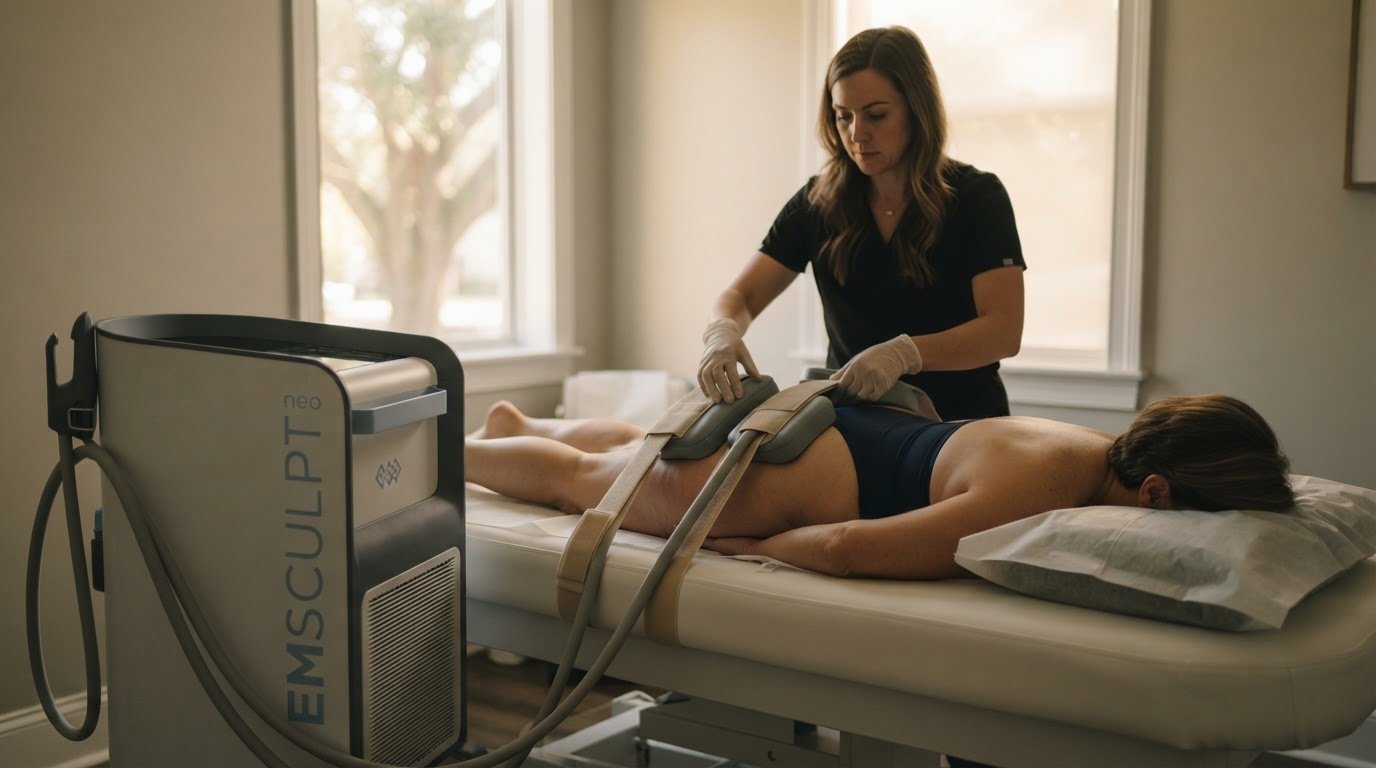
In Buffalo, New York, med spa care should begin with a consultation that connects your goals and health history to appropriate treatment options. At My Health 360, the right approach also depends on the experience of the physician performing a procedure and the medical oversight behind it. Body contouring may be worth discussing when it aligns with your goals.
It’s reasonable to want clear answers before choosing a treatment, especially when services differ in purpose and method. This guide explains what to expect from a consultation, how treatment planning can be personalized, and what to consider when discussing body contouring or an injectable procedure. It also covers physician experience and medical oversight, helping you approach your next step with a clearer understanding of aesthetic care.
Key Takeaways
- Use your consultation to connect your goals and health history with a treatment plan that fits your priorities.
- Compare body-contouring approaches by what they’re designed to address, rather than assuming every option works the same way.
- Ask about an injector’s experience and the physician’s involvement in care before proceeding with an injectable treatment.
- Treatment costs depend on the procedure and the plan; understand what shapes the estimate before making a decision.
- Contact My Health 360 for a Meet and Greet appointment to discuss with Medical Director Dr. Fatima whether a procedure is a good option for you.
Personalized consultations and treatment plans
A useful consultation connects your aesthetic goal with suitable treatments, their trade-offs, and the physician’s expertise. For a med spa visit, bring a specific example, such as the facial area or body contour you want to address.
Evaluating Treatment Options
Compare treatments by their purpose, method, and required provider training. For example, botulinum toxin injections and dermal fillers are different from laser hair removal, microdermabrasion, or nonsurgical fat reduction. Ask how often the treating professional performs the specific procedure and what training is required to use its equipment. Those answers help you assess whether the proposed approach matches your concern.
Customized Treatment Plans
A personalized plan should connect your goals with the treatment area, relevant health history, and procedure under consideration. Ask what the treatment is intended to address, what it involves, and how the physician will assess your response. A plan for smoother-looking skin, for instance, may involve a different procedure and follow-up discussion than one focused on hair removal.
Describe your priorities in practical terms during the consultation. You might want to soften the appearance of a facial line, address unwanted hair, or explore body contouring. Ask the physician why a suggested treatment fits your goal, what alternatives may be appropriate, and what preparation or follow-up the plan involves. A clear explanation should distinguish the treatment’s purpose from assumptions about its results.
Common nonsurgical aesthetic options include botulinum toxin injections, dermal fillers, laser hair removal, laser skin resurfacing, microdermabrasion, tattoo removal, and nonsurgical fat reduction. Each targets a different concern, so compare the proposed method with your actual priority. For equipment-based treatments, ask about the operator’s training and experience with that specific procedure.
Wellness services and vitamin boosters call for a separate conversation from facial or body treatments. Ask what the service is intended to address, what it involves, and how the physician considers your health history. A wellness goal is not interchangeable with an aesthetic goal, even when both come up in one treatment discussion.
Are med spa treatments covered by health insurance? Coverage depends on your insurance plan and the reason for treatment. Ask your insurer how it classifies the specific procedure before making financial decisions.
What are the risks and side effects? They vary by procedure and may include temporary effects such as redness, swelling, or discomfort. Ask the experienced physician to explain the relevant risks, aftercare, and signs that need medical attention.
How can I verify credentials and safety? Get the clinician’s full name and license type, then verify the credential with the issuing authority. Also ask how involved the supervising physician is in the practice’s operations and what training the operator has for your treatment.
Body contouring and fat reduction
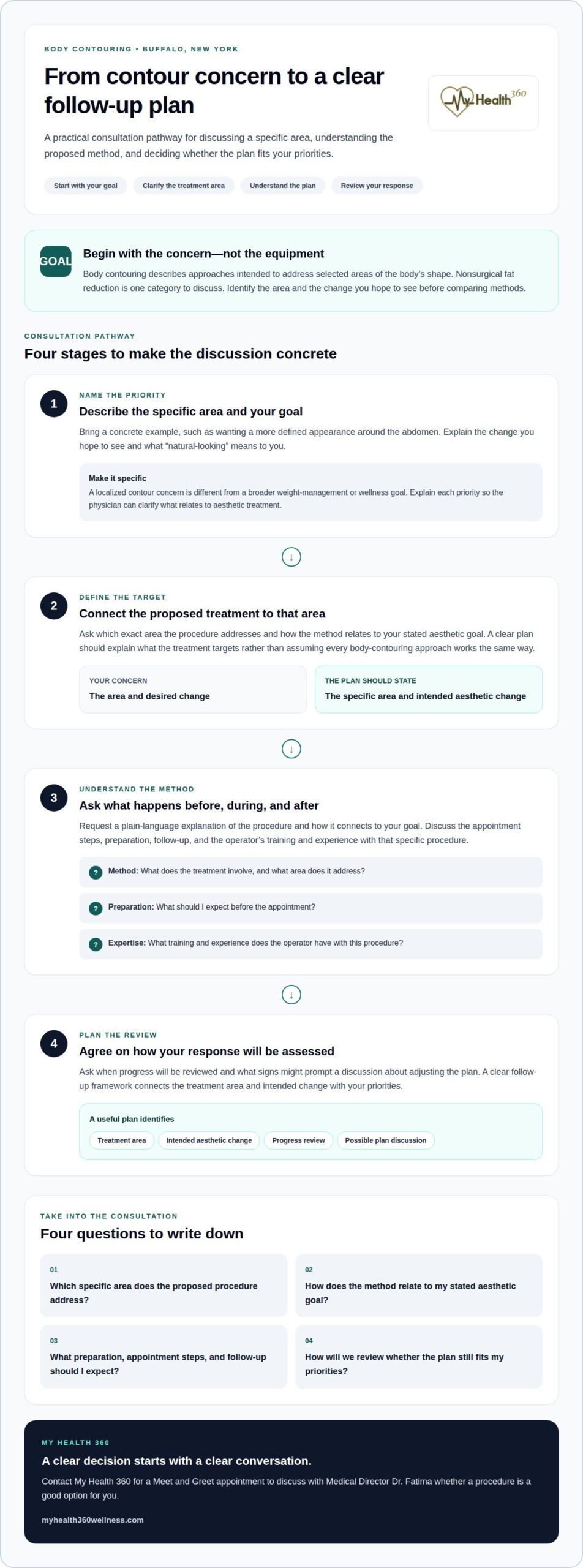
Body contouring describes approaches intended to address selected areas of the body’s shape. Nonsurgical fat reduction is one category to discuss if a specific area concerns you. At a med spa, describe the area and the change you hope to see, then ask what the proposed treatment targets.
Distinguish a broad body-contouring goal from a localized concern. For example, wanting a more defined appearance around the abdomen is a goal; the treatment plan should identify the exact area and explain how the approach relates to it. This makes it easier to compare options without assuming every advanced treatment addresses the same concern.
Ask the physician to explain the method in plain language before deciding. What area does it address? What does the appointment involve? What preparation and follow-up are part of the plan? These questions help you understand the process and identify details that matter to your schedule, comfort, and priorities. A clear explanation should connect each step to your goal.
Discuss how the treatment plan accounts for your overall appearance. If you want a natural-looking change, describe what that means to you, such as preserving balance with nearby areas. “Natural” can mean different things to different patients, so a specific example is more useful than a general preference for beauty or definition.
Before proceeding, ask how the physician will assess the area and review your response. A plan can specify the treatment area, intended aesthetic change, and when your progress will be reviewed. Ask what signs might prompt a discussion about adjusting the plan. This gives you a practical framework for follow-up instead of an unclear expectation.
Keep body contouring separate from general weight-management questions during the consultation. If your concern is a particular contour, focus the conversation on that area and the procedure being proposed. If your priorities include broader wellness or recovery, explain those goals too. The physician can clarify which parts relate to aesthetic treatment and which require a different care plan.
Use these questions to make the decision more concrete:
- Which specific area does the proposed procedure address?
- How does the method relate to my stated aesthetic goal?
- What preparation, appointment steps, and follow-up should I expect?
- How will we review whether the plan still fits my priorities?
Write down the answers and compare them with your original goal before committing. A useful consultation leaves you able to describe the treatment’s purpose, the area it targets, and the next step in the plan. That clarity helps you choose based on fit, not simply on the appeal of an advanced-sounding procedure.
Patient experience and injector expertise
A positive appointment involves more than a warm welcome; it requires clear communication before, during, and after treatment. At a med spa, notice whether the consultation addresses your concerns, explains the intended outcome, and gives you room to decide without pressure. Confidence comes from understanding the plan, not from promises of a youthful appearance.
Injector expertise matters because nonsurgical procedures still require training and practice. Many nonsurgical treatments are administered by aesthetic nurse practitioners. Ask how often the injector performs the specific procedure you’re considering, what training they completed for it, and how they approach your stated goal. Their answers should address the treatment itself, not only general experience with aesthetics.
Use the consultation to describe what would look balanced to you. For example, point to the area that concerns you and explain whether you want a subtle change or more visible definition. Ask the physician to describe the proposed placement or method in understandable terms. This helps reveal whether the plan reflects your preferences or simply applies a standard approach.
Patient experience also includes follow-up. For a skin treatment plan, ask how the practice assesses your response and what information you should share after the appointment. A quality med spa offers follow-up analysis to assess how a skin treatment plan is working. That review can help clarify whether the plan remains aligned with your concerns and intended aesthetic direction.
Before the appointment, prepare a short list of questions about the procedure’s purpose, the physician’s experience with it, and follow-up. Listen for specific answers. If you’re considering an injectable treatment to soften facial lines, for instance, ask how the physician will discuss your desired look and evaluate the plan afterward. Clear explanations make informed decisions easier.
During the appointment, notice whether the physician listens to your priorities. If you raise a concern, the response should address it directly. Ask what the procedure can reasonably address, what it does not target, and what follow-up involves. An answer that distinguishes the treatment’s purpose from your expectations is more useful than broad assurances.
Aftercare communication is part of the experience, too. Before treatment, ask whom to contact with questions and what changes should prompt a follow-up conversation. Keep the instructions and appointment details together so you can refer to them afterward. A clear process supports continuity between consultation, procedure, and review of your treatment plan.
For a personal discussion, contact My Health 360 to arrange a Meet and Greet appointment with Medical Director Dr. Fatima. You can discuss your goals and whether a procedure is a good option for you at this med spa.
Provider experience and medical oversight
Medical oversight is a key part of evaluating nonsurgical aesthetic care. A med spa combines an aesthetic medical center with a day spa, providing nonsurgical aesthetic medical services under a licensed physician’s supervision. Oversight requirements vary by state, so understand who supervises care and how that physician participates in operations.
Ask who performs the procedure, who supervises the clinician, and how the physician is involved. The person discussing skincare may not be the person administering treatment. Clarify each role before an appointment, especially for injectables or treatments using specialized equipment. Direct answers help you understand who makes clinical decisions and whom to contact with concerns at the med spa.
The physician’s experience should relate to the specific procedure, not just general aesthetic practice. Ask how often they perform that treatment and what training is required to use its equipment. Nonsurgical procedures still require training and practice. Experience with a facial treatment, for example, does not automatically establish experience with injectables.
For botulinum toxin products, the Centers for Disease Control and Prevention states that a valid healthcare license is required to purchase and inject them. Ask for the treating clinician’s name and license type, then verify the credential with its issuing authority. This practical step helps clarify the clinician’s role before treatment.
Medical supervision also matters for infusion services. In September 2025, Santa Clara County investigated two ICU admissions for septic shock after IV infusions at a medical spa, according to the Centers for Disease Control and Prevention. Santa Clara County is outside Buffalo; this case is a national example, not a local Buffalo incident. It illustrates why patients should understand who oversees an infusion and how concerns are addressed.
Ask how the physician contributes to the med spa’s operations. Find out who reviews treatment plans, handles clinical questions, and responds if a concern arises after a procedure. The answers should identify actual roles and communication steps, rather than relying on a physician’s name alone. This distinction can help you understand the care process.
Professional backgrounds differ. Plastic surgeons receive training in surgical procedures and nonsurgical treatments, while other licensed clinicians may have different education and procedural experience. Focus on preparation relevant to your chosen service. Ask how the physician’s training applies to the procedure and any equipment involved.
Before proceeding, summarize the plan in your own words: who performs the treatment, who provides medical oversight, and whom you contact with a concern. If those details remain unclear, pause and ask for a direct explanation. A thoughtful physician can explain clinical oversight without promising a particular aesthetic result.
A med spa combines a day spa with an aesthetic medical center and provides nonsurgical aesthetic medical services under a licensed physician’s supervision. The section does not establish how med spas compare with dermatologists.
Common med spa treatment costs in the United States
There is no single useful estimate for every aesthetic appointment in the United States. A consultation can involve botulinum toxin injections, dermal fillers, laser hair removal, microdermabrasion, skin resurfacing, tattoo removal, or nonsurgical fat reduction. Each treatment uses a different method, so a comparison should begin with the specific procedure and concern, not a general menu category.
For the services discussed here, price depends on the case and is given after a quote request; key factors include procedure type, treatment area, amount of product or equipment used, and planned follow-up. For example, an estimate for a facial procedure needs to describe the area and intended treatment, while a body-contouring estimate should identify the area being addressed. Those details make the quote more meaningful.
Ask what the estimate covers before comparing options. Does it include the planned procedure only, or follow-up appointments too? If an injectable is being considered, ask how the proposed amount relates to your treatment goal. For equipment-based care, ask what the estimate includes for the treatment area and planned sessions. Clear scope prevents comparisons between different plans.
Write down the same details for each estimate: procedure name, area, amount of product or equipment use, and follow-up plan. Then compare like with like. A quote for laser hair removal, for instance, cannot be compared directly with one for dermal fillers because their methods and purposes differ. Estimates for different body areas may also describe different plans.
- Identify the exact procedure and treatment area.
- Ask what the estimate includes and what follow-up it covers.
- Clarify how product or equipment use relates to the proposed plan.
- Compare estimates only when they describe the same treatment scope.
Memberships or loyalty programs may remind patients about follow-up treatments, but reminders are not a substitute for understanding the care plan. Ask whether a proposed treatment schedule is clinically appropriate for your goals, and keep cost discussions separate from decisions about which procedure suits you. A lower estimate alone doesn’t explain the provider’s experience, medical oversight, or the treatment’s purpose.
Before agreeing to a plan, ask for its scope in plain language and take time to review it. If the proposed procedure, treatment area, or follow-up differs from your understanding, request a clear explanation. This helps you decide based on the care being proposed, rather than a headline price or unclear package description.
To discuss a procedure and its cost factors in a personalized setting, contact My Health 360 for a Meet and Greet appointment with Medical Director Dr. Fatima and discuss whether it’s a good option for you.
My Health 360: Emsculpt Neo
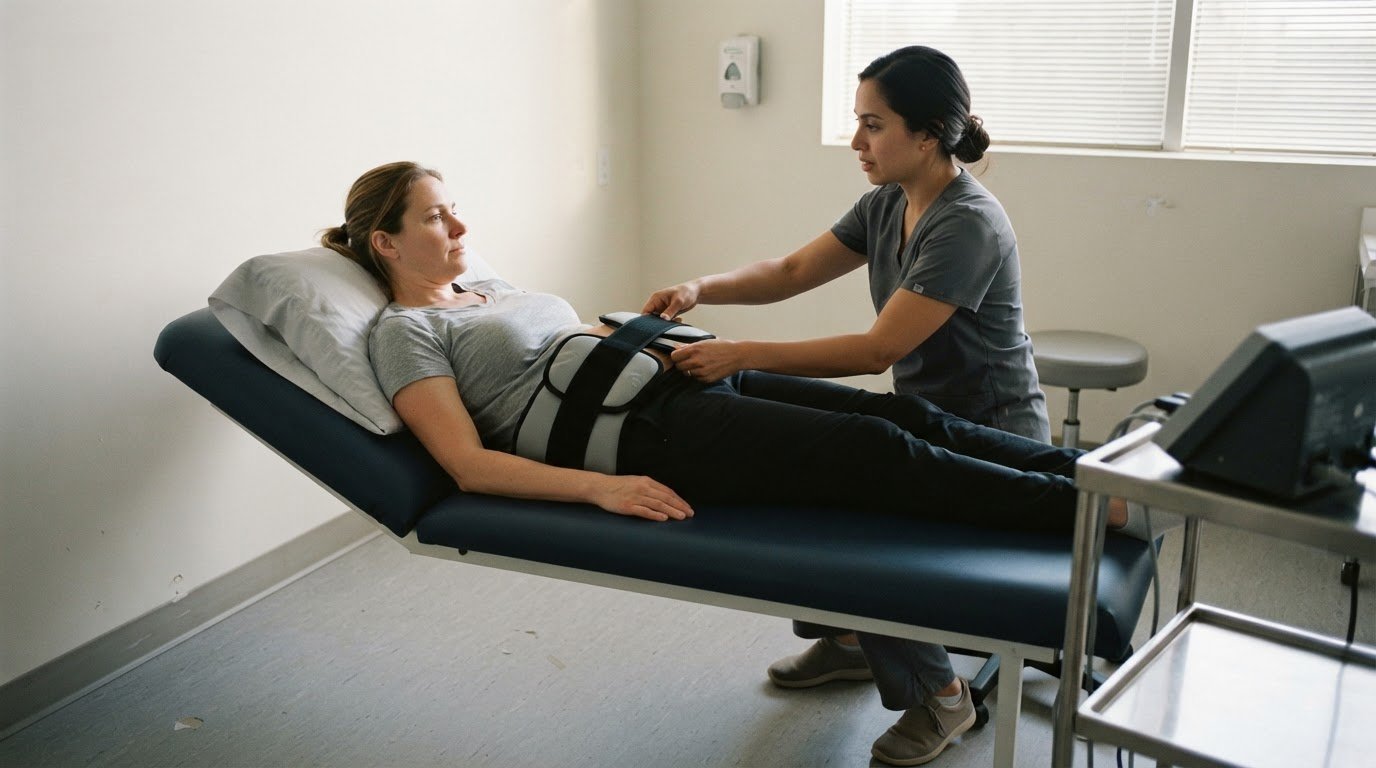
My Health 360 offers Emsculpt Neo for people exploring body contouring as part of their aesthetic goals. If you’re considering this approach, a discussion can help connect the area you want to address with a treatment plan tailored to your priorities.
Bring specific questions to your appointment: what concern the treatment is intended to address, how it fits your goals, and what the plan involves. A personalized conversation can clarify whether another option better matches your needs. The aim is an informed decision, not a one-size-fits-all recommendation.
Contact My Health 360 for a Meet and Greet appointment to discuss with Medical Director Dr. Fatima whether a procedure is a good option for you.
Choose a Next Step That Fits Your Goals
Your next step can be a focused conversation, not an immediate commitment to treatment. Bring the priorities you want to discuss and ask how a proposed procedure relates to them. A thoughtful med spa decision starts with understanding the plan and feeling comfortable with the discussion.
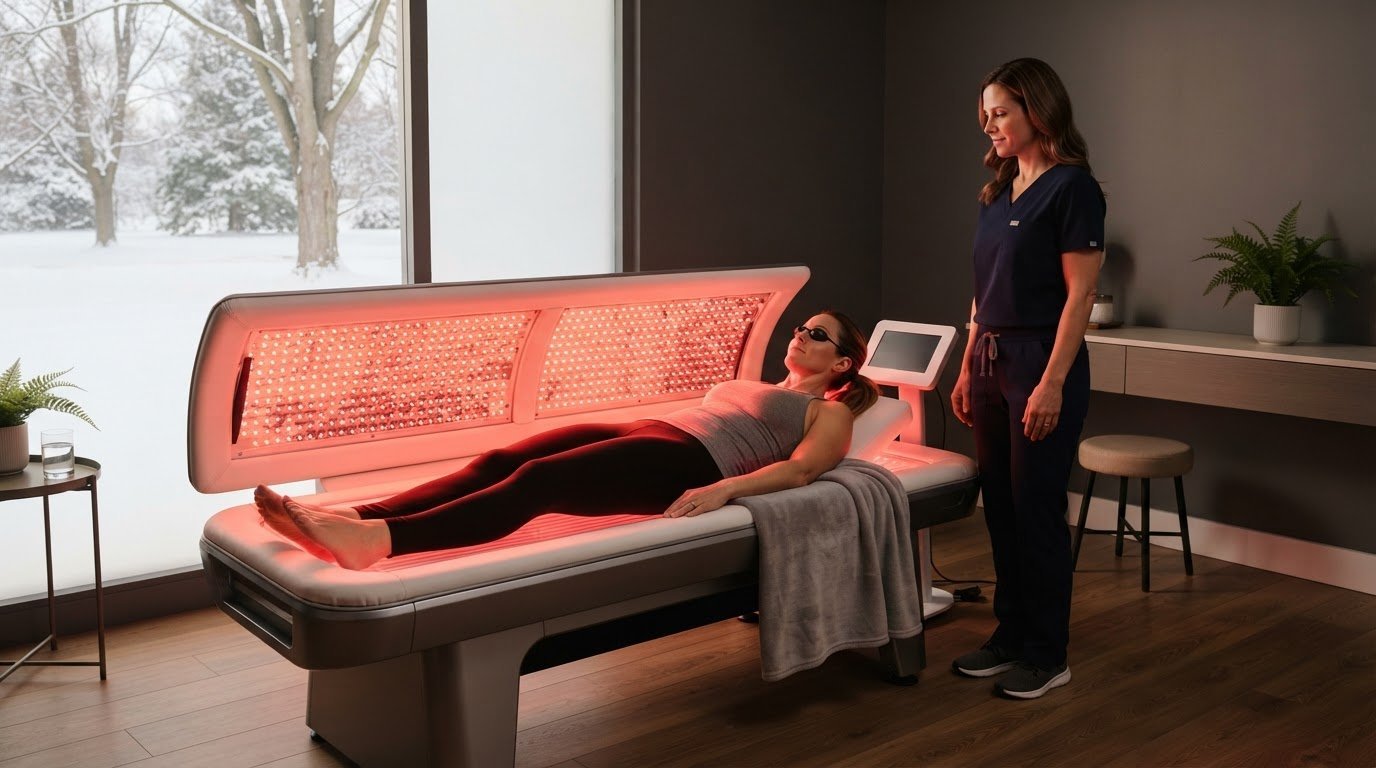
My Health 360 offers Emsculpt Neo for body contouring, alongside BioPrime for pre-operative or pre-event whole-body habilitation and Bio-Restore for post-operative or injury whole-body habilitation. These offerings address different needs, so the conversation can help you explore which direction aligns with your goals.
Contact My Health 360 to book a Meet and Greet appointment and discuss with Medical Director Dr. Fatima whether a procedure is a good option for you. Take the next step at your own pace, with your questions guiding the conversation.
Frequently Asked Questions
Have Questions or Want to Book an Appointment?
Contact My Health 360 to arrange a Meet and Greet appointment and discuss your goals with Medical Director Dr. Fatima. You can ask whether a procedure may be a good option for your situation and bring any questions about the process. To schedule, call 716-200-6146 or 716-407-3250. A direct conversation can help you decide what you’d like to explore next without committing to a treatment.
How involved is the supervising physician?
The supervising physician’s role can differ between practices, so ask about their involvement in patient care and operations. Find out who reviews clinical questions, oversees treatment protocols, and whom you would contact if a concern arose after an appointment. A physician’s name alone does not explain their day-to-day role. Clear answers help you understand how medical decision-making connects to your care.
What services do med spas offer?
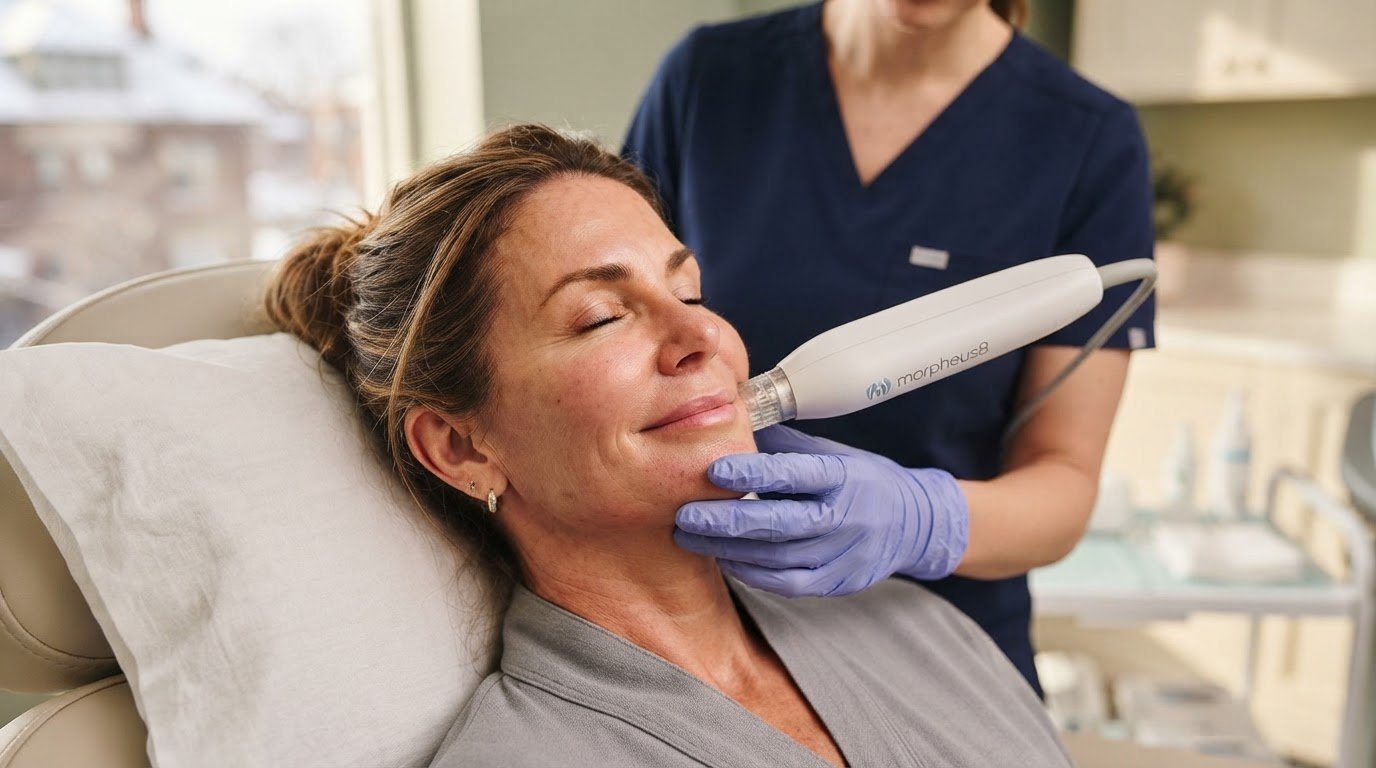
A med spa may offer nonsurgical aesthetic services such as injections, dermal fillers, skin resurfacing, laser hair removal, or body-contouring treatments. Wellness services can differ by practice. My Health 360’s offerings include Morpheus8, PDO Thread Lift, IV Hydration, Emsella, and Emsculpt Neo. Consider your specific goal first, then look for a service whose intended purpose fits it. Similar-sounding treatments may address different concerns.
How do I choose a safe, reputable med spa?
Start by reviewing the physician’s credentials and experience with the exact procedure you’re considering. Ask for their name, role, and relevant training, then confirm the license through its issuing authority. Read the treatment plan carefully, including aftercare and follow-up arrangements. A useful conversation should explain what the procedure addresses, who performs it, and how to raise questions afterward.
What licenses and medical supervision are required at a med spa?
Requirements vary by state and procedure, so confirm the applicable credential for the person performing your treatment. The Centers for Disease Control and Prevention states that a valid healthcare license is required to purchase and inject botulinum toxin products. Ask who supervises the practice and how that physician participates. Verify the clinician’s license with the relevant issuing authority instead of relying on a title alone.
What should I expect during a med spa consultation and treatment?
Expect to discuss your goals, relevant health history, and the procedure before deciding on treatment. Bring a list of medications and questions, including what preparation is needed and what aftercare involves. The physician should explain the plan and address your concerns. Before the appointment ends, make sure you know the next step, any follow-up arrangements, and whom to contact with questions.
How do med spas compare with dermatologists and day spas?
A med spa combines an aesthetic medical center with a day spa and provides nonsurgical aesthetic medical services under a licensed physician’s supervision. The material does not provide a comparison with dermatologists.
How do I find a med spa near me?
My Health 360 offers med spa services in Wilmington and Hampstead, North Carolina. Contact the practice to arrange a Meet and Greet appointment with Medical Director Dr. Fatima.