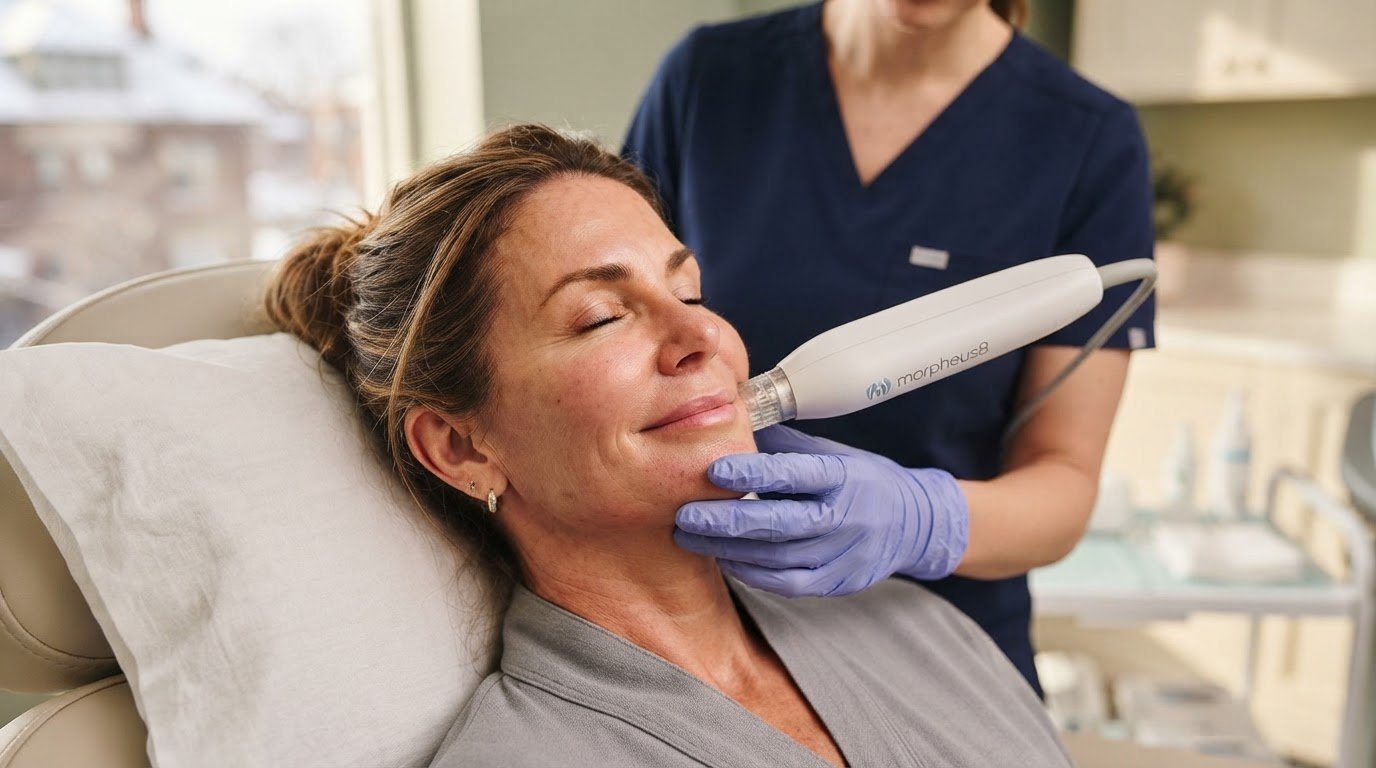
Skin remodeling doesn’t stop at the surface. Morpheus8 treatments in Buffalo, NY, combine microneedling with radiofrequency energy to encourage collagen remodeling, with treatment able to reach up to 4 millimeters beneath the skin’s surface. The approach can be used on the face and body, with the treatment plan shaped around the area and skin concerns being addressed.
It’s natural to want to understand both the process and the recovery before considering a treatment. Morpheus8 can involve temporary redness, mild swelling, or pinpoint skin texture, so knowing what may happen afterward helps you plan with realistic expectations.
This guide explains how radiofrequency microneedling works, which areas may be treated, what a session can feel like, and what to expect as your skin recovers. It also covers the factors that shape treatment planning, so you can approach a consultation with a clearer sense of whether the procedure aligns with your goals.
Key Takeaways
- Morpheus8 pairs microneedling with radiofrequency energy to support collagen remodeling beneath the skin’s surface.
- The treatment can address concerns on different areas of the face and body, with the approach tailored to the treatment area and skin goals.
- Your treatment schedule depends on the area being treated and the changes you want to address; improvements can continue to develop after a session.
- Temporary redness, mild swelling, or pinpoint skin texture may occur during recovery, so plan for gentle skin care and follow the aftercare guidance provided.
- Contact My Health 360 to arrange a Meet and Greet and discuss with Medical Director Dr. Fatima whether Morpheus8 is a good option for you.
Radiofrequency microneedling and collagen remodeling
Morpheus8 combines microneedling with radiofrequency energy to support skin remodeling beneath the surface. Clinics offering this treatment in Buffalo, NY, use it to address skin concerns through this combined approach.
Radiofrequency Microneedling Mechanism
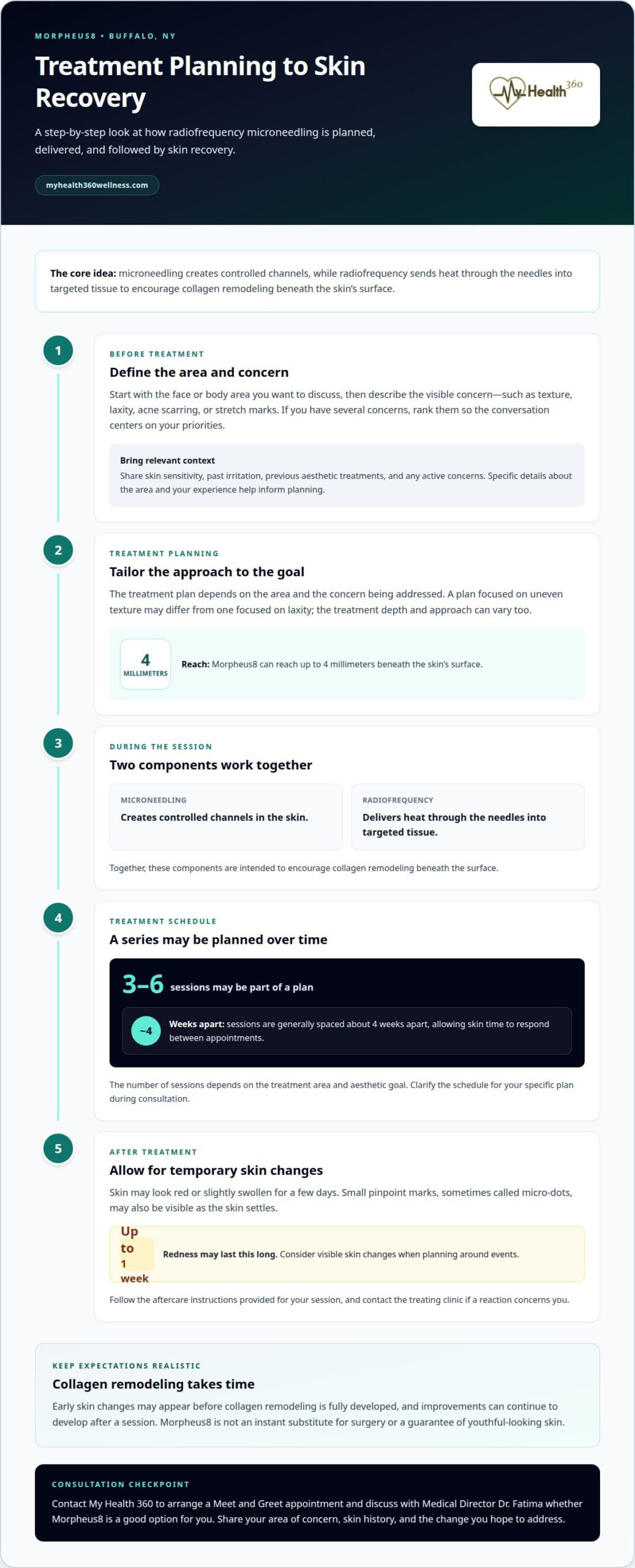
Microneedling creates controlled channels in the skin, while radiofrequency delivers heat through the needles into targeted tissue. Morpheus8 can reach up to 4 millimeters beneath the skin’s surface, allowing treatment to address deeper layers as well as the surface.
Radiofrequency refers to the energy used, while frequency describes a property of that energy. Microneedling combined with radiofrequency is intended to stimulate collagen remodeling. Because collagen production and remodeling take time, treatment is not an instant substitute for surgery or a guarantee of youthful-looking skin.
When considering treatment, focus on the concern and area, the planned treatment depth, and how the approach will be tailored to you. A plan for uneven skin texture, for example, may differ from one focused on laxity. These details shape how the device is used and what the session is designed to address.
Post-Treatment Redness and Micro-Dots
After treatment, your skin may look red or slightly swollen for a few days. Small pinpoint marks, often called micro-dots, may also become visible. These temporary surface changes relate to the microneedling component and can vary by treatment area and settings.
Redness may last up to 1 week after treatment. Micro-dots can be noticeable as the skin settles, so plan around any event where you’d prefer not to have visible skin changes. Follow the aftercare instructions provided for your session, and contact the treating clinic if a reaction concerns you.
Microneedling and radiofrequency work together, but they play different roles: needles deliver energy into the skin, and radiofrequency supplies heat to the targeted tissue. This combined mechanism is intended to encourage collagen remodeling without surgery. Treatment depth and approach can vary depending on the area and skin concern.
For a practical example, someone focused on texture may discuss how the treatment targets that area, while someone concerned about laxity may need a different plan. The mechanism alone doesn’t determine whether Morpheus8 is appropriate. Skin concerns, the area being treated, and the desired change all matter when discussing the treatment.
What Areas Can Be Treated?
Morpheus8 treatments in Buffalo, NY, can be planned for selected facial or body areas. The useful starting point is to name both the area and the visible concern, rather than asking whether the treatment suits a skin type in the abstract.
These details help make a consultation more focused. Describe whether you’re concerned about texture, laxity, acne scarring, or stretch marks, and point out where you notice the concern. The aim is not to treat every area in the same way, but to discuss whether the location and concern suit the treatment being considered.
Areas and Concerns Shape the Plan
Before your appointment, note the area you want to discuss and what you’d like to change. If you have several concerns, rank them. Setting a clear priority helps keep the conversation centered on your goals, whether you’re considering treatment for your face or body.
Describe the concern in everyday language, then explain what makes it noticeable to you. For instance, you might be concerned about uneven texture in one area and how the skin looks when relaxed in another. These distinctions help define your goals without assuming every visible concern has the same treatment objective.
Mention relevant skin history, including sensitivity, past irritation, or previous aesthetic treatments. Be specific about the area affected, what you noticed, and whether the issue is ongoing. Those details give the consultation a clearer picture than a broad label such as “sensitive skin.”
Skin Type and Treatment Comparisons
For patients considering Morpheus8 treatments in Buffalo, NY, skin type is one part of a broader suitability discussion. Share your skin tone, sensitivity, history of irritation, and any active concerns. Don’t assume that a general description of skin type answers whether a particular treatment plan fits your individual circumstances.
Ask how your skin history and chosen treatment area affect planning. If you’ve had a previous aesthetic procedure, describe its location and your experience. If acne scarring or stretch marks are your concern, explain which area matters most and what change you hope to see. Specifics help keep goals realistic and relevant.
Comparisons with other aesthetic procedures are most useful when they start with your priority. Explain whether you’re seeking a change in texture, laxity, or another visible concern, then ask how the treatment being considered relates to that goal. This focuses the discussion on suitability, rather than choosing a procedure by name alone.
For a personalized conversation, contact My Health 360 to arrange a Meet and Greet appointment with Medical Director Dr. Fatima. Discuss your area of concern, skin history, and whether Morpheus8 treatments in Buffalo, NY, are a good option for you.
Expected results and treatment schedule
Visible changes and treatment scheduling follow different timelines. Early skin changes may appear before collagen remodeling is fully developed.
Treatment Series
A Morpheus8 plan can involve 3 to 6 sessions, with the number shaped by the treatment area and aesthetic goal. Sessions are generally spaced about 4 weeks apart, allowing the skin time to respond between appointments.
Use your consultation to clarify the concern being addressed, the proposed treatment series, and how progress will be assessed. A plan focused on texture, for example, may differ from one addressing laxity. The number of sessions does not indicate how quickly results will appear.
Visible Results Timeline
Some visible changes may appear within a few days, while results are typically most noticeable after three weeks. Improvements can continue for up to three months as collagen remodeling develops through the skin’s layers.
The full remodeling response may continue over 3 to 6 months. This longer timeline matters when judging an aesthetic result: early redness or surface changes don’t show the final effect of collagen stimulation.
Think in stages. In the first few days, the skin may show temporary redness, while early visible changes can also begin to appear. Around three weeks, results are typically more noticeable. Over the following months, collagen remodeling can continue, with improvements developing for up to three months and the full response extending over 3 to 6 months.
Keep a simple record of the treatment date and area. Notes or photographs taken consistently can help you compare changes at similar intervals instead of relying on day-to-day memory. Avoid judging the outcome immediately after treatment, when temporary redness may distract from gradual changes.
At follow-up, compare your original concern with your current appearance and discuss whether the planned series still fits your goals. Scheduling should account for the treated area and the time needed for remodeling. If you’re seeking gradual improvement, remember that a three-week check-in and a three-month assessment reflect different stages of the response.
Results and timing vary by treatment plan, but the timeline provides useful milestones: initial changes may appear within a few days, more noticeable results typically emerge after three weeks, and remodeling may continue for months. Distinguishing these stages helps set clear expectations for progress.
What Happens During the Treatment?
A Morpheus8 appointment includes planning, preparation, and the treatment itself. The area being treated influences the session length and the details discussed beforehand.
Consultation and Treatment Process
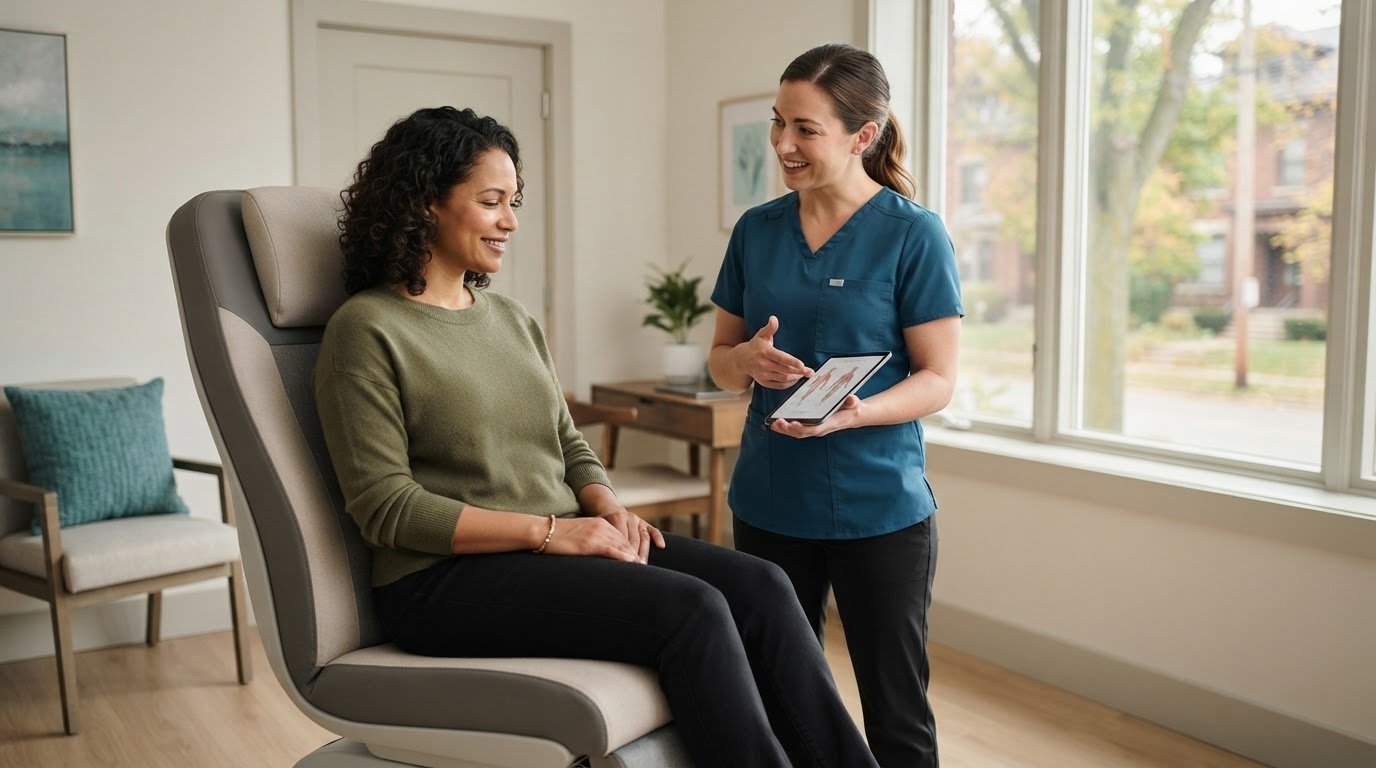
Describe your treatment area and the concern you want to address. For example, explain whether your priority is texture or skin laxity. The practitioner can then discuss how the proposed approach relates to your goal and which area will be treated.
Share relevant skin concerns and ask what to expect during the procedure. Clarify the expected session length for your treatment area, and discuss recovery instructions before scheduling around an event. This conversation connects the plan to your priorities instead of treating the device as a one-size-fits-all option.
Topical Numbing and Procedure
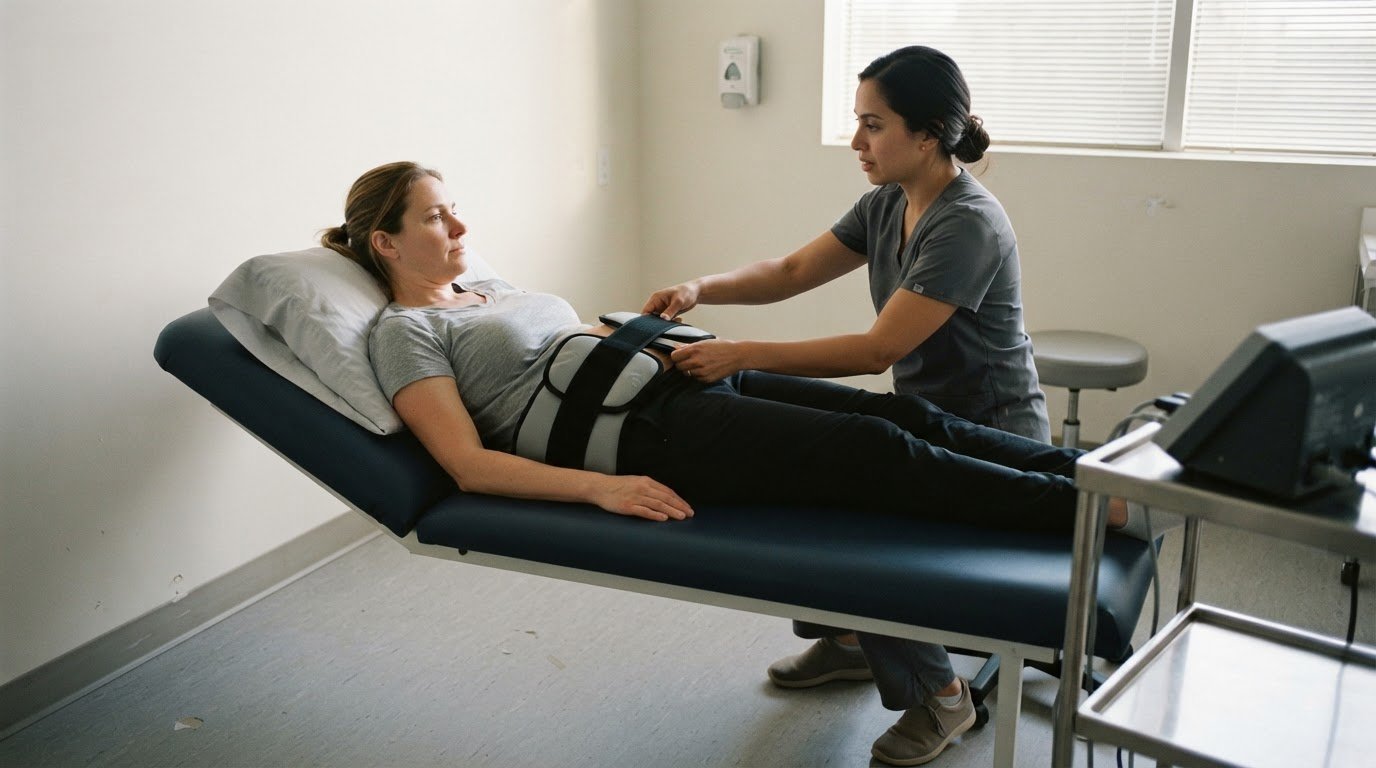
For Morpheus8 Body, topical anesthetic is typically applied and left in place for approximately one hour. The treatment then uses microneedling with radiofrequency energy. During the procedure, patients may feel pressure and warmth as the device treats the selected area.
Ask how numbing fits into the appointment timeline for your treatment area. The one-hour anesthetic application applies specifically to the body-treatment information, while the procedure itself takes additional time. Distinguishing these parts can help you plan transportation, work, and other commitments without confusing procedure time with total appointment time.
Procedure Duration and Recovery
A Morpheus8 session in Buffalo is described as taking about 30 to 60 minutes. A Morpheus8 Body procedure lasts approximately 45 minutes, depending on the areas treated. The exact duration therefore depends on whether treatment covers a smaller area or broader body zones.
Morpheus8 is described as having little to no downtime, but visible skin changes can still follow treatment. Plan your schedule with the treated area and post-treatment guidance in mind. For example, avoid placing an important event immediately after an appointment if you’d prefer time for your skin to settle.
The treatment also has a biological timeline. Radiofrequency energy is intended to stimulate collagen production in deeper layers, while microneedling affects the skin’s surface and underlying tissue. These effects develop after the appointment, so your immediate appearance is not the same as the later visible result.
Before booking, match the session details to your practical needs. If you’re considering a body area, account for the approximately one-hour topical anesthetic application and the roughly 45-minute procedure. For other areas, use the 30-to-60-minute session estimate as context, then discuss how the selected treatment area affects the appointment.
Post-treatment makeup and recovery
After Morpheus8, the skin can show temporary redness, swelling, or pinpoint texture. Recovery care helps protect the treated surface while it settles.
Common short-term effects include redness, mild swelling, discomfort, and pinpoint marks. Redness can last up to 1 week; makeup may be applied 1 to 2 days after treatment.
To prepare, follow the clinic’s instructions and allow for possible visible redness when planning your schedule. After treatment, keep your skin clean, use gentle moisturizer and sunscreen, and avoid direct sun and strenuous activity for a day or two.
Aftercare and Skin Care
For the first few days, keep the treated area clean and use gentle skin care. Don’t rub or pick at pinpoint marks, and follow the aftercare instructions provided for your session.
Makeup can generally be applied 1 to 2 days after treatment. If you plan to wear it, use that timing as a guide and apply it only when your skin is ready, following the clinic’s specific guidance.
Protecting your skin from the sun matters during recovery. Wear sunscreen and avoid direct sunlight, particularly during the first day or two. Avoid strenuous physical activity during that period as well, since heat and exertion can add discomfort to recently treated skin.
Recovery Time and Downtime
Morpheus8 is described as having little to no downtime, but that doesn’t mean the skin looks unchanged immediately. Mild swelling and discomfort may last for a day, while redness can persist for up to 1 week.
Micro-dots or pinpoint texture may be visible after treatment. Consider how this could affect your comfort with makeup or social plans, and take your schedule into account when booking.
Recovery varies with treatment settings and the area addressed. Facial redness, for example, may be more visible than changes on a covered body area, although both call for attention to sun exposure and skin care. Keep the treated area clean, use gentle moisturizer, and follow your personalized instructions.
Before treatment, leave room in your schedule for possible redness and avoid booking an important event immediately afterward. Ask about preparation instructions, especially if you use active skin-care products or take medication. Don’t stop prescribed medication without direction from the clinician who manages it.
After treatment, contact the clinic if symptoms concern you or differ from the recovery guidance you received. Arrange a Meet and Greet appointment with Medical Director Dr. Fatima to discuss whether the procedure is a good option for you and review your skin-care plan.
My Health 360: Emsculpt Neo
My Health 360 offers Emsculpt Neo for people exploring body contouring alongside aesthetic care. Morpheus8 focuses on radiofrequency microneedling and skin remodeling, while Emsculpt Neo may be relevant when your concern centers on body contouring. The right conversation starts with the outcome you want, whether that involves skin texture, laxity, or body shape, and how each approach relates to that goal.
If you’re considering Morpheus8 or Emsculpt Neo, contact My Health 360 to arrange a Meet and Greet appointment. You can discuss your goals with Medical Director Dr. Fatima and whether a procedure is a good option for you.
Choose a Next Step That Fits Your Goals
Considering Morpheus8 treatments in Buffalo, NY, is a chance to clarify what you want to address and which approach aligns with that goal. Skin remodeling and body contouring are different objectives, and a thoughtful conversation can help you distinguish between them before deciding how to proceed.
My Health 360 also offers Emsculpt Neo, BioPrime for pre-operative or pre-event whole-body habilitation, and Bio-Restore for post-operative or injury whole-body habilitation. These options serve different needs, so the useful next step is to discuss your priorities rather than assume one treatment addresses every concern.
Arrange a Meet and Greet with My Health 360 to discuss your goals and whether a procedure may be a good option for you with Medical Director Dr. Fatima. Contact My Health 360 to schedule a Meet and Greet, and take the next step with a clearer understanding of your options.
Frequently Asked Questions
What is Morpheus8?
Morpheus8 is a non-surgical treatment that combines microneedling with radiofrequency energy. Fine needles deliver energy into targeted skin layers, supporting collagen remodeling. It’s used for aesthetic concerns such as skin texture and laxity, rather than replacing surgery or restoring facial fat lost through weight loss. In Buffalo, treatment planning starts with the area you want addressed and the specific change you’re seeking.
How Does It Work?
Morpheus8 uses microneedles to deliver radiofrequency energy beneath the skin’s surface. The chosen treatment depth and area shape the approach. The aim is to stimulate collagen remodeling in targeted tissue. For example, a clinician may plan treatment around a particular area of skin laxity or texture instead of treating the entire face or body uniformly.
How long should i wait in between treatments?
A commonly recommended interval is 4 weeks between Morpheus8 treatments. For body treatments, sessions are often spaced approximately 4 to 6 weeks apart. The area treated and the plan’s goals inform the schedule, so a face-focused series may not follow the same pattern as a body series. Keep your appointment dates and treatment areas together, making it easier to track the plan you discussed.
How much downtime should I realistically plan for?
Plan for possible redness or mild swelling after treatment, even though Morpheus8 is described as having little to no downtime. Mild swelling and discomfort may last about a day, while redness can persist for up to 1 week. Makeup may be applied 1 to 2 days afterward. If you have an event, schedule with enough room for visible skin changes to settle.
How quickly will i see results?
Some visible changes may appear within a few days, while results are typically most noticeable after three weeks. Improvements can continue for up to three months as collagen remodeling develops. For a helpful comparison, take a photo before treatment and another at a later checkpoint under similar lighting. This can make gradual changes easier to assess than checking your appearance several times a day.
Is Morpheus8® safe for all skin tones?
Morpheus8 shouldn’t be assumed suitable for every person based on skin tone alone. Skin sensitivity, current skin concerns, treatment area, and personal history also matter in planning. Share any prior reactions and describe your skin-care routine during the assessment. This gives the clinician relevant context for discussing the approach and potential skin changes, including temporary redness or swelling, before you decide whether to proceed.
What is Morpheus8 and how does it work?
Morpheus8 is a radiofrequency microneedling treatment. The microneedles create controlled channels and deliver radiofrequency energy into targeted tissue, where the treatment is intended to support collagen remodeling. The depth can reach up to 4 millimeters. That mechanism distinguishes it from microneedling alone, which doesn’t deliver radiofrequency through the needles, and helps explain why the treatment can address concerns below the skin’s surface.
What areas of the face and body can Morpheus8 treat?
Morpheus8 can be used on the face and body. Treatment areas may include the full face, face and neck, arms, above the knees, abdomen, bra roll, and thighs. It may also be discussed for concerns such as acne, acne scars, stretch marks, or excess sweating in the hands, underarms, or feet. The treatment area and concern help determine the approach and series.