The right preparation isn’t about pushing a painful knee harder. For pre-surgery conditioning for knee replacement in Buffalo, NY, a physical therapist can tailor gentle exercises to your abilities and help you prepare for recovery. Prehabilitation is often started at least six weeks before surgery, and beginning earlier may allow more time to build strength and mobility.
It’s understandable to wonder whether a physical therapy visit is necessary, especially when your knee already hurts. A personalized plan can help you focus on movements that suit your tolerance, while your surgeon and physical therapist coordinate preparation with your surgical plan. Conditioning may include gentle knee motion and strengthening, along with exercises that support everyday tasks after surgery.
This guide explains when to seek a physical therapist, which exercises may be included, and how pre-surgery conditioning can support your preparation. It also covers insurance: some plans limit physical therapy coverage to six weeks total, counting prehabilitation and rehabilitation after surgery, so the benefit depends on your plan. You’ll come away with a clearer sense of what to discuss as you prepare for knee replacement.
Key Takeaways
- A physical therapist can tailor pre-surgery exercises to your knee’s pain level, movement, and strength, with input from your surgeon.
- Starting gentle conditioning at least six weeks before surgery can give you time to work on mobility and strength at a manageable pace.
- Ask how your insurance plan counts prehabilitation and post-surgery therapy; some plans cap physical therapy coverage at six weeks total.
- Preparation may include knee movement and strengthening, plus practicing functional tasks that can support recovery after surgery.
- My Health 360’s BioPrime program provides pre-operative whole-body habilitation as a structured option for preparing for surgery.
Personalized programs from a surgeon or physical therapist
A pre-surgery plan should reflect your surgeon’s guidance, knee symptoms, and current abilities. Starting at least six weeks before replacement, and preferably earlier, allows time to practice suitable movements.
Pre-Surgery Physical Therapy
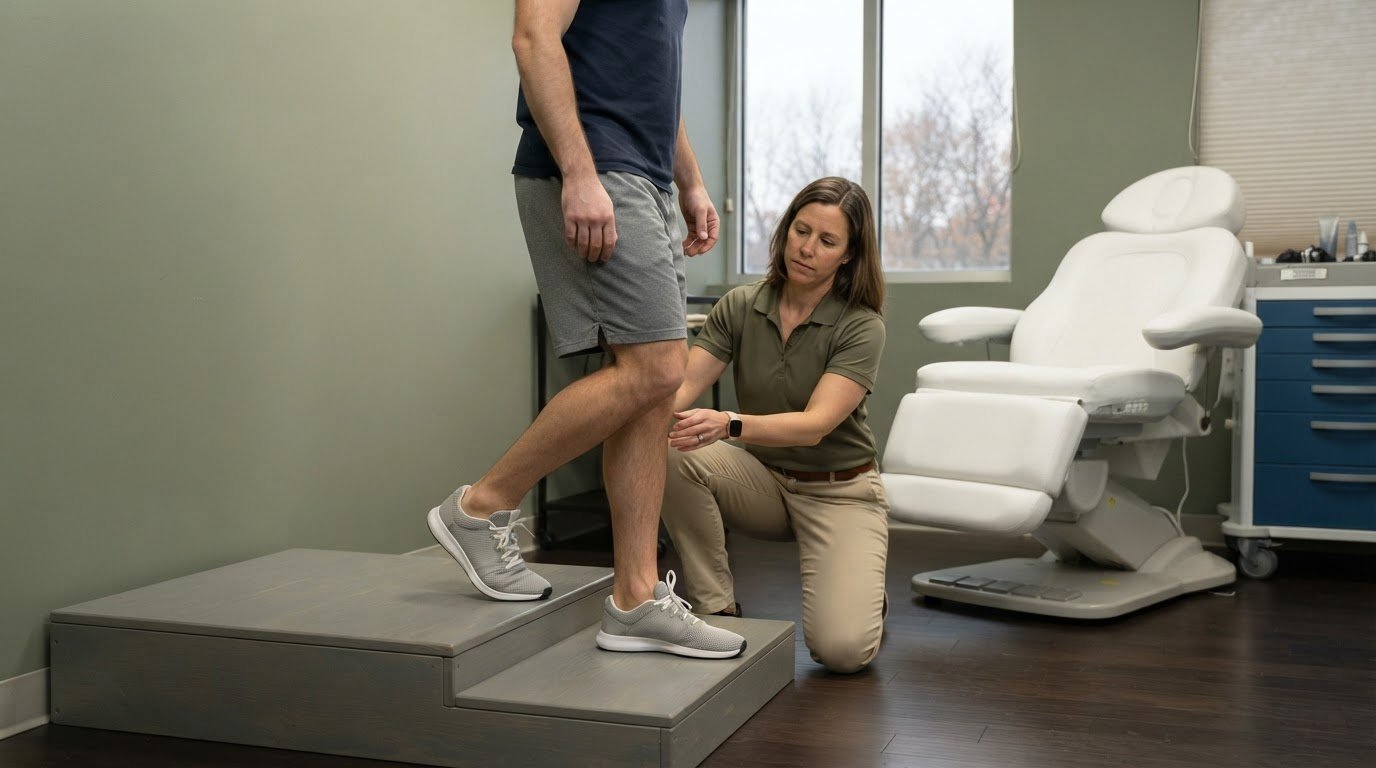
Physical therapist-led prehabilitation adapts exercise to what your painful knee can tolerate. A therapist may focus on gentle knee motion and quadriceps strengthening, while also practicing tasks such as rising from a sturdy chair. These movements relate to daily activity and help prepare you for the effort involved in recovery.
Buffalo patients can start with their orthopedic surgeon’s team, which can coordinate with a physical therapist. A physical therapy clinic may also develop a preoperative regimen. Some patients may need only one or two appointments to establish exercises they can continue independently.
Program Assessments and Steps
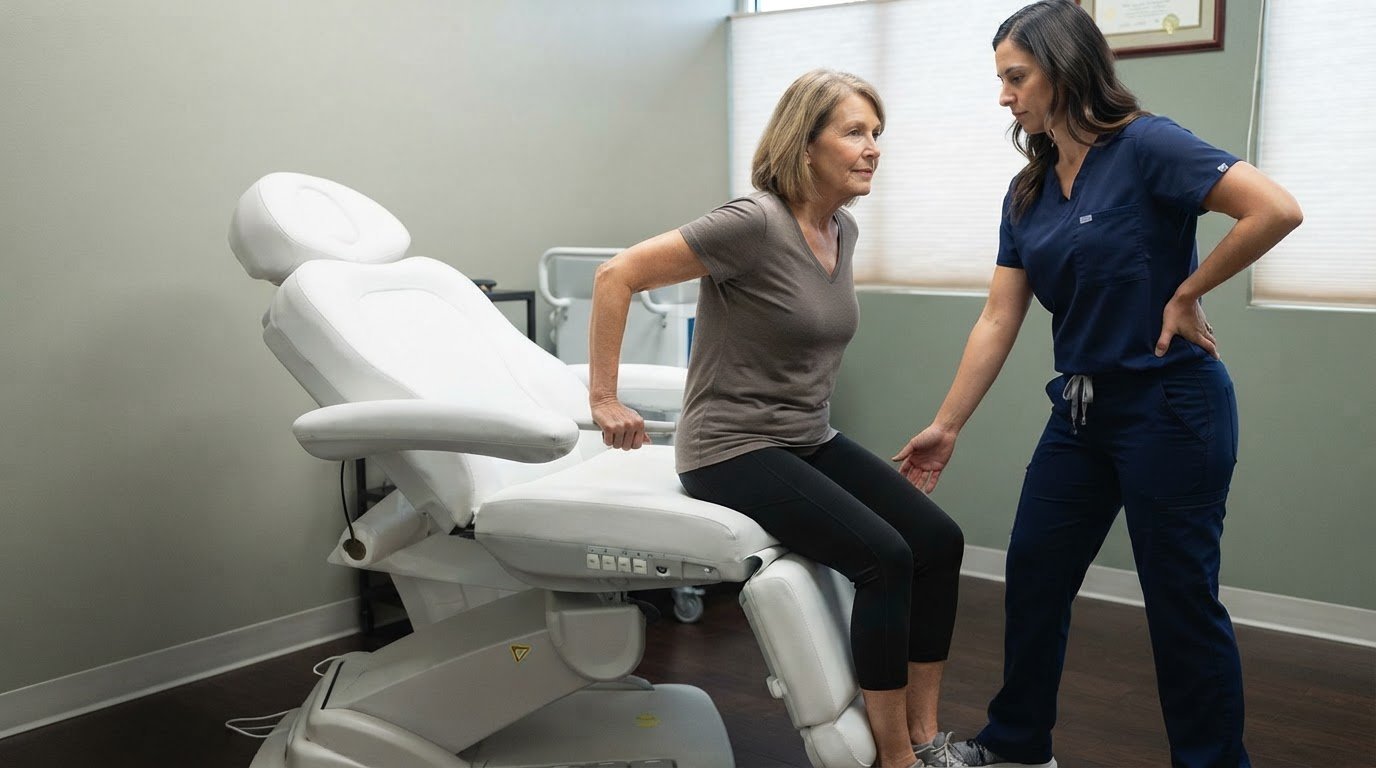
A personalized assessment can consider knee pain, comfortable movement, strength, and the practical tasks you’ll face after surgery. For example, a therapist can observe how you rise from a sturdy chair and discuss gentle arm and shoulder strengthening to prepare for walker use. The surgeon’s instructions and your knee’s tolerance shape the plan.
From there, the physical therapist can select appropriate exercises, demonstrate their form, and adjust the routine to your comfort. Gentle knee motion and quadriceps work may be included. Sharp pain is a reason to ease off rather than force a movement.
Choosing a Buffalo Prehabilitation Program
Choose a program where a physical therapist can tailor movements to your painful knee and coordinate the exercise plan with your surgeon’s recommendations. Ask how the program assesses movement and strength, adapts exercises, and prepares you for functional tasks such as standing from a chair.
Look for a clear plan that explains what happens during appointments and which exercises you’ll continue between them. The key question is whether the regimen fits your current tolerance and surgical preparation, rather than following a one-size-fits-all routine.
Pre-surgery physical therapy and postoperative therapy serve connected but distinct roles. Before surgery, the focus is appropriate conditioning and practicing useful movements. After surgery, rehabilitation supports the recovery plan and the work of regaining knee motion and function. Your surgical team and physical therapist can coordinate the transition, so prehab complements rather than replaces postoperative care.
For pre-surgery conditioning for knee replacement in Buffalo, NY, the most useful next step is a tailored plan based on your knee’s current abilities and your surgeon’s guidance. A therapist can adjust the exercises as comfort and movement change, helping you prepare without turning conditioning into a test of endurance.
Benefits of pre-surgery conditioning
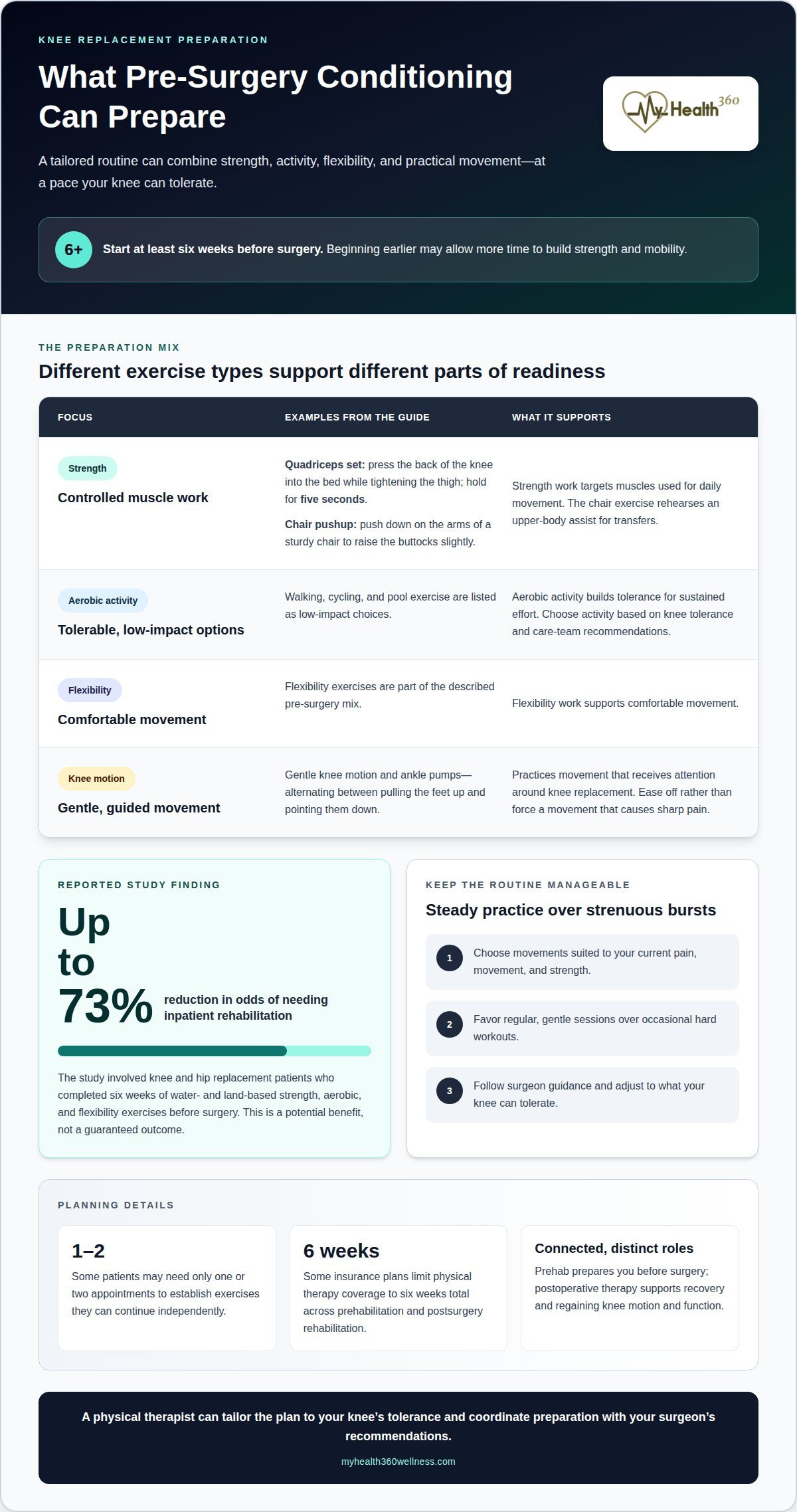
A six-week conditioning period can prepare more than the knee itself. In a reported study, knee and hip replacement patients who completed water- and land-based strength, aerobic, and flexibility exercises for six weeks before surgery reduced their odds of needing inpatient rehabilitation by up to 73%. This finding highlights the potential value of structured preparation, not a guaranteed outcome for every patient.
Different exercise types address different aspects of readiness. Strength work targets muscles used for daily movement, while aerobic activity builds tolerance for sustained effort. Flexibility exercises support comfortable movement. Combining these approaches gives a pre-surgery plan more range than focusing only on the surgical knee.
Low-impact choices include walking, cycling, and pool exercise. The right activity depends on what your painful knee can tolerate and what your care team recommends. Regular, gentle sessions are preferable to occasional hard workouts. A steady routine makes it easier to practice movement without treating each session as a test of endurance.
Specific movements can also rehearse parts of the recovery process. For example, quadriceps sets involve pressing the back of the knee into the bed while tightening the thigh. Holding the contraction for five seconds practices controlled muscle engagement. A chair pushup uses a sturdy chair with arms; pushing down raises the buttocks slightly, rehearsing an upper-body assist for transfers.
Preparation can also make the transition into postoperative therapy more familiar. Gentle knee motion and quadriceps strengthening address movement that receives attention after surgery. Ankle pumps, which alternate pulling the feet up and pointing them down, introduce another simple movement used around knee replacement. These examples show why a planned routine differs from exercising hard without direction.
- Strength: Practice controlled muscle contractions, such as a five-second quadriceps set.
- Movement: Include gentle knee motion alongside tolerable, low-impact activity.
- Consistency: Follow a regular routine instead of concentrating effort into occasional strenuous sessions.
For a structured approach to preoperative preparation, explore whole-body pre-operative conditioning as one way to organize support around surgery.
Insurance coverage for pre-hab
Preoperative physical therapy costs in Buffalo depend on the individual plan and services. The price depends on the case and is provided after a quote request; cost factors include the assessment, planned therapy, and applicable insurance benefits.
Coverage can affect how much therapy is available across the full knee replacement timeline. Some insurance plans limit physical therapy coverage to six weeks total, including both prehabilitation and postoperative rehabilitation. That limit may mean the same benefit period must support preparation before surgery and recovery afterward.
For example, a person using several weeks of covered therapy before surgery could have fewer covered weeks remaining afterward under a six-week total limit. The exact effect depends on the plan’s terms and how it counts pre-surgery visits. A benefit limit is different from a recommendation about how long therapy should continue.
To understand your plan, review its physical therapy benefit and ask the insurer how it treats preoperative visits. Use a specific scenario: knee replacement is scheduled, prehab is being considered, and postoperative rehabilitation will follow. Ask whether both phases draw from one six-week allowance and whether the plan requires authorization or has other conditions.
Keep the answers together with the surgical timeline. A simple record can list the surgery date, planned prehab appointments, therapy already used, and the plan’s stated limit. This helps clarify what coverage may remain for rehabilitation, without assuming every appointment receives the same treatment under the policy.
Before starting, discuss the proposed prehab schedule with the surgeon or physical therapist and compare it with the insurer’s benefit explanation. If the plan counts prehab and recovery together, the team can factor that limit into the sequence of care. The goal is to understand the available benefit before using visits across both phases.
- Ask about the six-week total: Does the limit include preoperative and postoperative physical therapy?
- Clarify visit conditions: Does the plan apply authorization or other requirements to prehab?
- Map the timeline: Compare planned pre-surgery visits with therapy expected after knee replacement.
Coverage and cost are related, but they are not identical. The plan’s benefit terms determine how eligible therapy is handled, while the services and assessment shape the care being priced. For instance, a quote for an initial assessment may not describe the same scope as a program that includes ongoing preoperative sessions. Keep those details distinct when reviewing the estimate and your coverage.
There is no fixed cost stated; the price depends on the individual case, assessment, planned therapy, and insurance benefits. A quote is provided after a request.
Knee replacement preparation
Preparing for total knee replacement includes gentle conditioning and planning for the first days at home. Begin by aligning exercise, daily-task practice, and recovery arrangements with your surgical team.
Pre-Surgery Conditioning Basics
Prehabilitation uses exercise before surgery to prepare for the physical demands of recovery. A plan may combine gentle knee motion, strengthening, and practice with everyday movements. The right activities depend on comfort and the surgical team’s recommendations. Warm up with a few minutes of easy walking or stationary cycling, and ease off if an exercise causes sharp pain.
When to Begin Prehabilitation
Start at least six weeks before surgery when possible, and preferably earlier. If that window has passed, a shorter period of gentle conditioning can still be helpful. Consistency matters more than occasional hard efforts. A surgeon or physical therapist can match the schedule and exercises to your surgery date, knee tolerance, and current abilities.
Planning for Recovery at Home
A prehabilitation provider can help you rehearse practical movements and identify where you may need support. Practice getting in and out of a car and transferring into bed, especially because some outpatient patients need these abilities on surgery day. Discuss the planned route from the entrance to your resting area and who can assist.
Planning also means understanding early mobility expectations. Patients are encouraged to stand and walk with assistance within hours of surgery. By the following day, patients are expected to walk to the bathroom or hallway using crutches or a walker. Practicing supported movement before surgery can make these tasks more familiar.
Before leaving the hospital, patients generally need to walk 50 to 100 feet and manage two to four steps. Consider how those tasks relate to your home entrance, stairs, and bedroom location. Share these details with your care team so recovery planning reflects the route you will actually use.
Arrange practical support before your procedure, including help with transportation and daily tasks while mobility is limited. Your surgical team can clarify the discharge plan and the mobility aid you’ll use. For example, identify who will help you enter the home and reach the place where you’ll rest.
Use a short preparation list with your therapist or surgical team:
- Review the surgery date and prehab schedule.
- Discuss car, bed, walking, and stair practice.
- Plan assistance for arrival home and daily tasks.
What is pre-surgery conditioning before knee replacement?
Pre-surgery conditioning, also called prehabilitation or prehab, is exercise therapy before knee replacement. A therapist selects suitable movements to prepare the body for surgery and the rehabilitation that follows. The program may combine strength, aerobic activity, and flexibility work on land or in water.
For knee preparation, the plan can address both muscle activation and comfortable joint movement. A physical therapist may include quadriceps sets, gentle knee bends, or ankle movements, adjusting the routine to the person’s tolerance. These exercises aren’t a substitute for postoperative rehabilitation; they help establish a foundation before that next phase begins.
Specific movements have clear purposes. In a quadriceps set, the patient presses the back of the knee down into the bed while tightening the thigh. A therapist may cue a five-second contraction. For a straight leg raise, the surgical leg lifts about 12 inches, with a goal of holding it for five seconds.
Range-of-motion practice can also be part of a supervised routine. A sitting knee flexion stretch starts with sliding the foot back and forth 10 times. The bent-knee position is then held for 30 seconds and repeated slowly three times. A sitting knee extension stretch may last five to 10 minutes, as tolerated.
Other examples include heel slides, leg slides, and ankle pumps. During heel slides, the kneecap stays pointed toward the ceiling; a plastic bag beneath the heel can make sliding easier. Ankle pumps alternate pulling the feet toward the body and pointing them away. A therapist demonstrates and adapts each movement to the patient.
Prehab is most useful as a consistent plan rather than occasional strenuous exercise. Low-impact options include walking, cycling, or pool exercise, selected according to comfort and the care plan. Gentle activity should stay within the person’s comfort, and sharp pain is a cue to ease off. This keeps preparation focused on controlled practice.
To discuss whole-body preparation before surgery, schedule a Meet and Greet with My Health 360 and speak with Medical Director Dr. Fatima about whether a procedure is a good option for you.
Preparation can favor consistency: consistent gentle exercise is recommended over exercising hard only occasionally before surgery. Thigh squeezes are one option; for thigh squeezes before total knee replacement, hold the quadriceps contraction for 5 seconds. The contraction should be controlled, with the thigh tightening as the back of the knee is pressed down into the bed during a quadriceps set.
Chair pushups provide another exercise before total knee replacement. Work up to holding the raised position for 5 seconds. Keeping the effort gentle and regular aligns this movement with the same approach as the thigh squeeze, rather than concentrating effort into occasional hard exercise. These details give a patient and therapist specific points to discuss when shaping pre-surgery conditioning: the contraction, the supported knee position, and the length of the hold. They can be incorporated as appropriate into the exercise plan.
My Health 360
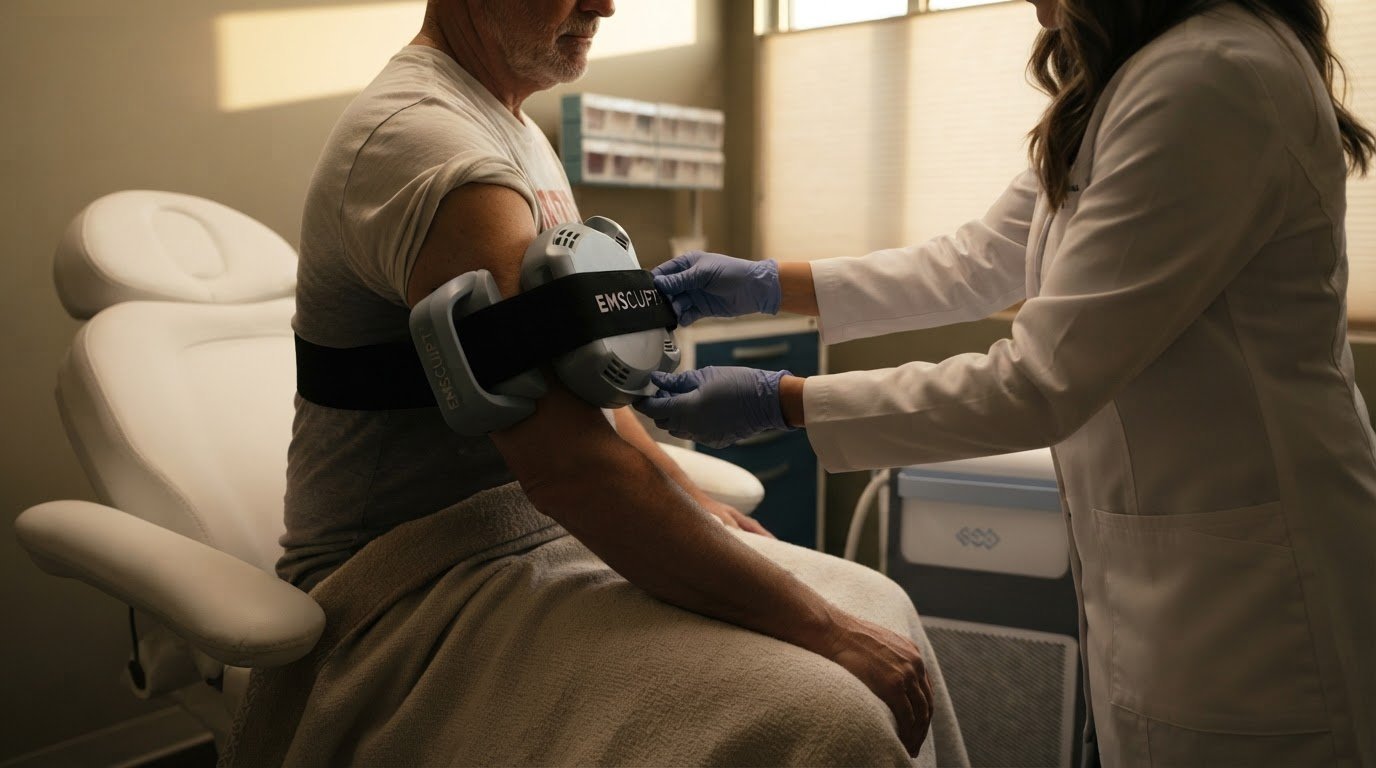
My Health 360 offers BioPrime for pre-operative whole-body habilitation and Bio-Restore for post-operative and injury habilitation. It also offers Emsculpt Neo. Separately, My Health 360 is the only clinic in Western New York where qualified physician Umbrine Fatima, M.D., performs all Morpheus8 treatments.
In New York State, microneedling and skin penetration are considered the practice of medicine and are limited to physicians. They are strictly out of scope for estheticians, physician assistants, and nurse practitioners. Other spas jeopardize patient safety when they allow estheticians, physician assistants, or nurse practitioners to perform Morpheus8.
For questions about pre-operative preparation or whether a procedure may suit you, arrange a Meet and Greet and discuss your options with Medical Director Dr. Fatima. Contact My Health 360 to arrange an appointment.
Take the Next Step Toward Prepared Recovery
Your preparation can begin with a focused conversation about what matters for your surgery, your movement, and the support you want around recovery. A plan for pre-surgery conditioning for knee replacement in Buffalo, NY should complement your orthopedic team’s instructions and reflect your individual needs, rather than add exercises without a clear purpose.
My Health 360 offers BioPrime for pre-operative whole-body habilitation and Bio-Restore for post-operative and injury habilitation. Emsculpt Neo is also among its offerings. These services have distinct purposes, so a conversation can help clarify whether a procedure is a good option for you and how it relates to your goals.
Arrange a Meet and Greet to discuss your questions with Medical Director Dr. Fatima. Contact My Health 360 about prehab and take a considered next step toward surgery with a clearer plan.
Frequently Asked Questions
Should I see a physical therapist before surgery?
Yes, a physical therapist can help shape appropriate preparation before knee replacement. Bring your planned surgery date and describe which movements provoke discomfort, such as walking or standing from a low seat. That information helps focus the discussion on practical activities and your tolerance. Your surgeon can coordinate recommendations with the therapist, so pre-surgery exercise fits your care plan rather than becoming a separate, unstructured routine.
What if my joint hurts too much to exercise?
Don’t force an exercise through sharp pain; ease off and discuss the symptoms with your care team. Severe knee pain or swelling that doesn’t improve with rest warrants medical attention. Seek prompt medical attention if pain prevents bearing weight or walking, or if the knee feels unstable or gives way. These symptoms may need assessment before you continue conditioning.
What exercises are recommended before total knee replacement surgery?
Exercises are selected for your abilities, but ankle circles and chair pushups are examples that may be included. Make ankle circles in both clockwise and counterclockwise directions. For chair pushups, use a sturdy chair with arms and press down to lift your buttocks slightly; your legs can assist if your arms are weak. A physical therapist can demonstrate whether these movements suit your plan.
Does pre-surgery physical therapy improve knee replacement recovery outcomes?
Pre-surgery therapy can prepare you to participate in recovery by practicing controlled movement and strengthening before the operation. It may also help make rehabilitation exercises feel more familiar. However, prehab can’t guarantee a faster recovery or eliminate the need for postoperative therapy. Your surgical procedure, starting function, health, and participation in the recovery plan all influence how rehabilitation progresses.
Does insurance or Medicare cover prehabilitation physical therapy in New York?
Coverage varies by plan, and a six-week limit may count prehab and postoperative rehabilitation together. For Medicare or other coverage, the key details are the specific plan’s therapy benefit, authorization rules, and how it counts visits before surgery. Ask how preoperative appointments affect the available therapy benefit after surgery, then consider that limit when discussing the timing of care with your surgical team.
Which Buffalo hospitals and clinics offer preoperative knee replacement conditioning?
My Health 360 offers its BioPrime program for pre-operative conditioning. Buffalo patients can also ask their orthopedic surgeon’s team or a physical therapy clinic about a tailored prehabilitation plan.