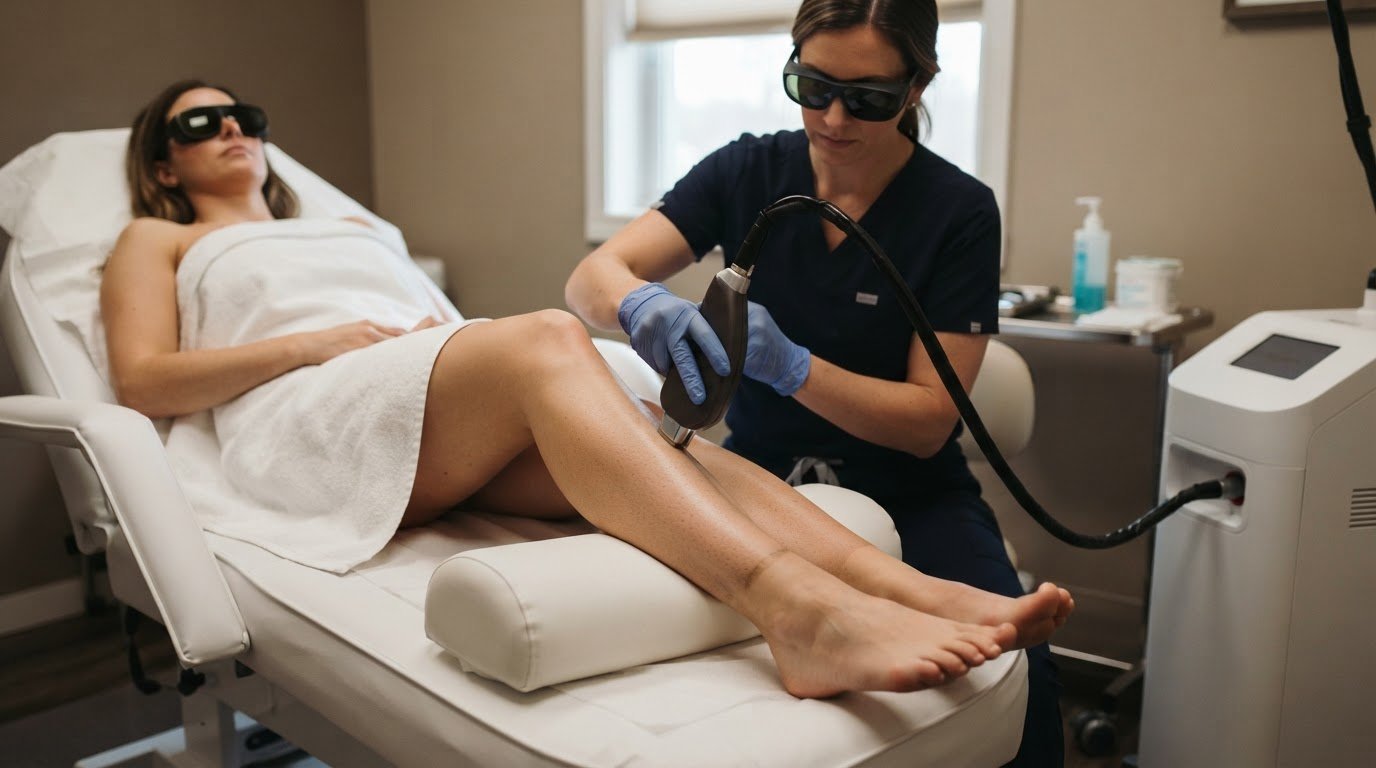
What if supporting collagen is less about a quick fix and more about giving skin cells a consistent light stimulus? It’s understandable to want clear expectations before trying a new aesthetic approach. For anyone considering infrared light therapy for collagen production in Elma, NY, red and near-infrared light may support cellular activity involved in collagen and elastin production, while the approach and schedule can vary with the device and skin goals.
This guide explains how photobiomodulation works, how red and near-infrared wavelengths differ, and what current evidence suggests about skin changes. You’ll also learn what session frequency and duration can involve: facial light-therapy studies commonly use two to three sessions per week over several weeks, while typical sessions are often described as 10 to 20 minutes. These patterns offer a practical starting point for understanding the process, not a universal schedule. By looking at the mechanism, expected pace, and treatment routine together, you can approach the topic with clearer expectations.
Key Takeaways
- Red and near-infrared light use different wavelength ranges, which helps explain how photobiomodulation may influence skin cells.
- Facial light-therapy studies commonly use two to three sessions per week over several weeks; session length and exposure depend on the device and protocol.
- Photobiomodulation may support cellular activity associated with collagen production, but visible skin changes develop over time rather than immediately.
- Light therapy is non-invasive, but eye protection, device instructions, and individual sensitivity matter when considering safety.
- Compare light-based approaches with lasers and microneedling by considering how each works, the treatment goals, and the expected recovery.
What Is the Recommended Session Frequency and Duration?
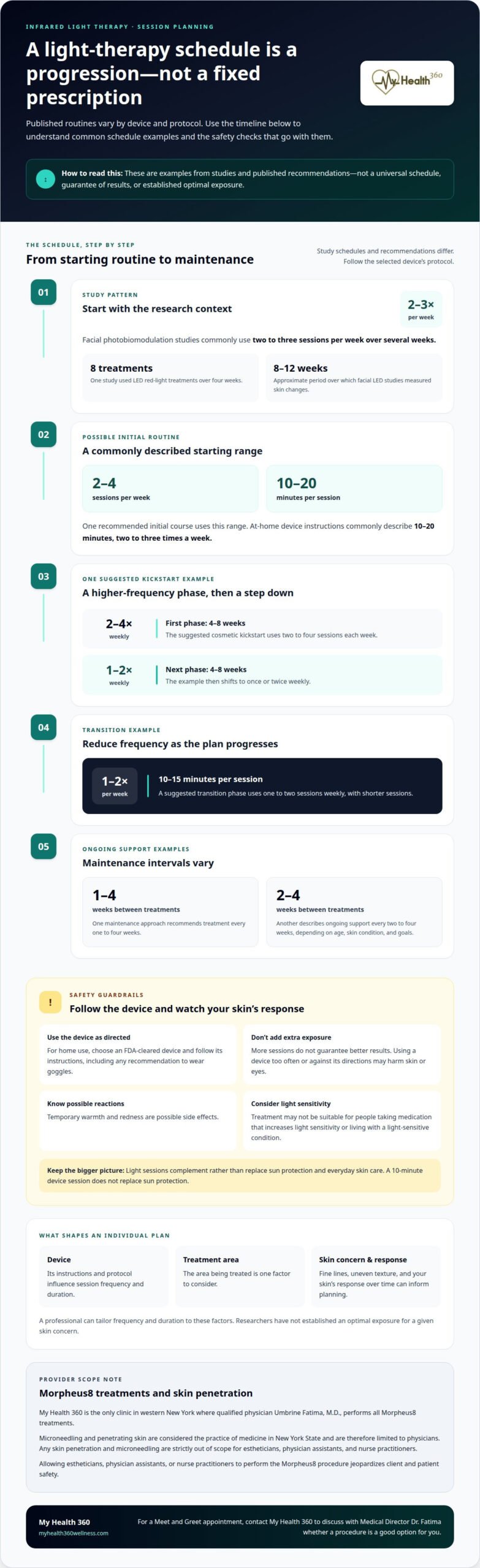
Red-light schedules vary by device and treatment plan, so there isn’t one established session length or exposure that suits every skin concern. Facial photobiomodulation studies commonly use two to three sessions per week over several weeks. One study’s eight LED red-light treatments took place over four weeks, while facial LED studies have measured skin changes over approximately 8 to 12 weeks. These are study schedules, not a guarantee of results or a universal prescription.
Published routines offer different starting points. One recommended initial course is 2-4 sessions per week, with each session lasting 10-20 minutes. At-home devices commonly recommend 10 to 20 minutes, two to three times a week. Another suggested cosmetic kickstart uses 2-4 sessions weekly for 4-8 weeks, followed by once- or twice-weekly sessions for the next 4-8 weeks. These differences reflect variation in devices and protocols, not a single proven ideal.
Duration can also change as a plan progresses. A suggested transition phase uses 1-2 sessions per week, with 10-15-minute sessions. One maintenance approach recommends treatment every 1-4 weeks; another describes ongoing support every 2-4 weeks, depending on age, skin condition, and goals. These schedules are examples of published recommendations, while researchers haven’t established an optimal exposure for a given skin concern.
For treatment planning in Elma, consider the device’s instructions, the area being treated, and the skin concern, such as fine lines or uneven texture. A professional can tailor the frequency and duration to these factors and assess your skin’s response over time. Follow the selected protocol consistently. Adding sessions beyond the directions does not guarantee better results and may raise safety concerns.
At-home and professional treatments differ in how the device and protocol are selected. For home use, choose an FDA-cleared device and follow its instructions, including any recommendation to wear goggles. Using a device too often or contrary to its directions can harm skin or eyes. Temporary warmth and redness are possible side effects. Treatment may not be suitable for people taking medication that increases light sensitivity or living with a light-sensitive condition.
Light sessions complement, rather than replace, everyday skin care. Pairing a schedule with sun protection, a consistent skin-care routine, restorative sleep, and a healthy diet supports a broader approach to skin health. For example, a 10-minute device session doesn’t replace sun protection. Keep to the device’s recommended frequency, avoid extending exposure on your own, and consider how other treatments for a specific concern fit alongside light therapy.
Red and near-infrared wavelengths used in photobiomodulation
Photobiomodulation uses selected wavelengths of light to interact with tissue. The wavelength distinguishes visible red light from near-infrared light and helps determine how a treatment is designed.
Red Light Wavelengths
Red light used for skin health commonly falls around 630-660 nm, within the broader range of approximately 620-700 nm. This visible light range matters because wavelength is one factor that shapes how light interacts with skin. Laboratory work reports increased fibroblast counts and activity with red light around 660 nm, a finding relevant to research on cellular processes involved in skin structure.
Near-Infrared Wavelengths
Near-infrared light is typically described across approximately 700-1100 nm, with skin-focused protocols often using 800-880 nm. Unlike visible red light, near-infrared light isn’t visible to the eye. Its wavelength helps define the light used in a protocol, but wavelength alone doesn’t establish a treatment’s effect or suitability for an individual concern.
Some studies combine red and near-infrared wavelengths rather than using only one range. A cited photoaging skin trial used LED wavelengths of 633 nm and 830 nm. This pairing illustrates why a device’s wavelength specifications matter: “red light” and “near-infrared” can describe different parts of a protocol, not interchangeable forms of light.
Near-infrared light has also been studied in relation to wound healing. Research on photobiomodulation examines how light may interact with cells and tissue, but a wavelength or study finding does not prove that every device or protocol produces the same outcome. The concern being addressed, treatment design, and individual skin response all affect how findings apply.
Light-based procedures can serve different purposes. Photodynamic therapy, for example, uses low-power red laser light to activate a light-sensitive drug and create a reaction that destroys targeted cells. It is an established treatment for certain skin cancers, as well as psoriasis, acne, and warts. This approach differs from LED photobiomodulation intended to support skin health.
If cancer or another medical condition affects your treatment decisions, consult a healthcare professional before beginning light therapy. Temporary redness or warmth can occur, and some medications or conditions may increase light sensitivity. Knowing the device’s wavelength and intended use can help you discuss whether that approach suits your skin concern.
What Is Photobiomodulation and How Does It Drive Cellular Renewal?
Photobiomodulation describes how selected light may influence cellular activity. For skin, researchers are examining possible effects on collagen, inflammation, and visible signs of aging.
Photobiomodulation and Collagen Production
Photobiomodulation uses red or near-infrared light to stimulate cellular processes associated with collagen production. Collagen helps provide skin structure, while light-based stimulation offers a non-invasive way to support skin health. Responses depend on the light protocol and individual factors, so treatment should not be considered a guarantee of immediate changes in appearance.
Cellular Renewal Through Photobiomodulation
Cellular renewal refers here to light-associated activity in cells, rather than the replacement of skin or a resurfacing procedure. Red light in the 600 to 810 nm range is discussed in photobiomodulation research for possible effects on mitochondria. This mechanism may help explain why studies examine light’s relationship to inflammatory processes and tissue response.
LED photobiomodulation is described as non-invasive and painless, but tolerability varies. Transient warmth and redness are possible side effects. A review of photobiomodulation in sensitive tissues reports that adverse effects are typically mild and resolve within 24 hours. That finding describes a review, not a guarantee that every patient will have the same experience.
Safety also depends on personal health and proper device use. Red light therapy may not suit people taking medication that increases light sensitivity or living with a light-sensitive condition. The long-term safety of regular use is not fully known. If the device recommends eye protection, wear the recommended goggles and follow its instructions rather than increasing exposure on your own.
FDA clearance and treatment effectiveness are separate considerations. Device clearance and treatment effectiveness are separate considerations, and clearance alone does not establish how effective a device is. The device’s intended use matters, too. A product designed for one concern or body area should not automatically be assumed appropriate for another.
Light therapy is not the same as every light-based dermatology procedure. Photodynamic therapy uses low-power red laser light to activate a light-sensitive drug, creating a reaction that destroys targeted cells. It is used for certain conditions, including some forms of skin cancer. This targeted approach differs from LED photobiomodulation discussed for skin renewal.
In one study, more than 90% of patients reported noticing some improvement after LED red-light sessions. That result is a study finding, not a prediction for an individual. For a specific inflammatory or skin concern, treatment choices depend on the concern and health context. A healthcare professional can help assess whether light therapy is appropriate alongside other care.
Collagen and elastin production
Collagen and elastin contribute different qualities to skin. Collagen provides structure and strength, while elastin is associated with flexibility and recoil. As skin changes over time, fine lines, wrinkles, and uneven texture may become more noticeable. Understanding these roles helps set realistic expectations for approaches intended to support skin appearance.
Red and near-infrared light are studied for their potential to support cellular activity associated with collagen and elastin production. This does not directly add either protein to the skin. Instead, photobiomodulation uses light exposure as a non-invasive stimulus, and visible changes depend on the skin’s response over time. For people in Elma, NY, infrared light therapy for collagen production is one approach to discuss when considering skin goals.
Clinical findings describe different timelines for different concerns. Reports on fine-line and wrinkle changes commonly span 4-12 weeks, while skin tone and texture changes are often described over 4-8 weeks. Improved skin elasticity is typically discussed over 6-12 weeks. These periods aren’t interchangeable: elasticity, texture, and fine lines are separate outcomes, and a change in one doesn’t establish the same change in another.
For example, someone focused on fine lines may track their appearance differently from someone concerned about skin elasticity. A consistent routine makes gradual changes easier to observe, but photos and everyday impressions can vary with lighting, facial expression, and skin condition. For a useful assessment, compare the same area under similar conditions and consider the specific concern being addressed.
“Optimal” treatment does not mean the longest exposure or most frequent sessions. Researchers have not established an ideal red-light exposure for each skin concern. Device instructions and the intended treatment area matter, since exceeding directions can increase the risk of skin or eye damage. Following a consistent routine is more appropriate than increasing exposure to pursue faster collagen-related changes.
Light therapy does not replace broader skin care. Sun protection, restorative sleep, a healthy diet, and consistent skin-care practices support skin health alongside treatment. For a specific concern, dermatologists may combine light therapy with another treatment, such as a medicated cream or an in-office procedure. The right approach depends on the concern and desired outcome; one method is not right for every appearance goal.
Because light therapy is non-invasive, it may appeal to people seeking an approach that does not penetrate the skin. Still, a non-invasive routine is not automatically appropriate for everyone. Skin condition, device, and personal goals all affect whether it is a suitable fit. If you are exploring infrared light therapy for collagen production in Elma, NY, focus on an appropriate protocol, consistent use, and enough time to assess changes related to your goals.
How does infrared light therapy compare with red light therapy, laser treatments, and microneedling?
These approaches use different forms of energy and interact with skin in different ways. Red and near-infrared light therapy uses light without penetrating the skin, while microneedling creates controlled punctures. Laser treatments are another category, with their purpose and effects depending on the specific procedure. Start the comparison with your concern: fine lines, texture, or another skin goal may call for different considerations.
In skin-focused photobiomodulation, red light and near-infrared light are distinct wavelength ranges. Their use is intended to support cellular activity, including processes associated with collagen. Studies of facial light therapy report minimal downtime, ranging from none to 24 hours. That differs from procedures that intentionally penetrate or treat the skin directly. The method, target concern, and recovery considerations all matter when comparing options.
Laser treatments are not one uniform alternative. Photodynamic therapy, for example, uses low-power red laser light to activate a light-sensitive drug, producing a reaction that destroys targeted cells. It is used for certain skin cancers and other conditions. This differs from LED photobiomodulation for skin appearance. A therapy’s purpose is central: light-based treatments can have very different mechanisms and goals.
In New York State, microneedling and skin penetration are the practice of medicine and strictly out of scope for estheticians, physician assistants, and nurse practitioners. Spas allowing them to perform Morpheus8 jeopardize patient safety. My Health 360 is the only clinic in Western New York where qualified physician Umbrine Fatima, M.D., performs all Morpheus8 treatments.
For a practical comparison, consider three factors: whether the method penetrates the skin, the concern it targets, and the expected recovery. Light-based therapy may suit someone seeking a non-invasive approach. Microneedling involves skin penetration and must be performed by a physician under the stated New York rule. A laser procedure should be understood by its specific purpose, not by the word “laser” alone.
If you’re weighing these approaches, contact My Health 360 for a Meet and Greet to discuss with Medical Director Dr. Fatima whether a procedure is a good option for you.
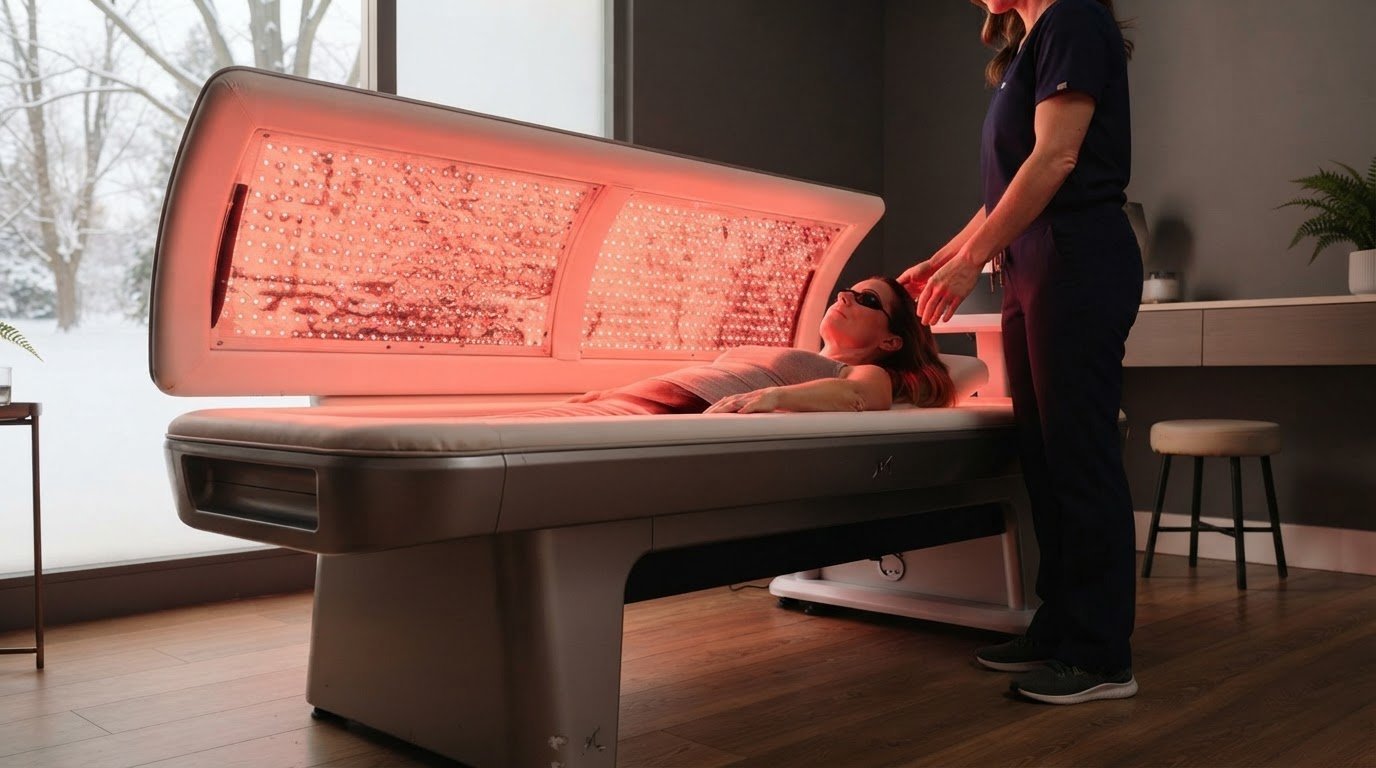
My Health 360: Whole body red light therapy
My Health 360 offers whole body red light therapy for people exploring light-based wellness as part of a broader approach to care. If your interest is collagen support, a conversation can help clarify how whole-body treatment relates to your goals and what expectations are appropriate. Red and near-infrared light research describes potential effects on cellular activity, but outcomes depend on the treatment approach and individual factors.
A Meet and Greet provides an opportunity to discuss your priorities with Medical Director Dr. Fatima and consider whether the procedure is a good option for you. Contact My Health 360 to arrange a Meet and Greet and discuss your goals with Dr. Fatima.
Choose a Next Step That Fits Your Goals
Choosing care is an opportunity to clarify your goals and how a treatment fits your broader health priorities. If you are considering infrared light therapy for collagen production in Elma, NY, discuss your goals, relevant health considerations, and whether whole-body red light therapy suits you. The Medical Director, Dr. Fatima, can discuss whether a procedure is a good option for your needs.
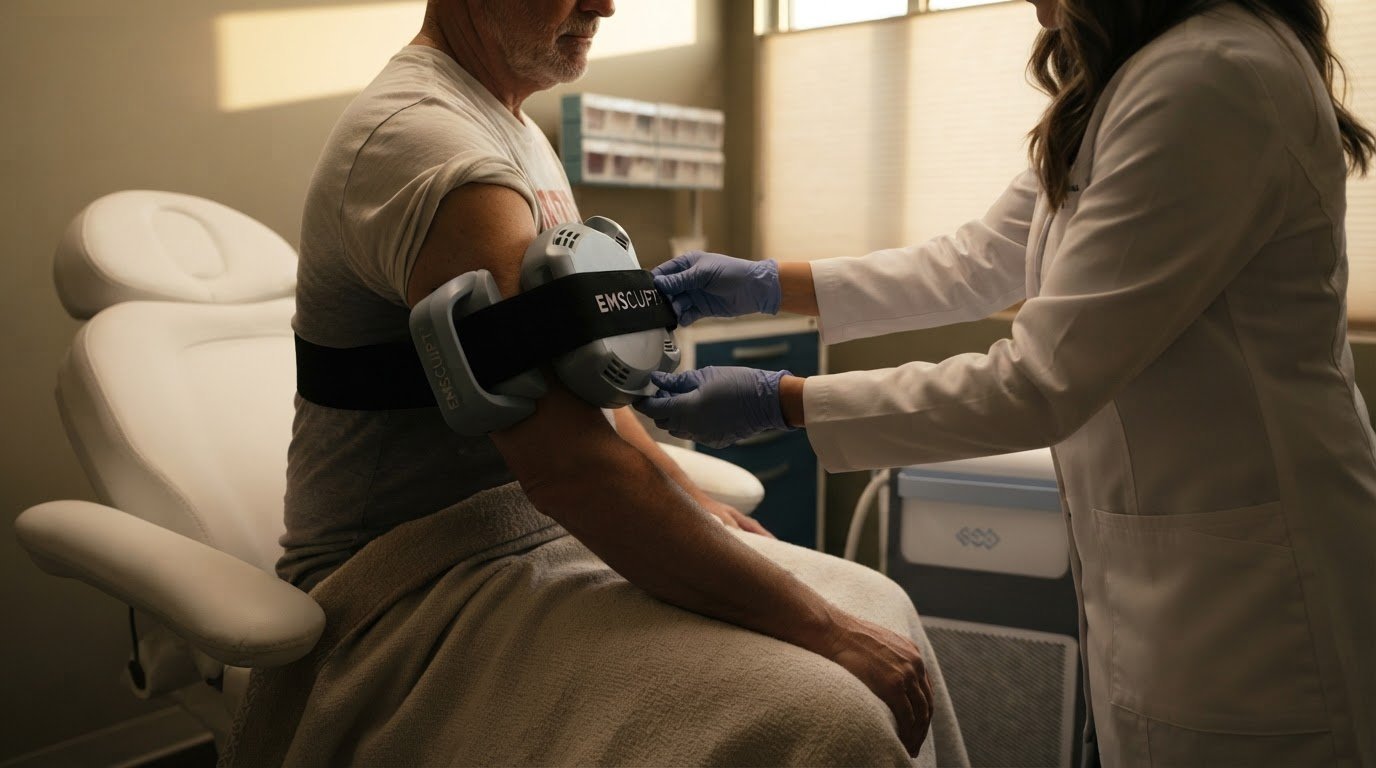
My Health 360 also offers Emsculpt Neo, BioPrime pre-operative or pre-event whole-body habilitation, and Bio-Restore post-operative or injury whole-body habilitation. These offerings serve different goals, so the right conversation starts with the outcome you’re seeking rather than assuming one treatment addresses every concern.
Contact My Health 360 to arrange a Meet and Greet and discuss your options with Dr. Fatima. A thoughtful next step can help you make a choice that feels informed and aligned with your priorities.
Frequently Asked Questions
Are there any risks or side effects?
Possible effects include temporary warmth or redness, while incorrect device use can harm skin or eyes. Follow the device’s instructions, including any guidance about protective goggles, and do not extend exposure in pursuit of faster changes. Treatment may not suit people taking medication that increases light sensitivity or living with a light-sensitive condition. Discuss these factors with a healthcare professional before starting.
How Long Until I See Noticeable Anti-Aging Effects?
Visible changes, if they occur, develop over weeks rather than after one session. Reported timeframes vary by concern: fine lines and wrinkles are commonly discussed over 4-12 weeks, while changes in tone or texture are often described over 4-8 weeks. These timelines aren’t a prediction for an individual. Consistent observations under similar lighting can help distinguish gradual skin changes from differences in photographs or expression.
Is it safe?
Red-light therapy is considered low risk when a device is FDA-cleared, but clearance does not establish its effectiveness. Follow the device’s directions and wear eye protection when instructed. FDA clearance applies to a device’s specific labeled indications, so it is not approval for every use. Medication-related light sensitivity and other health conditions may also affect whether treatment is appropriate.
What Anti-Aging and Pain Relief Benefits Have Patients Experienced?
Red-light therapy has been studied for skin concerns such as fine lines, wrinkles, uneven texture, and redness, as well as pain. Individual experiences differ, and the treatment category alone does not guarantee a specific improvement. Someone seeking relief from discomfort, for example, has a different goal from someone focused on facial lines. Define the concern first, then assess whether light therapy suits that goal.
What Is Collagen and Why Does It Matter?
Collagen is a protein that gives skin structure and strength. Elastin contributes flexibility, so the proteins relate to different aspects of skin appearance. Someone concerned about fine lines, for example, may also notice changes in firmness or flexibility, but these concerns are not identical. Identifying which change matters most can help clarify a treatment goal and assess whether it changes over time.
What is the optimal number of treatments for different concerns like loose skin and crow’s feet?
Researchers have not established one optimal treatment count for loose skin, crow’s feet, or every other concern. Protocols depend on the device, treatment area, and intended goal. A schedule used for facial lines should not automatically be applied to body skin laxity. Choose a clear concern to monitor, follow the device’s instructions, and assess changes over time rather than adding sessions without guidance.
Does infrared light therapy stimulate collagen production, and what does research show?
Research suggests red and near-infrared light may influence cellular processes associated with collagen production, but not every device produces the same effect. Laboratory work has examined fibroblast activity, while skin studies assess visible changes after repeated treatments. Infrared light therapy in Elma, NY is best understood as a potential supportive approach to collagen, not a guaranteed way to change skin structure.
What wavelengths and types of infrared light are used for collagen production?
Skin-focused protocols commonly use near-infrared wavelengths around 800-880 nm; broader descriptions place near-infrared light around 700-1100 nm. Red light is a separate range, not another name for infrared. Some protocols combine both, such as a studied pairing of 633 nm red light and 830 nm near-infrared light. A device’s wavelength specifications help identify the type of light used.