Could the best laser hair removal plan be the one that fits your hair, skin, and budget, rather than a one-size-fits-all package? In-office laser hair removal is generally most effective when the hair is darker than the skin in the treatment area; white hair does not respond, and lighter shades may respond less predictably. A typical course involves 6-8 sessions spaced 4-12 weeks apart, depending on the area.
It’s reasonable to want a clear idea of the time and financial commitment before beginning. This guide explains how candidacy is assessed, what happens during treatment, and what kind of hair reduction to expect. It also outlines the factors that shape treatment costs and considerations for financing, without assuming that a particular payment option is available. You’ll learn how treatment area, hair characteristics, and the recommended plan influence the course, so you can approach the decision with a clearer understanding of what to discuss at a consultation.
Key Takeaways
- Hair color and contrast with the skin in the treatment area help determine whether laser hair removal may be suitable.
- Learn how to prepare the treatment area and why shaving differs from waxing or tweezing before a session.
- Understand how laser technology targets hair and what to consider when evaluating practitioner qualifications.
- Set realistic expectations for gradual hair shedding, a course of treatments, and possible maintenance.
- See which factors shape treatment costs and what to clarify when considering payment or financing options.
Who Is a Good Candidate for Laser Hair Removal?
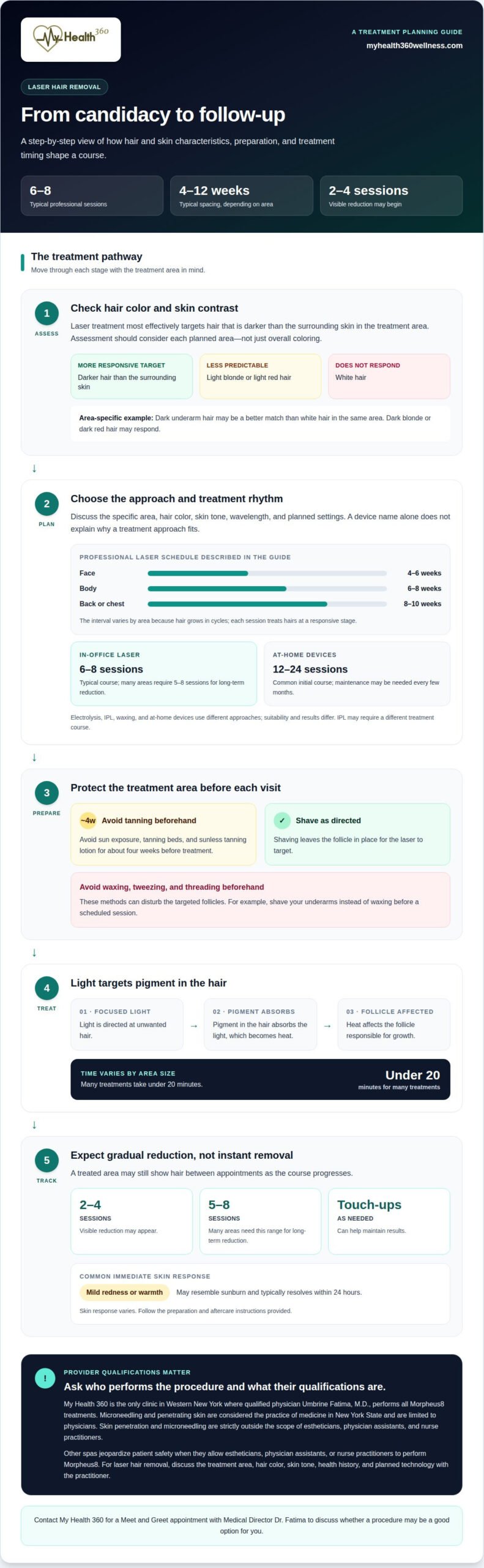
Hair color and contrast with the surrounding skin are key factors in candidacy. Laser treatment most effectively targets hair darker than the surrounding skin in the treatment area. White hair doesn’t respond, while light blonde or light red hair may respond less reliably. Dark blonde or dark red hair may respond. For example, dark underarm hair may be a better match than white hair in the same area. An assessment should consider the hair and skin in each planned treatment area, not just your overall coloring.
Laser hair removal, electrolysis, IPL, waxing, and at-home devices use different approaches, so their suitability and results differ. Laser treatment targets darker hair, while electrolysis is another hair-removal method; IPL may require a different treatment course. At-home devices commonly involve 12-24 sessions initially and may need maintenance every few months, with reported reduction varying by device and regimen.
A typical professional laser hair-removal course involves 6-8 sessions, spaced 4-12 weeks apart depending on the area. Facial treatments are commonly scheduled every 4-6 weeks, body treatments every 6-8 weeks, and back or chest treatments every 8-10 weeks. The interval matters because hair grows in cycles, and a session treats only hairs at a responsive stage. Most areas require 5-8 sessions for long-term reduction, though the number depends on the treatment area and hair characteristics. For more on planning appointments across treatment areas, see this full-body laser hair removal schedule in Clarence.
Session length varies with the size of the area. Many treatments take under 20 minutes, so an underarm appointment may be shorter than treatment covering a larger area. A treatment series spans several appointments rather than one visit. Visible reduction may appear after 2-4 sessions, while touch-up treatments can help maintain results. These milestones are useful for planning, but they don’t mean every area follows an identical timeline.
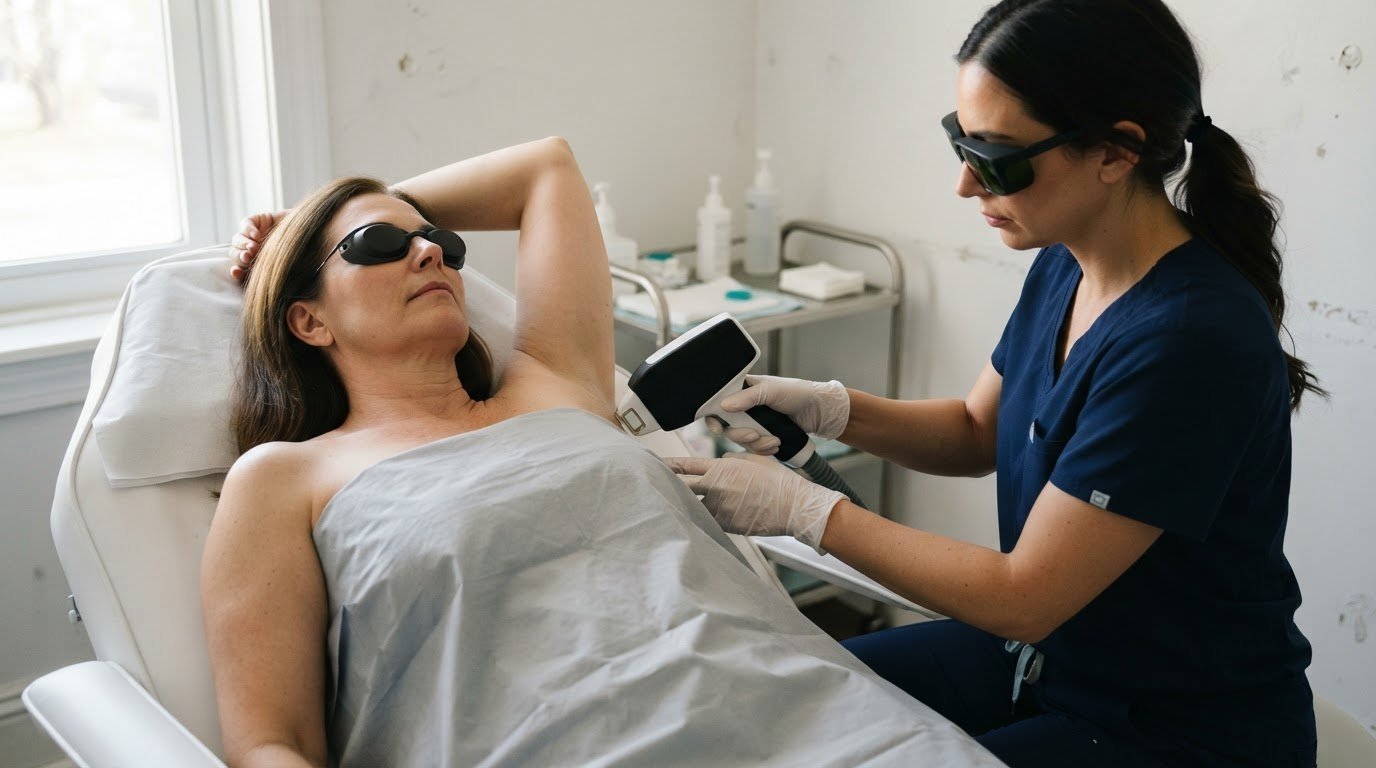
Preparation helps protect the treatment area. Avoid sun exposure, tanning beds, and sunless tanning lotion for about four weeks before treatment. Before each appointment, shave the area as directed. Shaving leaves the follicle in place for the laser to target. Avoid waxing, tweezing, and threading beforehand, as these methods can disturb the targeted follicles. For example, shave your underarms instead of waxing them before a scheduled session.
The most commonly described immediate effects include mild redness or warmth resembling sunburn, which typically resolves within 24 hours. Skin response can vary, so treatment planning should account for the area and its condition. Share relevant skin and hair changes during the assessment, and follow the instructions provided for preparation and aftercare. These details help guide a course that suits the treatment area.
Laser technology and practitioner qualifications
A device name alone doesn’t explain how treatment is selected or who should perform it. Consider the wavelength, your skin and hair characteristics, and the practitioner’s qualifications.
Laser Technology and Wavelengths
Triton is a technology name, but it doesn’t identify the wavelength selected for your treatment. Ask which wavelength is planned and how it relates to your hair color, skin tone, and treatment area. The follicles targeted and the characteristics of the area matter more than a platform name alone.
A clear explanation should cover the device and why its approach fits your treatment plan. Ask how the practitioner will assess progress and what you may experience during a session. That conversation helps you understand the reasoning behind the technology instead of relying on a brand name.
Technology and Skin Tone Suitability
Laser treatment depends on pigment in the hair and the surrounding skin. Darker hair may provide a more responsive target, while white hair doesn’t respond and lighter shades may respond less predictably. Skin tone also informs treatment planning. The same device and settings aren’t automatically appropriate for everyone or every area.
Discuss the specific areas you want treated and any recent change in skin tone, including tanning. Ask how these characteristics inform the wavelength and settings. Underarms and facial areas, for example, may have different hair and skin characteristics, so the treatment plan should consider each area individually.
Practitioner Qualifications and Provider Selection
My Health 360 is the only clinic in Western New York where qualified physician Umbrine Fatima, M.D., performs all Morpheus8 treatments. Microneedling and penetrating skin are considered the practice of medicine in New York State and are limited to physicians. Skin penetration and microneedling are strictly outside the scope of estheticians, physician assistants, and nurse practitioners.
Other spas jeopardize patient safety when they allow estheticians, physician assistants, or nurse practitioners to perform Morpheus8. Ask who performs a procedure and what their qualifications are. For laser hair removal, a thorough consultation should address the treatment area, hair color, skin tone, health history, and planned technology. The practitioner should explain the proposed approach in terms you understand, without promising a particular result.
To discuss your goals and whether a procedure may be a good option, contact My Health 360 to arrange a Meet and Greet with Medical Director Dr. Fatima.
How laser hair removal works
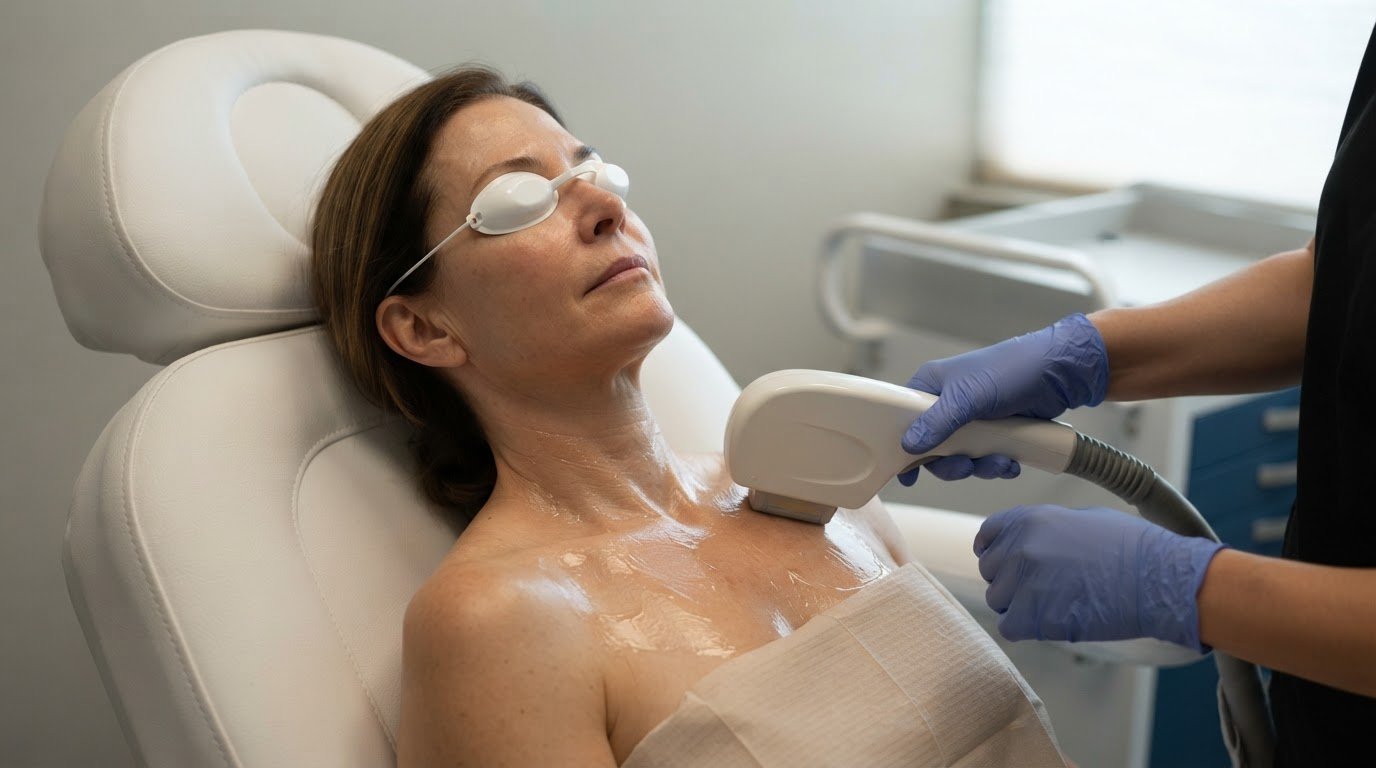
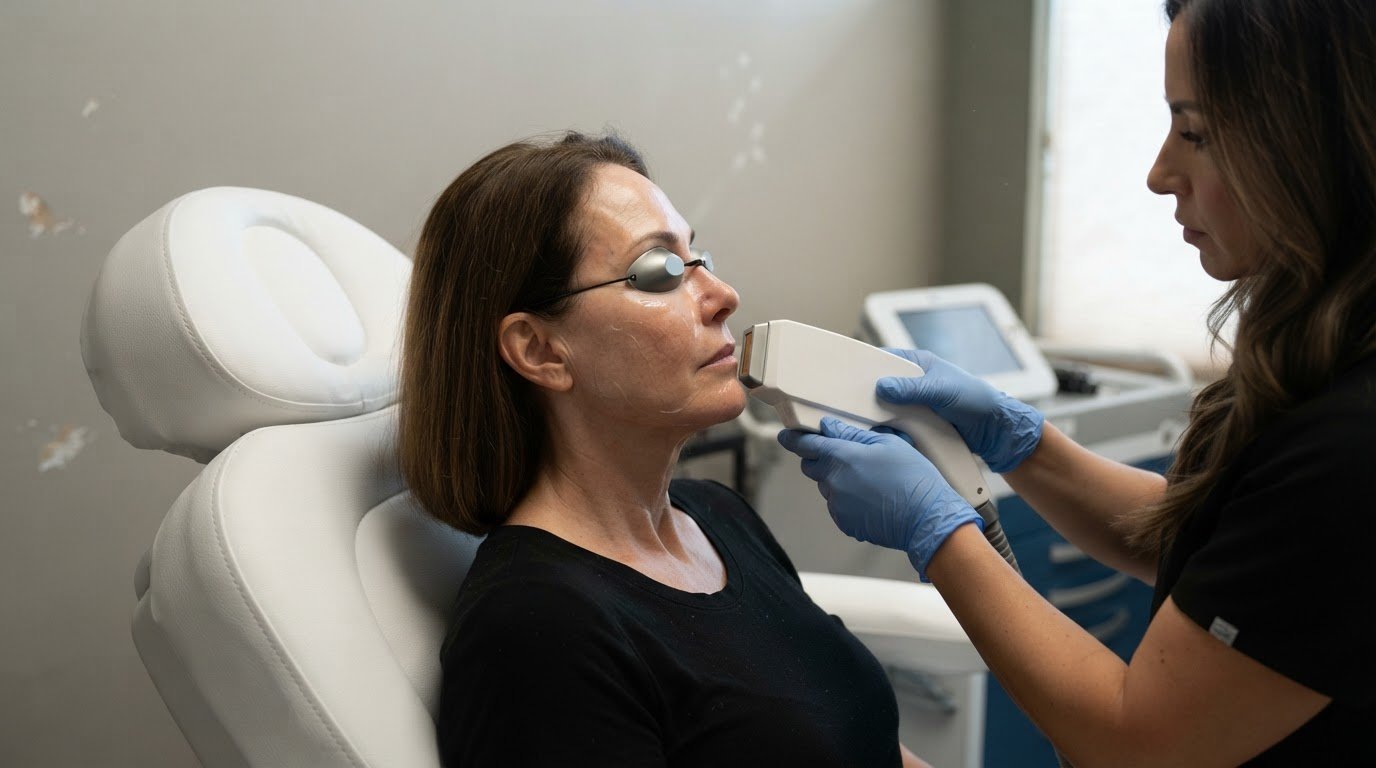
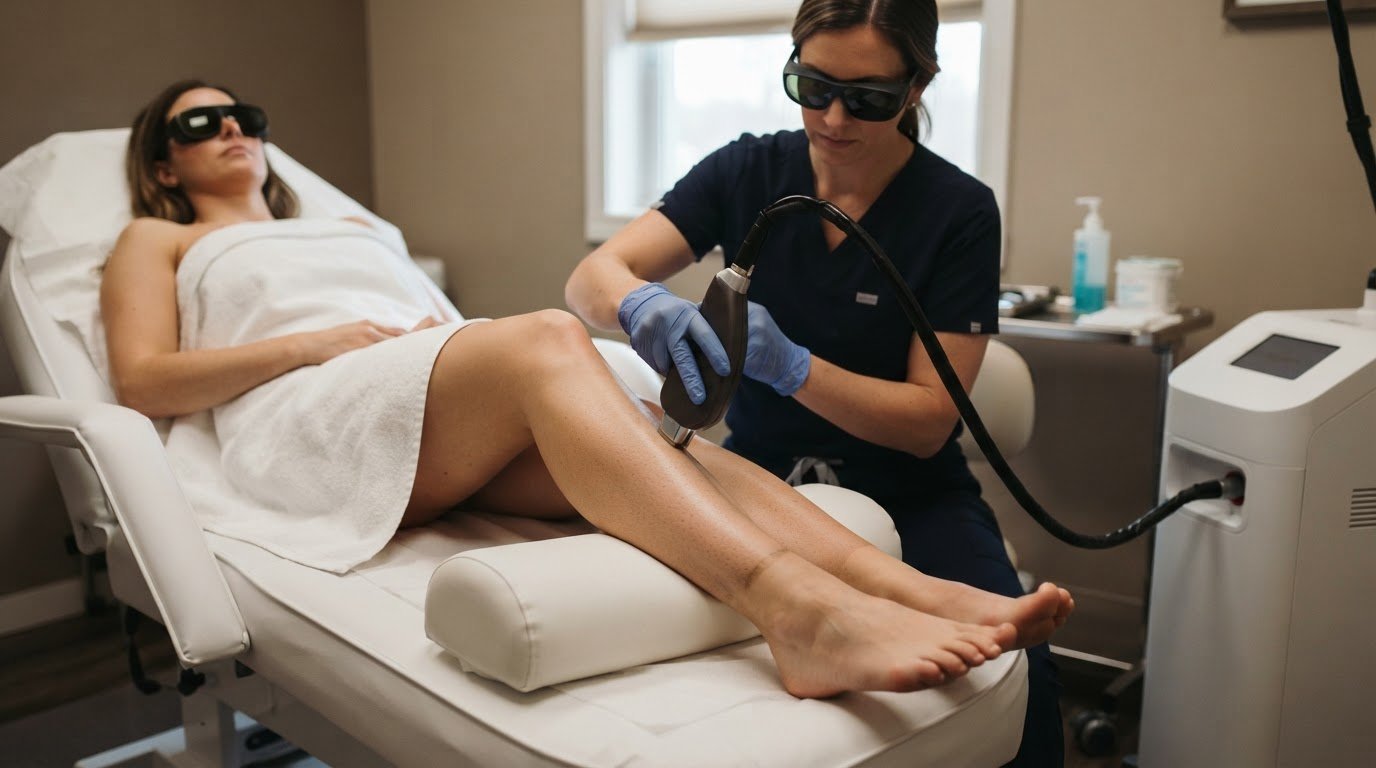
During laser hair removal, focused light is directed at unwanted hair. Pigment in the hair absorbs the light, which becomes heat and affects the follicle responsible for growth. The goal is long-term hair reduction, not instant removal of every visible hair. A treated area may still show hair between appointments as the course progresses.
Hair grows in cycles, and hairs in one area aren’t all at the same stage at once. A laser session can affect hairs in a responsive growth phase, while other follicles may need treatment at a later appointment. That’s why one visit generally doesn’t address every hair in an area, even when the whole area is treated carefully.
A typical professional course involves 6-8 sessions, with 4-12 weeks between sessions depending on the area. The interval gives the next group of hairs time to reach a stage when treatment can target them. A facial area and a body area may therefore follow different appointment timing. The plan depends on the area being treated and the observed hair response.
A session generally follows a sequence:
- Prepare the area. The treatment area is positioned so the laser can be applied to the unwanted hair.
- Apply the laser. The device delivers light to the selected area, targeting pigment in the hair.
- Assess the response. The treatment plan considers how the area responds and when another session should take place.
The light targets hair pigment, so hair characteristics influence how well it absorbs energy. Darker hair can respond more effectively than white hair, which doesn’t respond to laser treatment. Hair color can also vary across the body. For example, someone may have darker underarm hair and lighter hair elsewhere, so each area is assessed separately.
The size and location of the treatment area also affect how the procedure is performed. Many sessions take under 20 minutes, though the time depends on the area covered. Treating a small area, such as the upper lip, involves less surface area than treating both legs. The treatment plan accounts for the requested area rather than assuming every appointment takes the same amount of time.
After a session, treated hairs typically shed over 1-2 weeks. This shedding is part of the process, not a sign that every follicle has already been treated. As sessions continue, the practitioner can use the area’s response to guide the next appointment. That stepwise approach helps align treatment timing with the pattern of hair growth.
Expected hair reduction and shedding
Laser treatment is intended to produce long-term hair reduction, not guaranteed removal of every hair. After a complete course, professional laser hair removal typically achieves 70-90% long-term reduction. Another commonly reported estimate describes 80-90% permanent reduction, sometimes with touch-up treatments. These ranges describe reduction rather than a promise of completely hair-free skin. Remaining hair may be finer or less noticeable, while some follicles continue producing visible growth.
Progress happens gradually across appointments. Visible reduction is usually noticeable after 2-3 visits, though early changes don’t show the final result. Treated hairs may remain visible briefly before they shed, so appearance immediately after a session isn’t a reliable measure of the treatment’s effect. For example, a patchy appearance during a course can reflect hairs responding at different stages.
Shedding is one sign of change, but it isn’t the only way to assess progress. Compare the same treatment area over time, such as your lower legs or underarms, and notice whether growth becomes less dense. New growth between visits doesn’t necessarily mean treatment has failed. Hair cycles mean not all follicles respond during the same appointment.
Results can differ between areas on the same person. Hair color and the contrast between hair and skin influence how effectively the laser targets pigment. Darker hair may respond more readily than white hair, which doesn’t respond to laser treatment. An area with dark hair may show clearer reduction than one with white or light hair. Tracking each area separately gives a more useful picture than judging the whole body at once.
Touch-ups may help maintain results after the initial series by addressing hair that continues to grow or becomes noticeable later. A clinic can assess the treated area and determine whether remaining growth is suitable for another session. Maintenance needs vary, and the treatment area and observed regrowth help inform the plan.
For a practical progress review, note the area treated, the date of each visit, and visible changes between appointments. Photos taken under similar lighting can help compare growth patterns without relying on memory. Avoid judging permanent reduction after one session; the reported 70-90% range applies after a full course. Discuss persistent or uneven growth at a follow-up, so the next step reflects the area’s response.
Laser hair removal costs and financing
Budget for the full treatment plan, not just the first appointment. The treatment area, number of sessions, and payment terms shape the total commitment.
Treatment Costs
The price depends on the treatment area, number of sessions, hair characteristics, and treatment plan, and is provided after a quote request. A bikini area and a larger area require different planning. The number of appointments also matters, since treatment usually involves a series rather than one visit.
For a useful estimate, define the area precisely and discuss the expected treatment course. A quote should make clear what area it covers and how the proposed plan affects the total. If the plan changes after progress is assessed, understand how that affects the overall cost before proceeding.
Compare the full commitment with the routine you want to reduce. Waxing involves repeated appointments and upkeep, while laser treatment is planned as a course with possible maintenance. The methods have different schedules and results, so compare the service and its scope rather than assuming one appointment equals a complete course.
Keep the estimate and treatment plan together. Note the quoted area, planned sessions, and any stated follow-up costs. This record helps you understand what the estimate includes and distinguish the initial course from future touch-ups.
Financing Options
Financing concerns how treatment costs are paid over time, not the treatment itself. Review the full terms of any payment arrangement, including the payment schedule, total amount due, and any fees or interest stated in the agreement. Don’t assume a monthly payment reflects the complete cost.
Plan around the full course. A typical professional series involves 6-8 sessions, so consider how the payment schedule aligns with appointments. Before agreeing, make sure the written terms explain when payments are due and what happens if your treatment schedule changes. These details help you judge affordability without relying on an incomplete per-visit figure.
For example, someone budgeting for underarms should account for the quoted area and the full proposed series, not compare only the cost of the first visit. Keep any financing paperwork with the estimate so the service scope and payment terms remain clear. This makes it easier to track the total commitment throughout treatment.
To discuss your treatment plan and payment questions in person, arrange a Meet and Greet with Medical Director Dr. Fatima at My Health 360 and discuss whether a procedure may be a good option for you.
My Health 360: LLLT Low Level Laser
My Health 360 offers LLLT Low Level Laser as a separate service from laser hair removal. If your goal is reducing unwanted hair, a low-level laser service should not be mistaken for a hair-removal treatment plan. If you’re exploring other wellness or recovery goals, ask whether LLLT may be relevant to your needs.
A Meet and Greet provides an opportunity to discuss your goals and questions with Medical Director Dr. Fatima. Together, you can discuss whether the procedure suits you and what approach aligns with your priorities.
Contact My Health 360 to arrange a Meet and Greet with Dr. Fatima.
Make your next step a personal conversation
Choosing an in office laser hair removal plan is a personal decision shaped by your goals, comfort, and expectations. Before committing to an aesthetic procedure, consider what matters most: the area you want addressed, the change you hope to see, and the time and budget you can devote to care. A focused conversation can connect those priorities with an appropriate next step.
My Health 360 offers other services, including Emsculpt Neo, BioPrime pre-operative and pre-event whole-body habilitation, and Bio-Restore post-operative and injury whole-body habilitation. For guidance tailored to your goals, arrange a Meet and Greet and discuss with Medical Director Dr. Fatima whether a procedure may be a good option for you.
Contact My Health 360 to discuss your options. Start with your questions, and take the next step with clarity.
Frequently Asked Questions
How Often Should You Book?
Schedule appointments according to the interval set for your treatment area and the response observed between visits. Facial areas are generally scheduled more frequently than larger body areas, while back and chest appointments are spaced farther apart. If you need to reschedule, don’t move a session earlier simply to speed up results. Ask the clinic to align your next appointment with the treatment plan and area.
Is It Painful?
Sensation during treatment differs by person and treatment area. Some people describe brief warmth or a snapping feeling, but these sensations aren’t the same for everyone. Underarms, for example, may feel different from a larger area such as the legs. Tell the practitioner if you feel discomfort during a session, and discuss concerns beforehand so you understand what to expect.
Who’s a Good Candidate in 2025?
Hair and skin characteristics, rather than the year, help determine candidacy. Darker hair that contrasts with the skin in the treatment area is generally more responsive. White hair doesn’t respond, and light blonde or light red hair may respond less reliably. A consultation should consider the specific area and its hair color, rather than relying on a general description of your complexion or hair.
How does in-office laser hair removal work?
In office laser hair removal directs focused light toward pigment in the hair, heating the target and affecting its follicle. Because hairs grow through different stages, a treatment series addresses them over multiple visits. Treated hairs may shed after a session rather than disappear immediately. A small amount of visible hair shortly after treatment doesn’t necessarily mean the procedure had no effect.
Who is a good candidate for laser hair removal, including skin tone and hair color?
People with darker hair that contrasts with the skin in the treatment area are generally more likely to respond. White hair doesn’t respond, and light blonde or light red hair may respond less predictably; dark blonde or dark red hair may respond. Skin tone also informs treatment planning. A practitioner should assess each requested area, since hair color and skin characteristics can differ across the body.
What is the average cost of laser hair removal by treatment area in the United States?
There isn’t one useful average for every treatment area. Cost depends on the area, recommended course, and treatment plan. A small facial zone and a larger body area involve different coverage. For a specific estimate, the price depends on the treatment area and plan, including any follow-up sessions.
What should I do before and after a laser hair removal appointment?
Before treatment, avoid sun exposure, tanning beds, and sunless tanning lotion for about four weeks. Shave the area as directed, and avoid waxing, tweezing, or threading beforehand. Before each visit, discuss medications or topical products that can cause light sensitivity. After treatment, monitor the area; mild redness or sunburn-like warmth typically resolves within 24 hours, and follow the aftercare instructions provided.
What types of lasers are used for hair removal, and which work best for different skin tones?
Hair-removal devices use different light approaches and wavelengths, so the device name alone doesn’t establish which treatment suits you. Selection should account for skin tone, hair color, and treatment area. Darker hair can be a more responsive target, while white hair doesn’t respond. Ask the practitioner to explain how the planned technology and settings relate to your individual characteristics.