
Can IV hydration meaningfully ease fatigue, or does it mainly replace fluids? To understand IV therapy for energy and hydration benefits, separate what an infusion delivers from what evidence can establish about energy. If you’re also wondering whether IV hydration detoxifies the body, it’s important to distinguish hydration from a proven detoxification effect.
It’s understandable to seek support when low energy disrupts your day. An IV delivers fluids directly into the bloodstream, but that alone doesn’t show it will resolve ongoing fatigue or provide a detoxification benefit.
This article explains what IV therapy delivers, what the evidence says about energy and fatigue, and what to know about potential side effects. It also explains the factors that shape treatment costs, so you can approach the decision with clear expectations and understand the clinical questions involved.
Key Takeaways
- Understand what an IV infusion delivers and how that differs from proving a benefit for fatigue.
- Learn why the evidence for energy effects should be considered carefully, especially when fatigue persists.
- Recognize potential side effects and why a review of your health needs matters before treatment.
- See how fluid and nutrient delivery works, and what distinguishes hydration from claims about detoxification.
- Know which treatment factors can affect cost, without assuming every infusion is the same.
1. Does IV vitamin therapy have any risk or side effects?
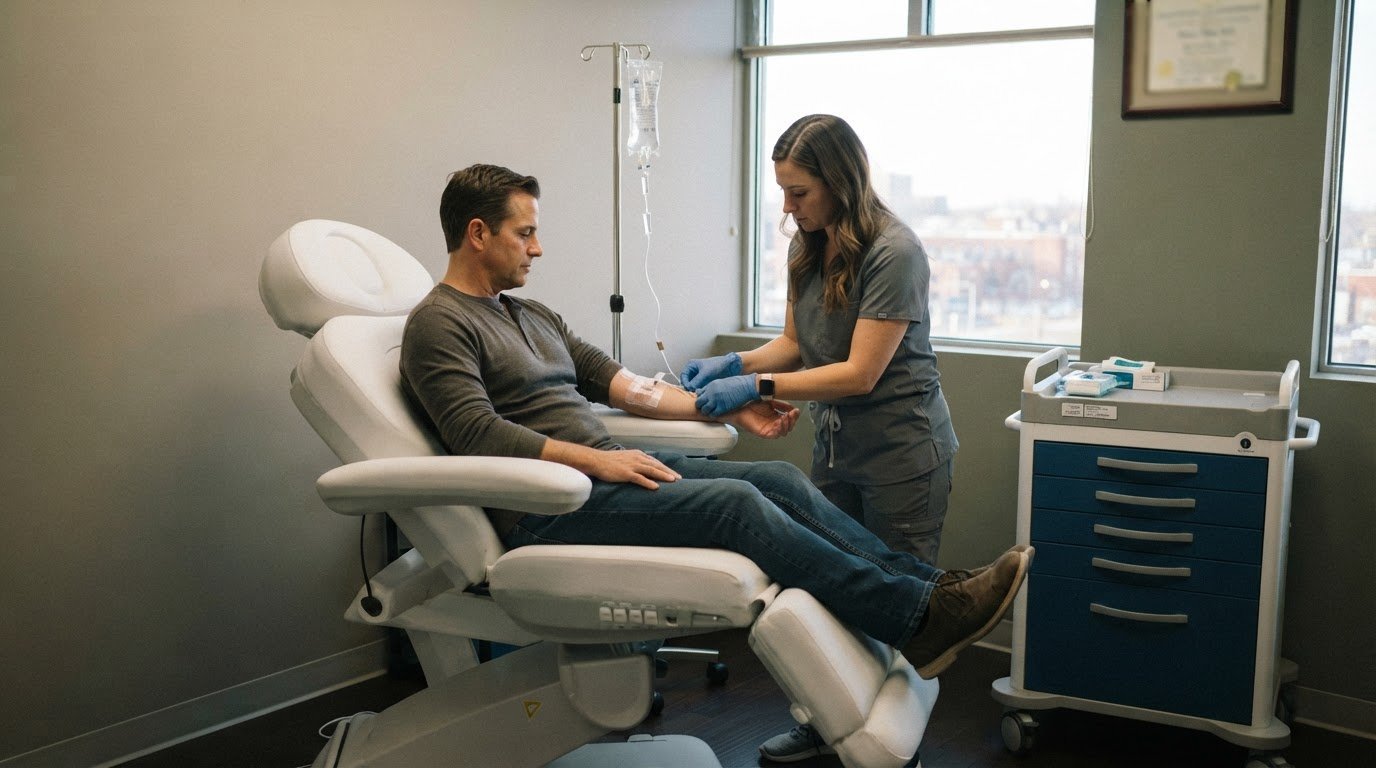
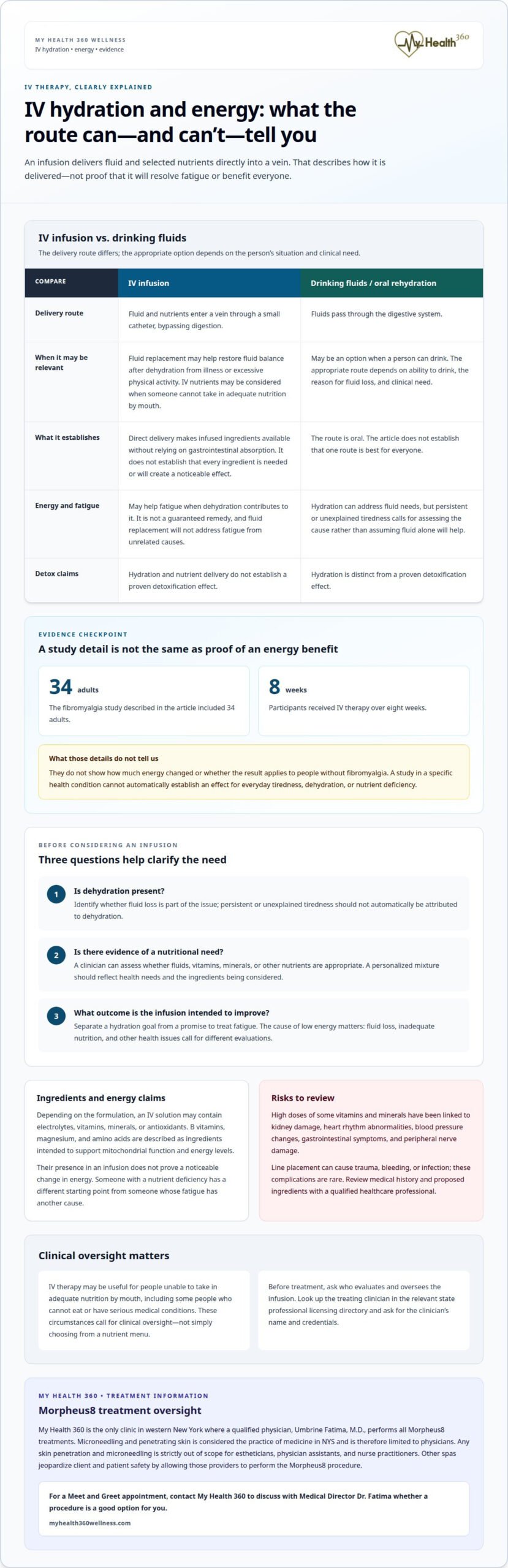
IV therapy delivers fluids and nutrients into a vein through a small catheter, bypassing digestion. This route makes the infused ingredients available to the body without relying on gastrointestinal absorption. It can be useful when a person cannot take in adequate nutrition by mouth, including some people who cannot eat or have serious medical conditions. But that does not mean everyone needs an infusion.
IV hydration delivers fluid directly into the bloodstream and may help restore fluid balance after dehydration from illness or excessive physical activity. Some people hope improved hydration will increase energy, but the infusion’s purpose is fluid replacement, not a guaranteed remedy for fatigue. Persistent low energy can have causes that fluid alone will not address.
If you have a specific nutritional need, a clinician can assess whether fluids, vitamins, minerals, or other nutrients are appropriate. A personalized nutrient mixture should reflect your health needs and the ingredients being considered, rather than assuming a standard formula suits everyone. High doses of some vitamins and minerals have been linked to kidney damage, heart rhythm abnormalities, blood pressure changes, gastrointestinal symptoms, and peripheral nerve damage.
Intramuscular injections use a different route: nutrients go into muscle tissue rather than a vein. The route changes where nutrients are administered, but it does not make an injection automatically appropriate or risk-free. Have a qualified healthcare professional review your health needs before considering injections or an IV.
How can you check whether an IV therapy clinic is licensed and uses qualified medical staff? Look up the treating clinician in the relevant state’s professional licensing directory, and establish who evaluates and oversees the infusion. Ask for the clinician’s name and credentials before treatment, rather than relying only on a general description of the clinic’s staff.
Who may benefit from IV fluids, and what conditions require medical supervision? People who are dehydrated after illness or excessive physical activity may need fluid replacement, while people unable to eat adequately or with serious medical conditions need clinical oversight. These circumstances call for an assessment of the underlying need, not simply a nutrient menu.
IV therapy carries risks related to both the ingredients and the intravenous line. Line placement can cause trauma, bleeding, or infection, although these complications are rare. Reviewing your medical history and the proposed nutrients helps determine whether the potential benefit justifies those risks. Careful assessment is especially important when fatigue, dehydration, or nutritional needs occur alongside a serious health condition.
2. Evidence for energy and fatigue benefits
Does an infusion reliably increase energy? The available evidence described here is limited: a fibromyalgia study included 34 adults who received IV therapy over eight weeks. Those details establish the study’s size and duration, but don’t show how much energy changed or whether the result applies to people without fibromyalgia.
That distinction matters. A study involving people with a particular health condition cannot automatically establish the same effect for everyday tiredness, dehydration, or a nutritional deficiency. To assess an energy claim, look at the measured outcome, comparison group, ingredients used, and whether participants had a diagnosed nutrient deficiency. Without those details, a broad promise of increased energy goes beyond what the study information can support.
IV delivery puts fluids and nutrients into the bloodstream instead of passing them through the digestive system. This route may be relevant when someone has trouble absorbing nutrients or cannot take in enough orally. It doesn’t establish that someone who absorbs nutrients normally will feel more energetic after an infusion. The cause of fatigue matters: fluid loss, inadequate nutrition, and other health issues call for different evaluations.
B vitamins, magnesium, and amino acids are described as ingredients intended to support mitochondrial function and energy levels. These ingredients are involved in the body’s energy production, but their presence in an infusion does not prove a noticeable change in energy. A person with a nutrient deficiency, for example, has a different starting point from someone whose fatigue has another cause.
How does IV hydration compare with drinking water or oral rehydration solutions? Drinking fluids and oral rehydration solutions pass through the digestive system, while an IV delivers fluid directly into a vein. The route differs; the appropriate option depends on your ability to drink, the reason for fluid loss, and the clinical need.
IV hydration may help address fatigue when dehydration contributes to it, because fluid replacement targets that specific need. It cannot be assumed to address fatigue caused by something unrelated to fluid balance. A medical assessment should distinguish signs of dehydration from persistent or unexplained tiredness before treatment is considered.
For a practical discussion, separate three questions: Is dehydration present? Is there evidence of a nutritional need? What outcome is the infusion intended to improve? Those answers make claims about IV therapy for energy and hydration benefits more precise. They also help distinguish a reasonable hydration goal from a promise to treat fatigue.
3. IV delivery of fluids, vitamins, minerals, and antioxidants
An IV drip delivers fluids and selected nutrients directly into a vein. Depending on its formulation, the solution may contain electrolytes, vitamins, minerals, or antioxidants. A small catheter, usually placed in the arm, provides access for the infusion. This route bypasses digestion, but direct delivery does not establish that every ingredient is needed or will produce a noticeable effect.
Hydration and nutrients both contribute to normal brain function. B vitamins are involved in essential body processes, and people deficient in these vitamins may notice improved cognitive function after treatment. This possibility relates to an existing deficiency; it does not mean an infusion reliably sharpens concentration for everyone. The underlying reason for symptoms still matters.
Some formulations use B vitamins, magnesium, and amino acids to support mitochondrial function and energy production. These nutrients participate in processes that help cells meet energy needs. Their inclusion alone cannot show that fatigue is caused by low nutrient levels or that treatment will change energy. A useful discussion distinguishes an ingredient’s role from the result you hope to experience.
Some infusions include antioxidants for their potential role in combating oxidative stress. In the brain, antioxidants may support communication between neurons and help with focus or mental clarity. These are potential effects, not a substitute for identifying why concentration or energy has changed. Hydration and nutrient needs also vary between individuals.
IV vitamin C is sometimes discussed in relation to cancer care, but the distinction between a wellness claim and an approved treatment matters. The U.S. Food and Drug Administration has not approved IV vitamin C therapy as a treatment for cancer side effects. It should not be presented as an established way to prevent or manage those effects.
Vitamin C and biotin delivered into the bloodstream are described as supporting collagen production and helping repair damaged skin cells. These proposed uses concern skin and collagen, not a demonstrated solution for fatigue. Understand a formulation’s ingredients according to their intended role, rather than treating every vitamin as a general energy enhancer.
Some IV infusions include vitamin C, vitamin B12, or B complex to support immune defenses. Antioxidant-rich formulations may also be intended to support skin health by neutralizing free radicals. These potential benefits depend on the formulation and the person’s needs. For any infusion, clarity about the fluids, electrolytes, minerals, and vitamins being administered helps keep the expected purpose specific.
4. Treatment costs
IV treatment costs depend on the specific infusion and the clinical factors that shape it. The price depends on the case and is provided after a quote request. Relevant factors include the fluids and nutrients selected, the formulation’s complexity, and your assessed needs. A basic hydration-focused infusion and a formulation with additional vitamins or minerals contain different components, so they shouldn’t be treated as interchangeable services.
The ingredients matter because “IV therapy” describes a delivery route, not one fixed treatment. One person may need fluids and electrolytes, while another may discuss vitamins or minerals because of a nutritional concern. Those choices affect what the infusion contains. A quote should clearly explain the proposed treatment, including whether it focuses on hydration, supplements, or a combination.
Clinical assessment is another cost consideration. Reviewing your health needs helps determine whether an intravenous infusion is appropriate and which ingredients fit its purpose. For example, someone seeking support for dehydration has a different treatment question from someone exploring nutrients for a suspected deficiency. The reason for treatment can shape the formulation and services involved.
Duration also affects convenience. An IV therapy session typically lasts 30 to 60 minutes. That time commitment may fit differently into a workday, a travel schedule, or other lifestyle demands. Individuals should consider the session length alongside the treatment’s purpose, rather than judging convenience by infusion time alone. The appointment involves a needle and an IV line, so it is distinct from taking oral supplements at home.
For chronic fatigue, the cost question shouldn’t replace the medical question. An infusion aimed at hydration does not address every possible cause of low energy, and repeated treatment should not be assumed necessary. First clarify the intended outcome, proposed ingredients, and how the treatment relates to your health needs. That makes the quote easier to understand and helps distinguish a targeted intervention from a general wellness purchase.
Before deciding, organize the discussion around three points: what the infusion contains, why each component is included, and how the session duration fits your schedule. Ask how the proposed plan relates to your symptoms and whether oral fluids or supplements address the same need. For example, someone who can drink adequately may be weighing a different option from someone whose condition makes oral intake difficult. These comparisons help you evaluate treatment value without assuming a more complex formulation is automatically better.
5. IV therapy and energy levels
Energy is not a single measurable outcome. You might describe feeling more alert, less physically depleted, or better able to focus. Some people notice benefits within a few hours of an IV session, but that timing doesn’t establish a lasting change in daily energy. A brief sensation and sustained improvement are different outcomes.
Hydration is a clear example of why context matters. If fluid loss from illness or strenuous activity contributes to tiredness, restoring fluid balance addresses one relevant factor. If fatigue continues after hydration, other explanations may need consideration. An infusion should not stand in for understanding a persistent change in energy.
Track the pattern rather than relying on a single impression. Note when fatigue occurs, whether it follows exercise or illness, and whether it disrupts ordinary tasks. For example, compare your morning alertness with your energy after physical activity. These observations help clarify the goal of treatment and whether the change is temporary, recurring, or unrelated to hydration.
Energy claims should distinguish delivery from outcome. IV nutrients enter the bloodstream without first passing through the digestive system, but that route alone doesn’t demonstrate improved stamina. B vitamins, magnesium, and amino acids are associated with cellular energy processes. Their inclusion doesn’t prove that fatigue results from a nutrient shortage or that an infusion will resolve it.
Recovery is another distinct goal. After an illness or intense activity, people may seek fluids, electrolytes, or antioxidants as support. The relevant question is what need the treatment addresses, not whether “wellness” language promises a general boost. Hydration, for instance, targets fluid balance; it does not establish that an infusion treats every cause of exhaustion.
Use a specific outcome to evaluate whether an intervention is relevant: improved ability to complete a usual activity, fewer fatigue-related interruptions, or better concentration during a familiar task. These examples make the goal clearer than a broad promise to “feel energized.” If fatigue is persistent, severe, or accompanied by other concerning symptoms, seek medical assessment rather than treating an infusion as a diagnosis.
For a personalized discussion about energy concerns and IV therapy, contact My Health 360 to arrange a Meet and Greet and discuss with Medical Director Dr. Fatima whether the procedure is a good option for you.
My Health 360: IV Hydration
My Health 360 offers IV Hydration for people considering clinician-guided fluid support. For Morpheus8, My Health 360 is the only clinic in Western New York where qualified physician Umbrine Fatima, M.D., performs all treatments. Microneedling and penetrating the skin are considered the practice of medicine in New York State and are limited to physicians; these procedures are outside the scope of estheticians, physician assistants, and nurse practitioners. Other spas jeopardize patient safety when they allow those providers to perform Morpheus8.
A Meet and Greet appointment gives you the opportunity to discuss your goals with Medical Director Dr. Fatima and whether a procedure may be a good option for you.
Contact My Health 360 to arrange a Meet and Greet and discuss your options with Dr. Fatima.
Choose a Next Step That Fits Your Goals
If you’re considering IV therapy for energy and hydration benefits, make your next step a focused conversation about the outcome you want. Describe how fatigue affects your routine, what you hope hydration will address, and any questions you have about treatment. That gives the discussion a practical starting point instead of relying on a general promise of more energy.
For goals beyond hydration, My Health 360 also offers Emsculpt Neo, BioPrime pre-operative and pre-event whole body habilitation, and Bio-Restore post-operative and injury whole body habilitation. These services address different needs, so the right discussion begins with your priorities, not with choosing a treatment in advance.
A Meet and Greet appointment is an opportunity to discuss your goals with Medical Director Dr. Fatima and whether a procedure is a good option for you. Contact My Health 360 to arrange a Meet and Greet, and take your next step with clear questions and realistic expectations.
Frequently Asked Questions
Does IV Hydration Help You To Detoxify Your Body?
IV hydration, by itself, does not demonstrate a detoxification effect. Some formulations include ingredients such as glutathione and are described as supporting the liver and kidneys as they process waste. That proposed role should not be confused with a demonstrated treatment for toxin exposure or illness. If you’re concerned about a specific exposure or symptom, seek medical care rather than relying on a wellness infusion.
Does IV vitamin therapy have any risk or side effects?
Yes. Beyond discomfort where the catheter is placed, an infusion can cause complications such as bleeding, infection, or trauma at the IV site. High doses of certain vitamins and minerals have also been linked to effects involving the kidneys, heart rhythm, blood pressure, digestion, and peripheral nerves. Share relevant health concerns with a qualified healthcare professional so they can assess the ingredients and route before treatment.
Is IV vitamin therapy worth trying?
It may be worth discussing IV therapy when there’s a specific clinical or nutritional reason, such as difficulty taking in adequate nutrition. For a healthy person expecting a general wellness boost, value depends on the intended outcome, formulation, and whether there’s evidence of a relevant need. Consider those points alongside the time commitment and cost. A Meet and Greet with Medical Director Dr. Fatima can help frame the discussion.
Should certain people avoid IV vitamin therapy?
Some people need a medical assessment before considering an infusion, rather than choosing a formula on their own. This includes people with serious medical conditions, people unable to eat adequately, and anyone concerned about possible nutrient-related risks. The right decision depends on health needs and the proposed ingredients. A qualified healthcare professional can assess whether treatment is suitable or whether another approach better addresses the concern.
Why Use IV Hydration?
IV hydration may be considered when fluid balance needs attention, including dehydration associated with illness or excessive physical activity. The useful question is whether fluid replacement addresses a specific need, not whether an infusion offers a universal wellness boost. For someone able to drink, oral fluids may be a practical alternative. A clinician’s assessment can help distinguish a hydration goal from a separate concern such as ongoing fatigue.
Is there scientific evidence that IV therapy improves energy or hydration in healthy people?
The evidence described here doesn’t establish that IV therapy improves energy in healthy people. A small study involved 34 adults with fibromyalgia receiving treatment over eight weeks, so its results can’t automatically be applied to healthy individuals. IV fluids do deliver hydration directly, but that mechanism alone doesn’t prove better energy or lasting wellness benefits for someone who isn’t dehydrated.
What ingredients are commonly included in IV energy and hydration drips?
Formulations may include fluids and electrolytes, with optional vitamins, minerals, or antioxidants. Examples discussed in energy-focused mixtures include B vitamins, magnesium, and amino acids; other blends may include vitamin C or vitamin B12. The ingredients vary by formulation, and their presence doesn’t prove each person needs them. Ask what each component is intended to address and how it relates to your health goals.
How much does IV therapy for energy and hydration typically cost in the United States?
Costs vary with the treatment’s formulation and the ingredients included, so there isn’t one figure that applies to every infusion. A hydration-focused treatment and one containing additional nutrients may involve different components. For My Health 360’s IV Hydration, the cost depends on the case and is given after a quote request. Contact My Health 360 to arrange a Meet and Greet and discuss options with Medical Director Dr. Fatima.