Understanding the treatment and its cost is a practical starting point when considering hair loss PRP and PRFM treatments in Clarence and Buffalo. PRP is prepared from a patient’s own blood and injected into areas of concern on the scalp. The appropriate approach depends on factors such as the pattern of hair loss and scalp health.
It’s reasonable to ask when changes may become visible and whether treatment may suit you. A consultation can help identify the type of hair loss and possible contributing factors, including whether an underlying cause should be addressed before growth-focused care.
This guide explains how PRP and PRFM treatments work, who may be a candidate, and what to expect on treatment day. It also explains how Buffalo-area costs are determined. The cost depends on the case and is provided after a quote request, with the treatment plan, hair-loss pattern, and scalp health among the factors considered.
Key Takeaways
- PRP for hair restoration comes from your own blood and may be injected into areas of concern on the scalp.
- A consultation can help identify the type of hair loss and contributing factors before growth-focused treatment is considered.
- Suitability depends on the pattern of thinning, scalp health, and whether active follicles are present in the treatment area.
- Understanding the blood collection and injection steps can help you know what to expect on treatment day.
- Buffalo treatment costs depend on the individual case and are provided after a quote request.
PRP for hair restoration
PRP uses a person’s own blood and can be injected into areas of concern on the scalp. In Clarence, Buffalo, and Amherst, treatment planning begins with the hair-loss pattern, scalp health, and the patient’s goals.
Hair-Loss Reduction and Follicle Stimulation
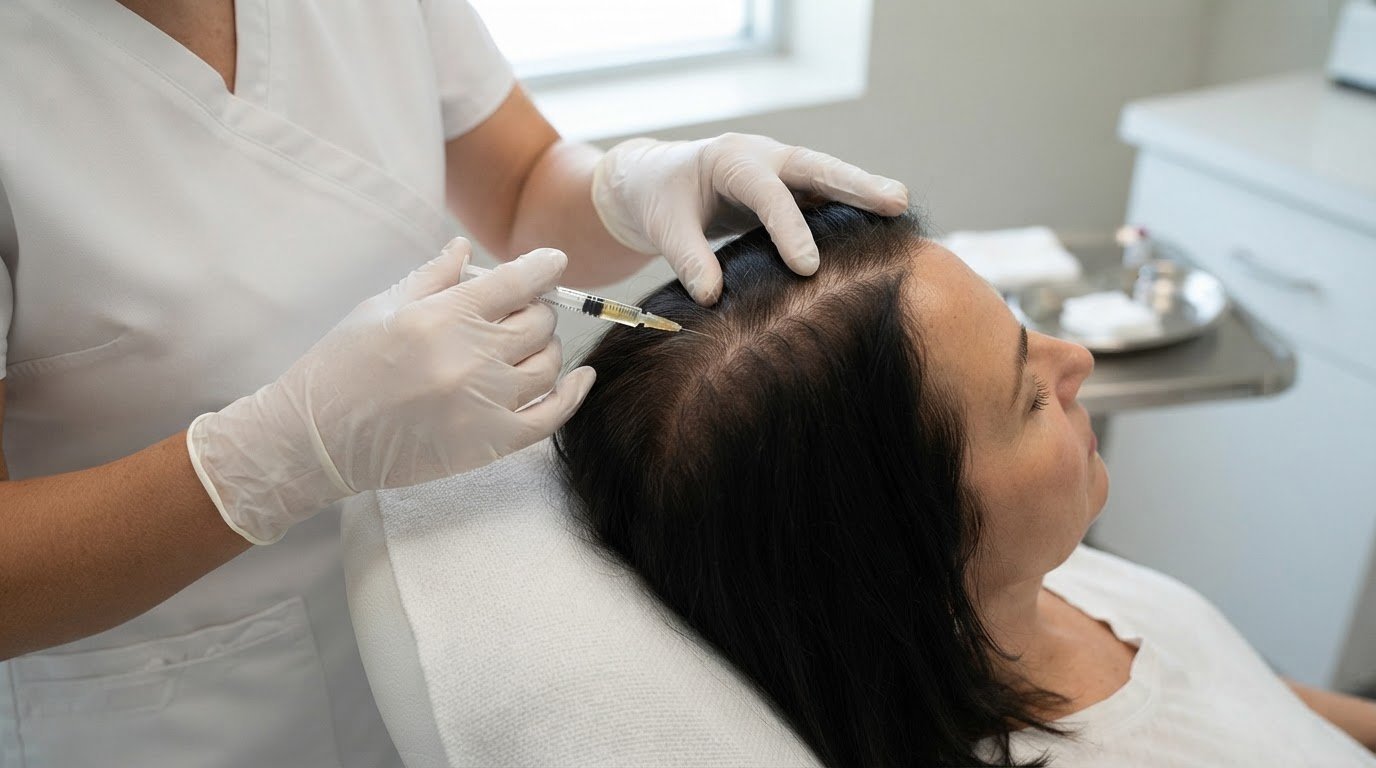
PRP treatment involves injecting material prepared from the patient’s blood into areas of concern on the scalp. The intended focus is supporting follicles where thinning is present, rather than treating every part of the scalp alike. Ask how the proposed injection areas relate to your hair-loss pattern, scalp findings, and goals. The clinician should also explain how growth factors relate to the proposed plan.
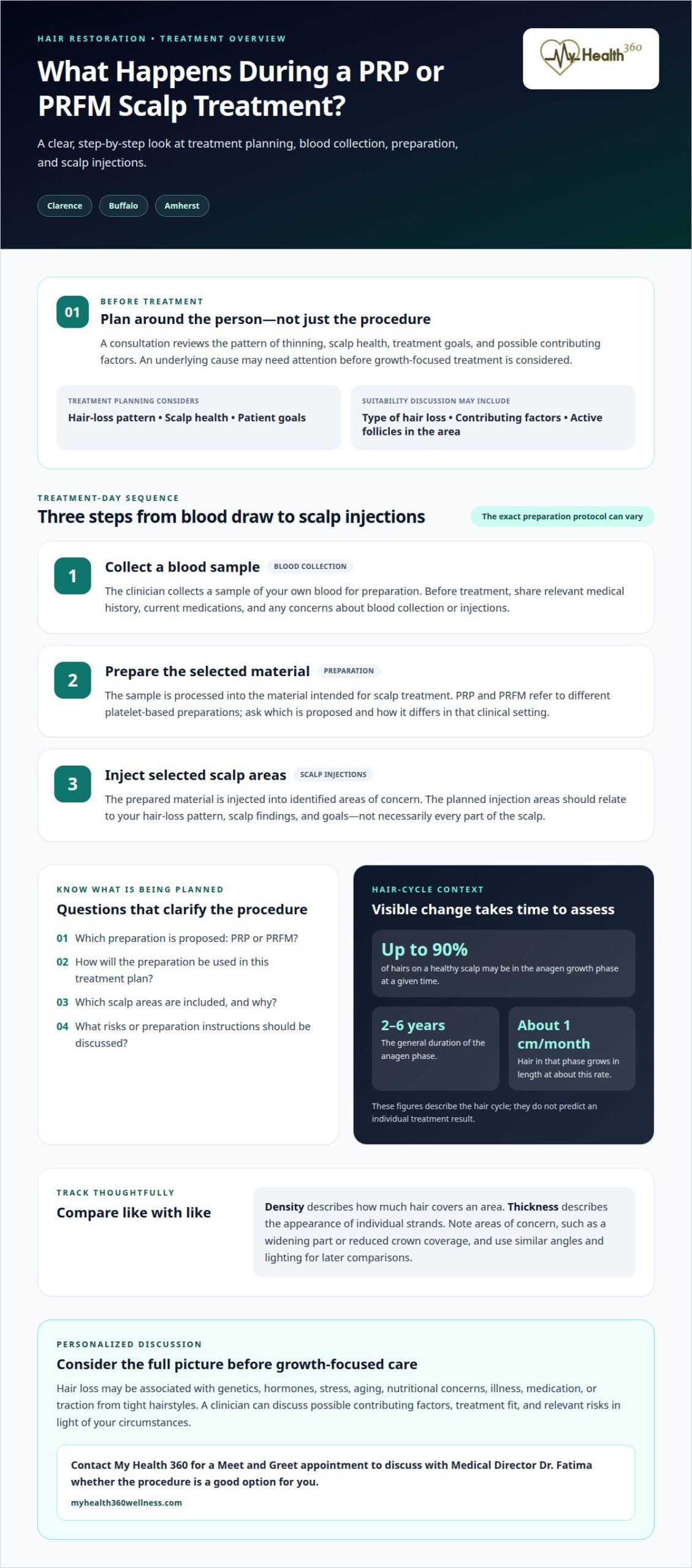
A healthy scalp has up to 90 percent of hairs in the anagen growth phase at a given time. That phase generally lasts two to six years, and growing hair increases in length by about a centimeter per month. These figures describe the hair cycle, not a forecast of an individual treatment result. They help explain why changes in visible coverage take time to assess.
Changes in Hair Density and Thickness
Density describes how much hair covers an area, while thickness describes the appearance of individual strands. Tracking both makes it easier to discuss change than relying on a general impression. Before treatment, note areas of concern, such as a widening part or reduced coverage at the crown. Later comparisons are more useful when made using similar angles and lighting.
Hair follicles cycle through growth phases, so visible changes do not happen all at once. The anagen phase can last two to six years, and hair in that phase grows about a centimeter per month. These details provide context, but they do not predict how much density or thickness a person may gain from PRP.
PRP and PRFM hair-loss treatments in Clarence, Buffalo, and Amherst should be considered in light of the cause and pattern of thinning. Hair loss can be associated with genetics, hormones, stress, aging, nutritional concerns, illness, medication, or traction from tight hairstyles. A consultation can help identify the type of loss and contributing factors. An underlying cause may need attention before growth-focused treatment.
If you are planning a hair transplant, discuss PRFM with the surgical team as part of the overall treatment plan. The team can coordinate whether and when it may fit alongside surgery. It should not be treated as a substitute for the transplant itself. Share the areas being treated and the planned surgical approach so the role of each step is clear.
When considering a PRP hair restoration provider near Clarence or Buffalo, review the treating clinician’s qualifications and training. Look for patient reviews that specifically discuss the consultation, explanation of the plan, and follow-up. A “certified” label alone does not explain who issued the credential or what it covers, so consider those details together.
Blood collection and PRFM injection procedure
PRP treatment uses a patient’s own blood, which is prepared and injected into areas of concern on the scalp. PRFM is another term used for platelet-based treatment. The specific preparation and injection plan can vary by clinical protocol.
During planning, the medical clinician identifies the scalp areas to address and explains the procedure. Blood is collected first, then prepared for treatment, and the resulting platelet-rich material is injected into the selected scalp areas. The clinician should explain how the proposed PRFM approach differs from PRP in that setting, rather than treating the terms as interchangeable.
For the patient, the procedure involves both a blood draw and scalp injections. Before treatment, share relevant medical history, current medications, and any concerns about blood collection or injections. This helps the clinician consider whether the planned procedure fits your circumstances and explain any preparation instructions.
- Blood collection: A sample of the patient’s own blood is collected for preparation.
- Preparation: The sample is processed into the material intended for scalp treatment; the exact protocol can differ.
- Injection: The prepared material is injected into identified areas of concern on the scalp.
PRP and PRF scalp injections share a treatment focus, but the terms refer to different preparations. Ask which preparation is proposed, how it will be used, and which scalp areas are included. These details clarify what the appointment involves and how the plan relates to your pattern of thinning.
Potential benefits of PRFM injections are discussed in relation to the treatment goal, such as supporting follicles in areas of concern. The treatment is intended to stimulate a response in the targeted scalp area, but it should not be presented as guaranteeing a change in hair growth. The clinician can explain why PRFM rather than PRP is being considered for your plan.
PRP hair restoration involves blood collection and needle injections, so discuss possible risks with the medical clinician before treatment. Review your medical history, medications, and any bleeding or scalp concerns. These details support an informed discussion of the procedure.
For a personalized discussion of whether this procedure may suit you, arrange a Meet and Greet with Medical Director Dr. Fatima.
Treatment-day preparation and procedure
A consultation helps identify the type of hair loss and contributing factors before growth-focused treatment. The procedure then follows a sequence: review the plan, collect blood, prepare the selected material, and inject it into areas of concern on the scalp.
Consultation and Treatment Preparation
The consultation establishes the treatment goal and reviews the pattern of thinning and scalp health. Because hair loss can have contributing factors, the clinician considers whether an underlying cause should be addressed before therapy. Discuss your medical history, medications, and questions about the procedure. This conversation clarifies why PRP or PRF is being considered and which areas the plan targets.
Preparation instructions should match the treatment plan. Before the appointment, make sure you understand what will happen during the blood draw, platelet preparation, and scalp injections. If the plan includes PRP rather than PRF, ask the clinician to explain the difference and the steps involved.
Blood Draw and Platelet Preparation
Blood collection is the first procedural step. The sample comes from the patient and is prepared for the planned scalp treatment. The preparation stage produces platelet-rich material for injection; the exact process depends on whether the plan uses PRP or PRF. Ask which preparation is intended and how the clinician will use it.
The treatment area is selected based on the pattern of concern. For example, the plan may focus on an area of thinning rather than treating the entire scalp. Understanding the intended sites connects the blood preparation to the purpose of the procedure.
PRP and PRF Preparation
PRP is prepared from a blood draw and contains concentrated platelets in plasma for injection. PRF, or platelet-rich fibrin, uses fibrin as part of the prepared material. Both start with the patient’s blood, but their names describe different preparations. The clinician should explain which one the appointment includes rather than treating PRP and PRF as identical.
Preparation details matter because they determine what is injected and how the treatment is described. Ask how the selected material relates to the planned scalp areas and why it is part of the proposed therapy. This keeps the discussion specific to your procedure, rather than the general idea of platelet treatment.
Procedure and Recovery
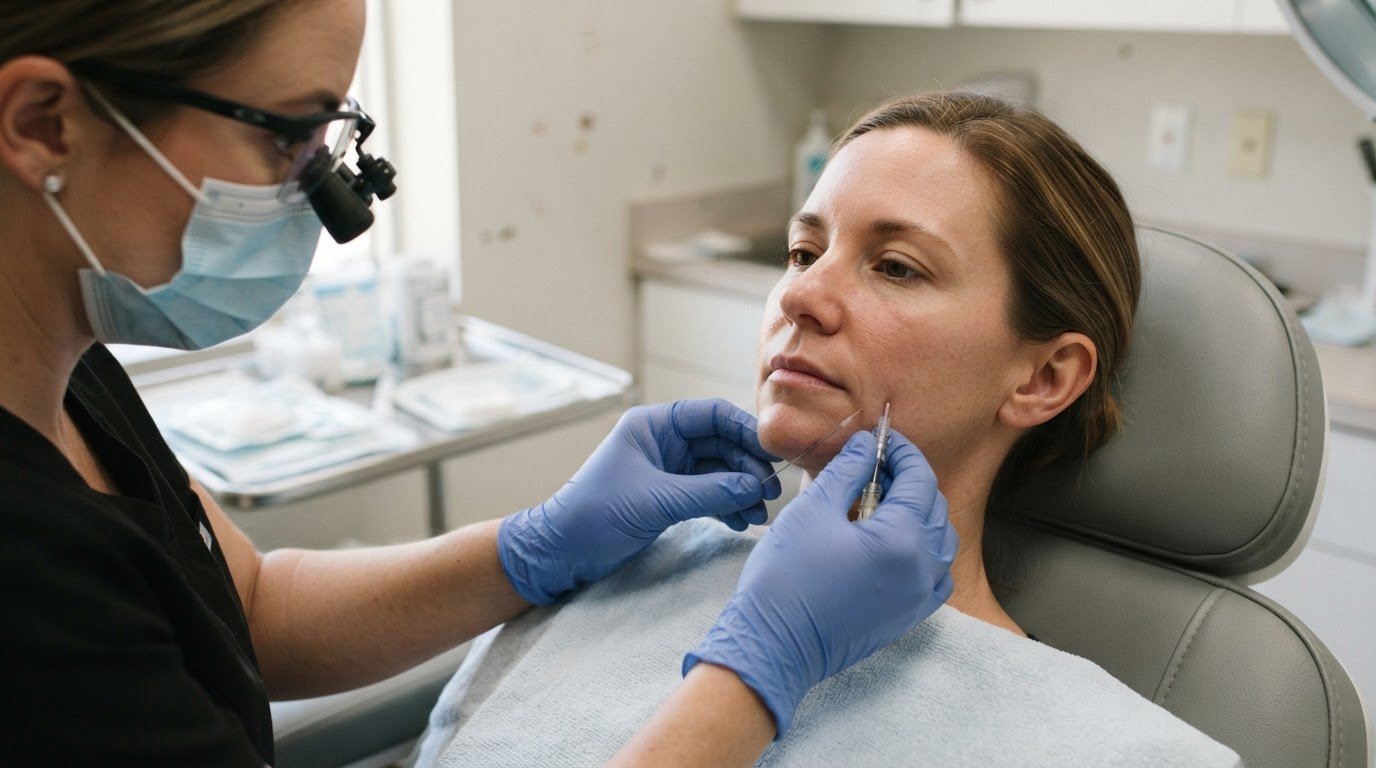
After preparation, the clinician injects the selected material into areas of concern on the scalp. The injection plan follows the treatment areas discussed during the consultation. Ask what sensations to expect and what care instructions apply afterward, since these depend on the procedure performed.
Recovery guidance is part of the treatment plan. Follow the clinician’s instructions for scalp care and contact them with concerns during healing. PRP hair-loss treatment does not have a fixed recovery schedule or guarantee a change in hair growth. The consultation should explain the plan and what follow-up involves.
Candidate suitability and active follicles
PRP hair restoration starts with identifying the pattern and possible causes of thinning. A consultation can help determine the type of hair loss and contributing factors before growth-focused treatment. The key question is whether the treatment plan fits your scalp concerns, goals, and circumstances. It is not simply a choice between injections and surgery.
Hair loss can be associated with genetics, hormones, stress, aging, nutritional concerns, illness, medication, and traction from tight hairstyles. These factors matter because a growth-focused procedure does not identify the cause by itself. For example, someone noticing shedding after a medication change has a different concern to discuss than someone with gradual thinning and a family pattern. The consultation should distinguish these histories before settling on a treatment plan.
Follicles are relevant because PRP is injected into areas of concern on the scalp with the aim of stimulating them. The clinician’s assessment should identify where thinning is visible, the scalp’s condition, and what you hope to address. A receding hairline, reduced crown coverage, and diffuse thinning are different patterns to describe. Clear mapping helps define the intended treatment area instead of treating the entire scalp as one uniform region.
A useful suitability discussion follows a few practical steps:
- Describe the change: Note where thinning or shedding appears, and whether it has changed over time.
- Review contributing factors: Discuss stress, medication, illness, nutrition, hormones, genetics, and hairstyle-related traction.
- Clarify the goal: Explain whether the main concern is shedding, coverage, density, or strand thickness.
- Discuss the sequence: Identify whether an underlying cause should be addressed before growth-focused treatment.
Hair restoration planning should account for the difference between supporting follicles and surgically replacing lost hair. PRP uses the patient’s own blood and can be injected into areas of concern, while a transplant is a separate surgical approach. If transplant surgery is planned, the treating teams can discuss whether PRFM fits the broader plan and how its timing relates to surgery.
A candidate discussion should end with a clear explanation of the proposed approach, target areas, and reasons for choosing it. In Clarence, Buffalo, or Amherst, bring specific examples of changes you have noticed, such as a widening part or thinner crown. The consultation can connect those concerns with your hair-loss pattern, scalp health, and possible contributing factors before treatment is considered.
PRP treatment costs in Buffalo
PRP treatment costs in Buffalo depend on the individual case and are provided after a quote request. Understand the proposed treatment plan before considering its cost. A useful quote describes the planned procedure, the scalp areas being addressed, and whether the plan uses PRP or PRFM. These details connect the quoted amount with the care being discussed.
Start with the scope of treatment. A plan focused on one area of thinning may differ from one addressing several areas, such as the crown and a widening part. The size and location of the treatment area shape what the clinician proposes. Ask for the quote to reflect the areas discussed during the consultation, so you can understand what the proposed care covers.
The preparation method is another point to clarify. PRP is prepared from a blood draw, while PRFM refers to a different platelet-based preparation. If both terms come up, ask which material the plan uses and what the quote includes. This helps ensure the quoted procedure matches the treatment being considered.
Hair-loss pattern and scalp health also inform the plan. A consultation may identify contributing factors and whether an underlying cause should be addressed before growth-focused therapy. This distinction matters when reviewing a quote: treatment intended to support hair growth addresses a different part of care than investigating or addressing a contributing factor. The plan should explain those steps instead of grouping them under a vague label.
For a clear cost discussion, request a quote after the proposed plan has been outlined. Review these details together:
- Treatment areas: Confirm whether the quote covers the crown, hairline, part, or another identified region.
- Preparation: Confirm whether the proposed material is PRP or PRFM.
- Included care: Clarify which procedure and related appointment steps the quote covers.
- Plan rationale: Understand how the selected approach relates to your thinning pattern and goals.
A considered decision depends on understanding both the treatment and its cost, not the price alone. Plasma-based care is intended to support a treatment goal; the quote does not establish how much hair growth someone will experience. Ask how the plan’s scope affects the quote and whether changing the treatment areas would change what is included. This gives you a clearer basis for deciding whether the proposed care fits your priorities.
For a personalized discussion of hair thinning and whether a procedure may be a good option, contact My Health 360 to arrange a Meet and Greet with Medical Director Dr. Fatima.
My Health 360
My Health 360 can help you discuss hair-thinning concerns within a broader, personalized approach to health. Bring your questions about the pattern of shedding, possible contributing factors, and what you hope to address, so the conversation can focus on your priorities and appropriate next steps.
If you’re considering a procedure, contact My Health 360 to arrange a Meet and Greet and discuss with Medical Director Dr. Fatima whether it may be a good option for you.
Make Your Next Step a Clear One
Before choosing a path, decide what you most want to understand: the cause of your thinning, the treatment approach, or how a proposed plan fits your priorities. Bringing that focus to a consultation can make the conversation more useful and help you leave with a clearer next step.
If you’re considering PRP or PRFM hair-loss treatments in Clarence and Buffalo, use the discussion to address your individual concerns and whether a procedure is a good option for you. My Health 360 invites you to arrange a Meet and Greet with Medical Director Dr. Fatima, where you can talk through your questions without pressure.
Arrange a Meet and Greet with My Health 360 and take the next step at a pace that feels right for you.
Frequently Asked Questions
How Long Until I See the Results?
Visible changes do not follow one dependable timeline for everyone. Hair cycling, the pattern of thinning, and contributing factors all affect how progress may appear. Use your consultation to establish which changes the plan aims to address and when they will be reviewed. Follow-up can distinguish changes in shedding from changes in visible coverage, rather than relying on a single impression.
What Are PRP Injections?
PRP injections deliver platelet-rich plasma, prepared from the patient’s own blood, into areas of concern on the scalp. Ask the clinician how PRP will be administered and whether it is appropriate for your concerns. During consultation, clarify which scalp areas the plan targets, why those sites were selected, and how the approach relates to your hair-loss pattern. This helps you understand the proposed procedure and decide whether it matches your goals.
Are PRF injections for thinning hair painful?
Scalp injections can cause discomfort, and experiences differ. If needles make you uneasy or you have had difficulty with injections before, raise that concern before treatment. Ask the clinician to describe how injections are performed, what sensations you might notice, and what aftercare instructions apply. A clear discussion helps you consider the procedure with realistic expectations rather than assuming it will be painless.
How Many Appointments Will I Need?
The number of appointments depends on the treatment plan for your concerns; there is no single count for everyone. Ask whether the proposed care includes a procedure, follow-up visits, or further treatment, and what each visit is intended to assess or address. A plan for localized thinning may differ from one addressing more widespread concerns. Have the purpose of each recommended visit explained before scheduling.
How is PRFM different from PRP?
PRP means platelet-rich plasma, while PRFM means platelet-rich fibrin matrix. The names describe different blood-derived preparations, but the labels alone do not explain the proposed protocol. Ask which preparation is planned, how it will be used, and why it fits your treatment goals. This helps distinguish the actual procedure from broad claims based only on the treatment name.
How long does it take to see hair regeneration results from PRP injections?
There is no single timeframe that applies to everyone considering PRP injections. Visible hair changes depend on individual hair cycling, the treatment area, and factors contributing to thinning. At follow-up, discuss what the clinician is assessing, such as shedding or visible coverage. This creates a more meaningful way to review progress than expecting a particular date or assuming early changes predict the final outcome.
PRP hair restoration risks and side effects
PRP involves a blood draw and scalp injections, so discuss possible risks with the clinician. Share your medical history, medications, and any bleeding or scalp concerns before treatment.