Whole-body red light therapy near me in Buffalo uses selected red-light wavelengths across multiple body areas to stimulate cellular activity, a process also called photobiomodulation. People may consider it for recovery support, joint comfort, or skin appearance. Understanding what the treatment involves can help you decide whether it aligns with your wellness goals.
Before trying a light-based treatment, it’s reasonable to ask what happens during a session, how the plan is set, and what effects are realistic. Red light therapy is not a substitute for medical care. Suitability can depend on personal health factors, including photosensitivity and certain medications.
This guide explains how whole-body sessions work and what to consider when exploring muscle recovery, joint comfort, or skin-related goals. It also covers treatment planning, safety considerations, and when to discuss light exposure with a medical professional.
Key Takeaways
- Learn how red and near-infrared wavelengths interact with tissue and why the type of light matters.
- Understand what can influence session length and frequency, rather than assuming one schedule suits everyone.
- Explore potential effects on muscle recovery, joint comfort, skin texture, and collagen-related processes.
- Recognize health factors that may affect suitability, and the precautions to consider before a session.
- Contact My Health 360 to arrange a Meet and Greet with Medical Director Dr. Fatima and discuss whether a procedure is a good option for you.
What Is Red Light Therapy?
Red light therapy, also called photobiomodulation or low-level laser therapy, uses selected wavelengths to stimulate cellular activity. Red and near-infrared light are used in whole-body sessions, with wavelength and exposure affecting how treatment is delivered.
How Red and Near-Infrared Light Works
Photobiomodulation directs red or near-infrared light toward the body, where it penetrates tissue and interacts with cells. Red light is described as reaching 8-10 millimeters into the skin. Visible red light spans 630-700 nanometers, while near-infrared light is described across 700 and 1200 nm. The intended focus matters: consider which wavelength the equipment uses and which areas receive exposure. Recovery support is a potential use, not a replacement for medical care.
When comparing nearby providers, look for the device’s wavelengths, the areas treated, session instructions, and eye-protection guidance. These details help clarify what a full-body session includes.
Effects of Different Light Wavelengths
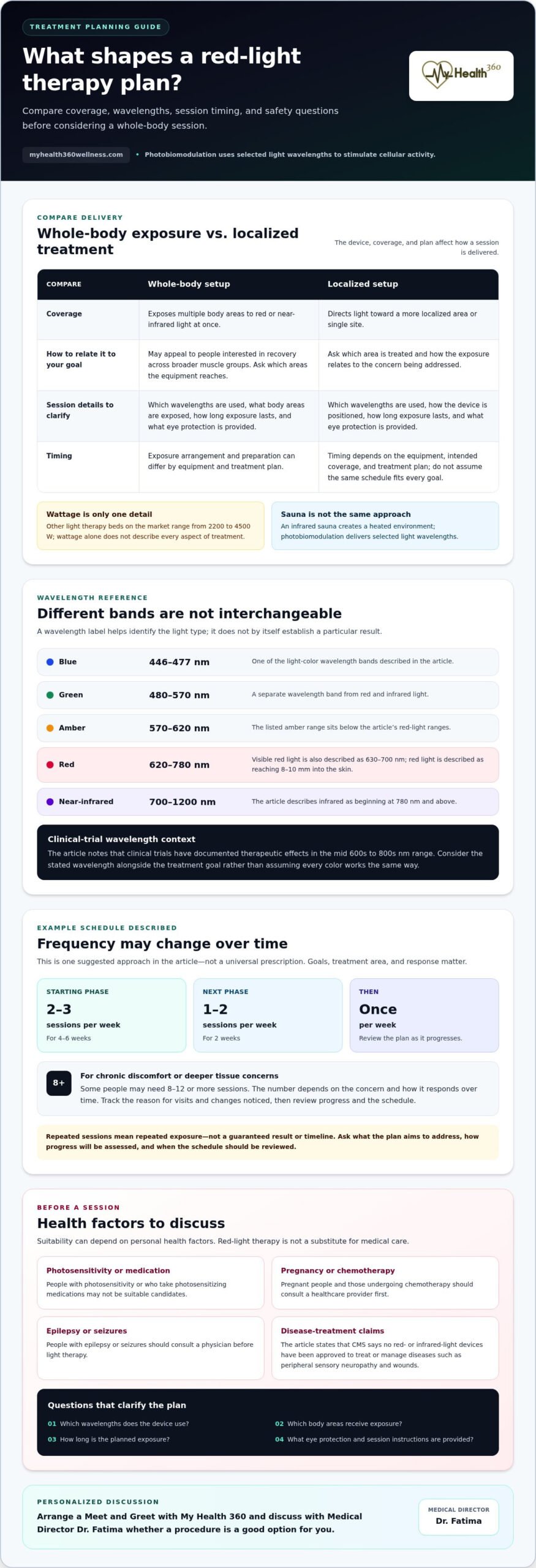
Light colors correspond to different wavelength bands: blue is 446 – 477 nm, green is 480 – 570 nm, amber is 570 – 620 nm, and red is 620 – 780 nm. Infrared begins at 780 nm and above. These ranges distinguish the light types; a wavelength label alone doesn’t establish a particular result. For red-light therapy, clinical trials have documented therapeutic effects in the mid 600s to 800s nm range. Consider the stated wavelength alongside the treatment goal, rather than assuming every color works the same way.
Full-Body Light Exposure and Recovery
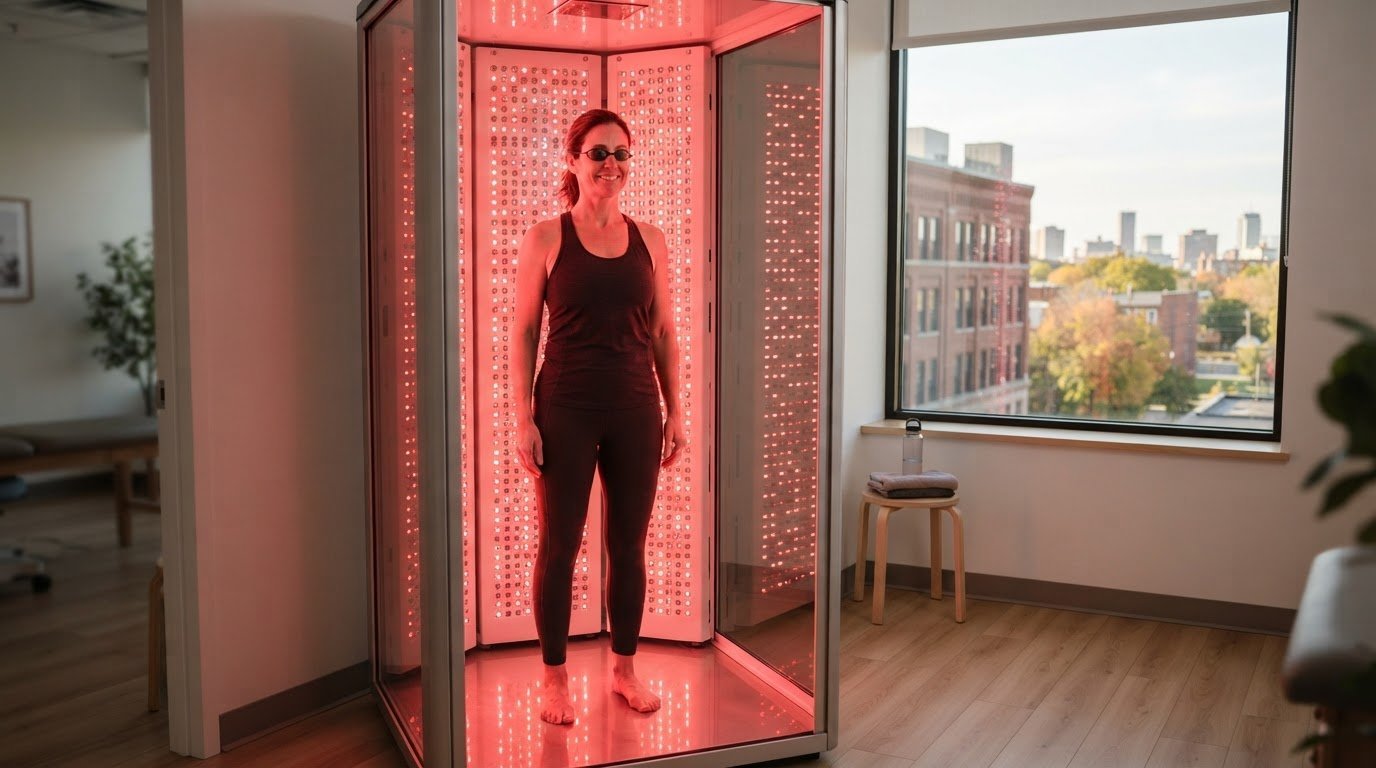
A whole-body session exposes multiple areas to red or near-infrared light instead of targeting a single small site. This format may appeal to people interested in recovery across broader muscle groups. The light is intended to stimulate cellular activity, but effects can vary from person to person. Ask which areas the equipment reaches and how that coverage relates to your recovery goals.
An infrared sauna and photobiomodulation use infrared energy differently. A sauna creates a heated environment, while photobiomodulation delivers selected light wavelengths. The distinction matters if you’re seeking light exposure rather than a heat-focused session.
Memberships, packages, and consultations are specific to each provider, not inherent features of red-light therapy. Review the stated terms rather than assuming a particular plan or complimentary visit is included.
Before booking, ask which wavelengths are used, what body areas are exposed, and what eye protection is provided. Discuss how photosensitivity, medications that increase light sensitivity, pregnancy, chemotherapy, epilepsy, or seizures may affect the treatment conversation.
People with photosensitivity or who take photosensitizing medications may not be suitable candidates. Pregnant people and those undergoing chemotherapy should consult a healthcare provider first; people with epilepsy or seizures should consult a physician before light therapy. The Centers for Medicare & Medicaid Services states that no red- or infrared-light devices have been approved to treat or manage diseases such as peripheral sensory neuropathy and wounds.
Red light therapy equipment and session duration
Equipment, exposure, and scheduling all shape a photobiomodulation plan. Compare how the session is delivered and how the proposed schedule relates to your goals.
Treatment Administration
Whole-body devices expose several areas at once, while other equipment focuses light on a more localized area. Ask which approach the treatment uses, what wavelengths the device emits, and how the session is arranged. Those details clarify the coverage, rather than relying on the label “red light bed.” Other light therapy beds on the market range from 2200 to 4500 W; wattage alone doesn’t describe every aspect of treatment.
Session Duration
Session length depends on the equipment, intended coverage, and treatment plan. A whole-body setup may involve a different exposure arrangement from a device used on one region. Ask how long the planned exposure lasts and whether preparation or positioning is included. A clear explanation helps you understand the appointment without assuming every device or goal calls for the same timing.
Frequency is another part of the plan. One suggested approach is 2 to 3 sessions per week for 4 to 6 weeks, followed by 1 to 2 sessions per week for 2 weeks, then once per week. This is a schedule described for red light therapy, not a universal prescription. Treatment goals and the area being addressed matter when considering a cadence.
For chronic discomfort or deeper tissue concerns, some people may need 8-12 or more sessions. The number depends on the concern and how it responds over time. A useful next step is to track the reason for each visit and any changes you notice, then review that pattern as the treatment progresses. A schedule is more meaningful when tied to a defined goal.
The expected outcome and session frequency are related, but one doesn’t guarantee the other. Repeated sessions mean repeated exposure, not a guaranteed result or timeline. Ask what changes the plan aims to address, how progress will be assessed, and when the schedule should be reviewed. This helps distinguish a structured plan from a routine that continues without reassessment.
Before arranging a session, clarify the device type, exposure area, session length, and proposed frequency. If you’re considering whole-body red light therapy, contact the practice to arrange a Meet and Greet and discuss with Medical Director Dr. Fatima whether the procedure is a good option for you.
Potential benefits for muscle recovery and joint comfort
Red-light therapy is used to support recovery and comfort, but effects vary with the concern and treatment approach. The sections below outline considerations for muscle soreness, inflammation, circulation, and pain.
Muscle Recovery and Soreness
After exercise, muscle soreness can make everyday movement more difficult. Photobiomodulation uses red and near-infrared wavelengths to stimulate cellular activity, an approach studied for potential recovery support. It isn’t a replacement for rest or rehabilitation, but may be considered as part of a broader recovery plan. For example, note whether soreness affects walking, lifting, or another familiar activity.
Track the same activity before and during a treatment course. Record soreness and ease of movement after a workout, rather than relying only on memory. Some people with mild pain or inflammation may notice improvement after 3-5 sessions. That observation describes a possible response, not a timeline every person should expect.
Muscle Inflammation and Joint Comfort
Inflammation can accompany muscle or joint discomfort, but the underlying cause matters. Red-light therapy is explored for potential effects on discomfort and inflammatory processes; it doesn’t identify why a joint hurts. Post-exercise tenderness and persistent joint pain, for example, are different concerns and may call for different clinical consideration.
Keep a simple record of the affected area, movement limits, and changes after each session. Note whether bending, climbing stairs, or gripping an object feels different. These observations describe joint comfort more clearly than a general impression of “feeling better” and can help guide a discussion about recovery needs.
Circulation and Muscle Relaxation
Red-light therapy has been described as supporting circulation and the delivery of oxygen and nutrients to skin cells. This statement concerns skin-cell delivery, not proof of improved blood flow to sore muscles. Sessions are also described as painless, and many people find them relaxing. Comfort during exposure, however, doesn’t establish a specific recovery effect.
Notice how you feel during and after a session, including whether you feel relaxed or experience discomfort. Temporary irritation, redness, or headache are possible side effects. If a symptom occurs, record when it started and how it changed. A specific note, such as redness on an exposed area, is more useful than a vague description.
Pain Relief and Recovery
Low-level laser therapy and red-light approaches are associated with photobiomodulation, but pain relief isn’t the same as healing an underlying injury. Changes in discomfort and function are separate ways to assess progress. For example, notice how easily you complete a usual walk instead of judging treatment only by whether soreness disappears.
Consider a measured approach: identify the concern, record a starting point, and track symptoms and function across sessions. The 3-5-session observation for some mild pain or inflammation can provide context, not a promise. Persistent or worsening pain warrants attention to its cause, rather than relying on light therapy alone.
Skin appearance and collagen-related effects
Red-light therapy is used for skin-appearance goals, including texture and fine lines. Effects depend on the light exposure and the outcome being assessed, so distinguish a cosmetic goal from a claim about treating disease.
The proposed skin-related process involves light energy stimulating cellular activity in tissue. Red-light therapy may promote collagen synthesis and improve skin elasticity. Collagen helps provide skin structure, while texture and fine lines are visible features people may track. These are potential effects, and not every skin concern will respond in the same way.
Set a specific goal before treatment, such as tracking fine lines in one area. Compare that area under similar lighting and conditions over time. This can help you notice gradual changes without relying on a vague overall impression. Ask which skin outcome the session is intended to address.
Green light is a separate wavelength category, ranging from 480 – 570 nm. That color label alone doesn’t establish a calming effect on skin or prove a particular result. Ask what outcome the light is intended to support and how the provider distinguishes that aim from red-light therapy’s collagen-related claims.
Temporary side effects can include slight irritation, redness, or headache. Note when a symptom appears and where, such as redness on an exposed area after a session. This detail makes your experience easier to describe. If symptoms arise, discuss them with the clinician overseeing your care before continuing the same exposure plan.
Eye protection is a practical safety measure, especially when near-infrared light is active. Wear the goggles provided when facing the lights, and don’t stare directly at the LEDs. Before the session begins, confirm when goggles should be worn and follow the equipment instructions throughout exposure.
Evaluate safety and effectiveness claims by asking what specific outcome they concern, such as skin texture, fine lines, or collagen synthesis, and what the treatment is intended to do. A statement about collagen isn’t proof that light therapy treats a skin disease. Similarly, describing a session as non-invasive doesn’t mean side effects are impossible.
For a balanced decision, consider the skin goal, the wavelength used, and the safety instructions. Red light is described as a non-invasive option that can improve skin texture and diminish fine lines, while potential collagen effects relate to synthesis and elasticity. Keep expectations specific, and report irritation, redness, or headache rather than dismissing it as part of treatment.
Whole-body red light therapy and wellness
Wellness involves more than one treatment or outcome. Consider whole-body light exposure in relation to a clear personal goal, such as supporting recovery, addressing skin appearance, or adding a structured treatment to an existing routine. Each goal calls for a different way to assess whether the experience is useful.
Start by naming the outcome that matters to you. Someone focused on skin appearance, for example, can track texture in a consistent area, while someone interested in recovery can note changes during a familiar activity. Keeping these aims separate makes progress easier to describe and helps avoid mistaking a general sense of well-being for evidence that a specific concern has changed.
My Health 360 describes red-light therapy as using low-level wavelengths that do not produce heat. That differs from a treatment chosen for a heat-based experience. Sessions are also described as painless, and many people find them relaxing. Comfort can shape how a session feels, but feeling relaxed alone doesn’t establish a measurable change in recovery, tissue, or appearance.
Whole-body exposure covers multiple areas rather than focusing on one small site. This format may be relevant to people with more than one wellness goal, but it doesn’t mean every area will respond identically. For example, someone tracking post-exercise recovery can record muscle comfort separately from skin changes. Separate notes keep each observation focused.
Interpret claims about overall wellness carefully. Red-light therapy is described as enhancing circulation and the delivery of oxygen and nutrients to skin cells. That specific statement concerns skin cells; it shouldn’t be extended into a claim that treatment improves circulation throughout the body or treats disease. A precise explanation of the intended effect is more useful than a broad wellness promise.
Build a simple routine: define your goal, record a starting point, and review what changes. Note the activity that feels difficult or the skin feature you want to observe. Keep other routines consistent where possible, so changes are easier to interpret. If photosensitivity, photosensitizing medication, pregnancy, chemotherapy, epilepsy, or seizures apply, discuss them with a healthcare provider before light exposure.
The practical takeaway is to treat whole-body red light therapy as one possible component of a wider wellness plan, not as a substitute for medical care or established recovery practices. If you want to discuss how this approach fits your goals, contact My Health 360 to arrange a Meet and Greet with Medical Director Dr. Fatima and discuss whether the procedure is a good option for you.
My Health 360: Emsculpt Neo
My Health 360 offers Emsculpt Neo for people whose goals include body contouring, a different focus from red-light therapy’s potential effects on recovery, joint comfort, and skin. If your needs relate to preparation before an operation or event, BioPrime provides pre-operative or pre-event whole-body habilitation. Bio-Restore addresses post-operative or injury-related whole-body habilitation.
Consider a conversation when you’re weighing these distinct goals or want guidance on which approach fits your situation. Contact My Health 360 to arrange a Meet and Greet and discuss with Medical Director Dr. Fatima whether a procedure is a good option for you.
Choose a Next Step That Fits Your Goals
If you’re considering whole body red light therapy near me in Buffalo or Western New York, let your goals guide the next conversation. Consider what you want to address, what changes would matter in daily life, and what questions remain about suitability or treatment planning. A clear starting point can make the discussion more useful and help distinguish a wellness goal from a concern that needs medical evaluation.
At My Health 360, options include Emsculpt Neo, BioPrime for pre-operative or pre-event whole-body habilitation, and Bio-Restore for post-operative or injury-related whole-body habilitation. These address different needs, so the right discussion begins with your priorities. Individual suitability depends on your circumstances.
Contact My Health 360 to arrange a Meet and Greet with Medical Director Dr. Fatima and discuss whether a procedure is a good option for you. Contact My Health 360 to arrange your Meet and Greet and take an informed next step at your own pace.
Frequently Asked Questions
How Many Sessions Do You Need to See Results?
There’s no single session count that applies to every goal. Some people with mild pain or inflammation may notice improvement after 3-5 sessions, while chronic discomfort or deeper tissue concerns may involve 8-12 or more. These figures describe potential response patterns, not a guaranteed schedule. Track a specific change, such as comfort during a familiar activity, so you can assess progress more clearly.
What does it feel like when applied?
Red-light sessions are described as painless, and many people find them relaxing. The experience differs from an infrared sauna because red-light therapy uses light exposure rather than a heat-focused environment. During a session, follow the equipment instructions and wear goggles when directed. If the light feels uncomfortable or you develop irritation, redness, or a headache, note it and tell the clinician overseeing your care.
What should I do before and after this treatment?
Before treatment, share relevant health information, including photosensitivity, medications that increase light sensitivity, pregnancy, chemotherapy, epilepsy, or seizures. Follow the eye-protection instructions and don’t stare directly at the LEDs. Afterward, notice how your skin and body feel, and record any irritation, redness, or headache. Report symptoms to the clinician overseeing your care rather than changing your treatment plan on your own.
Where can I find whole-body red light therapy near me?
In Buffalo, My Health 360 offers whole-body red light therapy and serves the city and surrounding suburbs. If you’re considering a session, contact the practice to arrange a Meet and Greet with Medical Director Dr. Fatima. You can discuss your wellness goals, relevant health considerations, and whether the procedure is a good option for you. That conversation can help connect your goals with an appropriate next step.
What types of whole-body red light therapy devices do local clinics use?
Equipment may include beds designed for broad body exposure or devices arranged to direct light toward selected areas. The setup determines which parts of the body receive light during a session. Ask what the equipment is designed to cover, which wavelengths it uses, and what eye protection is required. Wattage alone doesn’t explain the full treatment approach or whether it suits a particular goal.
How long is a whole-body red light therapy session, and how often should I go?
A session commonly lasts 10-20 minutes. Suggested schedules vary: one approach describes 2 to 3 sessions per week for 4 to 6 weeks, then 1 to 2 sessions per week for 2 weeks, followed by once per week. Those schedules aren’t universal. The goal, treated area, and response over time influence frequency, so track changes and discuss the plan with the clinician overseeing treatment.
What are the claimed benefits and scientific evidence for whole-body red light therapy?
Claims include potential support for muscle recovery, joint comfort, and skin appearance, including collagen-related effects. Clinical trials have documented therapeutic effects for red light in the mid 600s to 800s nm range, but that doesn’t establish every claim for every condition. The Centers for Medicare & Medicaid Services states that no red- or infrared-light devices have been approved to treat or manage diseases such as peripheral sensory neuropathy and wounds.
What are the risks, side effects, and contraindications of red light therapy?
Possible temporary side effects include slight irritation, redness, or headache. People with photosensitivity or medications that increase light sensitivity may not be suitable candidates. Pregnant people and those undergoing chemotherapy should consult a healthcare provider first; people with epilepsy or seizures should consult a physician before light therapy. Wear goggles when instructed, particularly with near-infrared light, and don’t look directly at the LEDs.