

A six-session course is a common plan for an Emsella chair treatment in Buffalo, NY, with each session lasting about 30 minutes. Some people notice changes after one or two treatments, while completing the course can help assess the response over time.
It’s understandable to want a clear estimate before committing to appointments, especially when urinary leakage or pelvic floor concerns affect everyday comfort. The number of sessions and timing of results can vary, so an early improvement does not necessarily show the full picture.
Here, you’ll learn how Emsella works, what may influence your treatment schedule, when changes may become noticeable, and what to consider when exploring pelvic wellness care in Buffalo.
Key Takeaways
- Emsella stimulates pelvic floor muscle contractions; understanding how pelvic floor weakness relates to your symptoms can help frame your care discussion.
- Urinary leakage can affect men and women, and treatment planning should reflect the symptoms and goals you want to address.
- Results may appear at different points during a treatment course, so track changes in symptoms rather than relying on a single early sign.
- Consider how potential benefits and ongoing pelvic floor support fit into your wellness goals before deciding on maintenance.
- Contact My Health 360 for a Meet and Greet to discuss with Medical Director Dr. Fatima whether Emsella may be an appropriate option for you.
Does EMSELLA help with pelvic pain?
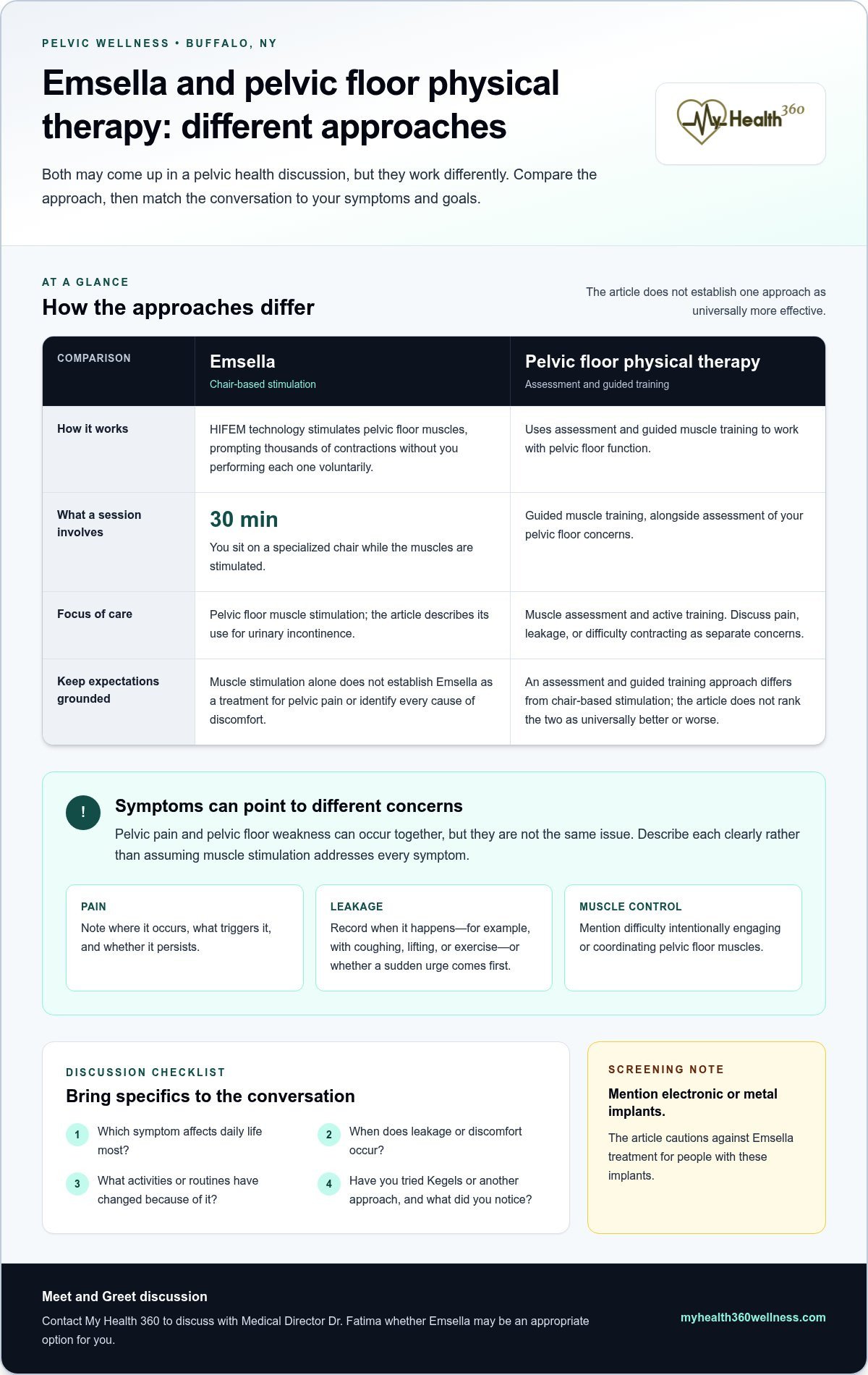
EMSELLA targets pelvic floor muscle weakness, but muscle stimulation alone does not establish it as a treatment for pelvic pain. Pelvic pain and weakness can occur together, but they are different concerns. Start by describing where pain occurs, what triggers it, and whether you also experience urinary leakage or difficulty contracting the muscles.
During an EMSELLA session, a person sits on a specialized chair while HIFEM technology stimulates pelvic floor muscles. The electromagnetic stimulation produces thousands of muscle contractions; a session is described as lasting 30 minutes. These contractions prompt the muscles to work without the patient performing each contraction voluntarily. The treatment’s focus is muscle stimulation, not identifying every possible cause of pelvic discomfort.
Pelvic floor weakness involves reduced strength, coordination, or ability to contract the muscles that support pelvic function. Muscle function may change with reduced conditioning or difficulty coordinating a contraction. For example, someone may notice urine leakage when coughing or trouble intentionally engaging the muscles. These examples point to function, but describe pain, pressure, or persistent discomfort separately during an assessment.
How effective is Emsella compared with pelvic floor physical therapy or other treatments? These approaches work differently: Emsella delivers chair-based stimulation, while pelvic floor physical therapy uses assessment and guided muscle training. The available information does not establish one approach as universally more effective. Consider whether your goal is stimulation, active training, or evaluation of symptoms such as pain and leakage.
What should patients look for when choosing an Emsella provider in Buffalo? Look for a clear explanation of the treatment’s purpose, session process, and screening considerations. Discuss your specific symptoms, including pain and leakage, and ask how the provider distinguishes pelvic floor weakness from other concerns. Mention any electronic or metal implants, since EMSELLA treatment is cautioned against for people with these implants. If you’re considering Emsella chair treatment in Buffalo, NY, these details can help guide a focused discussion.
Which clinics offer Emsella treatment in Buffalo, NY? Emsella is offered locally in the Buffalo area, including through providers like My Health 360. When considering Emsella chair treatment in Buffalo, NY, look for a discussion that covers your symptoms and treatment goals, rather than focusing only on muscle stimulation.
Before deciding, write down the symptoms you want to address and when they occur. Include specific examples, such as leakage during exercise, pain with a particular activity, or difficulty consciously contracting pelvic floor muscles. At your appointment, explain which concern affects daily life most. This helps keep treatment planning focused on your needs rather than assuming every pelvic symptom has the same cause.
Urinary incontinence treatment for men and women
Urinary leakage can affect daily routines, exercise, and confidence for men and women. EMSELLA is FDA-cleared to treat urinary incontinence, with treatment focused on pelvic floor stimulation.
Bladder Leakage and Stress Incontinence
Stress urinary incontinence means urine leaks during an activity that puts pressure on the bladder, such as coughing, lifting, or exercise. Start by noting when leakage occurs, how it affects daily activities, and whether urgency accompanies it. These details help distinguish a specific symptom pattern from a general concern about bladder control.
Types of Incontinence Treated
EMSELLA addresses urinary incontinence in women and men. The available information supports its use for incontinence, but does not establish that every type or cause responds identically. Describe whether leakage happens with exertion, comes with a sudden urge, or occurs in other situations. A precise description helps clarify whether pelvic floor stimulation fits the concern being addressed.
For women, EMSELLA is FDA-cleared for treating urinary incontinence. For men, the device is FDA-approved for bladder leaks and incontinence. These are distinct regulatory descriptions and should not be blended into a broader claim about treating every bladder condition. The practical question is whether the person’s symptoms involve urinary leakage and fit the treatment’s intended purpose.
Incontinence can affect wellness beyond the physical symptom. Someone might plan exercise around restroom access, avoid an activity that triggers coughing, or change routines because leakage feels unpredictable. Tracking these examples gives a clearer picture of the impact than simply recording that leakage occurred. Note the activity, any sensation beforehand, and whether the bladder emptied unexpectedly.
EMSELLA uses pelvic floor stimulation as a non-surgical approach to urinary incontinence. Symptom descriptions are not interchangeable: leakage during a workout differs from a sudden urge that interrupts a meeting. An appointment discussion can connect the pattern, its effect on daily life, and your treatment goals. This keeps expectations grounded in the concern being addressed, rather than assuming one approach covers every urinary symptom.
To prepare, write down the situations where leakage occurs and the activities you’ve changed as a result. Include whether you’ve tried Kegels or another approach, and what you noticed. This gives the conversation a practical starting point. Women and men can also describe how bladder symptoms affect exercise, work, sleep, or social plans, helping define the outcome that matters most.
For a personal discussion about pelvic wellness, request a Meet and Greet appointment and speak with Medical Director Dr. Fatima about whether Emsella is a good option for you.
How fast will I see results from EMSELLA treatments?
A typical EMSELLA session lasts 30 minutes, and a common schedule is twice weekly. The treatment course, appointment length, and timing of changes are separate parts of the plan. Knowing each helps you organize visits and notice how symptoms change across sessions.
During a session, electromagnetic stimulation prompts pelvic floor muscle contractions while the patient remains seated. The treatment itself is brief, but the full course involves repeated appointments. One Kenmore practice describes a session lasting 28 minutes, while typical sessions are described as lasting 30 minutes. These durations provide a practical expectation for setting aside appointment time.
Scheduling commonly follows a twice-weekly rhythm. One recommended course consists of six treatments, with two sessions each week for three weeks. This gives patients a planned series of visits rather than a single appointment. Keep visits on your calendar, then note symptom changes between appointments, such as bladder leaks during a familiar activity.
Changes may become noticeable at different stages of the course. Some patients report improvement after one or two treatments; most begin noticing changes after two or three. Others may need up to six treatments to see full results. These are possible timelines, not a reason to judge the entire course by one session.
For men and women, reported treatment plans commonly include six to eight sessions. The schedule is considered alongside the symptoms being addressed and progress during treatment. For example, track whether leakage during a recurring activity changes after successive visits. A simple record can make gradual differences easier to describe.
Pelvic floor muscle contractions are the focus of stimulation. The session does not involve surgery, and you remain seated during treatment. Rather than expecting a single appointment to answer every question, consider the course as a sequence: attend scheduled visits, observe relevant symptoms, and discuss the pattern as treatment progresses.
To prepare for the first session, identify the symptom you most want to monitor. It could be leakage during exercise, urgency, or another urinary concern. Record when it occurs before treatment begins, then compare similar situations after appointments. This keeps your observations concrete and helps distinguish a consistent change from an isolated day.
A 30-minute appointment can fit into a planned routine, while twice-weekly scheduling calls for regular attendance across the course. Patients can use a calendar reminder and a short symptom log to stay organized. Note the date, the treatment number, and any change in the concern being addressed. Those details create a clearer picture than relying on memory alone.
Some people notice changes early, while others assess progress across the full course of six treatments or more. The useful measure is the symptom pattern over time, not simply how the pelvic floor feels immediately after a session. Tracking the same activity or situation gives each observation a meaningful point of comparison.
Potential treatment benefits and results
EMSELLA uses pelvic floor muscle contractions to address urinary incontinence and support pelvic wellness. Consider potential benefits through concrete changes, such as improved bladder control or greater awareness of pelvic floor muscles.
Potential Benefits for Men and Women
Men and women may use EMSELLA to address urinary leakage, and reported benefits can include better awareness of pelvic floor muscles. A clinical study cited by Women’s Excellence reported that 100% of patients had better awareness after six treatments. That finding describes muscle awareness, not a guaranteed change in leakage or every person’s quality of life.
One clinic reports that 95% of patients describe improved quality of life after treatment. That percentage is a reported outcome, not a prediction for an individual. Consider what improvement would mean in daily terms: fewer interruptions, more confidence during exercise, or less concern about bladder leaks. Naming a specific goal makes progress easier to assess than relying on a general impression.
What are the risks and side effects of Emsella treatment? EMSELLA treatment is cautioned against for people with electronic or metal implants. Discuss your implant history and relevant medical concerns before treatment, and ask how the device’s stimulation relates to your circumstances.
Treatment Benefits and Downtime
EMSELLA is described as noninvasive and requiring no downtime, so treatment does not involve a surgical recovery period. Patients can resume daily activities immediately after a session. For example, you can plan an appointment around work or routine errands rather than setting aside recovery time. The format can fit into an ordinary day.
That convenience does not replace careful attention to outcomes. Track the same activity before and after treatment, such as a walk that previously raised concerns about leakage. Note changes in bladder control, confidence, or pelvic floor awareness. Comparing consistent situations gives a more useful view of progress than judging treatment by a single moment or general feeling.
Separate functional goals from broader quality-of-life goals. One person might want fewer leaks while lifting groceries, while another may focus on feeling more aware of pelvic floor muscles. Both matter, but they describe different outcomes. Writing down your primary goal before starting helps keep follow-up conversations specific and clarifies which change matters most.
Results also need context: the 100% awareness finding followed six treatments, while individual experiences can differ. Use reported study outcomes as context, not as a promise. A practical evaluation combines symptom changes, daily function, and the goal selected before treatment. This balanced approach helps patients understand potential benefits without assuming that one outcome represents every possible result.
Expected results and maintenance
EMSELLA results can involve changes in symptoms and ongoing pelvic floor support. A useful plan considers how long improvements may last and what maintenance could involve.
Expected Treatment Results
After treatment, patients may notice changes in pelvic floor muscle awareness or urinary leakage. A clinical study cited by Women’s Excellence reported improved muscle awareness after six treatments. That outcome is one measure, not a description of every possible change. To assess your own response, track a specific symptom, such as leakage during an activity you repeat regularly.
Intensity-focused electromagnetic stimulation prompts pelvic floor muscle contractions during a session. Those contractions are the mechanism; daily function is how practical results are measured. For example, note whether bladder leaks change during a usual walk or another familiar activity. Record observations throughout the treatment course rather than judging progress by one isolated day.
How Long Results May Last
Improvements commonly last 6 to 12 months, depending on the severity of the condition when treatment begins. This range offers a practical timeframe for thinking about follow-up, not a fixed expiration date. Compare symptoms over time, using the same activities or situations as reference points. A change in leakage during exercise, for example, gives a clearer comparison than a general impression.
Pelvic floor function and symptom severity help shape how results are experienced. Consider the original concern and whether it returns or changes during the months after treatment. A brief record of symptoms can help distinguish a lasting improvement from a gradual shift. The 6-to-12-month range also helps patients plan when to review progress and discuss continued support.
Result Maintenance
Maintenance may involve follow-up sessions or at-home exercises to support pelvic floor strength. One maintenance schedule used for EMSELLA is every 3 to 4 months. That interval can serve as a discussion point when planning ongoing care, alongside the symptoms that prompted treatment and changes observed since the initial course.
At-home exercises offer another way to continue pelvic floor work between appointments. Choose a consistent time and follow the exercise guidance provided for your situation. Track adherence alongside symptoms. For example, note whether a recurring leak changes during the same activity while you maintain an exercise routine.
Maintenance is not only about scheduling another session. Review your initial goal, current symptoms, and the interval since treatment. If improvements began to fade after several months, that pattern is useful context for a follow-up conversation. Bring a simple symptom log, including dates and examples, so the discussion is concrete rather than based on memory.
For guidance on continued pelvic floor support, contact My Health 360 to arrange a Meet and Greet and discuss with Medical Director Dr. Fatima whether Emsella is a good option for you.
My Health 360: Emsculpt Neo
My Health 360 offers Emsella for people exploring pelvic floor treatment and Emsculpt Neo for body contouring. These address different goals: Emsella relates to pelvic wellness, while Emsculpt Neo is a separate body-contouring treatment, not a substitute for care focused on urinary leakage.
If you’re considering Emsella, bring a clear description of your symptoms, daily impact, and treatment goals to a conversation with the Medical Director. This can help you understand how the treatment relates to your concerns and what factors matter in deciding on a next step.
Contact My Health 360 to arrange a Meet and Greet appointment and discuss with Medical Director Dr. Fatima whether Emsella is a good option for you.
Choose a Next Step That Fits Your Goals
Pelvic wellness decisions start with your priorities: which symptoms you want to address, how they affect daily life, and what kind of care feels appropriate. If you’re considering Emsella chair treatment in Buffalo, NY, bring those priorities into a focused conversation rather than treating it as a one-size-fits-all choice. A clear goal can help you discuss the next step with greater confidence.
My Health 360 offers Emsella for pelvic wellness, alongside distinct services such as Emsculpt Neo, BioPrime pre-operative or pre-event whole-body habilitation, and Bio-Restore post-operative or injury whole-body habilitation. These offerings serve different needs, so a conversation can help clarify which direction aligns with your goals.
Arrange a Meet and Greet with My Health 360 and discuss with Medical Director Dr. Contact My Health 360 to plan your next step. A thoughtful conversation is a practical place to begin.
Frequently Asked Questions
How many treatments will I need?
A common starting course is six treatments, while some plans include six to eight sessions. The schedule is usually arranged across multiple visits, not as a single appointment. To make the course useful, decide which symptom you want to track, such as leakage during a daily walk, and record how it changes between visits. Your treatment plan can then be discussed in relation to that specific goal.
How Does Emsella Work?
Emsella uses electromagnetic energy to stimulate pelvic floor muscle contractions while you sit on the treatment chair. The contractions engage muscles involved in pelvic floor function without requiring you to perform each contraction yourself. A session lasts about 30 minutes. Before treatment, tell the provider about your symptoms and any electronic or metal implants, since those implants are a stated treatment caution.
How long do results last?
Reported improvements commonly last 6 to 12 months, with duration depending in part on condition severity at the start of treatment. Keep a simple record of relevant symptoms after the course, such as changes in leakage during exercise or other repeated activities. If you consider maintenance, use that record to describe when improvements began and whether they have changed over time.
Who Are The Ideal Candidates For Emsella?
Emsella may be considered by people seeking help with urinary leakage or pelvic floor weakness. According to the treatment cautions, it is not appropriate for people with electronic or metal implants. Before scheduling, prepare a concise account of your symptoms, including when leakage occurs and how it affects everyday activities. This helps focus a treatment discussion on your specific pelvic wellness concerns.
HOW SOON WILL I SEE RESULTS?
Some patients notice improvement after one or two treatments, while many start noticing changes after two or three. Others may need up to six treatments to assess the full response. Track one recurring symptom, such as leakage during a familiar activity, rather than relying only on memory. This gives you a concrete way to compare how you feel at different points in the course.
Is EMSELLA covered by insurance?
EMSELLA sessions are not covered by insurance, according to the treatment information provided. Before planning appointments, consider how a course of visits fits your schedule and personal budget. You can also write down questions about payment arrangements for your discussion with the practice. Do not assume coverage for other medical services applies to this treatment, since insurance coverage can differ by service.
Is EMSELLA safe for men?
EMSELLA is FDA-approved for treating bladder leaks and incontinence in men, according to the treatment information provided. Men considering treatment should describe their symptoms and disclose any electronic or metal implants before proceeding. For example, note whether leakage occurs during activity or at other times. This detail can help frame a focused discussion about the treatment’s intended use and personal safety considerations.
What is Emsella chair treatment and how does it work?
Emsella is a noninvasive chair-based treatment that uses electromagnetic stimulation to activate pelvic floor muscles. You remain seated during the session, which lasts about 30 minutes, while the device produces repeated muscle contractions. People often explore it for urinary leakage and pelvic floor weakness. To discuss whether it fits your goals, contact My Health 360 for a Meet and Greet with Medical Director Dr. Fatima.