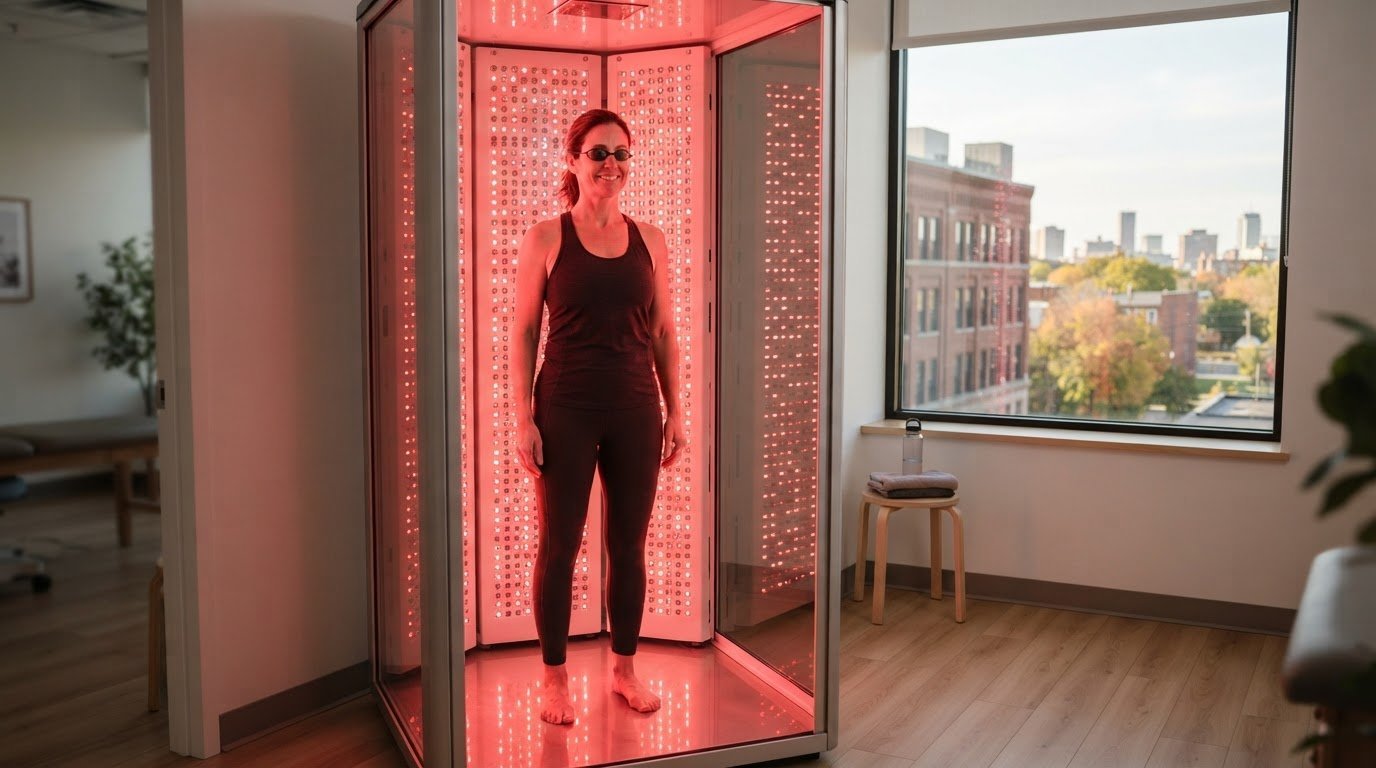
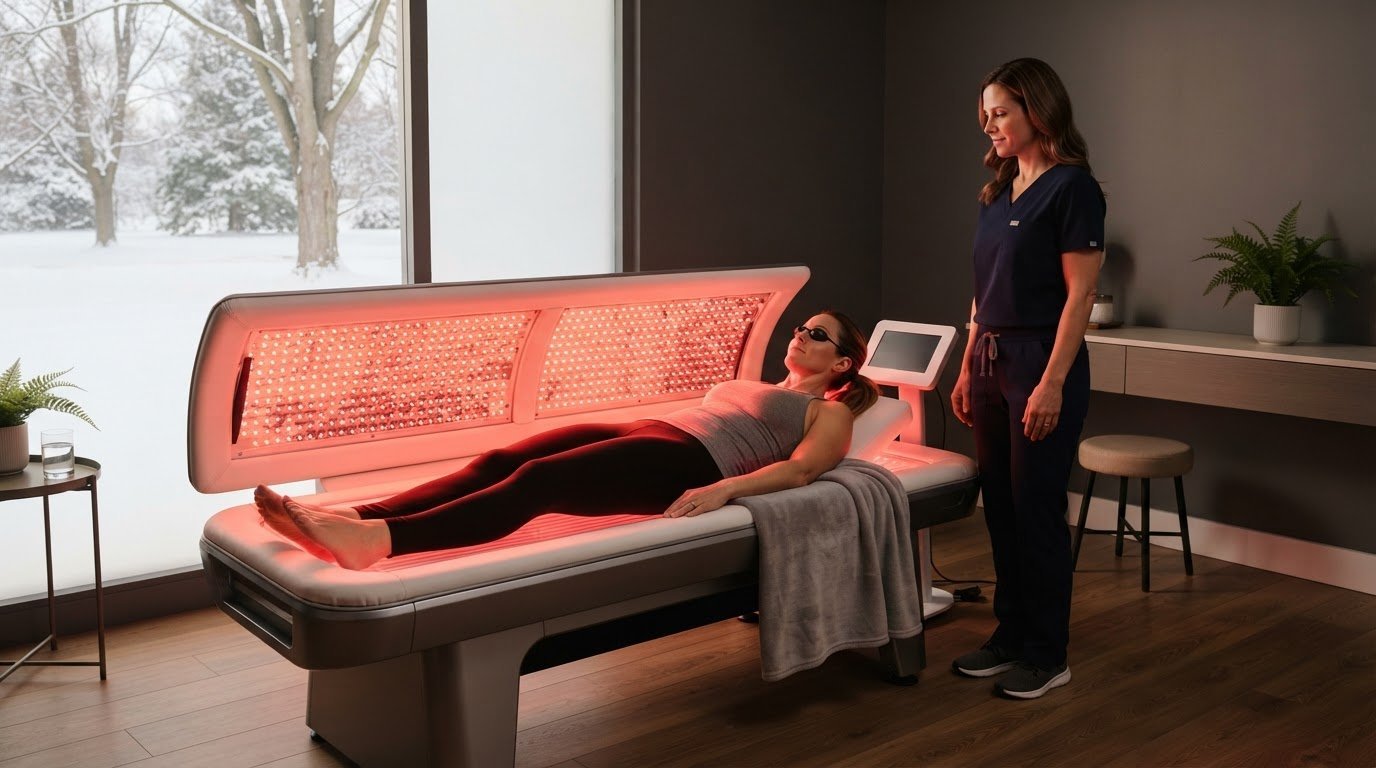
A full-body red light bed exposes a broader area than a targeted device, but the right option depends on your goal. When weighing full body red light bed benefits in Western New York, consider the treatment area, the light used, and the evidence for the outcome you’re seeking.
It’s reasonable to ask whether a bed offers more than a targeted device and whether the claims are supported by evidence. To assess full body red light bed benefits in Western New York, distinguish studied outcomes from broad promises: findings and treatment protocols vary.
This article explains how red light therapy works, what the evidence suggests about its benefits and limits, and what to expect during a full-body session. It also looks at how often people may use a bed and why the right approach depends on the treatment area and goal.
Key Takeaways
- Understand how red and near-infrared light differ, and why wavelength matters when considering a therapy bed.
- Use session schedules as general reference points, then consider how your goals and response shape a treatment plan.
- Separate promising findings about skin and other concerns from claims that red light therapy treats disease.
- Know what to expect during a session and why following device instructions for eye protection matters.
- For body-contouring goals, explore how Emsculpt Neo differs from light therapy. Contact My Health 360 for a Meet and Greet with Medical Director Dr. Fatima to discuss whether the procedure is a good option for you.
Suggested treatment frequency and session counts
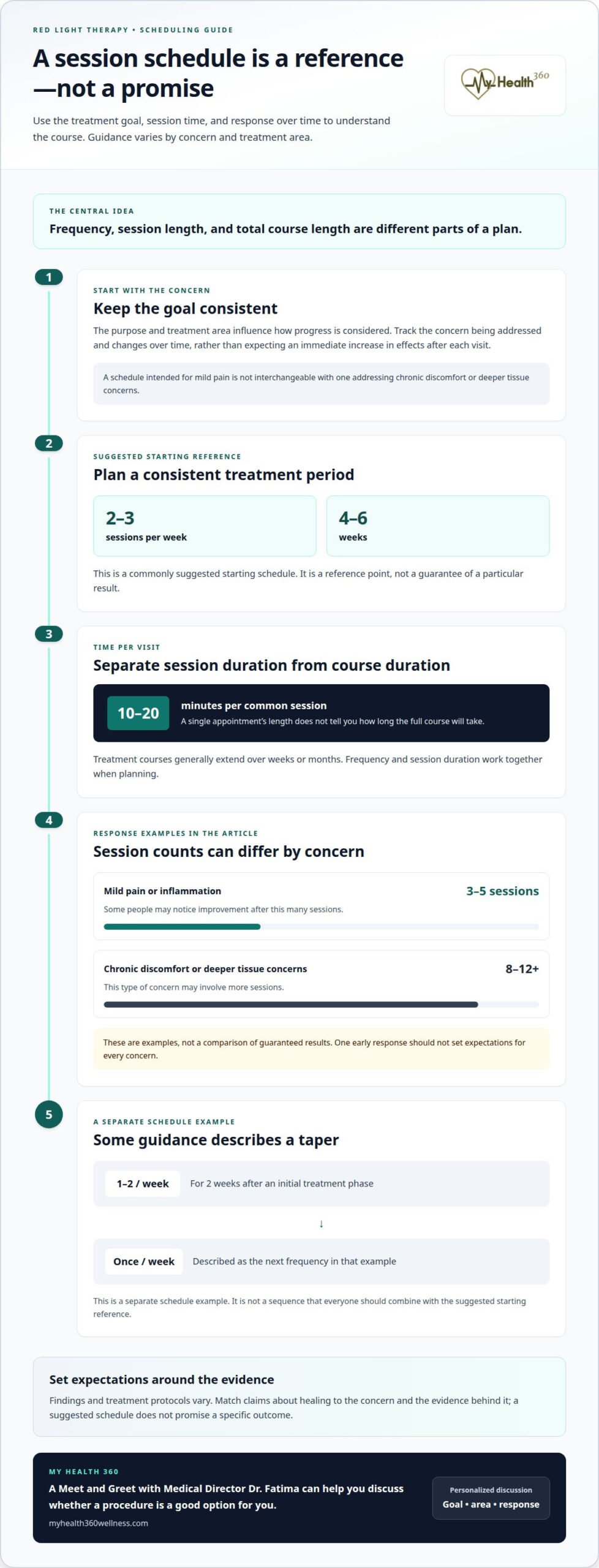
A commonly suggested starting schedule is 2 to 3 sessions per week for 4 to 6 weeks. Session length, treatment course, and observed effects all matter when setting expectations.
Treatment Frequency and Expected Results
Treatment frequency is how often sessions are scheduled across a course, and it matters because results are assessed over repeated exposures. Some people with mild pain or inflammation may notice improvement after 3-5 sessions, while chronic discomfort or deeper tissue concerns may involve 8-12 or more sessions. These examples show why one early response shouldn’t define expectations for every concern.
A suggested schedule is a reference point, not a promise of a particular result. For example, 2 to 3 weekly visits across 4 to 6 weeks creates a consistent treatment period. The purpose and treatment area influence how progress is considered. Track the concern being addressed and changes over time, rather than expecting an immediate increase in effects after each visit. Claims about healing should also match the concern and the evidence behind it.
Session Duration and Treatment Course
Session duration is the time spent under the light during one visit, while a treatment course spans multiple visits. A common session lasts 10-20 minutes, and courses generally extend over weeks or months. This distinction helps with planning: the time for one appointment doesn’t indicate how long a full course will take.
Frequency and duration work together. A suggested plan uses 2 to 3 sessions per week for 4 to 6 weeks, with each session commonly lasting 10-20 minutes. Other guidance describes 1 to 2 sessions per week for 2 weeks after an initial treatment phase, followed by once session per week. These are separate schedule examples, not steps that every person should combine.
- Initial reference: 2 to 3 sessions per week for 4 to 6 weeks.
- Session length: 10-20 minutes for a typical visit.
- Mild pain or inflammation: Some people notice improvement after 3-5 sessions.
- Chronic discomfort or deeper tissue concerns: 8-12 or more sessions may be involved.
For someone planning around work or other appointments in Western New York, the 10-20-minute session estimate helps gauge visit time. The broader course requires a separate commitment across weeks or months. Keep the goal consistent when evaluating changes: a schedule intended for mild pain isn’t interchangeable with one addressing chronic discomfort. Those distinctions make frequency, session count, and duration more useful than a single number viewed alone.
What is Red Light Therapy?
Red light therapy uses selected wavelengths of visible red light, sometimes alongside near-infrared light. Before choosing a Western New York provider, look for clear information about wavelengths, treatment area, device instructions, and how exposure is tailored to your goal. A full-body bed places light sources around much of the body; wavelength and exposure time help determine the delivered dose.
Photobiomodulation and Light Therapy
Photobiomodulation means using light to influence biological tissue; red light therapy is one form. The term describes an approach, not a guaranteed result. For people comparing light therapy options in Buffalo, this distinction helps separate the treatment method from claims about what it can achieve.
Devices vary in wavelength, coverage, and exposure settings, so “red light therapy” alone doesn’t describe the treatment. Ask how the device instructions define its intended use and how exposure relates to the treatment area. A bed offers broader coverage than a small device aimed at one location.
Red and Near-Infrared Light
Red light therapy typically uses wavelengths between 630 and 700 nanometers, while near-infrared light is described as spanning 700 to 1200 nm. These bands sit beside each other, but they aren’t interchangeable descriptions. The specific wavelengths matter because they identify the light delivered by a device.
Wavelength references can vary: one description places red light at 620-780 nm and infrared at 780 nm and above. When comparing a provider’s equipment, focus on the device’s stated range rather than assuming all beds use identical light. This makes it easier to understand what “red and near-infrared” means for a particular session.
How Full-Body Beds Deliver Light
A full-body bed surrounds the user with light sources to expose a broader area in one session. Wavelength identifies the type of light; dose describes the energy delivered to tissue. Dose depends on factors such as device output and exposure time. The available research doesn’t establish one dose for every bed.
In Buffalo, ask how the provider explains the bed’s wavelength, exposure settings, and intended treatment area. Follow the device directions, including instructions for protective eyewear, especially when light reaches near the face. A full-body setup covers more area than a handheld device, but broader exposure doesn’t mean every concern needs whole-body treatment.
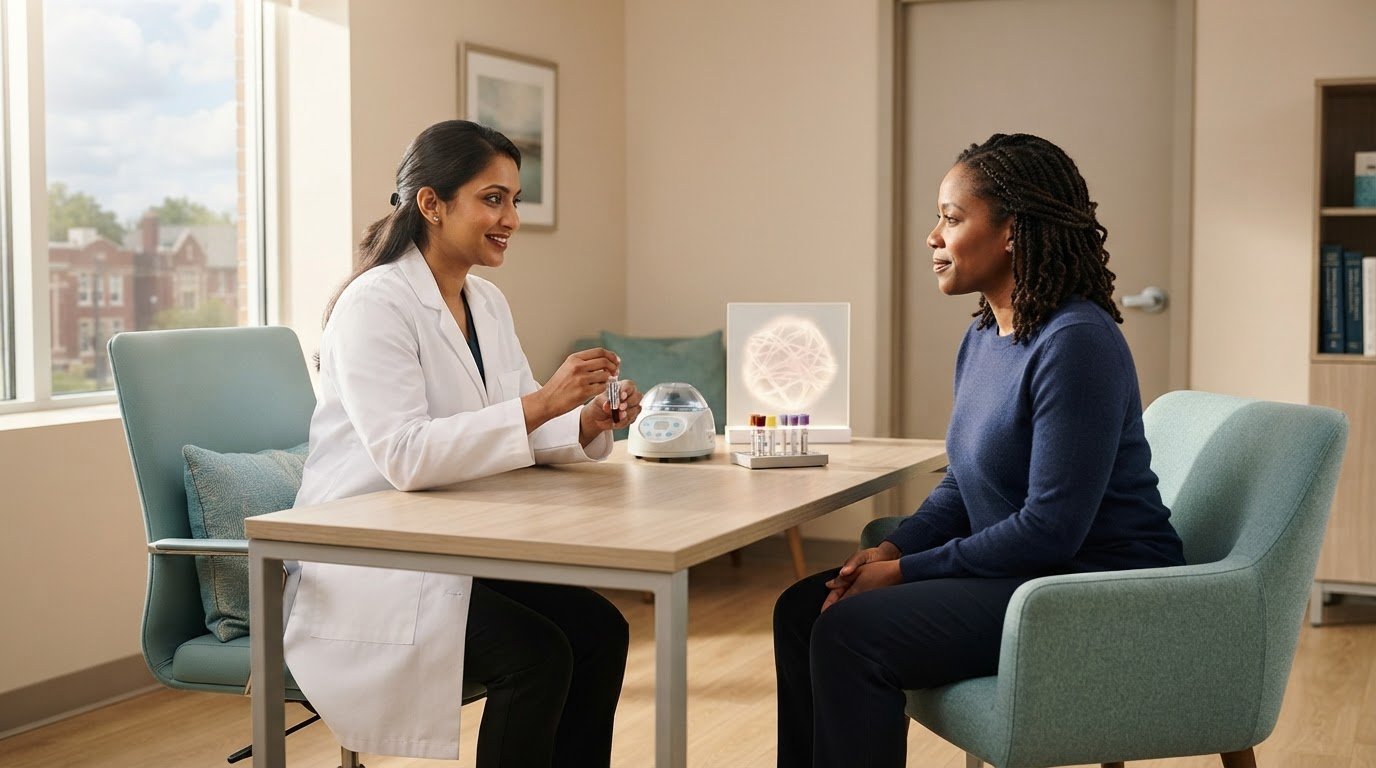
For a personalized discussion about whether this approach fits your goals, schedule a Meet and Greet appointment with Medical Director Dr. Fatima.
Claims, scientific evidence, and disease-treatment limitations
Red light therapy can injure the eyes without appropriate protection. The American Academy of Dermatology Association advises following device directions, including instructions for eye protection. It also recommends extra caution for darker skin tones, as sensitivity and hyperpigmentation may occur. Anyone with a history of skin or eye cancer should consult an oncologist or primary care physician before treatment.
Research findings relate to specific conditions, devices, and treatment schedules. One study of a red light therapy mask found improved skin quality after three months of use. A small acne study involved six treatments spaced two weeks apart. These examples describe particular protocols, not a universal schedule or a guarantee that another device will have the same effects.
Another study involved people with mild to moderate dementia who received red light therapy for six minutes daily over eight weeks. This finding doesn’t prove that a bed treats dementia. The Centers for Medicare & Medicaid Services states that no red- or infrared-light devices have been approved to treat or manage diseases such as peripheral sensory neuropathy and wounds. Red light therapy shouldn’t replace established disease care.
Before starting treatment, consult a physician about your health history, goal, and any medications or conditions that may affect light sensitivity. The American Academy of Dermatology Association also advises choosing a device intended for the area or condition being treated. This matters when comparing a full-body bed with a localized device: broader coverage alone doesn’t mean it suits a particular concern.
When comparing treatment locations in Buffalo, consider the device’s stated purpose, treatment area, and instructions rather than relying on the word “clinical.” The FDA evaluates the safety, not the effectiveness, of red light therapy devices. Research hasn’t suggested that red light causes cancer, unlike ultraviolet light, but anyone with a history of skin or eye cancer should seek medical advice before use. These distinctions help separate a safety review from evidence of benefit.
In Buffalo, treatment pricing depends on the case and is provided after a quote request; factors include the treatment area, device type, and session length. Home-device costs also vary by size and type, and a smaller device may not provide the same coverage as a full-body bed. Compare intended use and treatment area, not price alone. For example, a localized device is designed for a specific area, while a bed provides broader exposure.
Session experience and protective eyewear
A full-body red light session means remaining positioned while a bed delivers light across a broad area. A typical session lasts 10-20 minutes, and protective eyewear is a key part of following the device’s directions.
What to Expect During a Session
A session is a planned period of light exposure, with positioning and duration guided by the device instructions. Knowing the expected length helps you plan your visit and understand what “one session” means within a broader treatment course.
Before exposure begins, review the bed’s directions for positioning, timing, and eye protection. A 10-20-minute session is a common duration, but that range doesn’t establish the right exposure for every device or goal. The settings and instructions for the specific bed matter. During the appointment, follow those directions rather than extending the session to try to increase effects or stimulate healing.
Red light therapy is sometimes discussed in relation to inflammation or recovery, but the purpose of a session should be clear. If you’re seeking support for a specific concern, understand which areas the bed exposes and how the device instructions define treatment. A full-body setup provides broader exposure than a small, targeted light source; it doesn’t mean every part of the body needs the same attention.
Plan around the session, not an assumed result. Keep track of your goal and visit dates so you can consider any changes alongside the actual schedule. A simple record can include the session date, length, area exposed, and observations afterward. These details help distinguish the experience of light exposure from claims about clinical effects.
Eye Protection and Dermatologist Advice
Use the protective eyewear and precautions specified for the device, because bright treatment light can harm the eyes. The American Academy of Dermatology Association advises following device directions, including eye-protection instructions when red light therapy is used near the face.
Read the instructions before starting, and use protective goggles as directed rather than relying on closed eyelids. The device’s placement and treatment area determine which precautions apply. A bed that exposes the face calls for particular attention to its eye-protection guidance; instructions for a device aimed elsewhere may differ.
A dermatologist can help assess skin-related questions, including whether the approach suits your concern. The American Academy of Dermatology Association advises people with darker skin tones to take special care, since red light may increase sensitivity and lead to hyperpigmentation. Consider this before a session, not only after noticing a skin change.
Share relevant skin and eye history during a medical consultation, especially any history of skin or eye cancer. If you have either history, consult an oncologist or primary care physician before using red light therapy. These steps keep treatment decisions grounded in device directions and individual health considerations, rather than assumptions about what a full-body bed can safely address.
Whole-body versus localized light exposure
A full-body bed exposes a broader area at once, while a targeted panel focuses light on a selected region. An infrared sauna uses heat, and a tanning bed uses ultraviolet light; neither is the same modality as red light therapy. Compare coverage and light type rather than assuming one device suits every goal.
Whole-body exposure may appeal if you want light directed across multiple areas in one session. Targeted exposure may make more sense when your goal concerns one specific region, such as a small area of skin. Wider coverage doesn’t automatically mean a better result or a better fit. The American Academy of Dermatology Association advises choosing a red light device intended for the area or condition being treated.
Start by considering the treatment area. If your concern is localized, compare a targeted LED panel with a bed’s broader coverage. If you have several areas in mind, discuss whole-body exposure with a physician. In either case, the device’s intended use, wavelength, and instructions matter more than its size alone.
These devices differ in how they work. Red and near-infrared devices deliver selected light wavelengths; an infrared sauna uses heat rather than the same red-light exposure. Tanning beds use ultraviolet light, which is distinct from red light. A sauna or tanning bed shouldn’t be treated as a substitute for a red light device. Matching the technology to your goal helps keep expectations specific.
- Full-body bed: Broader light exposure across multiple body areas.
- Targeted LED panel: Light directed toward a particular region.
- Infrared sauna: Heat-based experience, distinct from red light exposure.
- Tanning bed: Uses ultraviolet light, not red light therapy.
For a practical comparison, identify the body area, your concern, and whether broader coverage serves that purpose. Then review the device’s stated treatment area and follow its directions, including guidance on eye protection. A physician can help you weigh your goal and health history. Choose based on intended function, not the assumption that full-body exposure is inherently preferable.
Schedule a Meet and Greet with Medical Director Dr. Fatima to discuss whether a red light therapy approach is suitable for your goals.
My Health 360: Emsculpt Neo
My Health 360 offers Emsculpt Neo for body-contouring goals, a different focus from red light therapy. A full-body light bed exposes the body to selected light wavelengths, while Emsculpt Neo is an option to discuss when body contouring is the priority. The distinction matters: treatment choice should follow your goal, not simply the device category.
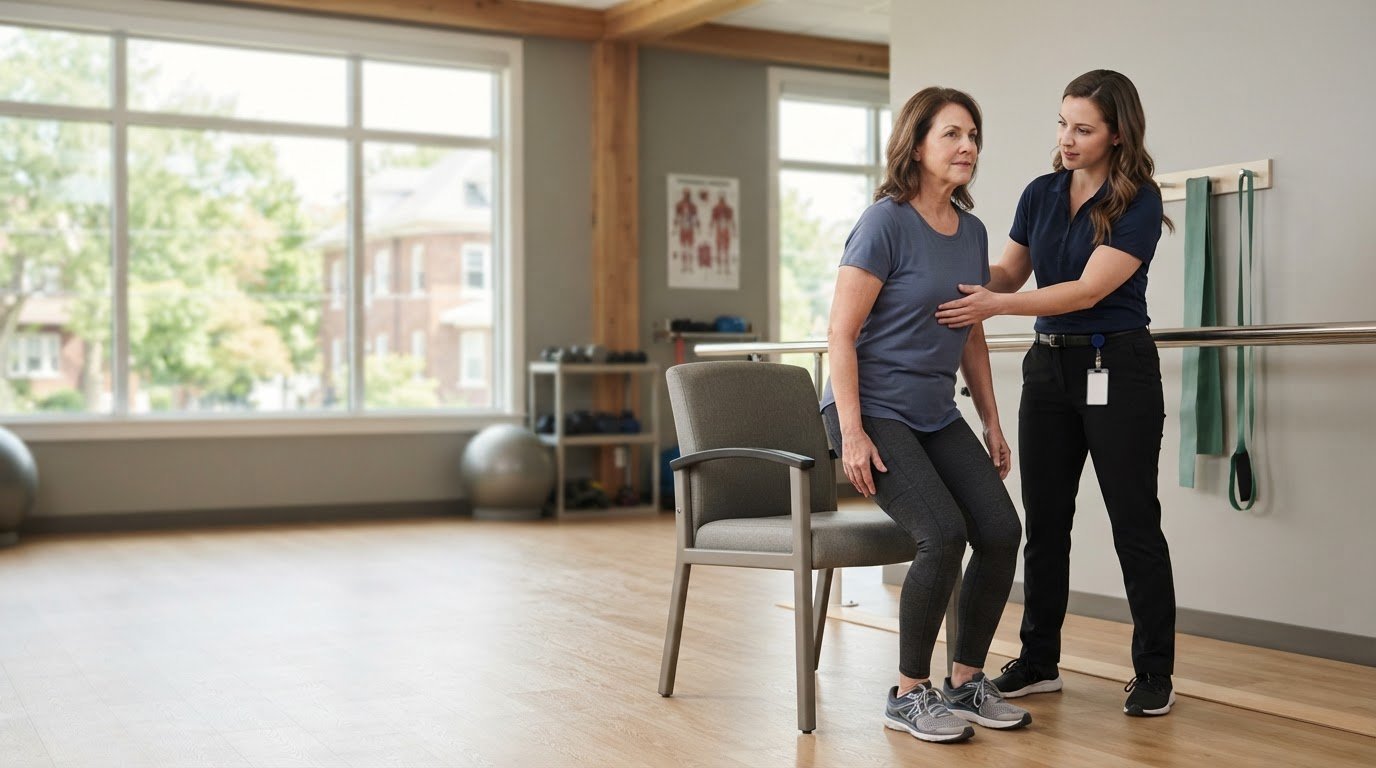
If you’re comparing approaches, consider what you want to address and whether a body-contouring procedure aligns with that goal. For pre-operative or pre-event whole-body habilitation, BioPrime may be relevant; for post-operative or injury habilitation, Bio-Restore may fit that context. These services have different purposes and aren’t interchangeable with red light therapy.
Contact My Health 360 to arrange a Meet and Greet and discuss with Medical Director Dr. Fatima whether Emsculpt Neo is a good option for you.
Choose a next step that fits your goal
For people considering the full-body red light bed benefits in Western New York, the next step is to define what they want to address and discuss that goal with a medical professional. A light-based wellness approach, a body-contouring procedure, and whole-body habilitation serve different purposes. Naming your priority helps shape a more relevant conversation.
At My Health 360, that discussion may include whether Emsculpt Neo aligns with a body-contouring goal, whether BioPrime fits pre-operative or pre-event preparation, or whether Bio-Restore is relevant after an operation or injury. These options are not interchangeable, so bring your goals and relevant health history to the conversation.
Contact My Health 360 for a Meet and Greet appointment with Medical Director Dr. Fatima to discuss whether a procedure is a good option for you. Arrange your Meet and Greet and take a thoughtful next step toward care that reflects your priorities.
Frequently Asked Questions
How Long Until I See the Results?
There’s no single timeline that applies to every goal or person. Some people notice a healthy glow or subtle change after a session, while other changes may take a course of treatment to assess. Choose a clear outcome to track, such as a specific skin concern, and note changes consistently. This gives you a more useful basis for discussing your experience than relying on memory.
How Many Appointments Will I Need?
The appointment count depends on the concern and the response over time. A suggested range for mild pain or inflammation is 3-5 sessions before some people notice improvement; chronic discomfort or deeper tissue concerns may involve 8-12 or more. These examples aren’t a personal prescription. Before starting, identify the goal and consider how progress will be assessed across the planned visits.
What are the evidence-based benefits of full-body red light therapy beds?
Research has explored outcomes such as skin quality, but evidence relates to particular devices and protocols. One study of a mask reported improved skin quality after three months; that doesn’t establish the same outcome for every bed. When evaluating a claimed benefit, consider whether the evidence concerns a similar treatment area, device type, and intended outcome.
What conditions can red light therapy help, and what claims are unsupported?
Studies have examined skin quality, acne, pain, and inflammation, but evidence for one use doesn’t establish an effect for every condition. The Centers for Medicare & Medicaid Services states that no red- or infrared-light devices have been approved to treat or manage diseases such as peripheral sensory neuropathy and wounds. Treat disease claims cautiously, and don’t replace established medical care with light therapy.
How many sessions are typically needed, how long does each session take, and how often should you go?
One suggested schedule is 2 to 3 sessions per week for 4 to 6 weeks, and a typical session lasts 10-20 minutes. Other schedule examples include 1 to 2 sessions per week for 2 weeks after an initial phase, followed by once session per week. These examples aren’t meant to be combined automatically. The treatment goal, area, device directions, and response all inform the course.
What does full-body red light therapy cost in Western New York?
The price depends on the treatment case and is provided after a quote request. Factors include the area treated, device type, and session length. A full-body bed and a localized device involve different coverage, so make sure the service being discussed matches your intended treatment area. If considering a course, clarify how many sessions the quoted plan includes before making a decision.
Where can you find full-body red light therapy beds in Buffalo and nearby Western New York areas?
My Health 360 offers whole-body red light therapy in Buffalo and surrounding Western New York communities, including Clarence, Orchard Park, Grand Island, Tonawanda, Elma, Amherst, and Williamsville. These locations provide local context for people considering treatment near home. If you’re comparing travel options, start with the community you live in and consider whether the full course would be practical to attend.
Which Western New York providers offer red light beds, and what devices, wavelengths, and session options do they list?
My Health 360 offers whole-body red light therapy. Red light therapy commonly uses wavelengths between 630 and 700 nanometers, while near-infrared light is described as spanning 700 to 1200 nm. A typical session lasts 10-20 minutes, but these are general therapy ranges, not specifications for a particular bed. Device instructions and intended treatment areas are important when comparing session options.