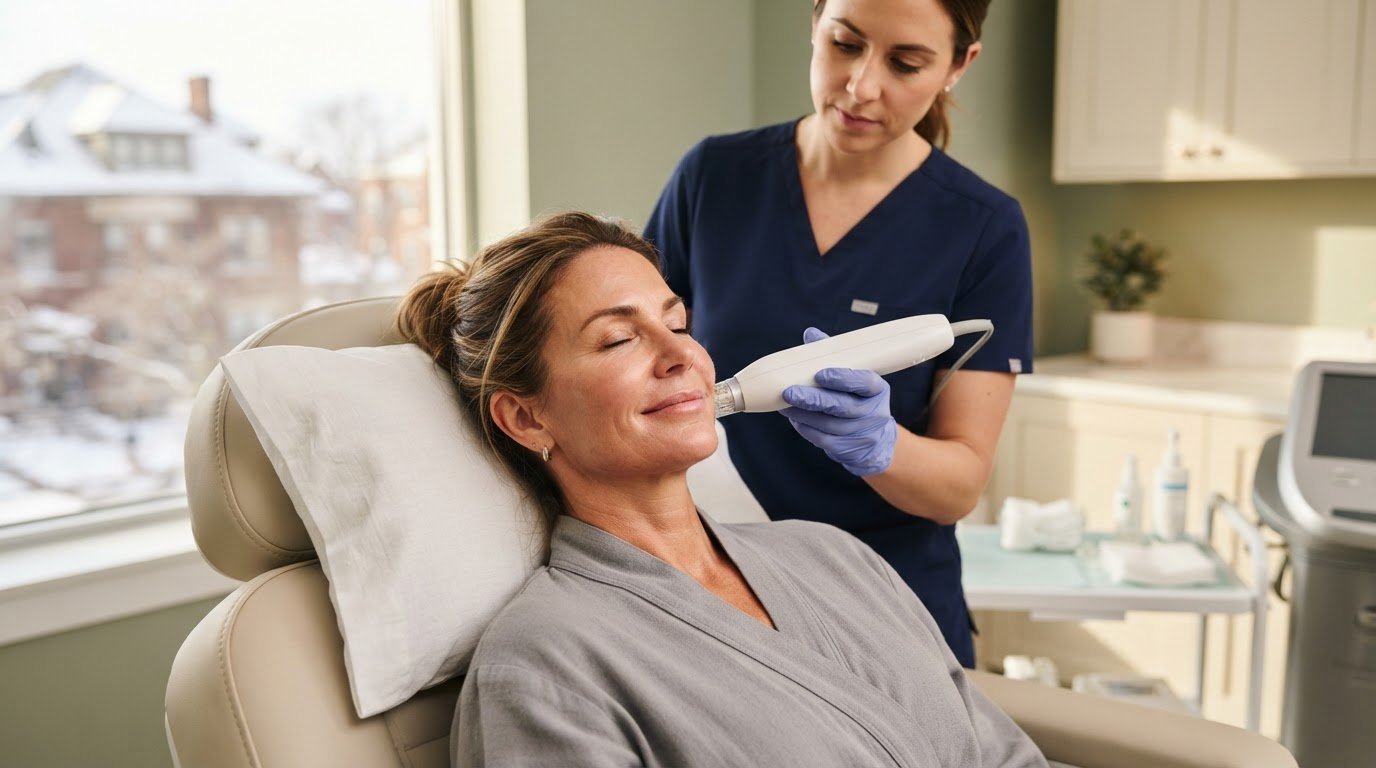
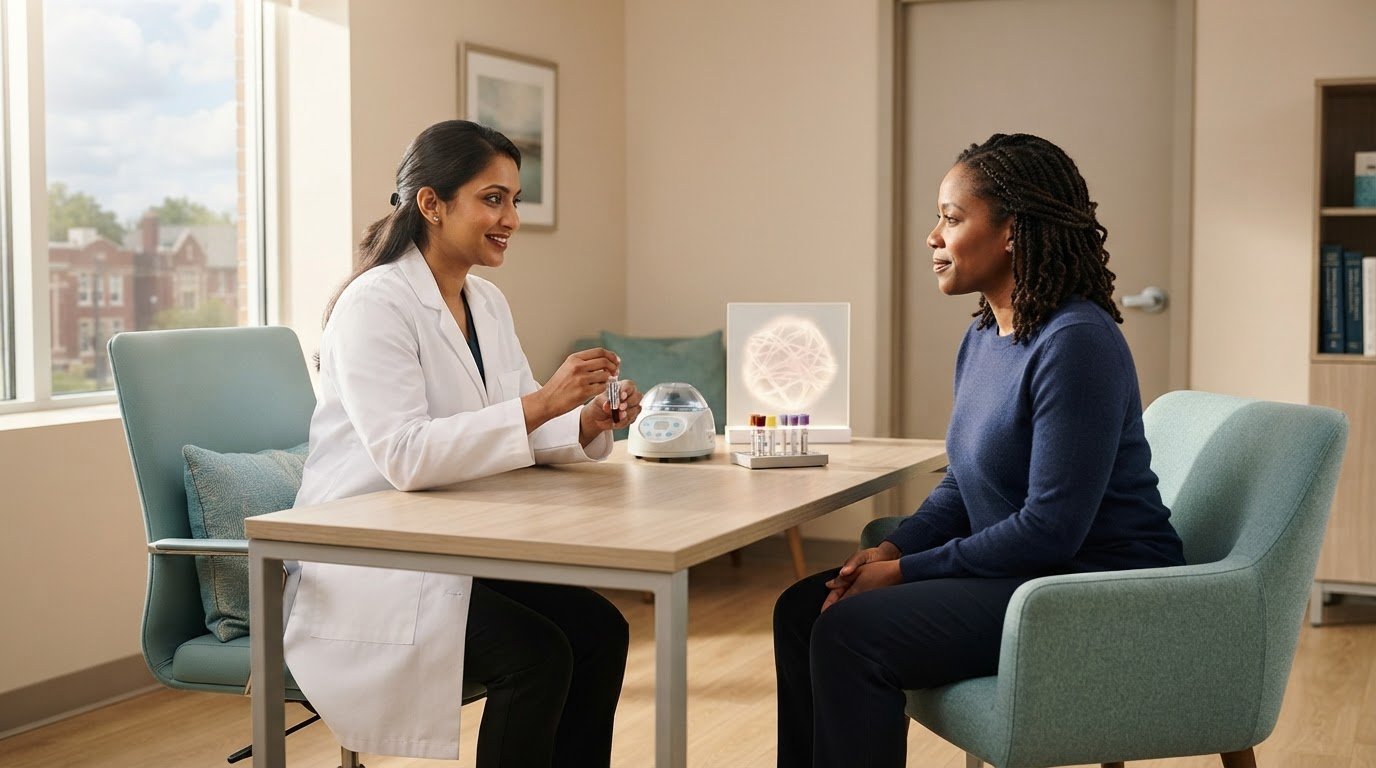
Appointment length varies because preparation, blood processing, and the treatment areas all affect the timeline. For PRFM intimate tissue regeneration, a small blood sample is processed into a platelet-rich fibrin matrix, which is then used in the planned areas. The appointment is only one part of the process; any tissue changes develop over time.
Before considering an intimate wellness procedure, it helps to understand what happens, what it may address, and what recovery may involve. This guide explains how PRFM is prepared and used, how treatment time and results can vary, and which potential uses and side effects to discuss at a consultation. It also distinguishes PRFM from related regenerative approaches, since protocols and evidence differ. With this information, you can consider whether the approach aligns with your concerns and goals.
Key Takeaways
- Learn how a small blood sample is processed into PRFM and how the preparation differs from liquid PRP.
- Understand which intimate areas may be targeted and how the treatment plan relates to tissue concerns and goals.
- Know what sensations may occur during treatment and what to consider when planning for recovery.
- Explore potential tissue-support uses and why changes may develop gradually over several weeks.
- Contact My Health 360 to book a Meet and Greet with Medical Director Dr. Fatima and discuss whether a procedure is a good option for you.
Is the Treatment Painful?
Patients receiving platelet-based regenerative treatments typically describe mild pressure or tingling rather than intense pain. Sensation depends on the treatment area and injection technique. For intimate tissue treatment, injections are placed in selected areas, so brief pressure may occur as the needle is positioned. Some protocols use topical numbing or a gentle technique to support comfort.
Anticipation or sensitivity in the treatment area can also contribute to discomfort. During consultation, mention any previous experiences with injections, tenderness, or difficulty tolerating pelvic exams. This context can inform the approach and how the targeted areas are treated. Careful placement matters more than rushing through the procedure.
There is no single appointment length for every treatment plan. The visit includes preparation, blood collection and processing, and injections into selected areas. The number and location of injection sites, the processing method, and any additional modalities affect the total time. Ask how each step will be arranged for your plan.
A plan may involve one treatment, a series, or maintenance. Tissue quality, goals, response to treatment, and the selected therapies all factor into that decision. Visit frequency is not determined by discomfort alone. A consultation considers symptoms, anatomy, health history, and desired changes before a plan is established.
Changes from PRF develop gradually over several weeks, rather than appearing immediately after treatment. Tissue response unfolds over time. PRF results often last up to a year or longer, but the timing and duration of benefits vary from person to person. Discuss what changes are realistic for your concerns.
Downtime is generally limited after PRF treatment, and patients can resume normal activities the same day. However, sensations and activity tolerance may not feel exactly the same right away. Follow your individualized aftercare instructions, and note any discomfort that changes or persists. Returning to routine the same day may be practical, while tissue response continues to develop over the following weeks.
Guidance about sexual activity should be specific to the treatment performed. Same-day intimacy is stated for vaginal PRP, but that timing should not automatically be applied to PRFM or another protocol. Ask for instructions that reflect the injections and areas treated. Clear guidance helps balance comfort, recovery, and the intended tissue support.
Injection locations and procedure steps
A consultation clarifies the treatment plan, intended injection locations, and whether PRF or PRFM is being considered. These distinctions matter because preparation and protocols can differ.
When considering intimate PRFM treatment, look for an experienced physician who can clearly explain the procedure, relevant experience, and rationale for treatment. At the consultation, discuss your symptoms, anatomy, health history, and goals, and ask how these inform the proposed plan.
Treatment Preparation
Preparation starts with a consultation to assess candidacy and develop an individualized treatment plan. The discussion can identify the concern being addressed, the targeted tissue, and the proposed regenerative material. Share any sensitivities or concerns about injections and comfort. Before proceeding, make sure the plan explains each step, including blood collection, processing, and how the prepared material will be used.
PRF and PRFM Treatment Processes
Both approaches use a small blood sample processed to concentrate platelets and growth factors. PRF is produced through slower centrifugation than PRP. PRFM is a platelet-rich fibrin matrix, rather than a liquid plasma preparation. These terms describe different materials and processes, so the consultation should specify the planned protocol. In selected intimate wellness plans, an energy-based treatment may precede PRP, PRFM, or recombinant PDGF.
In the described intimate PRF procedure, prepared PRF is injected into targeted vaginal and clitoral areas. The treatment plan and tissue concerns determine which locations are selected. The procedure is performed without sedation or hospital admission when the protocol is vaginal PRP, but that detail should not be assumed to apply to every PRFM protocol.
Injection placement depends on the area being treated. A plan focused on vaginal tissue may differ from one that also targets clitoral tissue. The physician should explain why each area is included, what material will be injected, and how the procedure relates to your goals. This step-by-step discussion helps you understand what to expect before treatment.
Discuss comfort before the procedure, including whether the protocol uses a gentle technique or topical numbing. Ask how the physician will communicate during injection placement and what sensations may occur. Clear communication supports a more considered experience, especially when treatment involves sensitive anatomy.
After preparation, the physician administers the material according to the agreed plan. The consultation should clarify whether the plan involves PRF, PRFM, or another protocol, since preparation and use differ. Understanding these distinctions helps you make an informed decision about intimate tissue treatment.
Are There Any Side Effects?
PRFM means platelet-rich fibrin matrix, prepared from a patient’s own blood and used to support tissue. For intimate treatment, the proposed aim is to support vaginal tissue quality. It does not guarantee a result or replace surgery when anatomy requires surgical correction.
Potential Temporary Side Effects
Injection-based procedures place material into targeted tissue, so ask the physician which temporary effects may occur with the specific protocol. The available safety description characterizes PRP and PRFM injections as involving minimal downtime and a low risk profile. These terms do not identify every possible reaction or predict an individual response.
Before treatment, ask what sensations or changes to expect, how long they may last, and which symptoms require follow-up. Discuss the injection locations and planned material, whether PRFM, PRP, or another protocol. These details matter because preparation and use differ.
After treatment, follow your individualized instructions and monitor how the treated area feels. If a change concerns you, contact the treating physician for guidance rather than assuming it is a normal response. A clear follow-up plan helps distinguish expected recovery from a concern that needs assessment.
Safety and Allergic Reactions
PRP and PRFM are prepared from a small sample of the patient’s own blood, which is processed to concentrate platelets and growth factors. Using a person’s own blood does not mean every protocol is risk-free. Ask the physician to explain the preparation, any other materials involved, and how those details relate to your health history.
PRF is described as natural and free from additives. That description should not be assumed to apply to PRFM, recombinant PDGF, or every combined protocol. These approaches differ in preparation, evidence, regulatory status, and appropriate use, so ask which material is proposed and why.
Discuss allergies specifically rather than relying on a broad label such as “natural.” Share known allergies and previous reactions, and ask whether the proposed treatment includes anything beyond your processed blood. This helps clarify what will be injected and which potential sensitivities the physician considers.
PRF is intended to support collagen and elastin production, tissue tone, and firmness. It may also increase blood flow, potentially enhancing sensitivity and arousal, or stimulate natural lubrication. These are proposed uses, not promises of vaginal rejuvenation or symptom relief.
Regenerative treatments may support tissue quality or recovery planning for selected patients, but they do not replace surgical correction when anatomy requires surgery. A consultation can relate symptoms, anatomy, health history, and goals to the treatment plan. Ask how changes will be assessed and what follow-up is appropriate for your protocol.
For a safety-focused discussion, ask the physician to identify the exact treatment material, targeted areas, potential temporary effects, and response plan. This specific conversation gives you a clearer basis for weighing potential tissue-support benefits against the procedure’s limitations and risks.
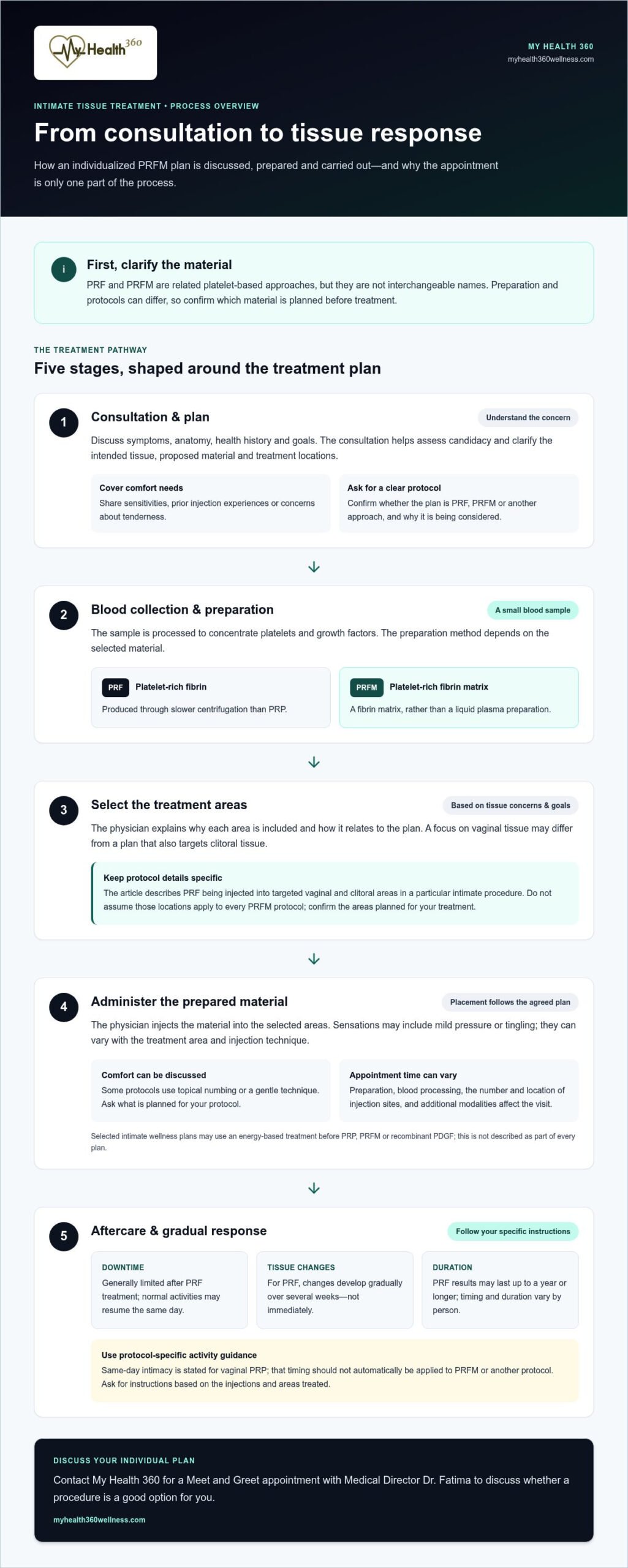
How PRP and PRFM are prepared from blood
Both platelet-rich plasma (PRP) and platelet-rich fibrin matrix (PRFM) start with a small sample of the patient’s own blood. Processing concentrates platelets and growth factors, but the preparation method affects the resulting material. Knowing the difference helps clarify what a proposed therapy involves.
For PRP, the blood sample is processed to separate platelet-rich plasma from other blood components. The resulting liquid delivers growth factors to targeted tissue. PRFM preparation instead forms a fibrin scaffold that supports slower growth-factor release and greater structural support. These terms describe distinct preparations, not interchangeable names for the same injection.
PRF involves slower centrifugation than PRP, a process described as preserving more growth factors and healing cells. PRFM is a platelet-rich fibrin matrix. Platelets may remain viable in PRFM for hours to days, compared with minutes to hours in PRP. PRFM growth factors may be released for up to seven days, while PRP growth-factor activation is immediate.
Understanding a SELPHYL PRFM Protocol
If a plan is described as SELPHYL PRFM, ask the physician to clarify the material being prepared and the steps involved. The key distinction is that PRFM forms a fibrin matrix, unlike liquid PRP. Ask how the preparation relates to the targeted tissue and treatment goals, such as supporting tissue quality or collagen production. The product name alone does not explain the proposed use.
Preparation advice should match the specific procedure. For vaginal PRP, patients are advised to avoid alcohol for at least 24 hours before treatment. That instruction applies to vaginal PRP; it shouldn’t automatically be transferred to a PRFM plan. The consultation can cover personal health history, planned injection areas, and any relevant sensitivities before blood collection.
Before proceeding, understand how the blood sample will be collected, processed, and used. The method matters because PRP, PRFM, recombinant PDGF, and peptide protocols differ in evidence, regulatory status, and appropriate use. A clear explanation distinguishes a patient-derived preparation from a manufactured product and connects the selected approach to the intended treatment.
Intimate tissue concerns can include dryness, sensitivity, or changes in tissue quality, but the preparation process alone does not determine how an individual will respond. Ask how the selected material is intended to support your treatment goal and how response will be assessed. This keeps the discussion grounded in the specific protocol rather than assuming all platelet therapies work alike.
Possible intimate wellness and tissue-support uses
PRFM uses a blood-derived fibrin matrix, while intimate regenerative approaches may target specific tissue concerns. Proposed uses focus on tissue quality, comfort, and function, rather than treating every cause of intimate symptoms.
How much does PRFM intimate tissue regeneration cost in the United States? There is no single price for every treatment plan; cost depends on the case and is provided after a quote request. Factors include the selected protocol, targeted areas, preparation, and whether the plan involves a series or maintenance.
One possible focus is tissue tone and firmness. PRF is described as supporting collagen and elastin production, which may improve tissue tone. A physician may discuss this approach when a patient’s goals relate to tissue quality. The sample is processed into a platelet-rich preparation, but the proposed effect depends on the protocol and treatment area.
Blood flow is another proposed pathway. PRF may increase local circulation, potentially supporting sensitivity and arousal for some patients. This is a potential intimate wellness use, not a guarantee of a particular sexual response. A treatment discussion should connect the concern, such as reduced sensation, with the targeted area and intended outcome.
Dryness and discomfort are also relevant concerns. PRF may stimulate natural lubrication, potentially helping ease dryness-related discomfort. These symptoms can have different causes, so the treatment rationale should take the person’s symptoms and health history into account. A regenerative injection is not a universal remedy for vaginal dryness.
“Rich fibrin” describes the matrix structure associated with PRFM. This structure supports slower growth-factor release and greater structural support than liquid PRP. The distinction helps explain why physicians may discuss different platelet-based preparations for different goals. It does not establish that PRFM and PRF have identical uses or evidence.
In selected intimate wellness plans, an energy-based treatment may be performed before PRP, PRFM, or recombinant PDGF. These protocols differ in evidence, regulatory status, and appropriate use. Ask which material is proposed, why it fits the treatment goal, and how its role differs from other options.
Regenerative treatment may support tissue quality or recovery planning for selected patients, but it does not replace surgical correction when anatomy requires surgery. This distinction matters when a concern involves structural changes rather than tissue quality alone. Match the proposed approach to the concern, and clarify what it can and cannot address.
For a personalized discussion of intimate wellness concerns, contact My Health 360 to arrange a Meet and Greet with Medical Director Dr. Fatima and discuss whether a procedure is a good option for you.
My Health 360: Emsculpt Neo
My Health 360 offers Emsculpt Neo for body-contouring goals, a distinct focus from PRFM’s proposed intimate tissue support. If you’re considering care for different concerns, separating the goals can help clarify which treatment discussion is relevant. My Health 360 also offers Women’s Health and Emsella, providing additional options to discuss in relation to your needs.
For a personalized next step, contact My Health 360 to arrange a Meet and Greet with Medical Director Dr. Fatima and discuss whether a procedure is a good option for you.
Take the Next Step With a Clear Goal
Before choosing a treatment, identify the concern you most want addressed and what meaningful progress would look like. This discussion can distinguish intimate tissue goals from broader wellness needs and keep your next decision focused. If you are considering PRFM intimate tissue regeneration, bring your priorities and questions to a personalized discussion rather than relying on a procedure name alone.
If your care pathway involves preparation for an event or procedure, BioPrime offers pre-operative and pre-event whole-body habilitation. For post-operative or injury recovery, Bio-Restore provides whole-body habilitation. These programs address different needs, so the right discussion begins with your goals and circumstances.
Contact My Health 360 to arrange a Meet and Greet with Medical Director Dr. Fatima and discuss whether a procedure is a good option for you. Contact My Health 360 to schedule your Meet and Greet, and take your next step with greater clarity.
Frequently Asked Questions
How Long Does the Procedure Take?
Appointment length depends on blood collection and processing, injection areas, and the steps in the treatment plan. A plan involving multiple targeted areas may require additional time for careful placement. Ask how the visit is structured, including preparation and post-treatment instructions, so you can plan your schedule. The injections are only one part of the appointment.
How Many Treatments are Needed?
The plan may involve one treatment, a series, or maintenance. Tissue quality, goals, response, and selected therapies shape the recommendation. For example, a plan focused on one concern may differ from one addressing several tissue goals. The physician should explain the reasoning behind the proposed number of visits and how progress will inform later treatment decisions.
What’s the Difference Between PRP and PRFM?
PRP is liquid platelet-rich plasma, while PRFM is a platelet-rich fibrin matrix with a scaffold structure. PRP growth-factor activation is immediate; PRFM supports release over hours to days. This difference matters when discussing the planned material and its intended use. Ask which preparation is proposed and why it fits the treatment area and your goals.
Considering Vaginal PRP?
Vaginal PRP is a platelet-based approach that may be considered for selected tissue-support goals. Discuss the symptoms you want addressed, your health history, and the proposed treatment areas during consultation. Ask what changes the protocol is intended to support, what aftercare applies, and how response will be assessed. Alcohol avoidance for at least 24 hours before treatment is advised for vaginal PRP.
Do regenerative treatments replace surgery?
No. Regenerative treatments may support tissue quality or recovery planning for selected patients, but they do not replace surgical correction when anatomy requires surgery. This distinction matters when a concern involves structural changes rather than tissue quality alone. Discussing symptoms, anatomy, and goals can help clarify whether a nonsurgical tissue-support approach matches the concern.
How long do the results of Vaginal PRP last?
Initial improvements after Vaginal PRP typically appear within 2 to 4 weeks. Changes may continue to improve for up to 6 months, and many patients may experience benefits for up to 1 year. These milestones describe a gradual response, not an immediate change. The treatment plan and follow-up should focus on the goals being assessed and how they evolve.
How does PRFM treatment for vaginal or vulvar tissue work?
PRFM is made by processing a small sample of the patient’s blood into a platelet-rich fibrin matrix. The exact protocol and injection locations should be clearly identified during consultation. A described intimate PRF procedure targets vaginal and clitoral areas, but PRF and PRFM are distinct preparations. Ask which material is planned for vaginal or vulvar tissue and how it will be used.
What intimate concerns is PRFM used to treat?
Intimate regenerative approaches may be discussed for tissue tone, firmness, dryness, or discomfort. PRF is proposed to support collagen and elastin production, blood flow, and natural lubrication. These potential uses do not mean every symptom has the same cause or responds alike. Bring a specific concern, such as dryness or reduced sensitivity, to a consultation to discuss the intended tissue-support goal.