Wrinkle treatment can work beneath the skin’s surface, not just on it. Morpheus8 facial rejuvenation combines microneedling with radiofrequency energy to support changes in skin texture and firmness, and treatment may involve one to three sessions depending on the area treated. Redness and swelling generally resolve within one to three days, while skin improvements develop as collagen remodeling progresses over several months.
If you’re weighing a treatment, it’s natural to want to know what the procedure feels like, how much time to allow for recovery, and whether it suits your skin concerns. This guide explains how Morpheus8 works, what can influence the number of sessions, who may be a candidate, and what to expect before and after treatment. You’ll also learn how to think about provider selection and the questions that can help you make an informed decision about your care.
Key Takeaways
- Treatment plans may involve one to three sessions, with the number shaped by the area treated and your skin concerns.
- Learn how microneedling and radiofrequency work together, and which concerns such as wrinkles, loose skin, and acne scars may be addressed.
- Plan for possible redness and swelling after treatment, and understand how recovery and skin changes can unfold over time.
- Review factors that influence candidacy, including skin needs and the timing of retinol or other exfoliating products.
- Contact My Health 360 to arrange a Meet and Greet and discuss with Medical Director Dr. Fatima whether the procedure may be a good option for you.
How many treatment sessions will I need?
Morpheus8 can address facial wrinkles, uneven skin texture, and mild skin laxity. Potential candidates include people seeking improvement in these concerns, across all skin types and tones.
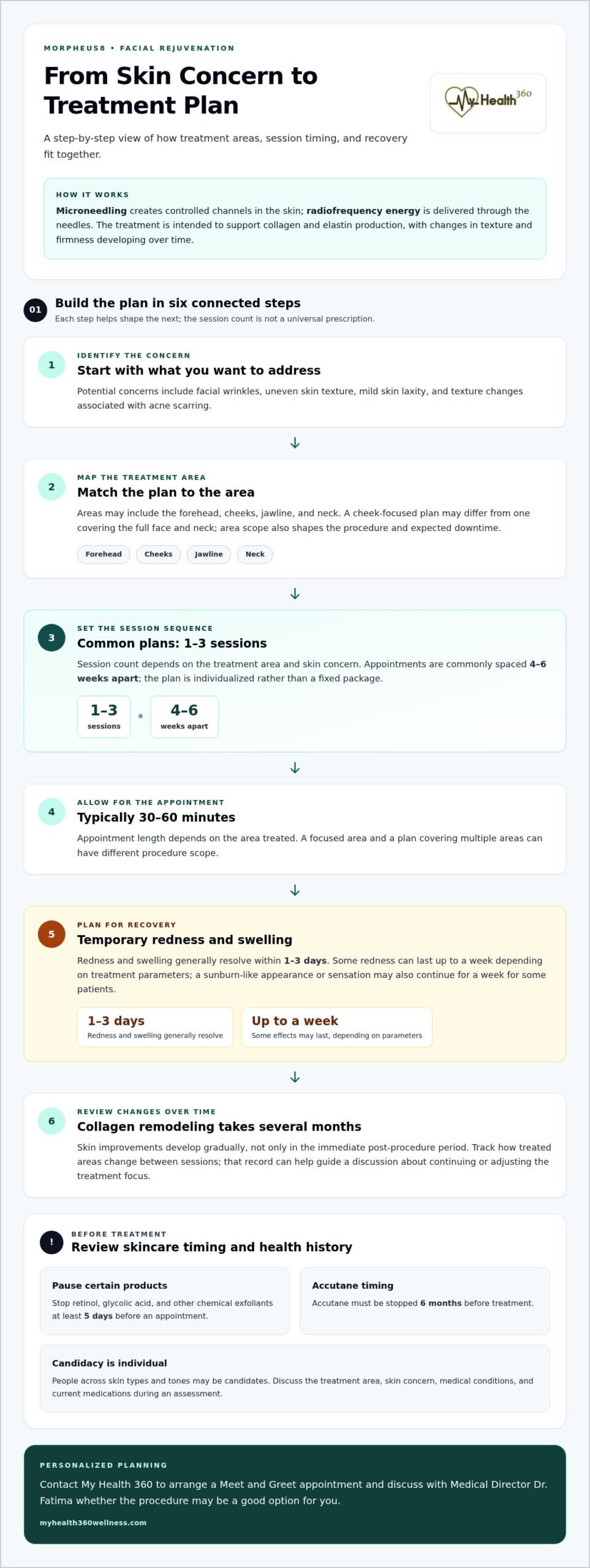
Session count depends on the treatment area and the skin concern being addressed. Plans commonly involve one to three sessions, with appointments spaced four to six weeks apart. A smaller area, such as the cheeks, may require a different plan than the full face and neck. The number of sessions isn’t a universal prescription.
Morpheus8 combines microneedling with radiofrequency energy. Microneedling creates controlled channels in the skin, while radiofrequency energy is delivered through the needles. The procedure is intended to support collagen and elastin production, which can contribute to changes in texture and firmness over time. Treatment can be adjusted for areas such as the forehead, cheeks, jawline, and neck.
Ask how the planned treatment area affects your session schedule. Morpheus8 appointments typically last 30-60 minutes, depending on the area treated. For example, a plan focused on the cheeks may differ from one that includes the cheeks, jawline, and neck. The scope of the procedure also shapes expected downtime and how much skin is treated during each appointment.
FaceTite and Embrace RF may also come up when discussing a broader treatment plan. If either is being considered alongside Morpheus8, clarify which concerns each procedure is intended to address, which areas are included, and how the schedule would be organized. These names alone don’t establish that treatments should be combined or performed in a particular order. The plan needs to account for the treatment areas and recovery expectations together.
Think of session planning as a sequence, rather than a fixed package. First, identify the main concern, such as wrinkles or texture. Next, map the relevant areas, for example, the forehead or jawline. Then consider whether one to three Morpheus8 sessions, spaced four to six weeks apart, suit that plan. Skin response and the area treated help guide the overall approach.
Collagen remodeling develops over time, so an assessment should not rely only on immediate post-procedure changes. Track the treated areas and how they change between sessions. This record can help guide a discussion about whether to continue the planned course or adjust the treatment focus.
Am I A Candidate for Morpheus8 for Wrinkles Treatment?
In the United States, cost varies with the treatment area, session plan, and any combined procedures; a quote follows a request. Morpheus8 may suit people seeking changes in wrinkles, skin texture, or mild laxity.
Wrinkles, Loose Skin, and Acne Scars
Microneedling with radiofrequency may be considered for facial wrinkles, mild loose skin, and uneven texture associated with acne scarring. The treatment uses controlled skin stimulation to support collagen remodeling, rather than removing or resurfacing the skin in the same way as some other procedures.
A study published in the Journal of Drugs in Dermatology reported that 90% of patients noticed improvements in skin texture and wrinkles after one treatment session. That finding relates to the study participants, not a promised outcome for every person. Consider which concern matters most, such as lines around the mouth or textural changes from acne scars.
Facial Texture, Tone, and Tightening
Changes in collagen can contribute to firmer-looking skin and a smoother facial texture as remodeling progresses. Morpheus8 may address concerns such as fine wrinkles, uneven texture, and mild laxity, while the treatment area and settings guide how energy is delivered.
For a practical assessment, identify the specific area and change you want to address. Forehead lines, cheek texture, and jawline laxity are distinct concerns. A treatment plan can prioritize one area or consider several, rather than treating “rejuvenation” as a single, uniform goal.
Skin Tone Suitability
People across skin types and tones may be candidates for Morpheus8. Its radiofrequency energy differs from light-based treatments, which is why skin tone alone does not automatically rule someone out.
Suitability involves more than complexion. Discuss the treatment area, skin concern, and desired degree of tightening to determine whether the procedure aligns with your goals. Describing previous acne scarring, texture changes, or wrinkles clearly helps guide the assessment.
Reasons to Avoid Treatment
Darker skin tones are not, by themselves, a reason to avoid Morpheus8. Certain medical conditions or medications can affect whether treatment should proceed, so disclose relevant health history and current medication use during the assessment.
Timing restrictions also matter. Stop retinol, glycolic acid, and other chemical exfoliants at least five days before an appointment. Accutane must be stopped six months before treatment. These restrictions affect scheduling, but they do not mean that everyone who uses skincare actives is permanently unsuitable.
For a personalized discussion, contact My Health 360 to arrange a Meet and Greet appointment with Medical Director Dr. Fatima and discuss whether the procedure may be a good option for you.
Downtime and recovery
After Morpheus8, temporary redness, swelling, and mild discomfort can affect your skin’s appearance. Plan recovery around the treated area, energy settings, and aftercare instructions.
Recovery Time and Side Effects
Redness and swelling generally resolve within one to three days. Some redness can last up to a week, depending on treatment parameters. For some patients, a sunburn-like appearance or sensation may also continue for a week.
Full-face treatment can involve a longer recovery, with full recovery taking around two to three weeks. These timeframes describe different stages: early redness may settle first while the skin continues to recover. If your appointment covers the full face, account for this longer window before planning important events.
Some patients experience pinpoint bleeding that subsides within an hour after treatment. Mild discomfort, redness, and swelling can vary with the procedure’s settings and treated area. Morpheus8 delivers radiofrequency energy through microneedling, so the skin may look temporarily irritated before a smoother appearance develops.
Sun Exposure During Recovery
Avoid sunlight during the recovery period, and use daily broad-spectrum sunscreen with SPF 30 or higher after treatment. Sun protection matters while treated skin is recovering, especially if redness remains visible. Include sunscreen in your daytime routine rather than relying only on avoiding outdoor plans.
For example, if you need to be outside during the day, apply broad-spectrum SPF 30 or higher and limit direct sun exposure. The recovery period can differ by treatment parameters, so follow the aftercare directions provided for your procedure. Avoiding direct sunlight supports a more controlled recovery.
Recovery and Aftercare
For the first 24 hours, avoid exercise. Heat and activity can add to discomfort while redness or swelling is present. If your schedule includes a workout, move it away from treatment day and prioritize rest during that initial period.
Wait at least 48 hours before applying makeup, following the more cautious end of published aftercare guidance. Some guidance recommends waiting three days, so use the instructions given for your treatment. Makeup can cover temporary redness, but applying it too early may interfere with care for the treated skin.
Work and social plans depend on your visible response. Some patients return to work immediately after an appointment, while others allow one to three days before resuming work or social activities. For a full-face procedure, allow additional flexibility because recovery can take around two to three weeks.
Keep the first days practical: schedule rest, avoid exercise for 24 hours, protect your skin from sunlight, and use SPF 30 or higher. These steps help you manage temporary changes in appearance and comfort while deeper skin remodeling continues over several months.
How Morpheus8 combines microneedling and radiofrequency
Morpheus8 combines tiny needles with radiofrequency energy to treat selected skin layers. The approach differs from conventional microneedling because it also delivers heat beneath the surface.
Microneedling and Radiofrequency Mechanism
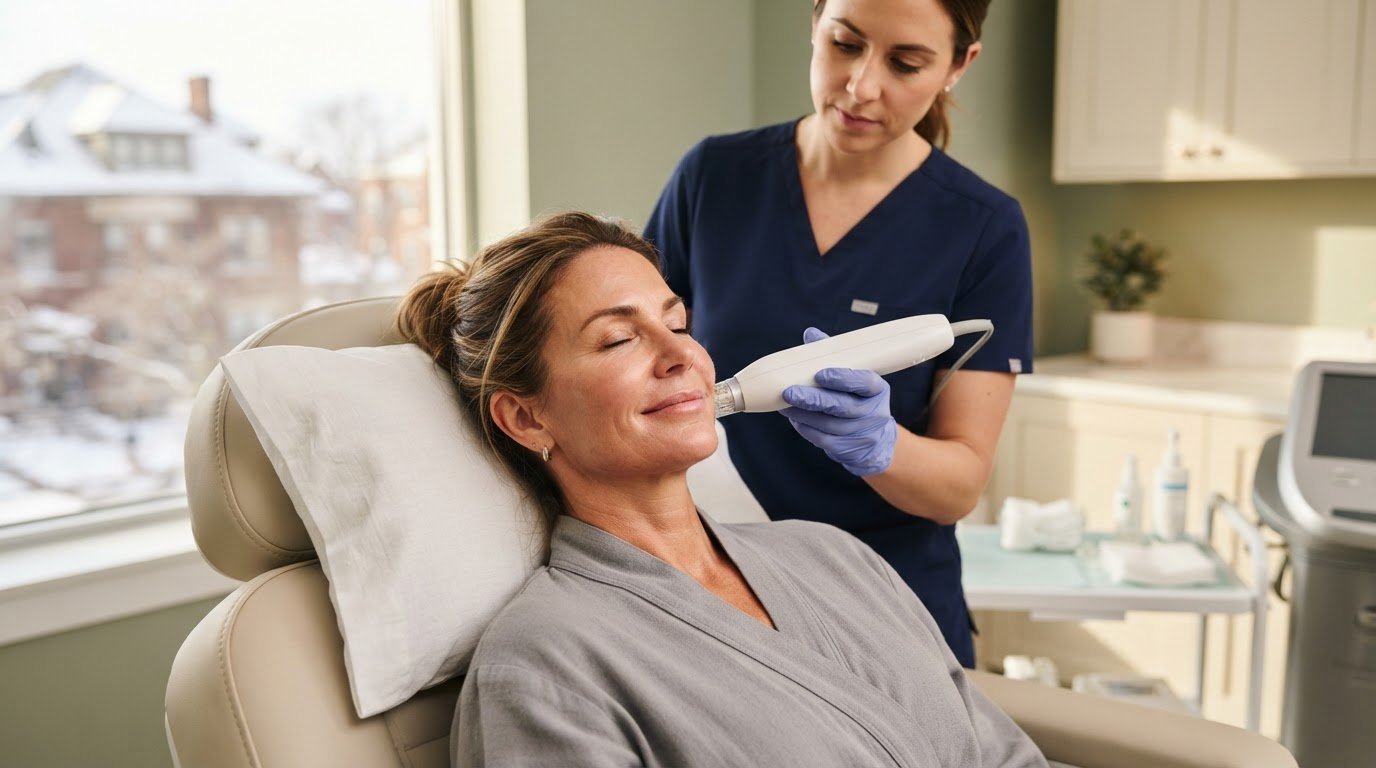
During a Morpheus8 facial treatment, a handheld device places fine needles into the skin and releases RF energy. The controlled stimulation supports the body’s collagen and elastin remodeling response, which can contribute to changes in texture and firmness.
Needle depth can be adjusted from 0.5 millimeters to as deep as 8 millimeters. The selected depth depends on the treatment area and the tissue being targeted. For facial treatment, that adjustability allows the procedure to address different layers, rather than applying one uniform setting across every part of the face.
Preparation follows a clear sequence. Skin is cleansed, then topical anesthetic cream is applied for 30 to 45 minutes before treatment. The device is passed over the planned area, delivering microneedling and radiofrequency at selected settings. A session typically lasts 30-60 minutes, depending on the area treated.
Before your appointment, avoid excessive sun exposure for at least one week. This helps prepare the skin for treatment. The procedure is minimally invasive, not surgery, but it still involves needles and temporary skin effects. Follow the preparation and aftercare instructions provided for your appointment.
Comparison With Conventional Microneedling
Conventional microneedling creates controlled punctures to stimulate the skin. It can target skin to a depth of 1.5 to 2 millimeters. Morpheus8 adds radiofrequency, which delivers heat through the needles into deeper layers.
Radiofrequency energy may be delivered at depths of 2 millimeters, 3 millimeters, or 4 millimeters. The treatment’s adjustable depth can also extend from 0.5 millimeters to as deep as 8 millimeters. Those figures describe device depth options, not a setting that applies to every face or concern.
The distinction matters when comparing treatment goals. Microneedling alone relies on needle-created stimulation, while Morpheus8 pairs that stimulation with RF energy. For example, a plan focused on surface texture differs from one targeting deeper tissue. The treatment area and intended depth guide the approach.
Neither method should be judged by depth alone. Ask which facial area is being treated, how the selected depth relates to that area, and what changes the procedure aims to address. These details clarify how the treatment is designed to support a balanced result, rather than simply using the deepest available setting.
Candidate suitability and retinoid restrictions
Morpheus8 candidacy depends on your skin concerns, treatment area, and health history. A focused consultation helps connect those factors with a practical treatment plan.
People across skin types and tones may be candidates. Morpheus8 uses radiofrequency rather than light energy, so darker skin tone alone doesn’t automatically exclude someone. The consultation should still consider your goals, such as improving texture or addressing laxity along the jawline, and the areas planned for treatment.
Discuss medical conditions, current medications, and previous procedures during your consultation, as these can affect treatment timing and planning. Be specific: mention the products you use, any prescription medication, and whether you have had a recent facial procedure. The physician can then consider how your skin and tissue may respond to microneedling and radiofrequency.
Retinoids and exfoliating products have specific pre-treatment restrictions. Stop retinol, glycolic acid, and other chemical exfoliants at least five days before your appointment. Accutane must be stopped six months before treatment. Factor these timelines into scheduling and discuss your skincare products and medications during preparation.
Collagen production and skin remodeling take time, so clarify which changes matter most to you before treatment. Jawline concerns, for example, may differ from uneven cheek texture. A consultation can connect the target area, your goals, and the planned approach, rather than treating “skin rejuvenation” as one broad concern.
To find a qualified Morpheus8 provider in your area, look for a medical setting that offers a consultation and explains the planned treatment areas, settings, and preparation. Ask how your health history and skincare routine factor into the plan. Clear answers help you understand the procedure before deciding whether to proceed.
Before your consultation, prepare a short list of questions and bring the names of the skincare products and medications you use. Include retinol, glycolic acid, other chemical exfoliants, and Accutane if relevant. Describe your main concern, such as wrinkles, skin texture, or laxity. These details help make the treatment-planning discussion specific to your needs.
Contact My Health 360 to arrange a Meet and Greet appointment and discuss with Medical Director Dr. Fatima whether Morpheus8 may be a good option for you. This conversation can address your goals, health history, and treatment preparation in one consultation.
My Health 360: Emsculpt Neo
Emsculpt Neo is a body-contouring treatment, while Morpheus8 addresses skin concerns such as facial texture and wrinkles. They serve different aesthetic goals, so consider Emsculpt Neo when your priorities include body contouring rather than facial rejuvenation.
For questions about facial treatment, My Health 360 offers Morpheus8. A Meet and Greet gives you the opportunity to discuss your goals and health history with Medical Director Dr. Fatima, and learn whether the procedure may be a good option for you.
Contact My Health 360 to arrange a Meet and Greet with Dr. Fatima and discuss your options.
Choose a Next Step That Fits Your Goals
Consider what you want to change and how a treatment could fit your broader wellness priorities. Morpheus8 facial rejuvenation may be one part of an individualized aesthetic plan, while My Health 360 also offers Emsculpt Neo, BioPrime: Pre-operative /Pre-Event whole body habilitation, and Bio-Restore: Post-Operative/ injury whole body habilitation.
Your skin concerns, health history, and personal goals all matter when deciding whether to proceed. A consultation with a physician can help you weigh these considerations and understand the next step. Individual suitability depends on your circumstances.
Contact My Health 360 to arrange a Meet and Greet with Medical Director Dr. Fatima and discuss whether Morpheus8 is a good option for you. Take the time you need, ask your questions, and move forward with a plan that feels right for you.
Frequently Asked Questions
What Is Morpheus 8?
Morpheus8 is a minimally invasive treatment that combines microneedling with radiofrequency energy. Fine needles deliver energy into selected skin layers, stimulating a remodeling response. For example, a facial treatment can focus on concerns such as uneven texture or wrinkles. It isn’t surgery, and the needle depth and treatment area are selected for the individual procedure rather than using one setting for every patient.
How Quickly Will I See Results?
Initial improvements may become visible within several weeks, while collagen remodeling continues over several months. Early changes and the later skin response happen on different timelines, so assess progress beyond the immediate recovery period. For example, texture may change before firmness. Take photos in consistent lighting to compare changes over time without relying only on day-to-day impressions.
Can I wear makeup afterward?
Wait at least 48 hours before applying makeup, and follow the aftercare directions for your treatment. Some guidance recommends waiting three days, so the more cautious timeline can help you plan around work or events. For example, avoid scheduling treatment immediately before a day when you need full-face makeup. Clean, unmade-up skin also makes it easier to observe redness or irritation during early recovery.
Can This Be Used In Combination With Other Treatments?
Morpheus8 can be discussed as part of a broader aesthetic plan, but combining treatments isn’t automatic. FaceTite and Embrace RF are examples of procedures that may arise in discussions about facial or skin tightening. Consider the goal for each treatment, the areas involved, and how recovery plans fit together. A consultation can clarify whether treatments are planned together or staged separately.
How Soon Will I See Results?
Visible changes may begin within several weeks, and fuller results can take three to six months to appear. This reflects the gradual nature of collagen remodeling, rather than an instant change at the appointment. To assess progress, compare the same facial areas under similar lighting. Changes in the cheeks, forehead, or jawline may develop at different rates as the skin continues to remodel.
What Areas Can Be Treated?
Facial treatment can include the forehead, cheeks, jawline, and neck. Morpheus8 can also be used on body areas such as the abdomen, buttocks, chest, arms, and knees. In Buffalo and Western New York, treatment planning can begin with identifying the specific area and concern, such as cheek texture or skin laxity near the jawline, rather than treating multiple areas by default.
What Happens During a Morpheus8 Session?
The treatment area is cleansed, and topical anesthetic cream is applied for 30 to 45 minutes beforehand. A handheld device then creates controlled needle channels and delivers radiofrequency energy. The treatment itself typically lasts 30-60 minutes, depending on the area. Before your appointment, avoid excessive sun exposure for at least one week, and arrive with your treatment goals and relevant medication details ready to discuss.
What is Morpheus8 facial rejuvenation and how does it work?
Morpheus8 facial rejuvenation is a radiofrequency microneedling approach for concerns such as wrinkles, uneven texture, and skin laxity. The needles create controlled channels while delivering radiofrequency energy into selected layers. This stimulation supports collagen remodeling over time. The treatment plan considers the facial area and skin concern, so a focus on forehead lines can differ from one addressing cheek texture or the jawline.