
To support healing and minimize scarring after surgery, follow your surgeon’s wound-care instructions, eat enough protein to support tissue repair, and resume movement only within the limits you’ve been given. Whole body post-op restoration takes time: healing tissues need patience, while gentle, appropriate movement can help maintain circulation and mobility. Swelling, bruising, and areas of firmness can occur as the body repairs itself.
It’s understandable to worry when tissue feels hard or progress seems to stall. Recovery doesn’t always follow a straight line, and doing more isn’t necessarily better while your body is healing.
This guide explains why tissue may feel firm after surgery, which activities and substances to avoid, and how to approach safe movement and early physical therapy. You’ll also learn how to manage a recovery plateau and recognize when changing symptoms need attention from your surgical team.
Key Takeaways
- Firmness and swelling can change as tissues heal; understanding the recovery phases can help you interpret what you’re feeling.
- Follow your surgeon’s wound-care guidance and be mindful of habits or substances that may interfere with healing.
- Return to activity gradually, using your surgical team’s clearance to guide when and how you increase movement.
- A recovery plateau can be part of an uneven healing process, but new or worsening symptoms deserve attention from your surgical team.
- For additional post-operative support, ask about Bio-Restore and contact My Health 360 to arrange a Meet and Greet with Medical Director Dr. Fatima to discuss whether a procedure is a good option for you.
Post-operative tissue hardness and healing
Firmness can reflect swelling and tissue repair, but its timing and location matter. Healing unfolds in phases, so a change in texture doesn’t automatically mean something is wrong. Whole body post-op restoration is a gradual process, not a single milestone.
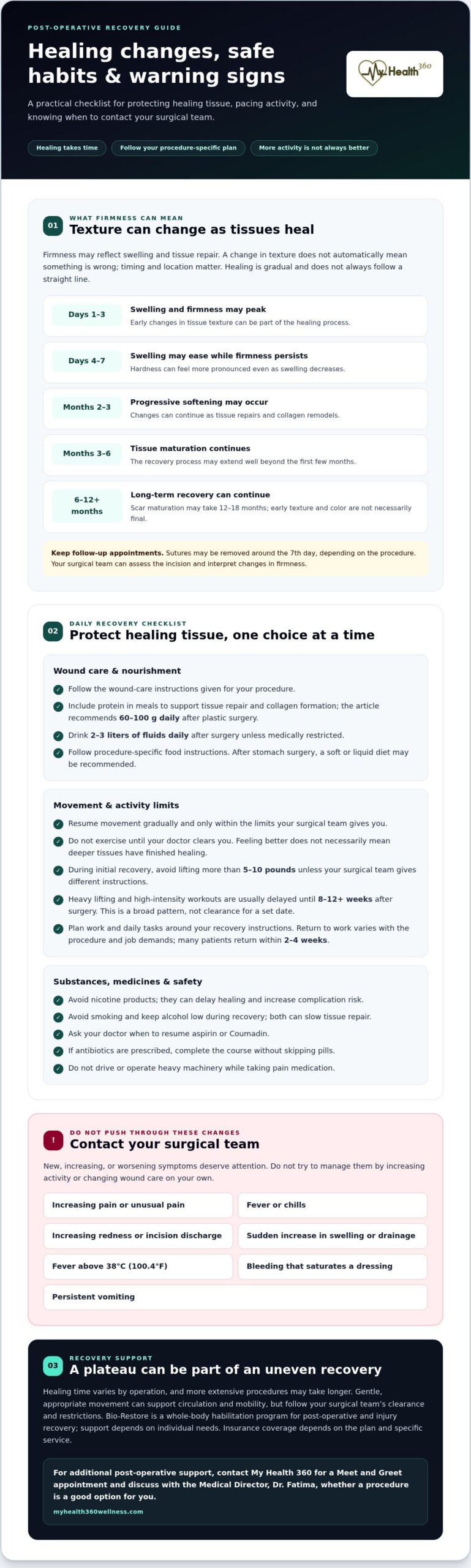
During the first 1-3 days after surgery, swelling and firmness may peak. From days 4-7, swelling can decrease while hardness persists or feels more pronounced. Progressive softening may occur over months 2-3, followed by maturation during months 3-6. Long-term recovery can extend through 6-12+ months. A whole body post-op restoration approach considers these changes alongside your function and care plan.
Scar tissue changes gradually as collagen remodels. Plastic surgery scar maturation continues for 12-18 months, so early texture and color aren’t necessarily the final appearance. Follow wound-care instructions and monitor changes. Increasing redness, unusual pain, fever, sudden swelling changes, or unexpected discharge should be discussed with your surgical team during healing.
Wound Healing and Follow-Up
Follow-up appointments let your surgical team assess the incision, healing progress, and any concerns. They matter because wound appearance and tissue firmness can change at different rates, and your team can relate those changes to the procedure performed. Sutures may be removed around the 7th day after surgery, depending on the procedure. Keep each appointment and follow the wound-care instructions you receive.
Fatigue and Healing Time
Postoperative fatigue is the tiredness that can accompany tissue repair and recovery. Healing time varies by operation, and recovery may take longer after more extensive procedures. Feeling more energetic doesn’t necessarily mean deeper tissues have finished healing. Pace daily tasks and resume usual activities according to your recovery instructions.
Nutrition and Hydration
Nutrition and hydration provide materials and support for tissue repair. Protein supports collagen formation, so include it in meals during recovery; the page recommends 60-100g daily after plastic surgery. Drinking 2-3 liters of fluids daily is advised after surgery unless medically restricted. Follow any dietary limits related to your procedure, since individual instructions may differ. Consistent nourishment supports the healing process, but it doesn’t replace wound care or follow-up.
Restoration Services and Eligibility
Whole-body post-operative restoration supports recovery after surgery or injury alongside care from the surgical team. Bio-Restore is a whole-body habilitation program for post-operative and injury recovery. The support provided depends on individual recovery needs, rather than following one universal set of procedures. People recovering from surgery or injury may be candidates for this type of habilitation. Insurance coverage depends on the plan and specific service, so review your benefits to understand whether restoration care is covered.
Activities and substances to avoid after surgery
Protecting an incision means limiting strain while tissues recover. Follow the instructions for your specific procedure, since lifting limits and activity restrictions vary. Avoid exercise until your doctor clears you, and don’t assume that feeling better means the incision is ready for heavier activity. Nicotine products can delay healing and increase complication risk. Smoking and alcohol can also slow tissue repair, so avoid smoking and keep alcohol low during recovery.
During the initial recovery stage, avoid lifting more than 5-10 pounds unless your surgical team gives different instructions. Heavy lifting and high-intensity workouts are usually delayed until 8-12+ weeks after surgery. These are broad recovery patterns, not permission to resume activity on a set date. A tummy tuck with muscle repair, for example, may require longer restrictions than a less extensive procedure.
- Don’t exercise before your doctor approves it.
- Ask your doctor when to resume aspirin or Coumadin.
- If antibiotics are prescribed, complete the course without skipping pills.
- Don’t drive or operate heavy machinery while taking pain medication.
Gastrointestinal and bariatric procedures may require specific food textures. After stomach surgery, a soft or liquid diet may be recommended to reduce demands on the healing digestive tract. Follow your operative diet plan rather than adding foods simply because they seem nutritious. Protein supports tissue repair, but the timing and form of foods should follow your procedure-specific instructions.
Contact your surgical team about increasing pain, fever, chills, incision discharge, or a sudden increase in drainage or swelling. A fever above 38°C (100.4°F), bleeding that saturates a dressing, or persistent vomiting also warrants prompt attention. These changes should not be managed by pushing through activity or changing wound care on your own.
In the United States, recovery timelines depend on the procedure and the surgeon’s postoperative plan. The operation and its specific restrictions guide when you can lift, exercise, or return to work. Follow the instructions for your surgery rather than applying another patient’s timeline to your recovery.
Time away from work after plastic surgery depends on the procedure and job demands. Many patients return to work within 2-4 weeks after surgery, depending on the procedure; full body lift patients may also return to work and light activities within 2-4 weeks. A physically demanding role can place different strain on healing tissues than desk work, so plan a gradual return around your surgical instructions.
For recovery support beyond surgical instructions, contact My Health 360 for a Meet and Greet appointment with Medical Director Dr. Fatima to discuss whether a procedure is a good option for you.
Activity restrictions and gradual return to exercise
Movement can support recovery, but healing tissue needs time to tolerate increasing demands. The right pace depends on your procedure and postoperative instructions.
Strenuous Activity Restrictions
Strenuous activity restrictions limit forceful movement while incisions and deeper tissues heal. They matter because exercise can place strain on healing areas before they’re ready. After full body lift surgery, strenuous activity or exercise is avoided for at least 6-8 weeks. Heavy lifting and high-intensity workouts are usually delayed until 8-12+ weeks after surgery.
Timelines vary by procedure, so don’t treat them as automatic clearance. A tummy tuck involving muscle repair may require longer restrictions on core exercises and intense workouts. Discomfort or fatigue during an activity can signal that the effort exceeds your current capacity. Follow your operation’s restrictions, then increase activity gradually as your surgical team permits.
Early Movement and Rest
Early movement means gentle, low-effort activity during recovery, balanced with regular rest. It matters because prolonged inactivity can limit mobility, while overexertion can strain healing tissue. Rest frequently during the first week, and introduce gentle movement according to your instructions.
If your surgeon has cleared you, walking for 3-5 minutes every few hours is one suggested starting point during the initial recovery stage. Keep the pace comfortable and stop if symptoms worsen. The goal is not to train through inflammation or discomfort. Short, easy movement and periods of rest can coexist; neither requires ignoring the limits set for your procedure.
Returning to Light Activities
Returning to light activities means rebuilding everyday movement before resuming demanding exercise. This gradual approach matters because stamina and tissue tolerance may recover at different rates. Weeks 2 to 6 after surgery are described as a period for building strength and mobility, with activity adjusted to recovery and surgical guidance.
As capacity improves, light walking or familiar daily tasks may become more manageable. Week 3 light cardio may include walking for 20-30 minutes, if appropriate for the person’s recovery. Don’t use that example as a target or a clearance date. Pay attention to how your body responds during and after activity, and avoid increasing duration and effort at the same time.
Returning to Work and Exercise
Returning to work and exercise is a staged shift from recovery tasks toward normal routines. Planning matters because desk work and physically demanding jobs place different demands on healing tissue. Many patients return to work within 2-4 weeks after surgery, depending on the procedure. Light-duty activities typically resume around 4-6 weeks.
More physically demanding tasks typically resume after 6-8+ weeks, depending on the procedure. Light exercise is often resumed around 4-6 weeks after surgery if cleared by the surgeon. Treat work and workouts as separate decisions: being able to manage a workday doesn’t necessarily mean you’re ready for strenuous exercise. Follow procedure-specific instructions as you gradually resume each activity.
How to Manage Recovery Plateaus?
A recovery plateau is a stretch when symptoms or energy seem to change slowly. Post-surgical healing often has ups and downs over a couple of weeks, so one slower day doesn’t define the overall timeline. Track pain, swelling, bruising, sleep, and activity in a brief daily note. Comparing several days can show whether symptoms are stable, easing, or worsening.
Swelling and bruising are common responses as the body repairs tissue. Swelling often peaks 48 to 72 hours after surgery, then gradually subsides. Discomfort can temporarily rise around days 3-4 as inflammation peaks. These changes may feel like a setback, especially if energy also fluctuates, but they should be interpreted alongside incision appearance and your surgical team’s recovery guidance.
Use only the pain medication and schedule prescribed for your recovery. During days 1-2 after plastic surgery, prescribed pain medication may be needed every 4-6 hours. Don’t change doses or add medication without guidance. Pain medicines can affect alertness, so don’t drive or operate heavy machinery while taking them. Avoid alcohol with pain medication, and tell your surgical team if pain is increasing rather than settling.
If your surgeon prescribes icing, keep the area cool, especially during the first 48 hours after surgery. Place a cloth between a cold pack and your skin; prescribed ice packs or cold compresses shouldn’t touch skin directly. Elevating and compressing the surgical site, when instructed, can also help manage swelling and discomfort. Follow the directions for the specific incision rather than applying pressure wherever swelling appears.
Fatigue may outlast the most noticeable early discomfort. Energy levels can vary during recovery, so plan essential tasks around how you feel and take breaks before exhaustion. Plan essential tasks around your available energy and take breaks before exhaustion. A gradual return to activity gives you useful information: note whether swelling or pain increases afterward, and share that pattern at your next follow-up appointment.
Call your surgical team promptly about new or worsening symptoms. Increasing redness, severe swelling, fever, unexpected incision discharge, bleeding that saturates a dressing, or a sudden increase in pain or drainage needs attention. Persistent vomiting after surgery also warrants contact. Don’t dismiss these signs as an ordinary plateau or wait for your next routine appointment. Report what changed and when it began.
At each follow-up, bring your symptom notes and a list of medications you’ve taken. Include when pain spiked, how bruising changed, and which activities preceded swelling. This specific record helps the surgical team assess the pattern rather than rely on a general impression. If symptoms remain steady without new warning signs, continue the prescribed recovery plan and monitor changes day to day.
Gentle movement and early physical therapy
Early movement after surgery isn’t the same as exercise training. Gentle, approved activity can support circulation, mobility, and comfort while the body repairs tissue. Begin with movement suited to your procedure, then build gradually. Standing, walking, and changing position place different demands on the body; your postoperative instructions should guide which movements are appropriate and when.
During the first week after surgery, light exercises in early physical therapy may help maintain circulation, prevent stiffness, and improve mobility. Movement can also support postoperative pain improvement and reduce the risk of deep vein thrombosis. These are reasons to avoid unnecessary prolonged sitting, not to push through pain. Your surgeon’s instructions define the boundary between appropriate early movement and activity that could strain healing tissues.
The body’s repair process continues while activity gradually increases. During the proliferation phase, which typically lasts 1-6 weeks, the wound develops collagen and new blood vessels as it begins to strengthen. That formation takes time. A short walk may feel manageable before longer activity does, and progress in one area doesn’t mean every movement is ready to resume. Consider comfort, fatigue, and your specific movement restrictions together.
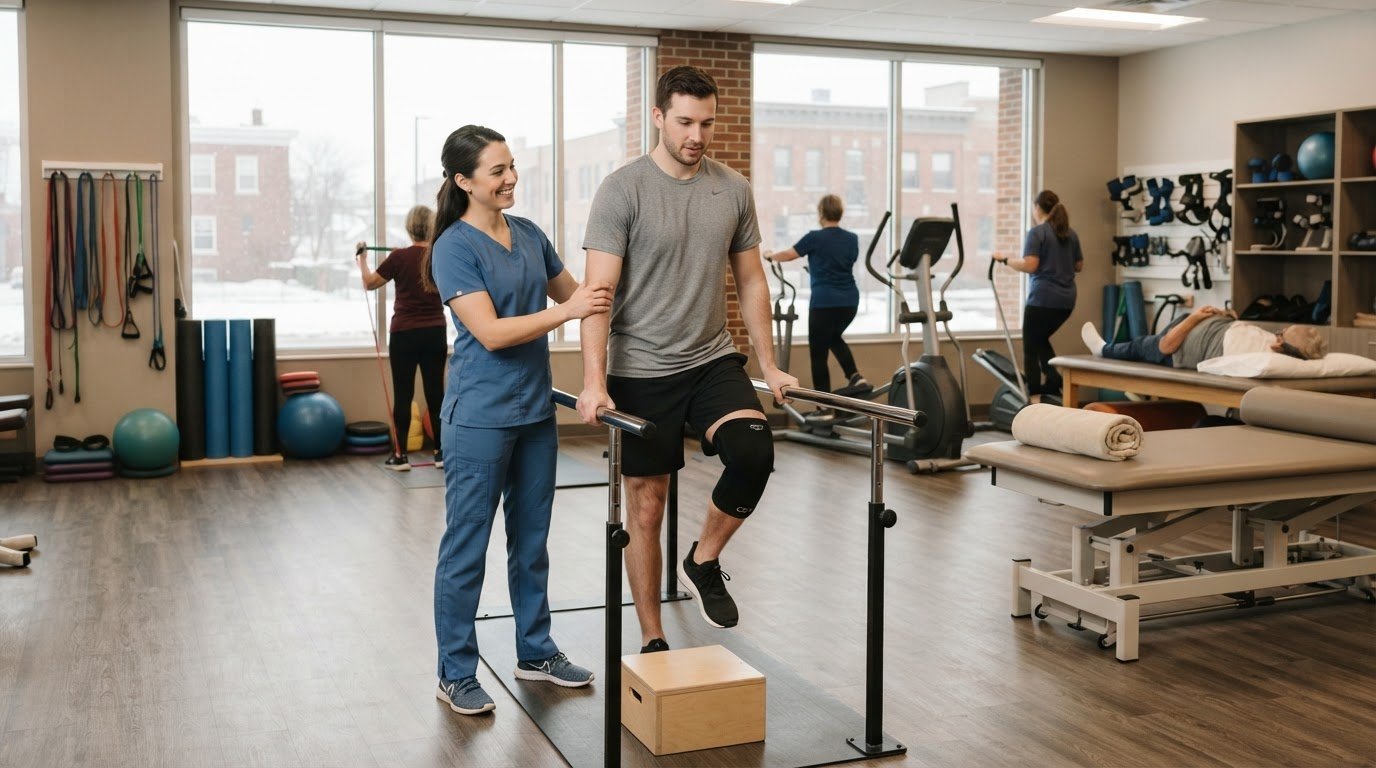
Walking is a practical example of gentle movement because it can be kept brief and adjusted. During the initial recovery stage, patients are advised to walk for 3-5 minutes every few hours if their surgeon has cleared them. Start on a stable, uncluttered route, move at an easy pace, and pause for rest. If standing or walking increases discomfort, stop and follow your recovery instructions rather than extending the session.
Progress is gradual, not a test of willpower. Weeks 2 to 6 after surgery are described as a period for building strength and mobility, while the appropriate activities depend on the procedure. Later, rehabilitation may expand to longer walks, light sports, or hobbies during months 2 to 6 after surgery. These examples describe a general progression, not automatic clearance. A physical therapist can help align movement with your surgical restrictions and functional goals.
Notice how your body responds after each activity. Record the movement, duration, discomfort, and any change in swelling, then discuss the pattern at follow-up. Feeling well on one day doesn’t establish readiness for strenuous exercise, and slow improvement doesn’t mean movement has failed. Focus on safe, repeatable progress, with your surgical team guiding each increase in effort.
For individualized guidance on post-operative habilitation, contact My Health 360 for a Meet and Greet and discuss with Medical Director Dr. Fatima whether a procedure is a good option for you.
My Health 360: Emsculpt Neo
My Health 360 offers Emsculpt Neo, while post-operative and injury recovery support is addressed through Bio-Restore, its whole-body habilitation offering. These services have distinct roles; Emsculpt Neo shouldn’t be treated as a substitute for surgical follow-up or recovery guidance. Keep your surgeon’s instructions central as you consider any additional support after an operation.
If you’re exploring options, contact My Health 360 for a Meet and Greet appointment with Medical Director Dr. Fatima. You can discuss your recovery goals and whether a procedure is a good option for you.
Choose a Supported Next Step
Recovery can also be a moment to consider what support may complement your goals once your surgical team has guided your next steps. Whole body post-op restoration should remain grounded in your procedure, healing progress, and the activities you’re working toward, rather than a one-size-fits-all plan. My Health 360 offers Bio-Restore for post-operative and injury whole-body habilitation, BioPrime for pre-operative and pre-event whole-body habilitation, and Emsculpt Neo. These offerings serve different purposes, so a conversation can help clarify which direction fits your needs.
Contact My Health 360 to arrange a Meet and Greet appointment and discuss with Medical Director Dr. Fatima whether a procedure is a good option for you. Bring your questions and recovery goals, and keep your surgical team’s guidance central to decisions about additional care. A thoughtful next step can help you approach recovery with greater clarity and confidence.
Contact My Health 360 about recovery.
Frequently Asked Questions
How Long Does It Take to Heal?
Full tissue healing typically completes between six and twelve months, though everyday function may return earlier. A healing wound typically regains about 80% of its strength by roughly three months, so a closed incision shouldn’t be mistaken for fully mature tissue. At follow-up, discuss changes in comfort, flexibility, and scar appearance. Those observations help distinguish functional improvement from the slower process of tissue maturation.
How can I support a smooth recovery after plastic surgery?
Follow procedure-specific directions for drains, medication, and activity rather than relying on general advice. If you have a surgical drain, your instructions may call for emptying and measuring it every 8-12 hours during days 1-2. Record the output as directed. If antibiotics are prescribed, complete the entire course without skipping pills. Keeping these details together makes it easier to follow your plan and report changes accurately.
How to Support This Stage Safely?
Keep movement within your surgeon’s clearance and adjust only as your recovery permits. Gentle walking can help move gas through the gut after surgery, but it shouldn’t be a reason to ignore discomfort or restrictions. Choose a short, clear route at home and pause when needed. If movement causes new or worsening symptoms, stop and contact your surgical team for guidance before trying it again.
How long does recovery take after combined cosmetic surgery procedures?
Combined procedures don’t share one fixed recovery timeline. The extent of surgery, incision locations, muscle repair, and the restrictions for each treated area all affect the pace. After major or orthopedic surgery, full recovery may take 6 to 12 months as strength, flexibility, and comfort return. For combined cosmetic procedures, use a recovery plan that accounts for each operation rather than assuming clearance for one means clearance for all.
What steps help prepare for whole-body surgery and recovery?
Before surgery, organize your home and arrange practical help for the first 48 to 72 hours after the procedure. Keep your postoperative instructions, medication schedule, and surgical team’s contact details together. Ask your care team which foods fit your operation; patients may be advised to eat lightly during the first 24 hours after surgery. Planning these basics ahead can make it easier to focus on rest and recovery.
What aftercare, monitoring, and support are needed after surgery?
Aftercare means following wound-care directions, attending scheduled appointments, and reporting changes to your surgical team. If you have a drain, follow its specific emptying and measurement instructions, and keep the output record. Arrange a friend, family member, or loved one to assist during the first 48 to 72 hours. Contact your surgical team about new concerns rather than changing wound care or medication on your own.