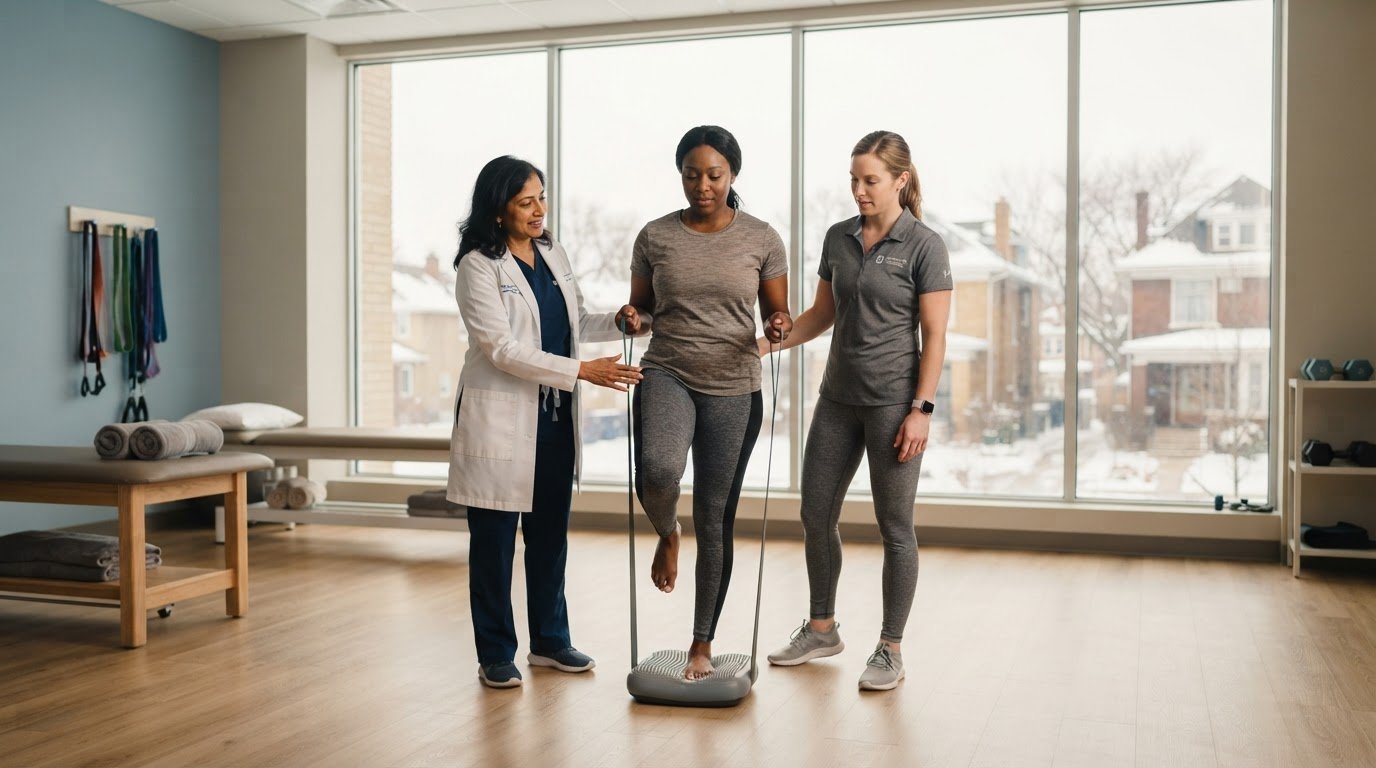
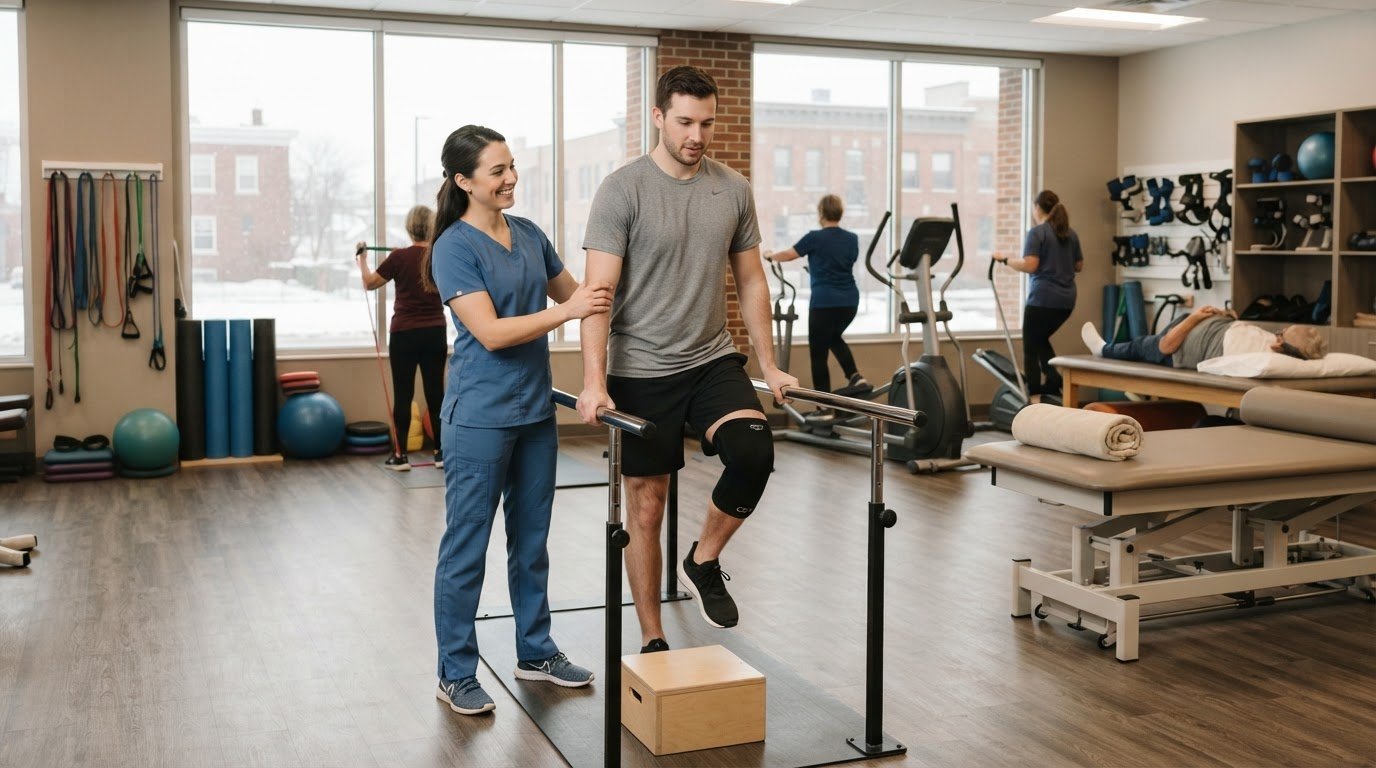
An HSA or FSA balance doesn’t automatically make every post-surgery expense eligible. Post-operative recovery solutions may include guided rehabilitation, targeted exercises, and supportive equipment, but these should complement, not replace, your surgical instructions or a professional assessment. Eligibility depends on the specific service and the rules governing your account.
It’s understandable to want a clear answer before committing to a recovery plan or paying out of pocket. This guide explains the types of support that may be used in physical therapy and sports medicine, how provider guidance shapes their use, and what details to ask about when considering HSA or FSA coverage. You’ll also learn how to distinguish clinical rehabilitation from practical recovery support, so you can discuss suitable options with greater confidence.
Key Takeaways
- Compare rehabilitation, physical therapy, and sports medicine support to understand how each may fit into recovery.
- Use recovery equipment and exercises in line with your post-surgical instructions and healthcare provider’s guidance.
- Learn how breathing techniques and gradual mobility can be discussed as part of a recovery plan.
- Choose practical recovery essentials around your mobility needs, medication routine, and support at home.
- Before using HSA or FSA funds, ask your plan administrator whether the specific service or item qualifies.
Recovery support in clinics, physical therapy practices, and sports medicine
Clinic-based recovery can combine symptom support, movement training, and practical guidance, tailored to the procedure and your current function.
Temperature and Compression Therapies
Cold therapy may help with comfort, while heat or contrast approaches use temperatures selected according to the treatment plan. Active compression devices apply pressure during a recovery routine. Portable temperature and compression equipment can support mobility work, but it doesn’t replace assessment or surgical instructions.
Ask how the ORX Pro 1 cold therapy and active compression device fits the plan, what instructions govern its use, and which symptoms should prompt stopping. Treatment approaches can vary; clarify the intended technique, treatment area, and how it relates to your procedure.
Rehabilitation Exercises
Physical therapy exercises target strength, flexibility, and range of motion in the affected area. After a knee procedure, for example, the movement progression may differ from recovery after shoulder surgery because the joint and functional goals are different. A therapist can adjust exercises as your movement changes instead of relying on a generic routine.
Rehabilitation may also include manual therapy, ultrasound, or electrical stimulation to support pain management. Ask what movement or daily task each exercise addresses, such as standing from a chair or reaching overhead. Learning body mechanics and controlled movement can help support function and avoid unnecessary strain.
Surgery-Specific Recovery Needs
Recovery needs vary by surgery because the operated area, tissue healing, movement restrictions, and weight-bearing instructions differ. Mobility practice may be central after joint replacement, while abdominal surgery involves different precautions for movement and daily activities. Your surgical team’s instructions guide which exercises, devices, and assistance are appropriate.
Clinicians also consider pain, current mobility, medical history, and recovery goals when planning rehabilitation. Report changes in function and ask how progress will be assessed, for example, whether you can perform a movement with greater control. These details make the recovery plan specific to your procedure, rather than someone else’s timeline.
Care Settings and Service Costs
Home health and rehabilitation costs in the United States vary according to the service, clinician involvement, visit frequency, location, and insurance coverage. A home visit and facility-based rehabilitation involve different arrangements, so there’s no single cost for every recovery plan.
A skilled nursing facility or rehabilitation center may suit someone who needs ongoing nursing support or structured therapy beyond what can be managed safely at home. The decision depends on medical needs, mobility, daily care requirements, and available help at home. Discuss these needs during discharge planning, and clarify the services and billing arrangements before care begins.
Provider-directed use and medical-care limitations
Home recovery works best when every device, medication routine, and caregiving task follows your surgical instructions. Equipment supports a care plan; it doesn’t replace medical assessment, post-surgical directions, or physical therapy.
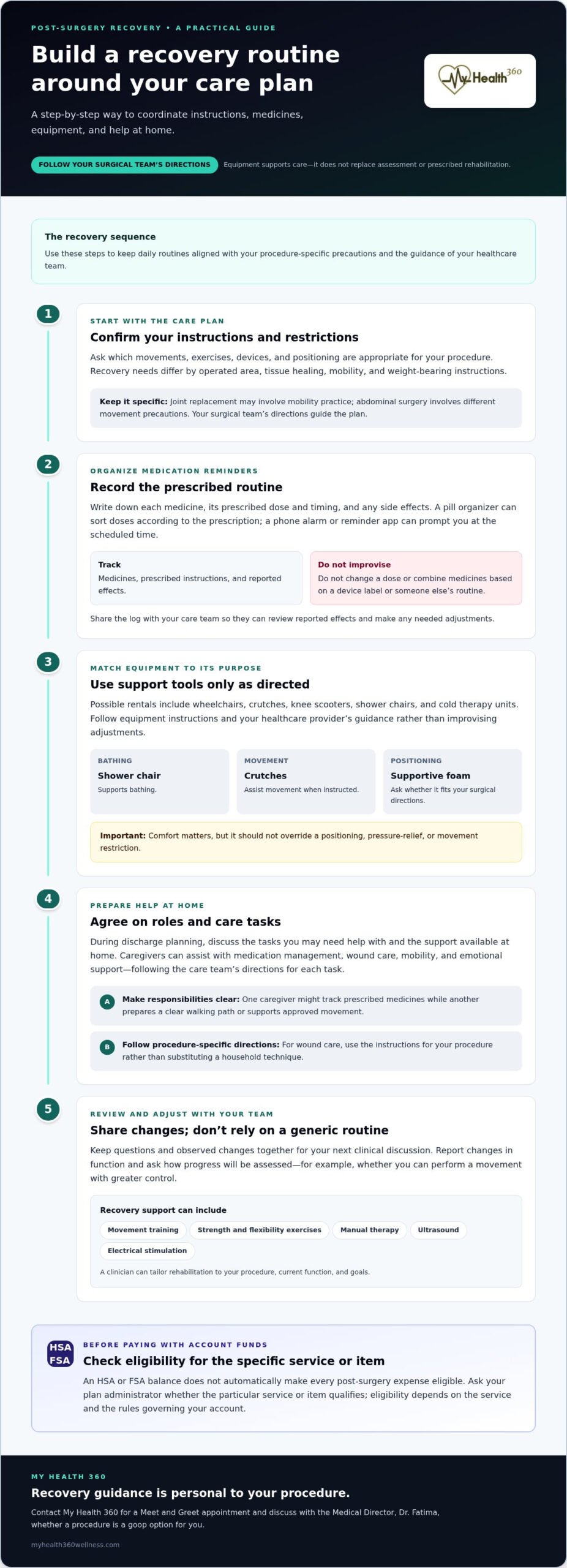
Coordinate medications and reminders
Multimodal pain management can coordinate prescribed medication with other approaches in your recovery plan. The prescriber considers your procedure, current medications, and medical history when setting instructions. Don’t change a dose or combine medicines based on a device label or someone else’s routine.
For a clear medication routine, record each medicine, its prescribed dose and timing, and any side effects. A pill organizer can sort doses according to the prescription, while a phone alarm or reminder app can prompt you at the scheduled time. Share the log with your care team so they can review reported effects and make any needed adjustments.
Use supportive surfaces and equipment appropriately
Dual-density medical foam may be considered for positioning or support, but the material alone doesn’t show whether a surface is suitable for a particular surgical site. Follow instructions for positioning, pressure relief, and movement, and ask how the foam fits those directions before using it. Comfort matters, but it shouldn’t override a restriction.
Medical equipment rentals may include wheelchairs, crutches, knee scooters, shower chairs, and cold therapy units. Match each item to its purpose: a shower chair supports bathing, while crutches assist movement when instructed. Use devices according to their instructions and your healthcare provider’s guidance, rather than improvising adjustments.
Arrange home support and caregiver tasks
To arrange home health care after surgery, discuss the tasks you’ll need help with during discharge planning and describe the support available at home. Caregivers can assist with medication management, wound care, mobility, and emotional support, following the care team’s directions for each task.
A safe routine starts with clear roles. One caregiver can track prescribed medicines while another prepares a clear walking path or supports approved movement. For wound care, follow the instructions for the specific procedure rather than substituting a household technique. Keep questions and observed changes together for your next clinical discussion.
Know what equipment cannot do
Devices can support comfort and daily routines, but they can’t assess a surgical site or replace prescribed rehabilitation. Before using rented equipment or foam support, review its instructions alongside your surgical precautions. This helps align equipment, medication reminders, and caregiver assistance with one coordinated plan.
For guidance on recovery and procedure suitability, contact My Health 360 for a Meet and Greet appointment to discuss with Medical Director Dr. Fatima whether a procedure is a good option for you.
Breathing techniques to help prevent complications
After surgery, pain, anesthesia, and limited movement can affect how comfortably you breathe. Your care team may teach breathing exercises as part of your recovery instructions, with the technique tailored to your procedure and health needs.
Two techniques you may hear about are diaphragmatic breathing and incentive spirometry. Diaphragmatic breathing focuses on a gentle breath that moves the abdomen; an incentive spirometer provides visual feedback when your care team prescribes it. These approaches aren’t interchangeable, so follow the instructions provided for your surgery.
For guided breathing practice, follow the steps taught by your healthcare professional:
- Choose the supported position recommended in your discharge instructions, such as sitting upright.
- Relax your shoulders and breathe gently, without forcing a deep breath or straining the incision.
- Use an incentive spirometer only if it was prescribed, following its specific instructions.
- Stop and contact your care team if the exercise causes new or worsening symptoms.
Comfort and technique matter. For example, someone with an abdominal incision may need to support the area as instructed when coughing or moving. Don’t press on an incision or change position to perform an exercise unless your team has shown you how.
Breathing exercises are one part of monitoring, not a substitute for clinical assessment. Follow the written schedule for your procedure, and ask your care team to demonstrate the movement if the instructions aren’t clear. A caregiver can keep the spirometer nearby and note questions for follow-up.
What are the risks and warning signs of complications after surgery? Risks vary with the operation and a person’s health; post-operative concerns can include blood clots and muscle atrophy. New difficulty breathing, chest discomfort, faintness, or a sudden change in alertness requires urgent medical attention.
Keep your discharge paperwork accessible, and follow its contact instructions if symptoms change. A caregiver can help describe when a symptom began, what you were doing, and whether it is worsening. Those concrete details support communication with your healthcare team.
Breathing practice should complement prescribed movement and pain management, not replace either. If pain prevents a comfortable breath, report that rather than forcing the exercise. Your care team can review the technique and instructions in light of your surgery.
Complications need attention beyond a breathing routine. Follow your post-surgery monitoring plan, report new symptoms promptly, and follow clinical instructions for urgent concerns. Breathing techniques should remain one guided part of recovery.
Early mobility after a procedure
Movement after surgery should be planned, not improvised. The operated area, weight-bearing instructions, pain, and balance determine which activities are suitable. In hospital, a care professional may help with your first transfer from bed to chair. At home, that movement may require a clear route and the recommended support device.
Early mobility can help patients work toward better function while limiting unnecessary inactivity. Rehabilitation plans also account for risks such as muscle atrophy and blood clots. That doesn’t mean everyone should walk the same distance or start the same exercise. Your care team sets permitted movements according to the procedure and healing progress.
Before moving, follow this practical sequence from your care instructions:
- Confirm which movements and weight-bearing activities are permitted.
- Set up the space, such as clearing a path between the bed and bathroom.
- Use the prescribed support, such as a walker or crutches, as instructed.
- Pause if a movement causes a concerning change, and follow the care team’s guidance.
Everyday tasks can become opportunities to practise mobility. A supervised sit-to-stand transfer, a short walk to a nearby chair, or a therapist-guided joint movement each has a distinct purpose. Physical therapy exercises can help restore strength, flexibility, and range of motion in the affected area. A therapist can also teach body mechanics for standing, turning, or reaching.
Progress should reflect function, not comparison. Someone recovering from a knee procedure, for example, may focus on permitted leg movement, while another patient may have different restrictions. Note which task feels difficult, such as stepping through a doorway or rising from a chair, and share it during therapy. This gives the clinician practical information for adjusting your plan.
Your home setup affects how safely you can move. Keep frequently used items within reach, secure loose rugs, and place a stable chair near your usual resting area. If your home has stairs, ask for instruction before attempting them. A caregiver can clear the route and stay nearby when assistance is part of your plan.
Guided exercises and routine movement can support recovery without replacing surgical instructions. Don’t add repetitions, distance, or resistance on your own. If pain interferes with an approved task, tell your care team which movement causes the symptom rather than forcing it.
Early mobility is one part of a broader recovery journey. Follow your procedure-specific instructions, use prescribed devices correctly, and discuss changes in function with your care team. Small, permitted tasks can help build practical independence while keeping safe healing in focus.
Curated recovery essentials
The best at-home recovery solutions meet your specific daily needs and fit your surgical instructions. A clear medication record, suitable mobility aids, prepared meals, and help with household tasks can make your home routine easier to manage.
Start with a practical home assessment. Note where you sleep, use the bathroom, store medication, and rest during the day. A clear path between these areas can simplify everyday movement. If bathing or walking is difficult, discuss suitable equipment with your healthcare provider and follow their instructions for using it.
- Medication journal: Record each medication, prescribed dose timing, and any side effects. This gives the patient and care team a written record to review.
- Meal planning: Prepare easy-to-serve food or arrange meal delivery. Services may offer options such as low-sodium, diabetic-friendly, or vegetarian meals.
- Household support: Arrange help with tasks such as dusting, vacuuming, or sanitizing surfaces, so these chores don’t fall to someone experiencing discomfort.
- Supportive equipment: Discuss whether items such as crutches, a wheelchair, a shower chair, or a cold therapy unit suit the patient’s needs and instructions.
A medication journal can also capture questions for your next appointment. For example, note when discomfort occurs and whether it follows a particular activity. Medication reminders, such as a phone alarm, can help you follow the prescribed schedule, but they don’t replace the prescription or clinical advice.
Nutrition is another consideration when planning recovery. Nutritional guidance can support the body’s healing processes, while meal choices may depend on dietary restrictions and your routine. Note food preferences and restrictions before arranging meals, then discuss relevant questions with your healthcare provider.
Braces and supports may help stabilize an injured joint, reduce strain, and prevent further injury during healing. Their role depends on the joint and treatment plan. Ask how to position a support and which activities it is meant to assist, rather than assuming all braces are interchangeable.
Practical support can also shape the recovery experience. A relative may organize meals and medication reminders, while a home cleaner handles vacuuming. A support group can offer shared experience and connection during recovery, and online counseling gives patients a way to speak with a mental health professional from home.
For a personalized discussion about recovery and procedure suitability, contact My Health 360 to book a Meet and Greet and speak with Medical Director Dr. Fatima about whether a procedure is a good option for you.
My Health 360: Emsculpt Neo
My Health 360 offers Emsculpt Neo, while Bio-Restore provides post-operative and injury whole-body habilitation. These offerings serve different purposes, so recovery planning should distinguish rehabilitation support from a procedure considered for another goal. Post-surgical instructions and the care team’s assessment remain central when deciding what fits your recovery stage.
If you’re exploring options beyond your current rehabilitation plan, discuss your procedure, goals, and recovery needs with the Medical Director. A Meet and Greet appointment provides an opportunity to talk with Dr. Fatima about whether a procedure is a good option for you. Contact My Health 360 to arrange a Meet and Greet and discuss your needs with Dr. Fatima.
Choose a Recovery Path That Fits Your Goals
Your next step is to identify what support you need and discuss how it fits your current care plan. Post-operative recovery solutions should reflect your procedure, recovery stage, and goals, not replace your surgical team’s instructions.
My Health 360 offers Bio-Restore for post-operative and injury whole-body habilitation, BioPrime for pre-operative and pre-event whole-body habilitation, and Emsculpt Neo. These offerings address different needs. Whether a procedure is a good option for you depends on your individual circumstances and goals.
For a personal discussion, contact My Health 360 to arrange a Meet and Greet appointment with Medical Director Dr. Fatima. You can talk through your goals and whether a procedure may be appropriate for you, while keeping your recovery guidance at the center of the conversation.
Contact My Health 360 to arrange a Meet and Greet, and take a thoughtful next step toward care that reflects your needs.
Frequently Asked Questions
Is it covered by HSA or FSA?
HSA or FSA eligibility depends on the specific expense and the rules governing your account. A prescribed rehabilitation service may be treated differently from a wellness procedure or personal comfort item. Before using funds, identify the exact service or product, its purpose, and any supporting documentation. Ask your account administrator whether that expense qualifies instead of assuming every recovery-related purchase is eligible.
What does post-operative recovery care include?
Post-operative care may include follow-up with your surgical team, rehabilitation, help with daily tasks, and monitoring for changes that need attention. The right combination depends on the operation and your home situation. For example, someone returning home alone may need practical help with meals and transportation alongside clinical follow-up. Before discharge, clarify who will handle each task and how you can reach your care team with concerns.
Does health insurance or Medicare cover post-operative recovery services?
Coverage depends on the service, care setting, medical documentation, and terms of your insurance plan or Medicare coverage. A rehabilitation visit, medical equipment, and help with household tasks may be treated differently. Ask your insurer or plan administrator about the specific service, where it will be delivered, and any required documentation. Keep written responses and bills together so you can compare them with the care received.
What equipment and supplies are commonly needed for recovery after surgery?
Your needs depend on the procedure and its instructions. You may use a prescribed walking aid, shower chair, cold therapy unit, or medication organizer. Prepare your home around actual tasks, such as bathing, moving between rooms, and keeping medicines accessible. Follow instructions for wound care supplies and equipment instead of assembling a generic kit. A written list from your care team can help prevent unnecessary purchases and missed essentials.
What local post-operative recovery services are available near me?
In Buffalo and nearby Western New York communities, including Clarence, Orchard Park, Amherst, and Williamsville, My Health 360 offers Bio-Restore, its post-operative and injury whole-body habilitation program. To discuss how it may relate to your recovery goals, contact My Health 360 for a Meet and Greet appointment with Medical Director Dr. Fatima. You can discuss whether a procedure is a good option for you and how it fits your care plan.