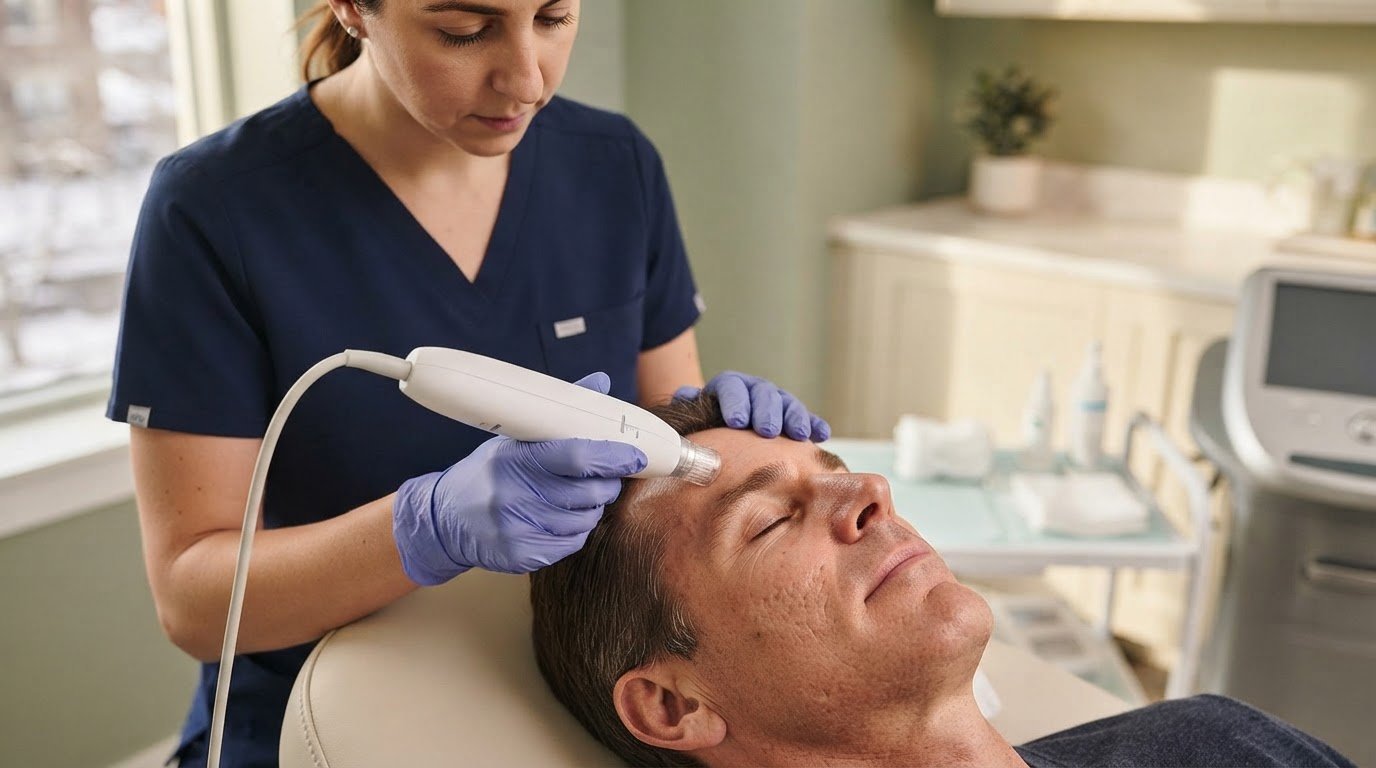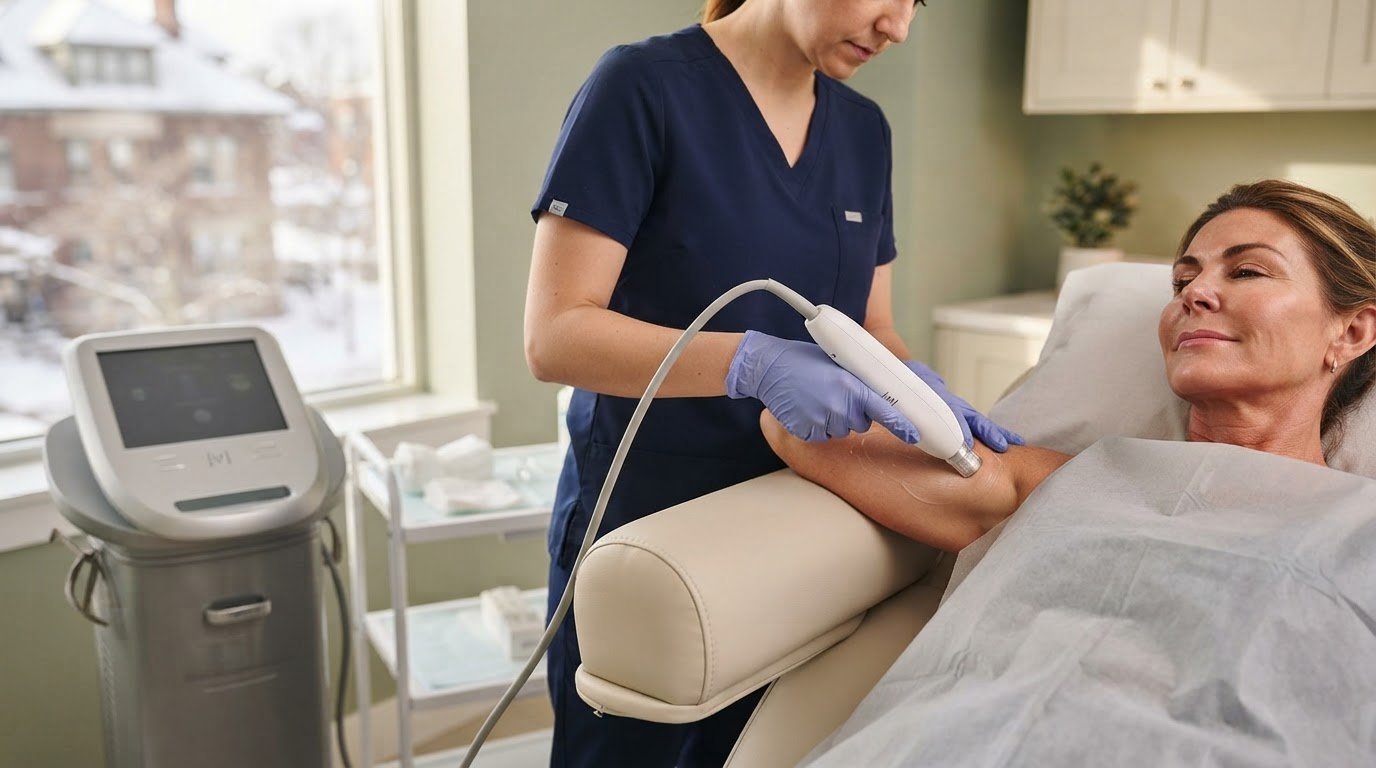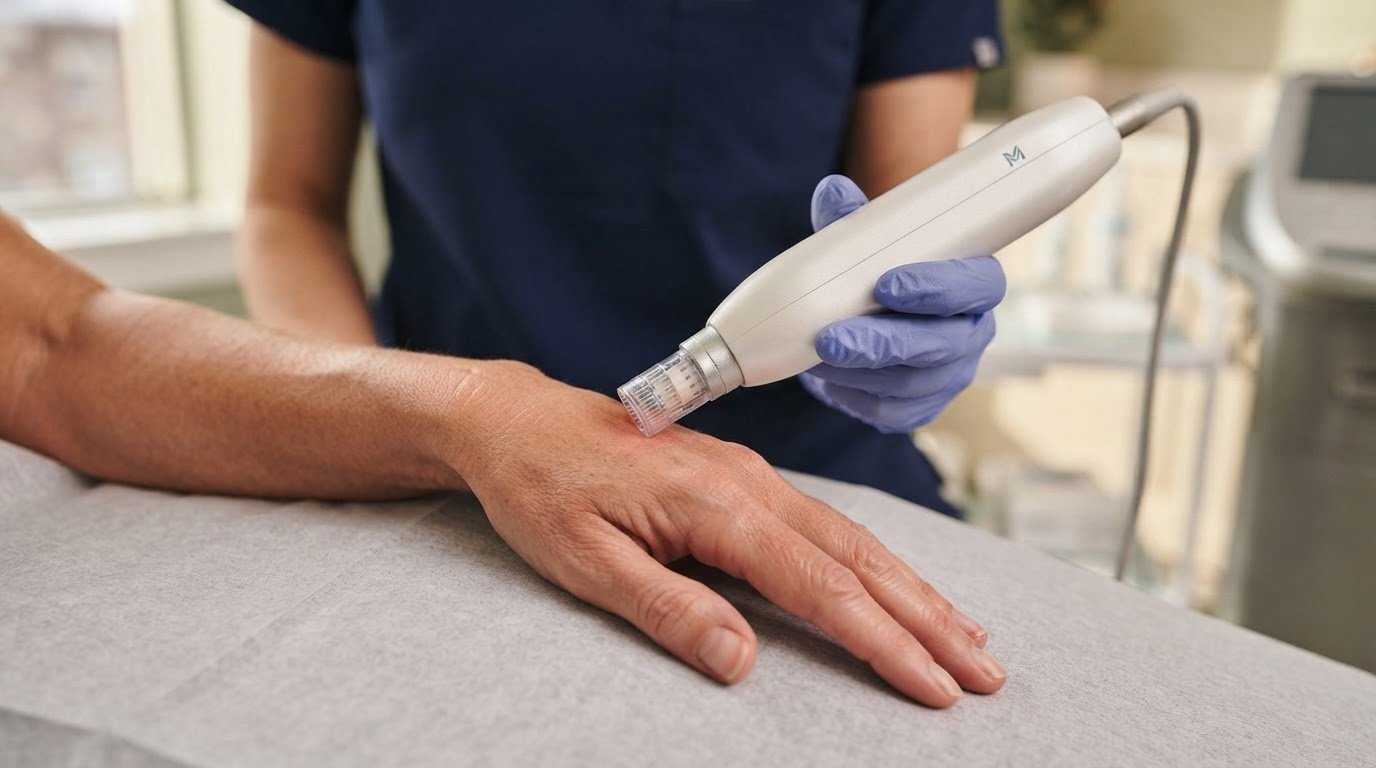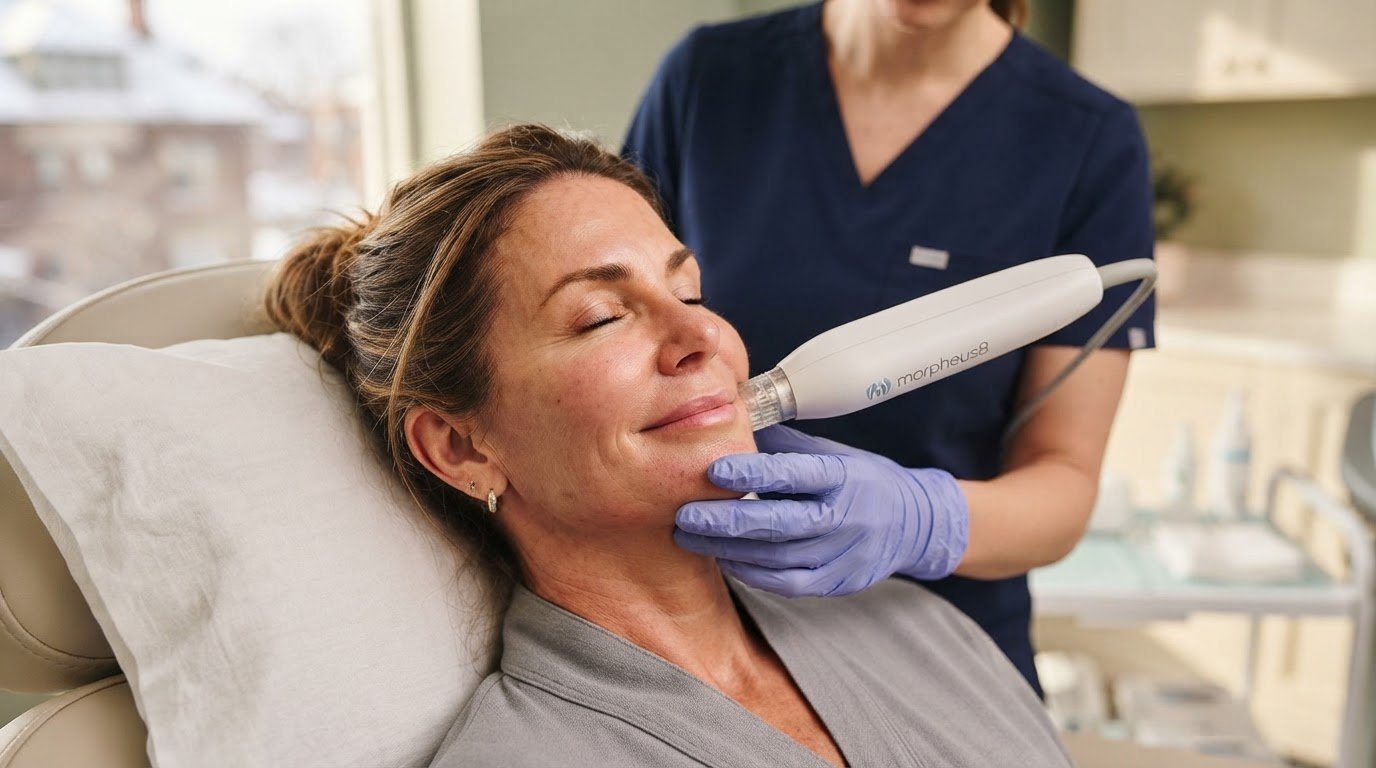
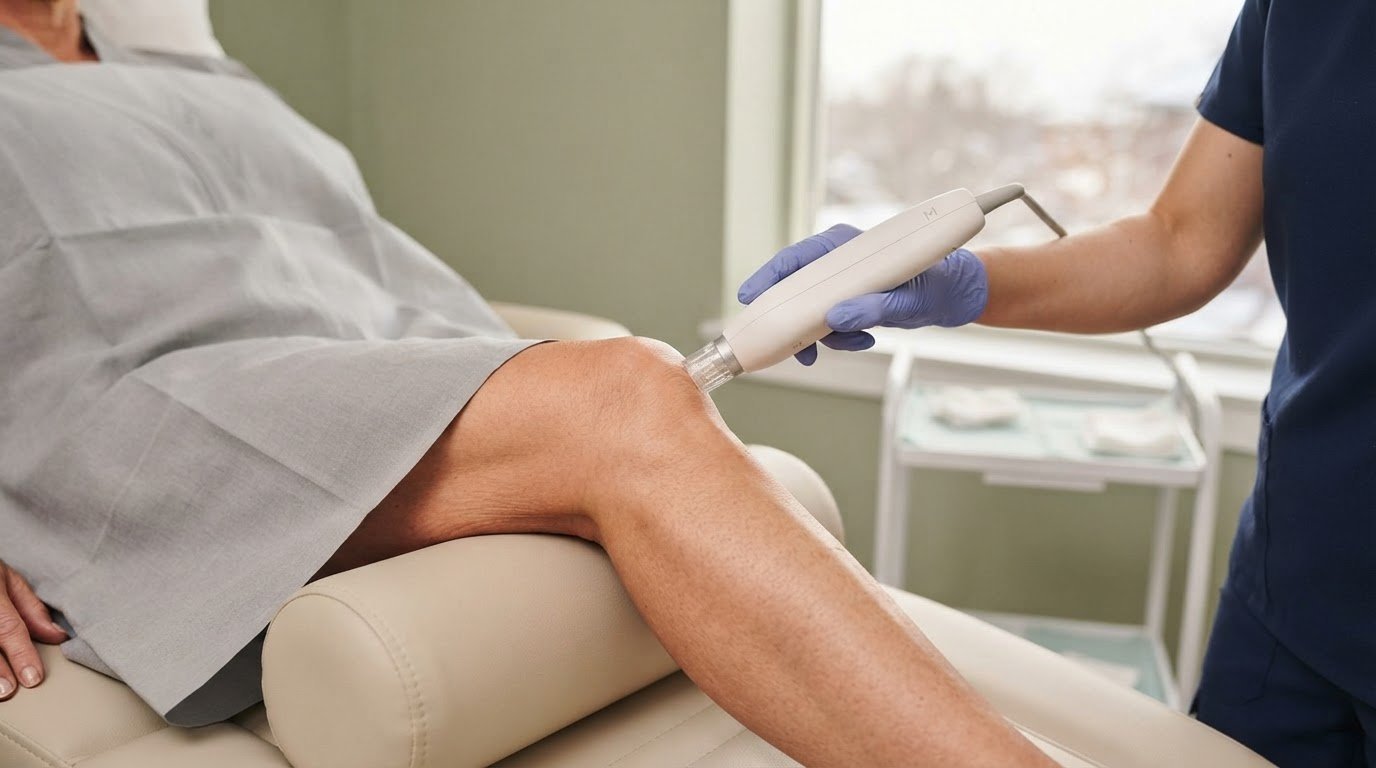
Morpheus8 arm and knee tightening uses microneedling with radiofrequency energy to encourage firmer-looking skin and improve its texture. The treatment can address crepey skin and mild to moderate laxity, with changes developing gradually over weeks as collagen remodels. Knee treatment commonly involves 2-3 sessions, while the right plan depends on the areas treated and the degree of skin laxity.
Loose or crepey skin around the upper arms and knees can be frustrating, especially when exercise or weight changes haven’t addressed the skin itself. Morpheus8 may offer a non-surgical option, but it isn’t a substitute for removing substantial excess skin. This guide explains how the treatment works, who may be a suitable candidate, what recovery can involve, and how results emerge over time, so you can understand whether it aligns with your goals.
Key Takeaways
- Morpheus8 combines microneedling and radiofrequency energy to support firmer-looking skin and smoother texture.
- The degree of skin laxity matters: mild to moderate concerns may suit treatment, while substantial excess skin may call for a different approach.
- Radiofrequency energy doesn’t target pigment, making the treatment suitable for a wide range of skin tones when performed correctly.
- Plan for possible redness, swelling, and pinpoint marks for a few days, with visible changes developing gradually over the following weeks.
- Contact My Health 360 for a Meet and Greet to discuss with Medical Director Dr. Fatima whether Morpheus8 is a good option for you.
HOW DOES Morpheus8 Make Legs and Knees Firmer?
Morpheus8 combines microneedling and radiofrequency to treat skin on the arms, legs, and knees. Fine needles deliver energy beneath the skin, supporting collagen remodeling and gradual firming.
Treatment Across Laxity Levels
Mild laxity may appear as early creasing or a subtle loss of firmness. Moderate laxity can include more visible looseness and crepey texture, particularly around the upper arms or above the knees. Morpheus8 may address these skin-quality concerns without removing tissue.
Significant loose skin, especially after substantial weight loss, differs from mild surface laxity. Morpheus8 can improve crepey skin, but it doesn’t replace surgery to remove excess skin. The amount and distribution of loose tissue help distinguish a tightening goal from a skin-removal goal.
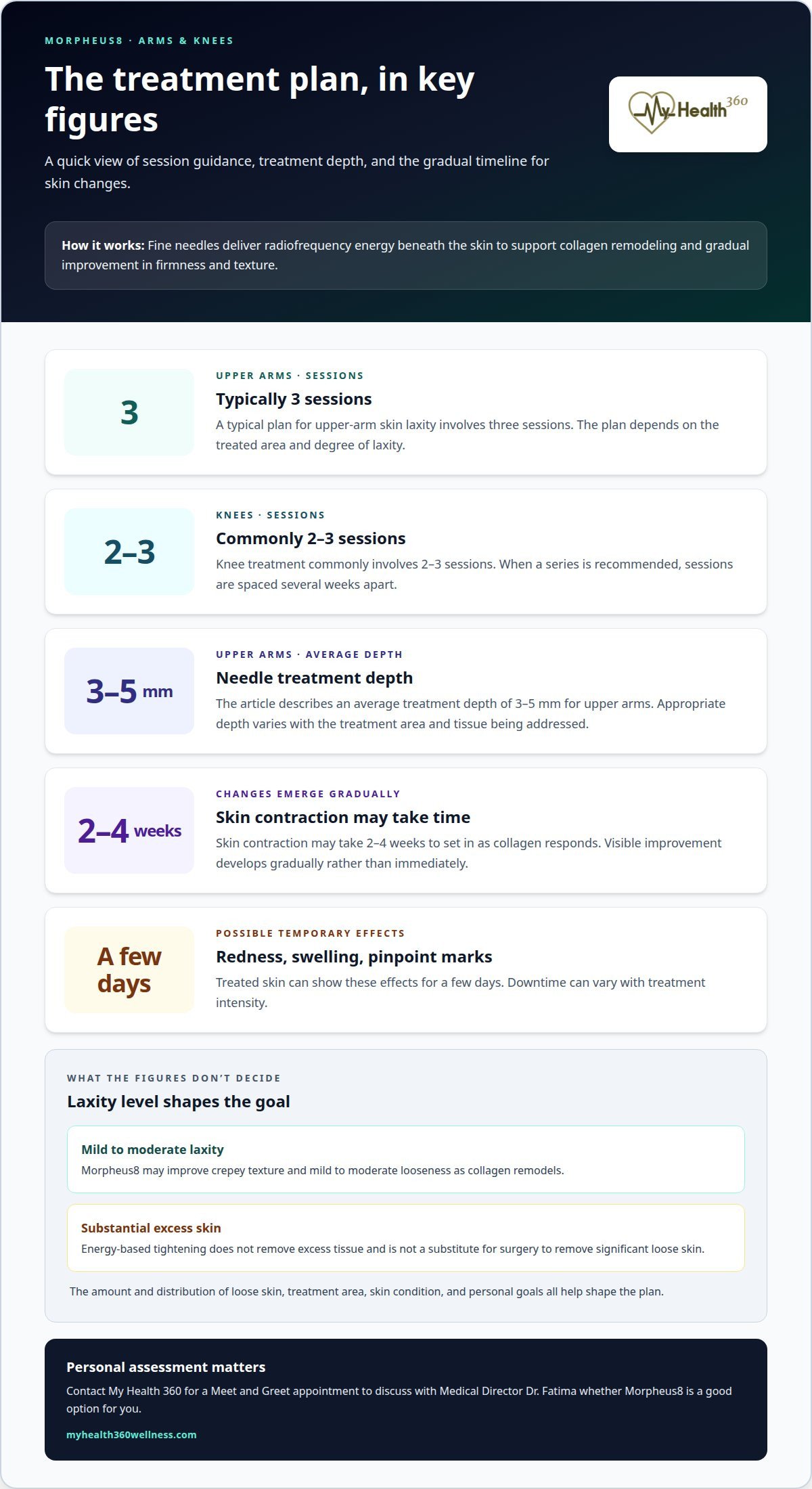
For upper-arm skin laxity, treatment typically involves 3 sessions. Knee treatment typically involves 2-3 sessions, spaced several weeks apart when a series is recommended. The procedure plan depends on the treated area and degree of laxity.
Crepey Skin Above the Knees
Crepey skin above the knees may look finely wrinkled, thin, or less smooth when the leg bends. Morpheus8 can target this texture by delivering radiofrequency energy through microneedles into the skin. The goal is gradual improvement in firmness and surface appearance, not removal of excess skin.
For knee creases, additional sessions may help improve skin tightness and smoothness. Treatment depth and energy can be adjusted to the area, while the degree of laxity remains an important planning consideration. Crepey skin with substantial excess tissue calls for a different discussion than fine surface wrinkling.
RF Microneedling for Crepey Skin
Traditional non-invasive tightening delivers energy through the skin’s surface. Morpheus8 Body uses fine needles to place radiofrequency energy beneath the skin, creating a targeted treatment pattern. The energy supports collagen remodeling, which develops gradually rather than immediately.
For upper arms, an average treatment depth is described as 3-5 mm. The appropriate depth varies with the treatment area and tissue being addressed. Temporary redness or swelling may follow the procedure, and downtime can vary by treatment intensity.
Effectiveness, Results, and Candidate Suitability
How effective is Morpheus8 for arm and knee skin laxity? It may improve crepey texture and mild to moderate looseness as collagen remodels over weeks. Results are gradual, and Morpheus8 cannot remove significant excess skin.
Who is a good candidate for Morpheus8 arm and knee tightening? Adults concerned about skin laxity or crepiness, rather than substantial excess tissue, may be suitable. The amount of loose skin after weight loss or pregnancy is one important consideration.
What results can Morpheus8 achieve for crepey skin and cellulite on the arms and knees? It may improve crepey skin texture and firmness; it shouldn’t be presented as a cellulite-removal treatment. When fat, rather than lax skin, is the primary concern, fat reduction or contouring addresses a different goal.
Suitability for different skin tones
Morpheus8 uses radiofrequency energy, which doesn’t target pigment. When performed correctly, it’s considered suitable for a wide range of skin tones. That makes skin tone one consideration among several, rather than an automatic barrier. The treatment area, skin condition, degree of laxity, and personal goals also shape the plan.
For darker or lighter skin, suitability depends on careful assessment of the specific area. The clinician considers existing skin concerns and how the arms or knees respond to touch and movement. This helps guide treatment settings and clarify whether the main goal is firmer texture, less crepiness, or another change.
At the knees, the concern may be fine wrinkles above the kneecap or looser skin across a broader area. Morpheus8 can treat knee skin by delivering radiofrequency through microneedles. Upper-arm treatment similarly focuses on laxity and texture. In either area, the amount of excess skin matters because energy-based skin tightening doesn’t remove tissue.
How does Morpheus8 compare with radiofrequency microneedling, laser treatments, or surgery for loose arm and knee skin? Morpheus8 is a form of radiofrequency microneedling, while traditional non-invasive radiofrequency delivers energy through the skin’s surface and may suit mild to moderate laxity. Laser treatments use different technology, while surgery can remove excess skin that energy-based treatments cannot. When researching medical-grade cosmetic enhancement options for skin rejuvenation, resources like skinstitute.com.au offer helpful insights into how specialized clinical treatments are tailored to specific skin concerns.
Collagen remodeling explains why changes aren’t immediate. Skin contraction after Morpheus8 may take 2-4 weeks to set in, as collagen responds over time. This gradual process can enhance firmness and texture without promising a particular degree of tightening. The desired result, skin quality, and treatment area all influence what improvement means for each person.
Traditional non-invasive radiofrequency skin tightening is generally performed as a series, with minimal to no visible downtime. Morpheus8 instead uses microneedling to deliver radiofrequency beneath the surface. The choice depends on whether the priority is gradual tightening without needling, or treatment that targets deeper skin layers. Neither approach replaces surgery for substantial excess tissue.
Skin tone alone doesn’t determine whether treatment is appropriate. A useful assessment distinguishes pigment concerns from laxity, then considers whether the arms or knees have enough excess skin to change the treatment goal. For a personalized discussion of these factors, schedule a Meet and Greet with Medical Director Dr. Fatima to discuss whether the procedure may be a good option.
Downtime and recovery
After Morpheus8, treated skin can show redness, swelling, and pinpoint marks for a few days. These temporary effects may appear across the upper arms or around the knees. Their visibility can influence when patients feel comfortable returning to social plans or sleeveless clothing. Plan around the treated area, rather than assuming both arms and knees recover identically.
For arm rejuvenation, reported downtime is 3-5 days. During this period, redness or small marks may remain noticeable as the skin settles. The term downtime describes visible recovery, not a fixed period of restricted movement. Patients should consider work, exercise, and events when scheduling an aesthetic procedure.
After knee treatment, patients can walk immediately. That does not mean the skin has finished recovering. Swelling, redness, or pinpoint marks may remain for a few days, so allow visible effects to ease before planning activities that expose the treated area.
What are the risks and side effects of Morpheus8 on arms and knees? Common short-term effects include redness, swelling, and pinpoint marks lasting a few days. The treatment uses microneedling and radiofrequency energy, so temporary skin changes are part of the recovery period.
Before treating the legs or knees, topical numbing cream may be applied to support comfort during the procedure. Discuss comfort concerns and the treatment area beforehand, especially if both knees or a broad section of the arms will be treated. The treated surface and energy settings can influence the experience.
After treatment on the legs and knees, aftercare includes avoiding strenuous activity and direct sunlight. These steps matter while the skin recovers. For example, schedule a knee procedure away from an outdoor workout or prolonged sun exposure, leaving time to follow these precautions.
Wait at least 5 to 7 days after Morpheus8 before chemical peels or skin resurfacing. This timing helps prevent stacking another skin procedure too soon after microneedling. If a peel or resurfacing appointment is already planned, arrange the sequence so the recovery interval is respected.
Plan recovery around the degree of laxity and your goals. Someone seeking subtle improvement around the knees may have a different treatment area than someone addressing loose upper-arm skin. Matching work and exercise plans to the procedure area makes scheduling more straightforward.
Redness, swelling, and pinpoint marks are visible recovery effects, while collagen remodeling continues beneath the skin over subsequent weeks. These are separate stages: a calmer surface does not mean the aesthetic result has finished developing. Focus first on recovery, then on gradual changes in skin firmness and texture.
Before treatment, identify any upcoming event that requires bare arms or exposed knees. A 3-5 day arm downtime estimate offers a useful scheduling reference, but visible marks can affect comfort beyond work or movement. Choosing a date with flexibility can make the early recovery period easier to manage.
For knee treatment, walking immediately supports everyday mobility, while avoiding strenuous activity remains part of aftercare. These details are not contradictory: ordinary walking and intense exercise place different demands on the body. Follow the activity guidance for the treated area and protect the skin from direct sunlight during recovery.
Prepare by coordinating three details: topical numbing for comfort, a schedule that allows for several days of visible effects, and a pause before peels or resurfacing. Each step addresses a different concern. Together, they help organize recovery without assuming every patient will have the same downtime.
When Will I See Results From Morpheus8 Body Treatments?
Morpheus8 changes develop over weeks, not immediately after treatment. The timeline reflects collagen remodeling and the skin’s gradual contraction.
Results Timeline and Longevity
Skin contraction after Morpheus8 may take 2 to 4 weeks to set in. Initial tightening can appear around week 2, while collagen remodeling continues beneath the surface. Early changes are only one stage, so assess skin appearance over time rather than judging the outcome immediately after a procedure.
For legs and knees, improvements in tightness and texture may last from several months to years. Longevity varies by individual, and the starting condition of the skin matters. For example, fine wrinkles and crepey texture differ from extensive loose skin after weight loss. Morpheus8 can improve crepey skin, but it doesn’t replace surgical removal of excess tissue.
After weight loss, consider how much loose skin remains and where it sits. A localized area of crepey skin is different from laxity extending across a larger part of the leg. Skin quality and the amount of excess tissue help clarify whether the goal is gradual tightening or skin removal.
Keep the stages distinct: skin contraction can begin within weeks, while full changes take longer to emerge. Improvements in skin tightness and texture are described across a range from several months to years. This reflects individual variation, not a fixed duration of results for everyone.
Arm Results Timeline
Upper-arm results develop in stages. Initial tightening may be visible by week 2, and an estimated 20% improvement may appear by month 1. By month 3, about 70% of the final arm-treatment result may be visible. These milestones describe a gradual progression, rather than an immediate change in loose skin or wrinkles.
Full arm-treatment results are achieved by month 6. Collagen remodeling helps explain why skin quality continues changing after early tightening appears. Comparing the arms at different stages, such as month 1 and month 3, can make gradual changes in appearance easier to recognize.
For arm laxity after weight loss, the degree of remaining loose skin remains important. Morpheus8 may improve crepey texture and firmness, but it isn’t a substitute for surgery when excess skin requires removal. The distinction is whether the concern is skin quality or a substantial amount of loose tissue.
Plan expectations around the treatment area and timeline. Week 2 offers an early indication, month 3 provides a later progress point, and month 6 marks the stated full-results timeline for arms. Knee and leg improvements also develop gradually, with longevity varying from several months to years.
Morpheus8 body for knee tightening
Morpheus8 Body treats the knees with radiofrequency delivered through microneedles. This body application can also address the arms, thighs, abdomen, and flanks. For the knees, treatment planning focuses on the skin’s texture, wrinkles, and degree of laxity around the kneecap. The goal is firmer-looking skin, not surgical removal of excess tissue.
A knee session typically lasts 30-60 minutes. The treatment area and its skin condition shape how the procedure is performed. When a series is recommended, knee treatment typically involves 2-3 sessions, spaced several weeks apart. This spacing allows time for the skin’s response to develop before another session.
Settings matter because knee skin may have fine creases in one area and broader laxity nearby. Morpheus8’s treatment depth can be selected for the tissue being addressed. In a described knee-treatment scenario after CoolSculpting, a 4 mm setting was suggested. That example illustrates how treatment parameters relate to a specific clinical context, not a universal setting for every knee.
Patients considering knee tightening should distinguish loose skin from fat-related contour concerns. If fat is the primary concern, fat reduction or contouring addresses a different objective. If wrinkles and crepey texture are prominent, Morpheus8 focuses on skin quality. Significant loose skin with excess tissue may call for a surgical consultation rather than an energy-based procedure.
What should you expect after a knee session? Redness, swelling, and pinpoint marks can occur for a few days. Patients can walk immediately after treatment, but should avoid strenuous activity and direct sunlight during recovery. Keep these details in mind when scheduling around an outdoor event or demanding workout.
Knee results develop as collagen remodels, so changes appear gradually over weeks. A series of sessions may be spaced several weeks apart for the same reason: the skin needs time to respond. Additional sessions can make knee wrinkles tighter and smoother. The treatment is generally considered safe when performed by a qualified healthcare professional—specialized aesthetic practices, such as Brazilian Medical Center, routinely tailor these radiofrequency parameters to patient skin goals.
The practical takeaway is to match the treatment goal to the concern. A small area of crepey skin above the kneecap differs from widespread excess tissue or a fat-contouring goal. During assessment, the clinician considers the location and extent of laxity, skin texture, and treatment area before planning settings and sessions.
For a focused discussion about knee skin texture, session spacing, and treatment settings, contact My Health 360 to schedule a Meet and Greet and speak with Medical Director Dr. Fatima about whether Morpheus8 is a good option for you.
My Health 360: Morpheus8
My Health 360 offers Morpheus8 for patients considering skin tightening for the arms or knees. A personalized discussion can help connect your concerns, such as crepey skin or visible laxity, with realistic treatment goals and recovery expectations. It also helps distinguish skin texture concerns from significant excess skin, which Morpheus8 doesn’t remove.
If you’re weighing treatment, a Meet and Greet appointment is a practical next step. You can discuss the areas you’d like to address, your desired changes, and whether Morpheus8 is a good option for you with Medical Director Dr. Fatima.
Contact My Health 360 to arrange a Meet and Greet and discuss your questions with Dr. Fatima.
Take the Next Step Toward a Personalized Plan
Planning Morpheus8 arm and knee tightening starts with defining the change you want and the areas that concern you most. A discussion can help distinguish skin texture goals from concerns that may call for a different approach. Whether Morpheus8 fits depends on your needs and treatment goals.
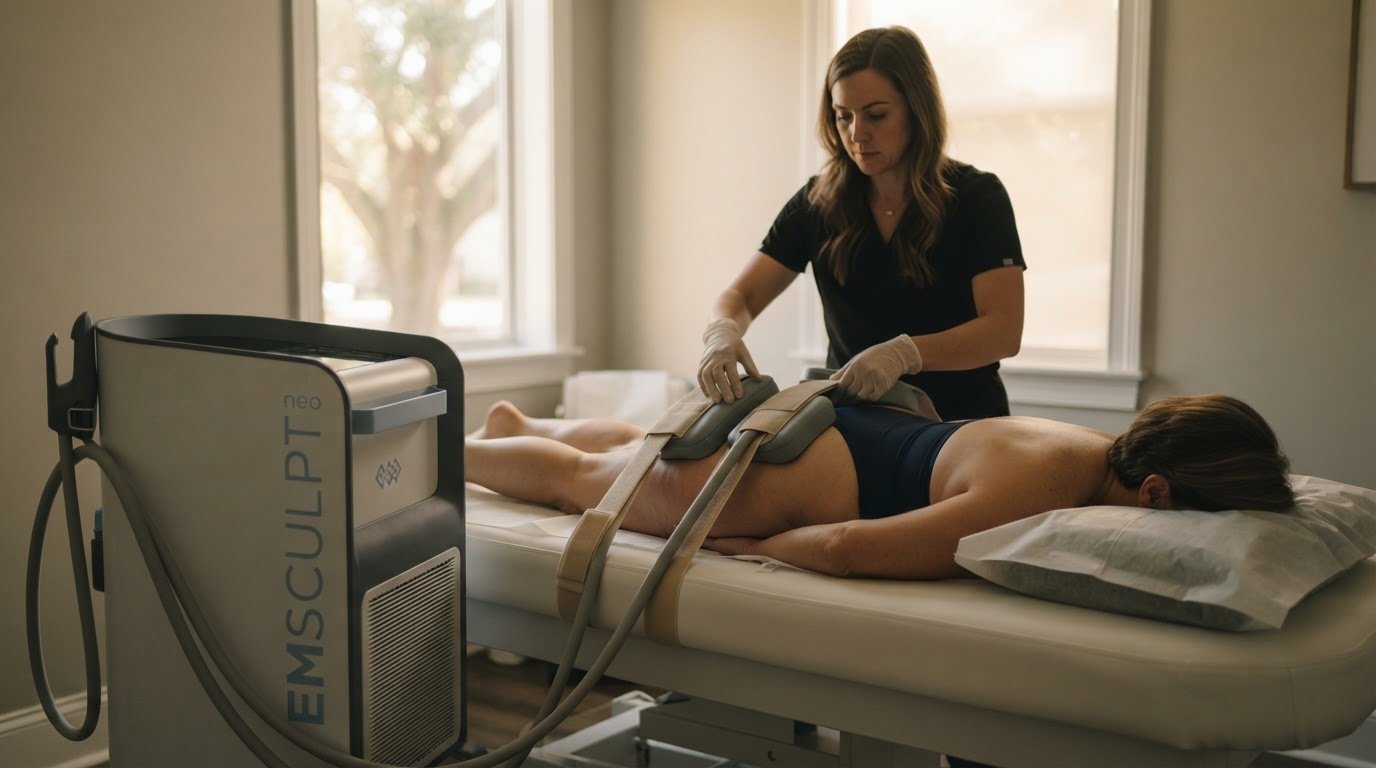
For broader body goals, My Health 360 also offers Emsculpt Neo, BioPrime: Pre-operative /Pre-Event whole body habilitation, and Bio-Restore: Post-Operative/ injury whole body habilitation. These are distinct offerings, and the right conversation begins with the concern you want to address.
Arrange a Meet and Greet to discuss your goals and ask Medical Director Dr. Fatima whether Morpheus8 is a good option for you. Contact My Health 360 to schedule a Meet and Greet. A thoughtful next step can help you move forward with clarity and confidence.
Frequently Asked Questions
What Is Morpheus8?
Morpheus8 is an in-office, non-surgical treatment that combines microneedling with radiofrequency energy. Fine needles deliver energy beneath the skin’s surface, targeting tissue involved in skin firmness and texture. For example, a treatment plan may focus on crepey skin above the knees or laxity on the upper arms. It’s distinct from surgery, which can remove excess skin rather than stimulate gradual skin remodeling.
Is Morpheus8 Safe for All Skin Types?
Morpheus8 is considered suitable for a wide range of skin tones when performed correctly. Its radiofrequency energy doesn’t target pigment, but suitability still involves assessing the specific treatment area and skin concerns. For example, a practitioner considers whether the main issue is laxity, texture, or another skin feature before planning treatment. Skin tone alone doesn’t determine the treatment approach or expected changes.
How Many Treatments Are Needed?
The number of treatments depends on the area and concern being addressed. For example, upper-arm treatment typically involves 3 sessions, while knee treatment typically involves 2-3. These are area-specific expectations, not a single standard plan for every person. The treatment goal also matters: improving localized crepey texture differs from addressing widespread loose skin, which Morpheus8 cannot surgically remove.
How many sessions are needed?
Session count is planned around the treated body area, so arms and knees may have different schedules. Upper arms typically require 3 sessions; knees typically require 2-3 sessions. If a series is recommended, sessions are generally spaced several weeks apart. This interval allows the skin’s response to develop between appointments, rather than placing treatments close together without time to assess progress.
What causes wrinkly knees?
Wrinkled knee skin can be associated with aging, weight loss, and decreased skin elasticity. After weight changes, for example, skin may look looser above the kneecap, while reduced elasticity can make fine creases more visible when the knee bends. Appearance can also reflect how much excess skin is present. Distinguishing fine surface wrinkles from substantial loose tissue helps clarify the treatment goal.
How does Morpheus8 tighten loose skin on the arms and knees?
Morpheus8 uses microneedling to deliver radiofrequency energy into the skin, supporting collagen remodeling and gradual contraction. On the arms or knees, the treatment can target skin texture and mild to moderate laxity. It may improve crepey appearance, but it doesn’t remove significant excess skin. For example, a localized wrinkled area differs from loose tissue extending across a larger part of the leg.
How many Morpheus8 treatments are needed for arms and knees, and how far apart?
Upper arms typically require 3 treatments, while knee treatment typically involves 2-3. When a series is recommended, sessions are usually scheduled several weeks apart. The arm and knee counts describe treatment of those areas separately; they don’t establish a combined appointment schedule. The area’s laxity and texture guide the plan, and time between sessions allows the skin response to develop.
What is the recovery time after Morpheus8 on arms or knees?
Arm rejuvenation has a reported downtime of 3-5 days. Most patients experience mild redness and swelling that typically resolves within a few days. Patients can walk immediately after knee treatment, though visible skin effects may still occur. After leg or knee treatment, avoid strenuous activity and direct sunlight. For a personal discussion, contact My Health 360 to arrange a Meet and Greet with Medical Director Dr. Fatima.