Morpheus8 may soften the appearance of some depressed acne scars and improve uneven skin texture, but it won’t erase every scar. A Morpheus8 acne scar package usually involves a series of treatments, with about 3 treatments commonly recommended for cumulative improvement.
It’s understandable to weigh the potential skin benefits against the cost of committing to a series rather than paying for one session at a time. Package and single-session pricing depends on factors such as the treatment area, scar pattern, treatment depth, and number of sessions, with the price provided after a quote request.
This guide explains how Morpheus8 works for acne scarring, which scar types may respond more readily, who may be a suitable candidate, and what side effects and recovery can involve. It also clarifies how to think about a treatment series versus a single session, so you can assess the options with realistic expectations.
Key Takeaways
- Learn how radiofrequency microneedling stimulates collagen remodeling and why scar type influences the potential improvement.
- Understand which skin concerns may make treatment a better fit and when active breakouts or other factors can make postponing sensible.
- See why deeper or ice-pick scars may respond differently from shallow boxcar scars, and what realistic results can look like.
- Review common short-term skin reactions, recovery considerations, and how downtime can affect your schedule.
- Compare the factors that shape package and single-session costs, so you can weigh a course of treatment against one appointment.
Does Morpheus8 Help Treat Acne Scars?
Morpheus8 may improve the appearance of some depressed acne scars and uneven texture. Its microneedles deliver radiofrequency energy beneath the skin, supporting collagen remodeling.
Microneedling With Radiofrequency
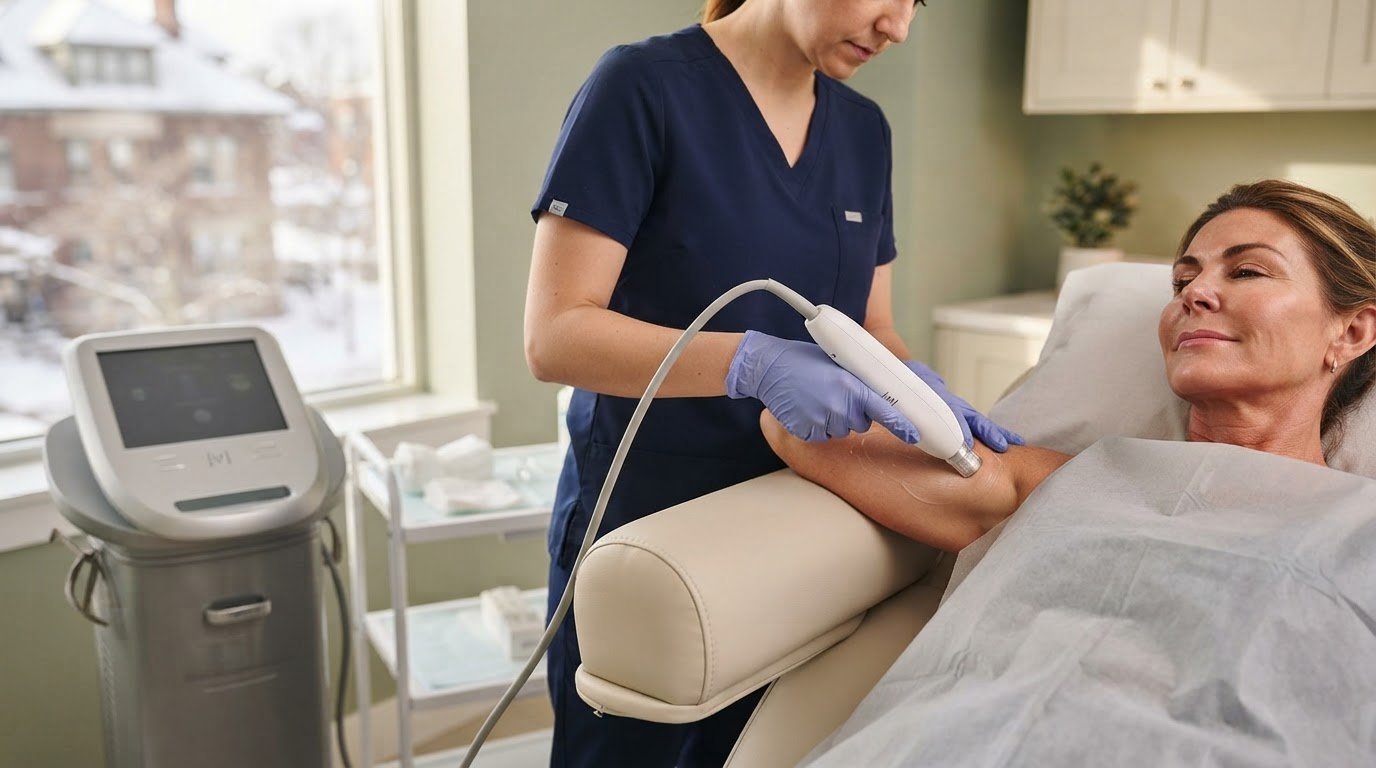
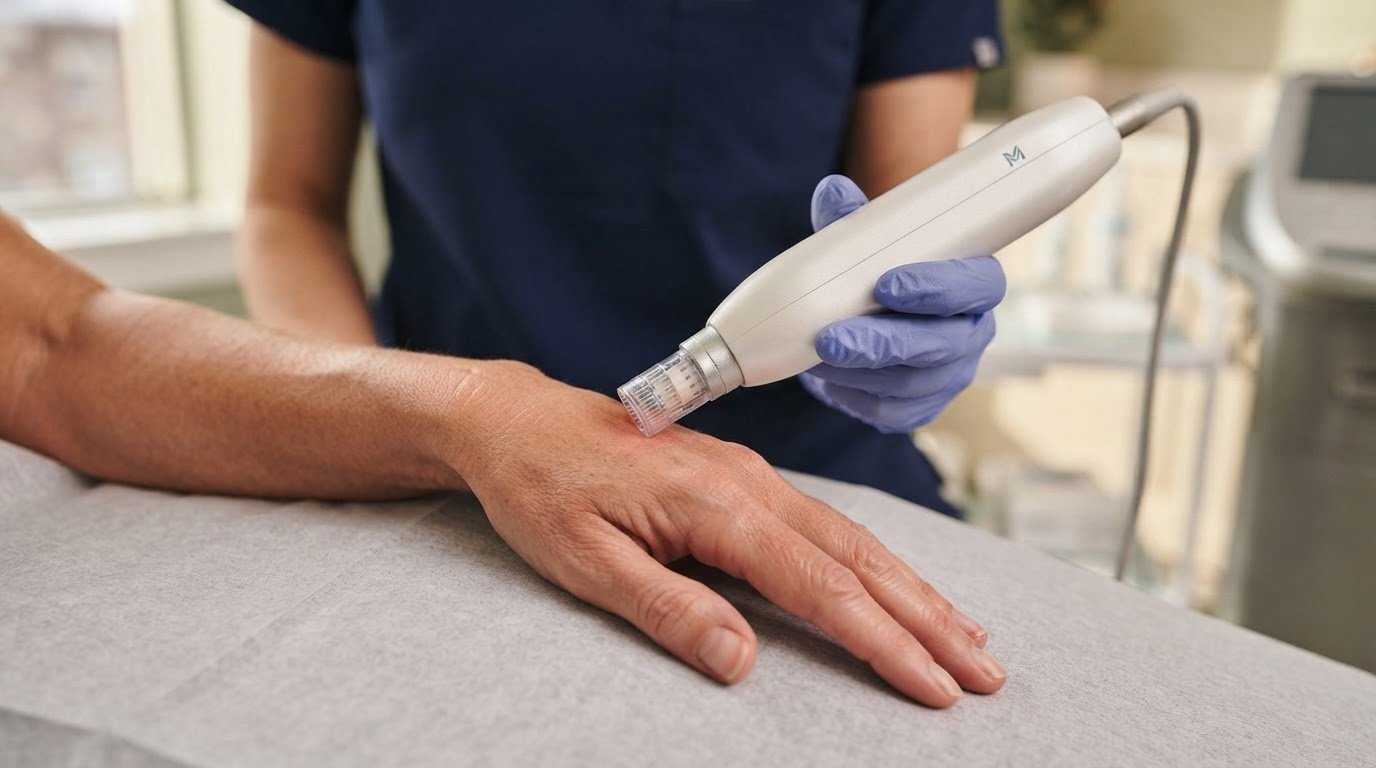
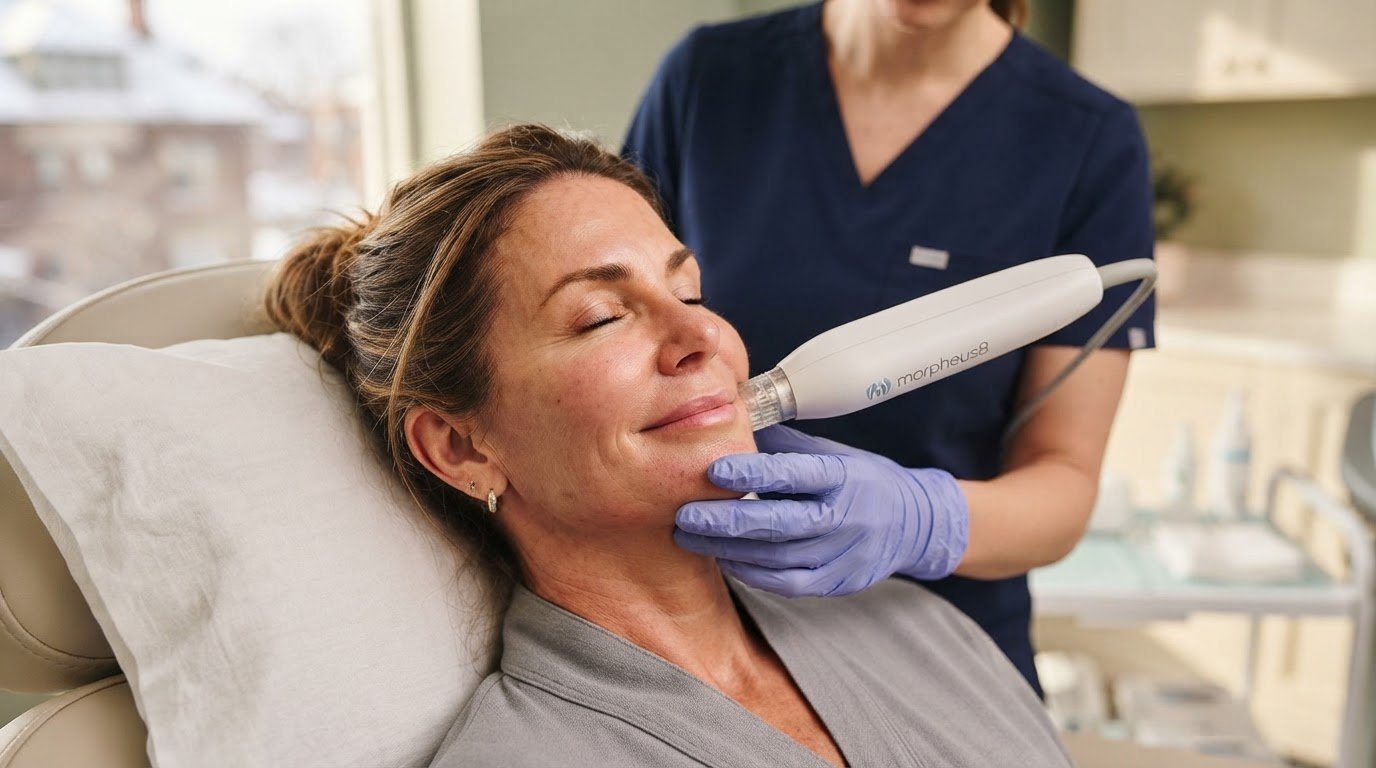
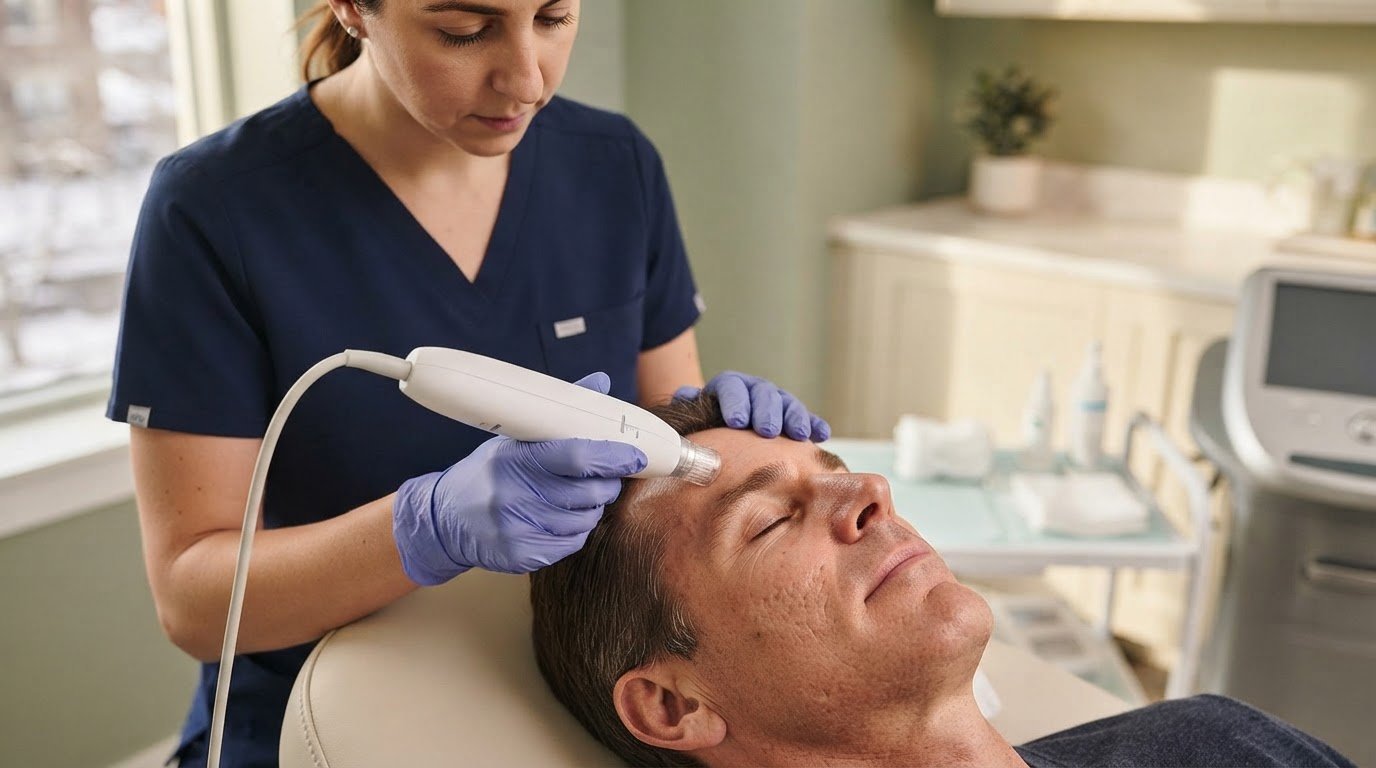
Morpheus8 combines microneedling, which creates controlled channels, with radiofrequency heat delivered through the needles. The device’s needles can reach up to 4 mm beneath the skin. This pairing matters because treatment can address texture below the surface, rather than relying only on superficial skin changes.
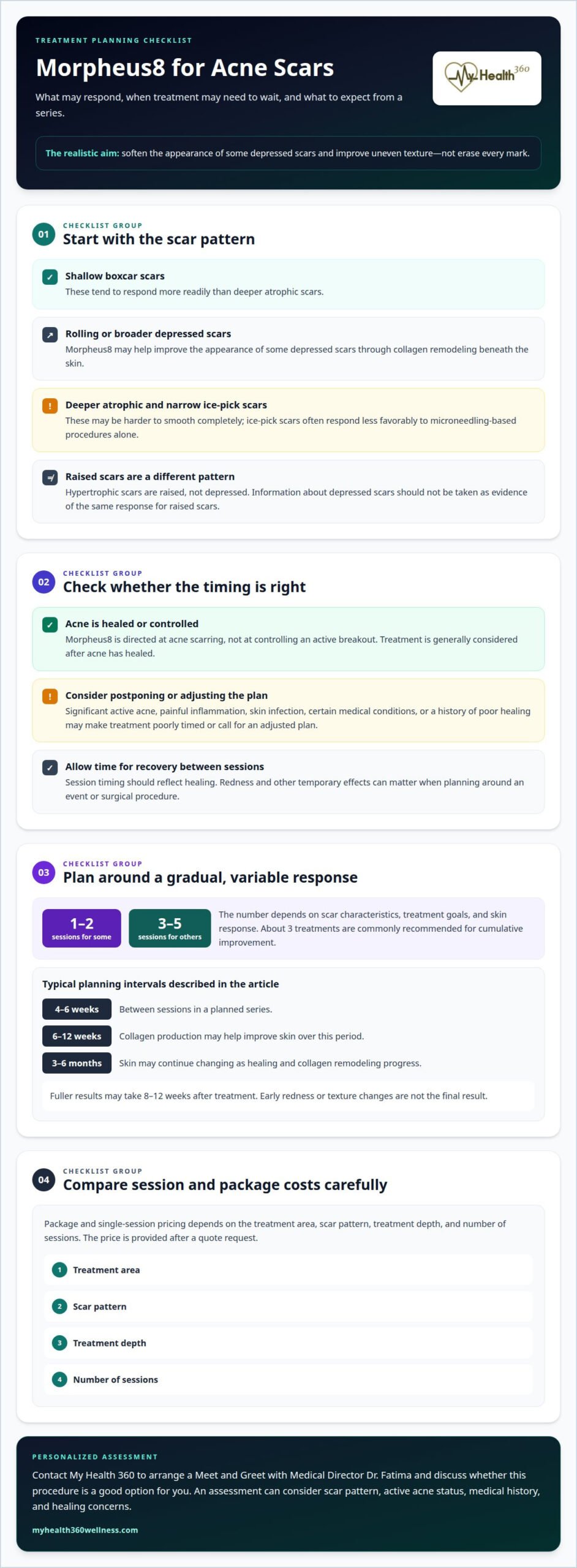
For example, a shallow boxcar scar and a narrow ice-pick scar have different shapes, so they may respond differently. Microneedling with radiofrequency may help improve certain depressed scars, but it should not be expected to erase every mark. A consultation can assess the scar pattern and the treatment approach most relevant to it.
Collagen Production and Remodeling
Radiofrequency microneedling stimulates collagen and elastin, proteins involved in skin structure. As the treated tissue heals, collagen remodeling may gradually soften the appearance of some depressed scars. The change develops over several weeks or months, rather than appearing immediately after treatment.
Collagen production may help improve skin over 6 to 12 weeks. That timeline helps set expectations: early redness or texture changes are not the final result. A treatment plan may involve 3 sessions for cumulative improvement, while the response depends partly on scar type. Shallow boxcar scars tend to respond more readily than deeper atrophic scars.
Comparisons With Other Scar Treatments
Microneedling alone uses needles, while Morpheus8 adds radiofrequency energy through its needles. CO2 laser treatment and subcision are different approaches, not interchangeable versions of radiofrequency microneedling. The useful comparison is how each option aligns with the scar’s shape and the intended treatment area.
Ice-pick scars often respond less favorably to microneedling-based procedures alone. Morpheus8 may be more relevant to some depressed scars, including shallow boxcar patterns, while deeper atrophic scars can be harder to smooth completely. CO2 laser and subcision may be considered as distinct treatment approaches, but a consultation should focus on the scar pattern, skin condition, and desired change. Choosing by modality name alone can overlook those differences.
Candidate suitability and reasons to postpone treatment
Suitability depends on whether acne is controlled, the scar pattern, and how the skin heals. These factors inform treatment timing, session planning, and realistic goals.
Scar Types and Likely Response
Scar type describes the shape and depth of the marks, which influence how they respond to radiofrequency microneedling. Shallow boxcar scars tend to respond more readily, while deeper atrophic scars can be harder to smooth completely.
Ice-pick scars may respond differently from broader, shallow scars. An assessment considers whether scars are depressed, narrow, broad, or unevenly distributed. For example, a face with shallow boxcar scars and a few deeper marks may call for a different discussion from skin with mostly narrow ice-pick scars.
Realistic Results and Limitations
The realistic aim is to make suitable acne scars less noticeable and improve texture, not eliminate every mark. Skin can continue changing for 3 to 6 months after treatment as healing and collagen remodeling progress.
Some patients need only 1 or 2 sessions, while others are offered a series of 3 to 5 treatments spaced 4 to 6 weeks apart. The number depends on scar characteristics, treatment goals, and skin response. A planned series does not mean every scar will become level with surrounding skin.
Treatment is generally considered after acne has healed, because active or inflamed breakouts can make scar treatment poorly timed. Significant active acne, painful inflammation, skin infection, certain medical conditions, or a history of poor healing may lead to postponement or an adjusted plan. These considerations matter for safety and the appearance of treated skin.
Session spacing allows the skin time to recover between treatments. When sessions are separated by 4 to 6 weeks, visible changes may emerge over several weeks, with fuller results taking 8 to 12 weeks after treatment. Redness and other temporary effects can also factor into scheduling, particularly before an event or surgical procedure. The treatment frequency should reflect healing, rather than a fixed calendar alone.
A consultation helps connect the scar pattern, active acne status, medical history, and healing concerns to a suitable plan. To discuss whether treatment is a good option, contact the team to arrange a Meet and Greet with Medical Director Dr. Fatima.
Morpheus8 for acne scars
Morpheus8 treatment is directed at acne scarring, not at controlling an active breakout. Scar shape, depth, and the skin’s healing response affect what improvement can look like.
Rolling, Ice-Pick, and Hypertrophic Scars
Rolling, ice-pick, and hypertrophic scars differ in shape, so they shouldn’t be treated as one pattern. Morpheus8 is used to improve the appearance of some depressed scars by stimulating collagen remodeling beneath the skin.
Broad, depressed rolling scars can respond through changes in skin contour. Narrow ice-pick scars often respond less favorably to microneedling-based procedures alone. Hypertrophic scars are raised rather than depressed, so information about improving depressed scars should not be taken as evidence of the same response for raised scars.
During assessment, distinguishing a broad depression from a narrow pit helps guide the discussion. For example, a treatment plan for rolling scars may not address ice-pick scars in the same way. Scar classification matters when discussing treatment and appearance goals.
Deep Scars and Active Acne Limitations
Deeper atrophic scars are harder to smooth completely than shallow boxcar scars. Morpheus8 can support collagen remodeling and improve skin contour, but the depth and structure of an individual scar limit how much it can change.
Active acne is different from established acne scarring. Significant inflamed breakouts should be controlled before microneedling begins, because the procedure targets existing skin texture rather than active lesions. For example, painful inflamed acne across an area is a reason to postpone scar-focused treatment until the breakout is managed.
Elastin and collagen contribute to skin structure, but stimulating their production doesn’t recreate every area of lost tissue. A realistic goal is a less noticeable scar and smoother texture, not complete removal. Deep scars and mixed scar patterns can leave visible irregularities after treatment.
Treatment Downtime
After Morpheus8, downtime reflects temporary skin reactions while the treated tissue heals. Acne-scar treatment commonly involves 2 to 5 days of downtime, depending on treatment intensity and skin response.
Redness, mild swelling, sensitivity, dryness, or flaking can occur after the procedure. Some patients return to normal activities within 24 to 48 hours, although visible redness and pinpoint marks can take about a week to improve. These timelines describe different parts of recovery, not a promise that every person’s skin will follow the same schedule.
Plan around the visible healing period, especially before work, photographs, or social events. Follow the aftercare instructions provided for your procedure, including guidance on skincare, sunscreen, heat, sweating, exfoliants, and direct sun. Treatment intensity and individual skin response influence how quickly redness settles and when texture changes are easier to assess.
Does Morpheus8 for Acne Have Side Effects?
Temporary redness, swelling, sensitivity, dryness, and mild flaking can follow the procedure. Recovery varies with treatment intensity, skin response, and the area treated, so facial treatment and acne-scar treatment may not look identical.
Common Reactions and Recovery
Redness and mild swelling may last 1 to 3 days after treatment, while some skin remains red or swollen for a few days to a week. Redness is often most noticeable during the first 24 to 48 hours. These reactions reflect the skin’s response to microneedling and radiofrequency, which stimulate collagen production over time.
Pinpoint marks may be visible as the surface heals. If a resurfacing tip is used, tiny pin-dot scabs can appear around day 3 and typically shed naturally within 3 to 5 days. Most visible redness and pinpoint marks improve within about a week, though some patients have symptoms that last longer.
Social downtime can range from about 48 hours to 3 to 5 days, depending on treatment intensity and individual skin response. Some patients resume normal activities within 24 to 48 hours, but visible redness may still affect plans. Makeup should be avoided for 24 to 48 hours after the procedure.
Aftercare and Safety Considerations
For the first 24 hours, avoid strenuous exercise or activities that cause sweating. Avoid heat exposure, including saunas and hot tubs, for 48 hours. Prolonged direct sun exposure should be avoided for at least 10 days, and sunscreen with at least SPF 30 should be reapplied every 2 hours when exposed to sunlight.
Use gentle skincare while treated skin heals. Avoid exfoliants and follow guidance on when to resume active products; for example, one recommendation is to wait 72 hours before applying Retin A. Makeup timing can also depend on the product and healing, so follow the post-procedure instructions for your treatment.
Serious complications have been reported with certain uses of radiofrequency microneedling devices. According to the FDA’s safety communication issued on October 15, 2025, reported complications include burns, scarring, unintended fat loss, disfigurement, nerve damage, and injuries requiring medical or surgical intervention. These reports concern certain uses of the devices and underscore the importance of appropriate treatment selection and careful technique.
Plan around visible recovery, not just the appointment itself. For example, someone with a work event the next day may prefer to schedule treatment when temporary redness or pinpoint marks won’t disrupt their plans. Follow the specific aftercare instructions provided for your procedure, especially regarding sun exposure, makeup, and skincare products.
Morpheus8 acne scar package and single-session prices
Package pricing and a single-session quote describe different treatment commitments. A single appointment addresses one treatment visit, while a package may group planned sessions; the right comparison is the total cost for the same treatment area and plan.
The price depends on the case and is given after a quote request; cost factors include the treatment area, scar pattern, treatment depth, session count, and treatment intensity. For example, a small targeted area and broader facial scarring involve different treatment scopes, so comparing their quotes without accounting for those differences can mislead.
For acne scarring, a plan may include 3 treatments, with sessions spaced 4 to 6 weeks apart. That doesn’t mean every person needs the same number of visits. Scar depth, uneven texture, treated area, and skin response help shape the course. A package makes sense to consider when the planned course is already clear; paying per session may suit someone whose plan starts with one treatment and reassessment.
What to Compare in a Package
Compare the same details across package and single-session options: treatment area, planned session count, depth and intensity, and what each quoted amount covers. If one option includes a broader area or more visits, its total can’t be compared directly with a single, targeted session.
Ask for the total commitment and the per-visit calculation. For instance, divide a package total by its included visits, then compare that figure with a single-session quote for the same area and treatment approach. This arithmetic clarifies the difference without assuming a package discount or identical treatment at each visit.
Why One Session May Not Equal a Course
One Morpheus8 treatment may provide a starting point, but collagen remodeling develops over time. A series spreads treatment across recovery intervals, allowing the skin to heal between visits and the response to inform subsequent sessions. Radiofrequency energy and needle depth are part of treatment planning, not standalone measures of value.
Before choosing a package, establish whether the quoted sessions match the scar pattern and desired improvement. Deep or varied scars can require a different plan from a limited area of shallow scarring. The practical takeaway is simple: compare equivalent areas and session counts, then weigh the total cost against the course actually proposed.
For a personalized discussion of treatment scope and pricing, contact My Health 360 to arrange a Meet and Greet and discuss with Medical Director Dr. Fatima whether the procedure is a good option for you.
My Health 360: Morpheus8
My Health 360 offers Morpheus8 for people considering treatment for acne scarring, uneven texture, or related skin concerns. For back acne or mask-related breakouts, it’s important to distinguish active acne from scars left after acne has healed, since Morpheus8 is discussed here as a scar-focused treatment.
A discussion with Medical Director Dr. Fatima can consider your scar pattern, current acne activity, treatment area, and healing history. These details help shape a conversation about whether Morpheus8 fits your goals and what questions to consider about treatment and recovery.
Contact My Health 360 to arrange a Meet and Greet appointment and discuss with Dr. Fatima whether the procedure is a good option for you.
Make Your Next Step a Personalized One
Choosing a morpheus8 acne scar package is not only a budgeting decision. It’s also an opportunity to align treatment with your skin’s current condition, scar pattern, recovery needs, and goals. Consider what matters most to you, such as a smoother texture, a gradual treatment plan, or understanding whether to address active acne first.
At a Meet and Greet, you can discuss those priorities with Medical Director Dr. Fatima and explore whether Morpheus8 is a good option for your individual case. My Health 360 also offers Emsculpt Neo, BioPrime pre-operative or pre-event whole body habilitation, and Bio-Restore post-operative or injury whole body habilitation for people considering broader aesthetic or recovery needs.
Contact My Health 360 to arrange a Meet and Greet and discuss a thoughtful next step with Dr. Fatima. A clear conversation can help you move forward with greater confidence in the approach that fits your goals.
Frequently Asked Questions
What is Morpheus8?
Morpheus8 is a non-surgical, in-office treatment combining microneedling with radiofrequency energy. Fine needles deliver energy into targeted tissue, creating a controlled treatment response while stimulating collagen and elastin. For acne scarring, the goal is to improve selected depressed marks and uneven texture, not remove every scar. A consultation considers scar pattern, treatment area, and active acne before planning the procedure.
How Soon Will I See Results?
Early changes can appear over several weeks, while collagen remodeling continues after the appointment. Morpheus8-related collagen production is described as helping improve skin over 6 to 12 weeks, and skin may continue improving for 3 to 6 months. For a useful comparison, take photos in similar lighting before treatment and during follow-up, rather than judging texture while temporary redness remains.
What Results and Recovery Can You Expect?
Expect temporary redness, swelling, sensitivity, dryness, or mild flaking as treated skin recovers. My Health 360 reports that most patients experience mild redness and swelling that typically resolves within a few days. Acne-scar downtime commonly ranges from 2 to 5 days, depending on treatment intensity and skin response. If you have an event planned, allow time for visible marks to settle rather than scheduling immediately beforehand.
Can Morpheus8 Treat Other Skin Texture Concerns?
Morpheus8 is also used to minimize the appearance of stretch marks, and radiofrequency microneedling may address uneven texture beyond acne scars. The relevant considerations are tissue pattern and treatment area, not simply the concern’s label. For example, someone asking about back acne scars needs the scarring assessed on the back, while active lesions require separate consideration from healed marks.
How Many Treatments Are Needed to See an Improvement?
About 3 treatments are commonly recommended for cumulative improvement, with sessions typically spaced 4 to 6 weeks apart. Some people need only 1 or 2 sessions, while deeper or mixed scar patterns can require a different plan. The number depends on the treatment area, scar depth, and skin response. Assess changes after healing, since visible improvement develops gradually.
How Soon After Treatment Can Makeup Be Applied?
Wait 24 to 48 hours before applying makeup after the procedure. This pause gives the treated surface time to recover from microneedling and limits friction from brushes, sponges, or repeated cleansing. If redness or sensitivity remains, avoid layering makeup over irritated skin and follow your aftercare instructions. For facial treatment, plan around work or social commitments that require full-coverage makeup.
How Long Do the Results From Morpheus8 for Acne Last?
Results for acne scars don’t follow one fixed duration. Morpheus8 addresses the appearance of existing scars, while future breakouts can create new marks and natural skin changes can alter texture. Improvement develops through tissue remodeling, so the skin’s ongoing condition and whether acne remains controlled both matter. Compare healed skin over time, not during the temporary recovery phase.
What Is Morpheus8 and How Does It Treat Acne Scars?
Morpheus8 treats acne scars by delivering radiofrequency energy through microneedles into targeted skin tissue. The controlled treatment response stimulates collagen remodeling, which can soften the appearance of selected depressed scars and uneven texture. Scar shape matters: shallow boxcar and rolling scars differ from narrow ice-pick scars, which often respond less favorably to microneedling alone. Active acne is assessed separately from healed scarring.