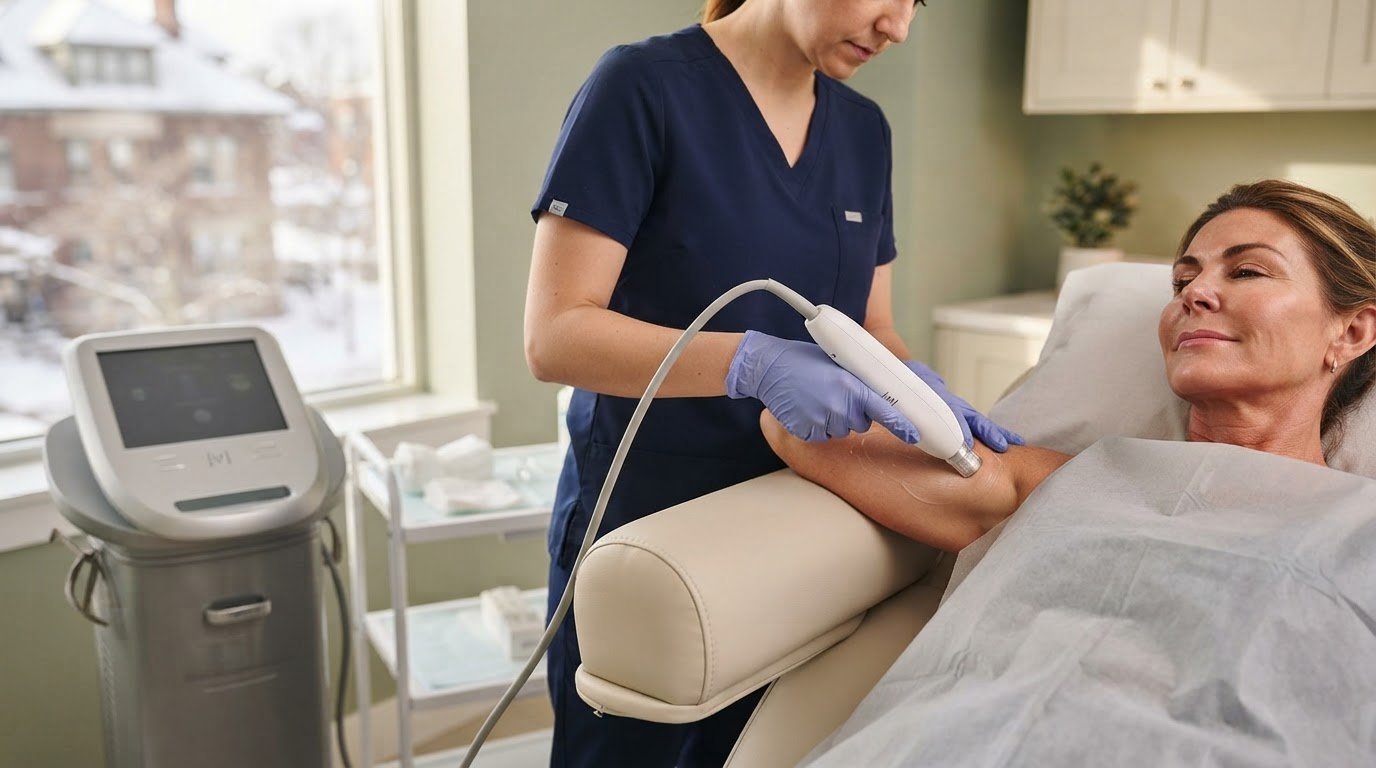
Three treatments are commonly described in a Morpheus8 excess sweating protocol, although a treatment plan may range from one to three sessions. The procedure uses radiofrequency microneedling to target sweat-gland activity in the underarm area. Improvement may become noticeable within weeks, but the timing and duration of results vary.
If persistent sweating affects daily routines, it’s understandable to want to know whether a procedure could offer meaningful relief and how it compares with familiar options. This guide explains how Morpheus8 may affect sweating, who may be a candidate, what results and recovery can involve, and how the approach differs from antiperspirants, injections, and surgery. It also puts the available evidence on treatment numbers and lasting effects in context, so you can understand what a personalized plan may involve before considering your next step.
Key Takeaways
- Understand how fractional radiofrequency microneedling may affect underarm sweat-gland activity and what the evidence can, and can’t, tell you.
- Learn which health and treatment-history factors matter when assessing whether Morpheus8 may be suitable for excessive sweating.
- Compare Morpheus8 with antiperspirants, botulinum toxin injections, and surgery by how each approach works and what to consider.
- Set realistic expectations for when sweat reduction may become noticeable and why results can differ from person to person.
- See what can influence the cost of treatment and why a personalized plan matters more than a single average figure.
Can Morpheus8 Really Help Stop Excessive Sweating?
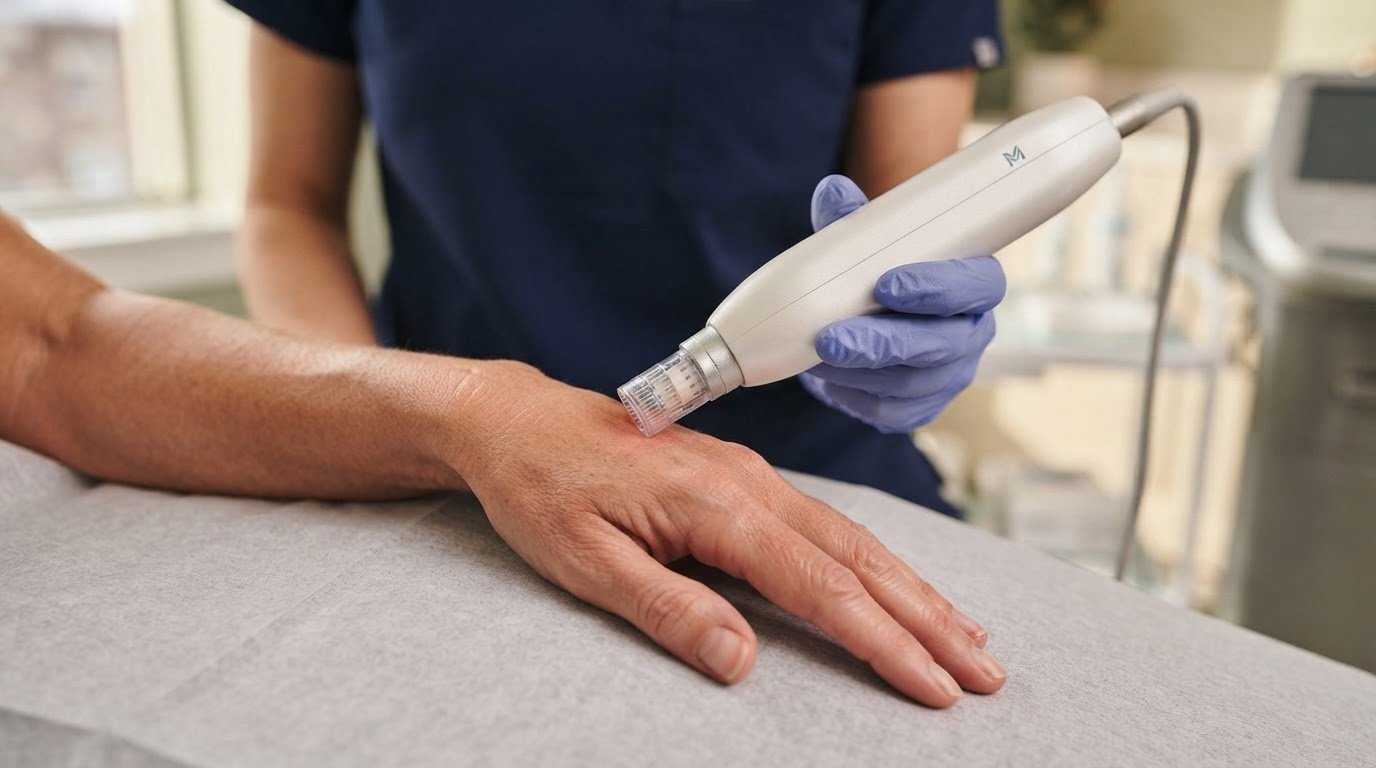
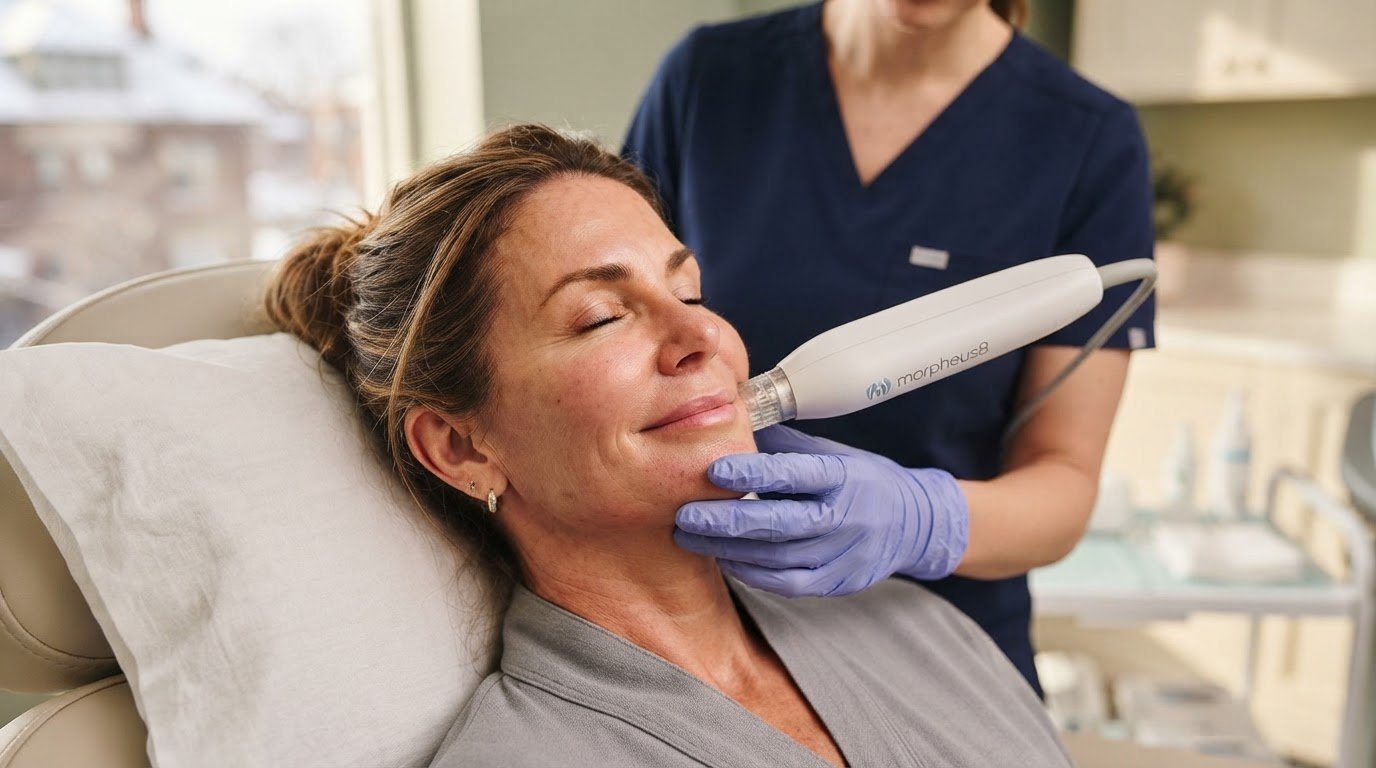
Morpheus8 may reduce underarm sweating by using fractional radiofrequency microneedling to affect sweat-gland activity. It combines tiny needles with controlled radiofrequency energy, delivering heat into targeted skin layers. The treatment is intended to affect sweat-gland activity, though its effects may differ from other approaches. A Morpheus8 excess sweating protocol is therefore different from an injection-based approach. It is a nonsurgical, minimally invasive procedure, but it still involves needles and energy applied to the skin.
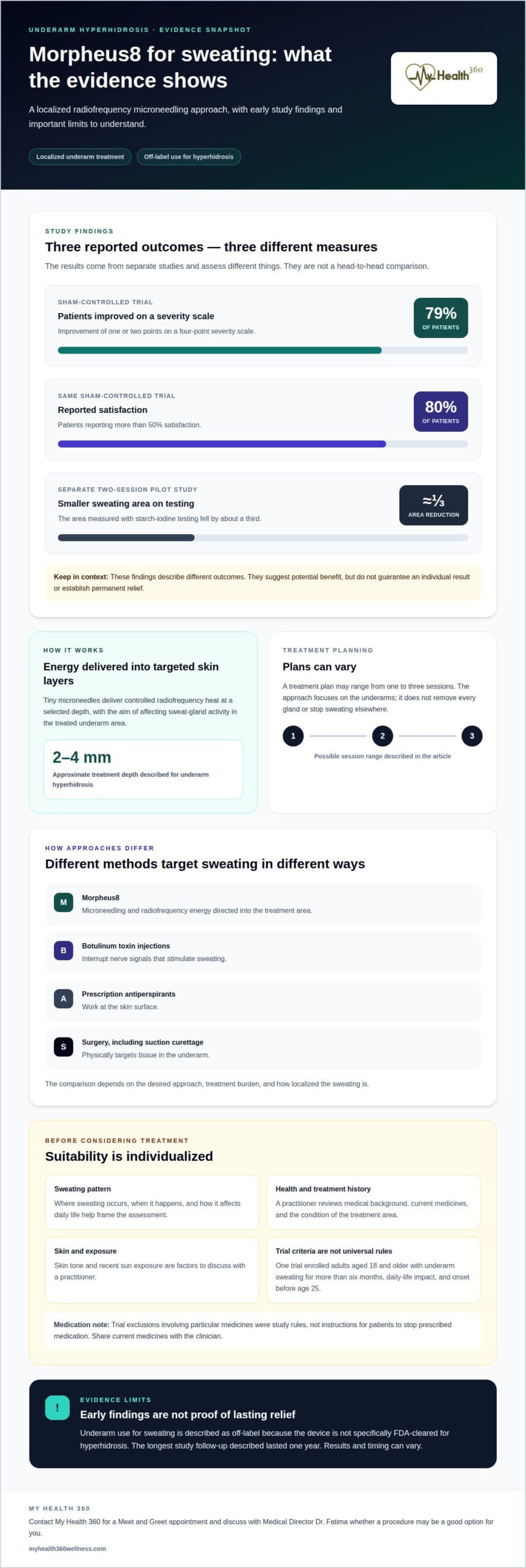
The underarm contains eccrine and apocrine glands, both involved in perspiration. Morpheus8’s microneedles enter the skin and deliver radiofrequency energy at a selected depth. For underarm hyperhidrosis, treatment is described at approximately 2-4 mm beneath the skin surface. This controlled delivery aims to affect sweat-gland function while limiting disruption to surrounding tissue. It does not remove every gland or prevent the body from sweating elsewhere. The intended effect is localized relief in the treated area.
That distinction matters because sweating is a normal body function, not a problem to eliminate everywhere. The human body has 2-4 million sweat glands, while about 2% are located in the underarms. For example, someone whose main concern is visible underarm sweat may consider a localized treatment differently from someone experiencing sweating across the palms, soles, or forehead. Morpheus8’s underarm approach focuses on the treatment area; it does not address every possible cause of perspiration.
Clinical findings offer early evidence, rather than a guarantee of an individual result. In a sham-controlled trial of fractional microneedle radiofrequency for axillary hyperhidrosis, 79% of patients improved by one or two points on a four-point severity scale. In that trial, 80% reported more than 50% satisfaction. A separate two-session pilot study found that the sweating area on starch-iodine testing fell by about a third. These results suggest potential benefit, but they measure different outcomes and should not be treated as interchangeable.
There are important limits. Underarm Morpheus8 for sweating is described as an off-label use because the device is not specifically FDA-cleared for hyperhidrosis. Evidence includes a sham-controlled trial and a pilot study, while the longest study follow-up lasted one year. Those findings help explain why the approach is considered, but they don’t establish permanent relief. The practical question is whether localized gland treatment aligns with a patient’s sweating pattern, treatment goals, and health history.
Candidate suitability and contraindications
Suitability starts with the pattern of sweating, the treatment area, and the patient’s health history. A practitioner examines the underarms and reviews medical background before Morpheus8 treatment. This helps establish whether the concern is localized and whether the skin and tissue can be treated safely. For example, persistent underarm sweating that affects daily activities differs from sweating that appears only during exercise. The distinction shapes whether a localized approach fits the concern.
Clinical trial criteria offer context, but they aren’t universal eligibility rules. One Morpheus8 axillary hyperhidrosis trial enrolled adults aged 18 and older. Participants had excessive underarm sweating for more than six months, it affected daily life, and it began before age 25. These details describe that study’s group, not a requirement that every patient meet before discussing treatment. A practitioner considers the individual’s symptoms, goals, health history, and treatment area together.
Medication history matters because some medicines can affect sweating or treatment planning. The trial excluded participants taking oral anticholinergic or cholinomimetic medications unless they stopped at least four weeks before the study and throughout it. Participants using isotretinoin had to stop it six months before the study. The trial also excluded people who had used anticoagulants in the 10 days before enrollment. These are study rules, not instructions for patients to stop prescribed medication.
Before a Morpheus8 treatment, share all current medicines and relevant health details during the history review. The clinician can then consider whether medication use, skin condition, or another health factor could affect comfort or healing. Decisions should reflect the person’s circumstances, not a trial checklist applied in isolation. The treatment’s controlled energy delivery does not remove the need for an individualized assessment.
Skin tone is another consideration. Skin tone and recent sun exposure are factors to discuss with a practitioner, who can examine the treatment area. Skin appearance, sensitivity, and the intended treatment zone help inform the plan. If underarm sweating is the main concern, describing when it occurs and how it affects daily life gives the assessment useful context. A focused treatment suitability discussion can help clarify the factors that matter before proceeding.
Comparisons with botulinum toxin, antiperspirants, and surgery
These approaches manage underarm sweating through different mechanisms. Morpheus8 uses microneedling and radiofrequency energy directed into the treatment area, while botulinum toxin injections interrupt nerve signals that stimulate sweating. Prescription antiperspirants work at the skin surface. Surgery, including suction curettage, physically targets tissue in the underarm. The best comparison depends on the desired approach, treatment burden, and how localized the sweating is.
Botulinum toxin, often called Botox, is an injection-based option for underarm hyperhidrosis. It blocks nerve signals involved in sweat production rather than using radiofrequency energy to affect gland activity. Effects typically last around 4-7 months before repeat treatment is needed. Some treatment descriptions also list 4 or more treatments for hyperhidrosis, reflecting that care may involve repeat sessions over time. Morpheus8 uses a device with a different mechanism, so the two approaches aren’t interchangeable.
Prescription antiperspirants remain a traditional option for managing hyperhidrosis. They’re applied to the skin, unlike Morpheus8’s microneedling-based delivery or botulinum toxin injections. This difference may matter to someone whose sweating is concentrated in the underarms and who is considering a procedure. For example, exercise-related perspiration and persistent underarm sweating at rest describe different patterns. Treatment choice depends on the concern being addressed, not simply whether sweating occurs.
Suction curettage is a surgical approach that targets underarm tissue. One study found underarm sweating was reduced by 61% at 2 years after suction curettage. That figure describes a study result, not a guarantee for every person. Compared with surgery, Morpheus8 is described as nonsurgical and minimally invasive, using controlled radiofrequency energy rather than suction to target the area. The techniques differ in how they affect tissue and in the nature of the procedure.
Consider the practical trade-offs. Botulinum toxin requires injections and repeat treatment as its effects wear off. Antiperspirants are applied to the skin, while suction curettage involves surgery. Morpheus8 offers a device-based approach using fractional radiofrequency microneedling, with treatment focused on the underarm area. None of these methods means the body stops sweating altogether. A useful discussion weighs where sweating occurs, how it affects daily life, and whether a nonsurgical procedure, topical approach, injections, or surgery best aligns with the treatment goal.
Expected sweat reduction and duration of results
Response involves both the amount of sweating and the time needed to notice change. Treatment sessions, measurement methods, and follow-up timing shape how benefit is assessed.
Expected Sweat Reduction
Expected reduction means less sweating in the treated underarm area, not complete dryness throughout the body. In a two-session pilot study, starch-iodine testing showed the sweating area fell by about a third. A separate sham-controlled trial found 79% of patients improved by one or two points on a four-point severity scale. These results use different measures, so they describe distinct outcomes rather than one guaranteed level of relief.
For daily life, the practical benefit could mean fewer visible sweat marks or less frequent clothing changes. Antiperspirants may remain useful for managing perspiration outside the treated area. A procedure directed at the underarms does not explain or treat sweating at the palms, feet, or forehead. Tracking the location and circumstances of sweating helps clarify what improvement means for an individual.
Timing of Relief
Timing describes when a patient first notices reduced sweating after treatment. Some patients report improvement within a couple of weeks, while changes may continue over several weeks as collagen induction takes effect. This gradual response means an early impression doesn’t necessarily represent the final benefit. For example, comparing underarm sweating during similar daily activities can provide more meaningful context than judging one unusually hot or stressful day.
Session planning also affects when progress is assessed. Treatment descriptions commonly discuss one to three sessions, while published study designs use their own schedules. A two-session pilot, for example, measured sweating after both treatments. The number of sessions and spacing depend on the treatment plan, so the first visit alone may not show the full course of change.
Duration of Results
Duration means how long reduced sweating remains noticeable after treatment. The available evidence includes follow-up over time, but it doesn’t establish permanent results. In the longest study described for fractional microneedle radiofrequency, patients were followed for one year. That observation period provides a time frame for reported outcomes, not proof that the same effect lasts for every patient beyond follow-up.
For a lasting assessment, distinguish sustained improvement from short-term change after a session. Note whether sweating returns in the treated area, whether other areas remain bothersome, and whether antiperspirants are still part of daily management. Downtime and temporary skin responses are separate from how long sweat reduction lasts. Reviewing these factors alongside session timing gives a clearer picture of the procedure’s benefit over time.
What is the average cost of Morpheus8 for excessive sweating in the United States?
A single national average doesn’t describe what an underarm treatment plan will cost. The price depends on the individual case and is provided after a quote request. The factors include the treatment area, the number of sessions, and the plan recommended for the patient. A plan involving one session differs from one involving several sessions, so comparing only a per-session figure may not reflect the full course of care.
For excessive sweating, the treatment area matters because this approach focuses on the underarms. The extent of the area being treated and the planned energy delivery shape the procedure. The number of sessions is another key factor: treatment descriptions discuss one to three sessions, while the appropriate plan depends on the patient’s presentation and goals. These details help explain why a published amount elsewhere may not match an individualized quote in Buffalo.
Cost discussions should also distinguish the procedure itself from the treatment plan. Ask what the quote covers, how many sessions it includes, and whether it reflects both underarms. For example, a quote for a single visit and a quote for a multi-session plan describe different scopes of care. Understanding those details makes it easier to assess the total commitment rather than relying on a headline figure without context.
Comparisons with other hyperhidrosis treatments need similar care. Botulinum toxin injections, prescription antiperspirants, and surgery use different methods and treatment schedules. Their costs cannot be directly compared with Morpheus8 by looking at one visit alone. Consider the approach, the number of treatments involved, and how long the intended benefit may last. Those factors provide a more meaningful basis for discussing value than an isolated price.
A quote request should follow an assessment of the underarm area, health history, and treatment goals. Those details help establish whether the procedure fits the concern and what plan is being considered. Cost depends on the case and is given after a quote request, with the treatment area, session plan, and individual needs shaping the amount. A clear estimate should make the proposed scope understandable before treatment begins.
To discuss whether Morpheus8 may suit your sweating concerns, contact My Health 360 for a Meet and Greet with the Medical Director, Dr. Fatima. You can review your goals, discuss the factors that shape a treatment plan, and talk through whether the procedure is a good option for you.
There is no single national average; the cost is individualized based on the treatment area and session plan.
My Health 360: Morpheus8
My Health 360 offers Morpheus8 for patients exploring treatment for underarm sweating and looking for an individualized discussion of their goals. A conversation can consider the treatment area, health history, and how sweating affects daily life, alongside the evidence and limitations described above. Morpheus8 may not be the right fit for every concern, particularly when sweating occurs across several areas or has another underlying cause.
If you’re considering this approach, contact My Health 360 to arrange a Meet and Greet appointment and discuss with Medical Director Dr. Fatima whether the procedure is a good option for you.
Make Your Next Step an Informed One
Choosing a treatment is easier when you start with what you want to change in everyday life. Consider which situations feel most limiting, what you hope will improve, and how comfortable you are with a procedure that targets a specific area. Bring these priorities to a consultation with an experienced physician to make the discussion practical.
A Morpheus8 excess-sweating protocol may be worth discussing if underarm sweating is your primary concern. Whether it’s an appropriate option depends on your symptoms, health history, and treatment goals. The next step is a personalized conversation, not a commitment to proceed.
Contact My Health 360 to arrange a Meet and Greet with Medical Director Dr. Fatima and discuss whether the procedure is a good option for you. You can ask questions, share what you’re hoping to address, and leave with a clearer sense of your options. Take that step at your own pace.
Frequently Asked Questions
How many treatments will I need?
A commonly described plan involves one to three treatments, with three often used as a complete series. The appropriate number depends on the underarm area, the severity and pattern of sweating, and how you respond between visits. For example, someone tracking persistent underarm symptoms may discuss progress before completing a series. In Buffalo, a treatment discussion can clarify the proposed plan and what each visit is intended to address.
Are there any side effects?
Most patients experience mild redness and swelling that typically resolves within a few days. Because Morpheus8 uses microneedles and radiofrequency energy, temporary skin changes can occur in the treated area. Follow the aftercare directions provided for your treatment, and contact the clinic if a reaction concerns you or seems to worsen. Sharing relevant health and medication history beforehand helps the practitioner plan for your individual circumstances.
How does it work?
Morpheus8 combines microneedling with radiofrequency energy delivered into the skin through a specialized handpiece. For underarm sweating, the intended effect is to influence sweat-gland activity in the treated area. This differs from topical antiperspirants, which are applied to the skin, and injections that interrupt nerve signals. The approach is localized, so it isn’t designed to prevent normal perspiration across the rest of the body.
How long does it take?
An underarm appointment generally takes about an hour and a half, including preparation and numbing time. The active treatment of both underarms takes about 20-30 minutes; topical anesthetic cream may be applied beforehand for 45-60 minutes. The total visit is therefore longer than the energy-delivery portion alone. Allow time for the full appointment rather than planning around the treatment minutes by themselves.
How many sessions do I need?
Session count refers to the visits in your treatment plan, while “treatments” often describes the same visits. Descriptions of underarm hyperhidrosis care commonly range from one to three sessions, and a three-treatment series is also used. For example, a plan may involve evaluating your response across visits rather than judging the whole course after the first appointment. Your clinician can explain the schedule and goals for each session.
How does Morpheus8 treat excessive sweating (hyperhidrosis)?
For underarm hyperhidrosis, the procedure uses fractional radiofrequency microneedling to target sweat-gland function locally. The aim is to reduce excessive perspiration in the treated area, not to eliminate sweating throughout the body. This may be relevant if underarm sweat disrupts clothing choices or work routines, while symptoms on the palms or feet require separate consideration. Underarm use for sweating is off-label, not specifically FDA-cleared for hyperhidrosis.
What Morpheus8 settings and protocol are used for underarm sweating?
There isn’t one setting that applies to every underarm. The practitioner selects treatment parameters based on the area, skin, and treatment goals. A studied setup used a 24-pin tip, but that research detail shouldn’t be treated as a universal prescription or instruction for self-treatment. Underarm hyperhidrosis use is off-label, so the treatment plan should be discussed with a qualified medical professional before proceeding.
How many Morpheus8 sessions are needed for hyperhidrosis, and how far apart?
The number and spacing of visits can vary, so discuss a suitable schedule during your consultation. A three-treatment course is another protocol described for hyperhidrosis. The interval allows the practitioner to assess your response before the next visit and keep the plan aligned with your goals. Rather than scheduling additional sessions automatically, discuss the intended series and follow-up approach during your treatment consultation.