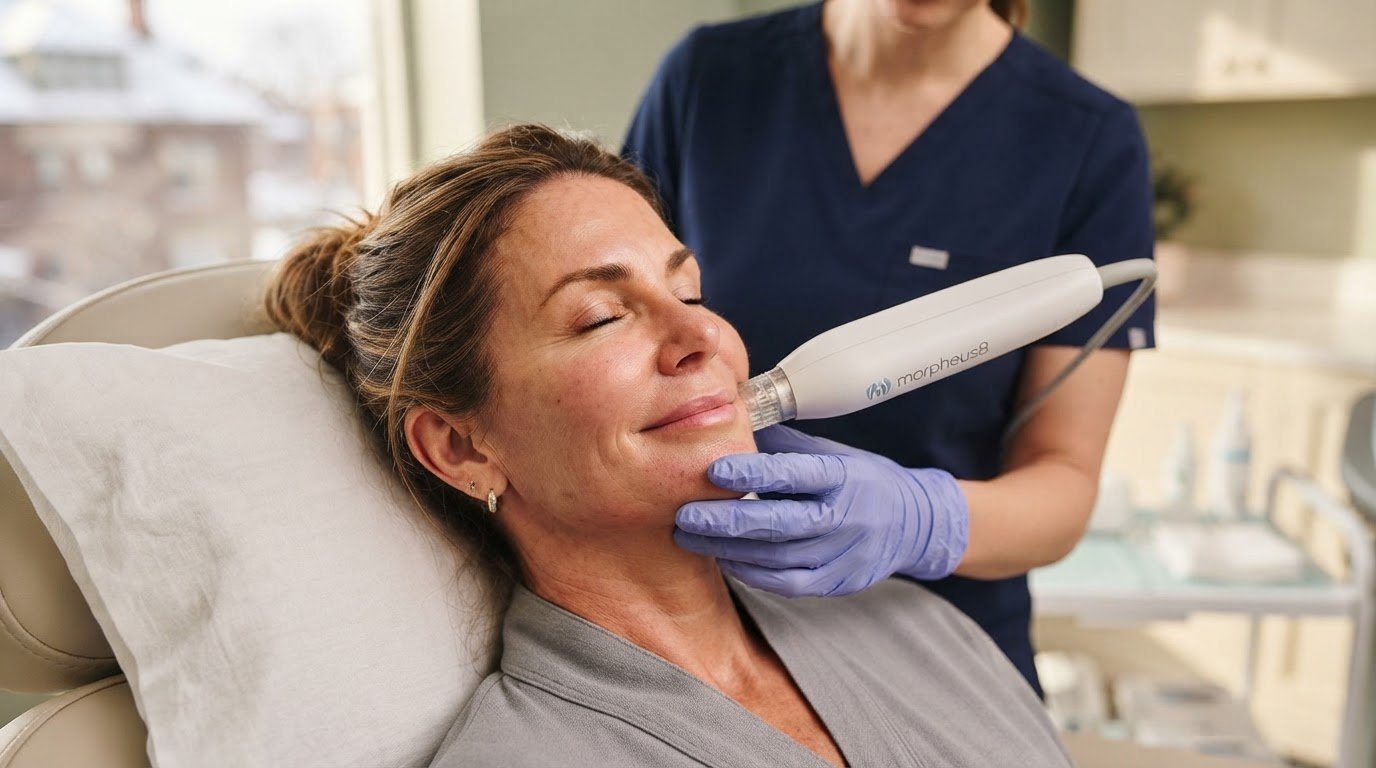
Buffalo’s geography gives local context for considering photobiomodulation and sleep, but location alone can’t show whether light exposure will improve an individual’s sleep. The city covers 40.378 square miles of land, according to the U.S. Census Bureau’s 2020 Census Gazetteer. This guide explores photobiomodulation for deep sleep optimization in Buffalo by separating the city’s geographic setting from the questions that matter when assessing a wellness approach.
If you’re researching photobiomodulation for deep sleep optimization in Buffalo, it’s reasonable to want clear explanations rather than sweeping promises. Photobiomodulation uses red or near-infrared light, but that alone doesn’t establish a sleep benefit. This guide explains how to evaluate the evidence, treatment details, and safety questions so you can make a considered decision.
Key Takeaways
- Buffalo’s geographic setting provides local context, but it doesn’t determine whether a light-based approach will affect your sleep.
- Learn how to assess clinical evidence by distinguishing sleep-quality outcomes from measures of deep sleep.
- Compare the wavelengths and device types discussed in sleep research, and understand why the details of a study matter.
- See which factors shape treatment schedules and session duration, rather than assuming one protocol fits everyone.
- Review potential risks and safety considerations to make a more informed decision about photobiomodulation.
Buffalo city area
Photobiomodulation is the use of red or near-infrared light in a treatment setting. For Buffalo residents, the city’s geographic context helps frame access and daily routines, but it doesn’t establish whether light will change sleep. Buffalo is located at 42°53′11″N 78°52′41″W. According to the U.S. Census Bureau’s 2020 Census Gazetteer, the city has 40.378 square miles of land. These details locate the topic; they don’t demonstrate a treatment effect.
Buffalo’s setting can shape practical planning. The city sits 600 feet above sea level, and its annual precipitation is 40.68 inches. Its annual average temperature is 48.8°F. These figures describe local conditions, not an individual sleep pattern or a photobiomodulation protocol. For example, a resident’s commute, bedroom light exposure, work schedule, and evening habits may matter more to their routine than city coordinates. Consider those factors separately from treatment claims.
CBT-I is a structured behavioral approach for insomnia; bright-light therapy uses timed light exposure to influence sleep timing; sleep medications are medicines used in sleep care. These approaches aren’t interchangeable: CBT-I addresses habits and thoughts around sleep, while light therapy and medication involve different methods and considerations. Evaluate photobiomodulation on its own evidence rather than assuming it replaces established care.
When evaluating a Buffalo provider, ask who assesses your sleep concerns, which device and wavelength are used, how exposure is controlled, and what safety instructions apply. Look for clear explanations of the device’s intended use and the training of the person administering treatment. A device label alone doesn’t establish that a sleep benefit has been demonstrated.
Clinical assessment means reviewing sleep symptoms and health context before starting a new intervention. Persistent difficulty falling or staying asleep, disruptive snoring, gasping during sleep, marked daytime sleepiness, or unusual movements during sleep warrant discussion with a clinician. These symptoms can point to different concerns, so treatment should account for the underlying pattern rather than focus only on deeper sleep.
Buffalo uses Eastern Standard Time, UTC−05:00, according to the provided city-time information. A practical first step is to record when you go to bed, wake, and experience symptoms, then bring that pattern to a clinical discussion. Include shift work, travel, caffeine timing, prescribed medicines, and light exposure. This record can clarify whether the concern centers on sleep timing, repeated waking, or another symptom.
For local readers considering photobiomodulation for deep sleep optimization in Buffalo, location offers orientation, not proof of effectiveness. Separate Buffalo’s climate and location from clinical evidence, device safety, and your own sleep symptoms. That distinction keeps the decision grounded in relevant details rather than assumptions about where you live.
The city’s 40.378 square miles of land, as recorded by the U.S. Census Bureau, sits within a broader urban area with a population of 948,864 in 2020 and a metropolitan area with a population of 1,125,637 in 2020.
What clinical evidence supports photobiomodulation for sleep quality or deep sleep?
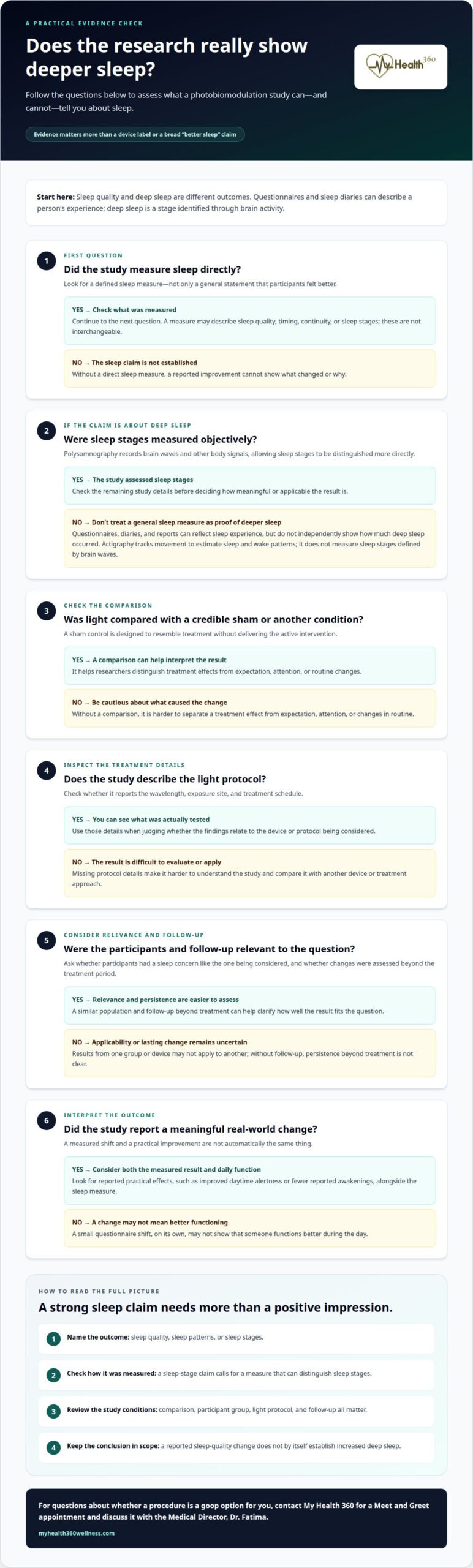
Clinical evidence is information gathered through research involving people. To assess photobiomodulation and sleep, look for studies that measure sleep directly, describe the light protocol, and compare outcomes fairly. Without those details, a reported improvement can’t establish what changed or why.
Sleep quality describes a person’s overall experience of sleep, including restfulness and waking. A study may assess it through questionnaires, sleep diaries, or reports of daytime function. These measures can capture meaningful experiences, but they don’t independently show how much deep sleep occurred. Look for the specific outcome, not just a broad claim of “better sleep.”
Deep sleep is a sleep stage identified through brain activity. Polysomnography is an overnight test that records brain waves and other body signals, allowing sleep stages to be distinguished more directly than a general rating. If a study claims increased deep sleep, check whether it measured sleep stages objectively or relied only on participants’ impressions.
Actigraphy estimates sleep and wake patterns by tracking movement. It can help show timing and continuity across repeated nights, but it doesn’t measure sleep stages defined by brain waves. A study using actigraphy may support a claim about sleep patterns, but it can’t by itself establish a change in deep sleep.
A sham control is a comparison condition designed to resemble treatment without delivering the active intervention. It helps researchers distinguish treatment effects from expectation, attention, or routine changes. Check whether a study includes this comparison, along with details about participants and the light protocol. Results from one group or device may not apply to another.
Clinical significance describes whether a measured change matters in real life. A small shift on a questionnaire may not mean someone functions better during the day. Review whether researchers report both measured sleep outcomes and practical effects, such as improved daytime alertness or fewer reported awakenings. These outcomes aren’t interchangeable.
- Population: Were participants similar to people with your sleep concern?
- Outcome: Did researchers measure sleep quality, sleep stages, or both?
- Comparison: Was light compared with a credible sham or another condition?
- Protocol: Were wavelength, exposure site, and treatment schedule described?
- Follow-up: Were changes assessed beyond the treatment period?
For photobiomodulation for deep sleep optimization in Buffalo, these criteria offer a disciplined way to assess claims. Evidence supporting better sleep quality doesn’t automatically demonstrate deeper sleep. Separate preliminary signals from measured outcomes, and don’t treat a proposed device mechanism as proof of clinical benefit.
Which photobiomodulation wavelengths and devices have been studied for sleep?
Wavelength describes a light’s position within the electromagnetic spectrum. A sleep study should report the wavelength precisely rather than refer only to “red light.” Red and near-infrared are broad light categories, not complete treatment protocols. To compare research, look for the measured wavelength and the device’s other settings.
Irradiance describes the light power delivered across an area. It matters because two devices can share a wavelength but provide different exposures. Fluence describes energy delivered across an area over time. A useful study report includes both values, exposure duration, and the treated body site. Without those details, it’s difficult to match a commercial device to a study.
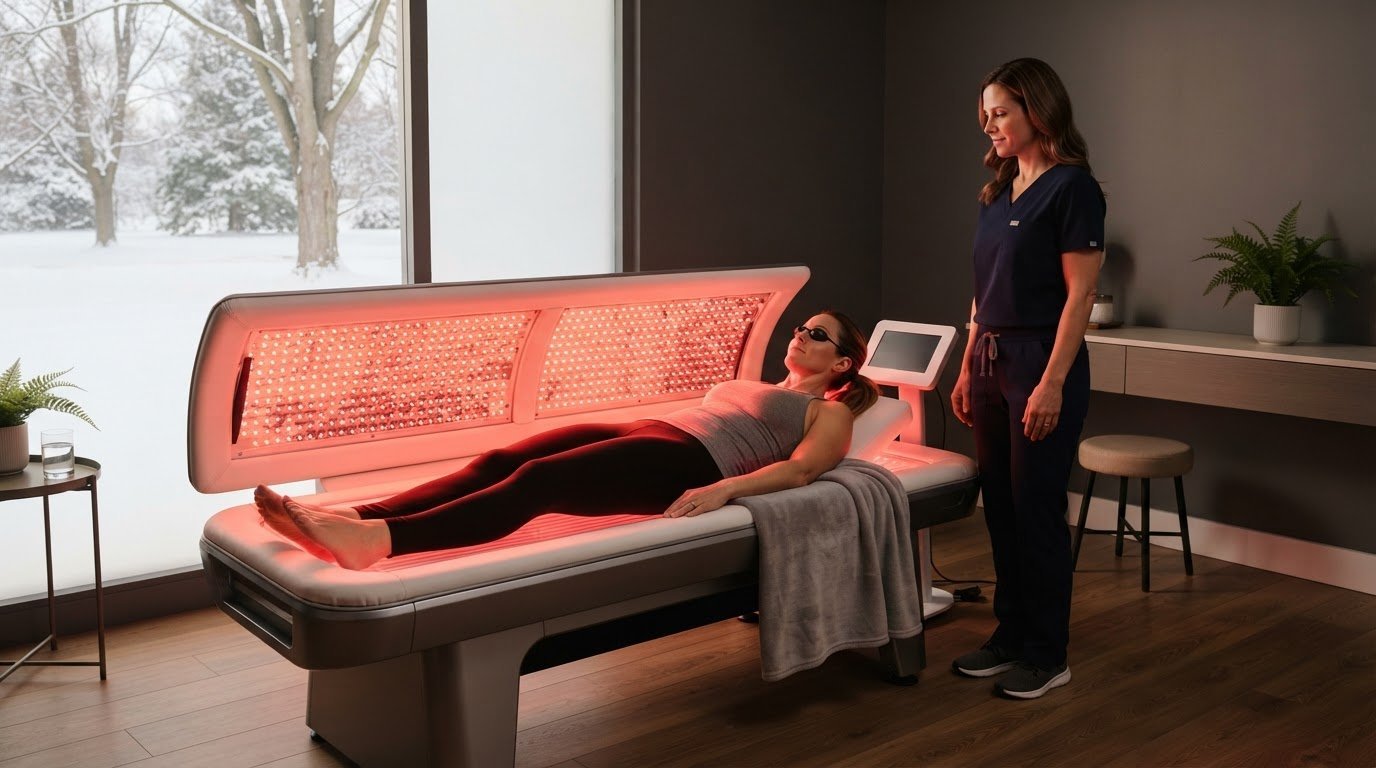
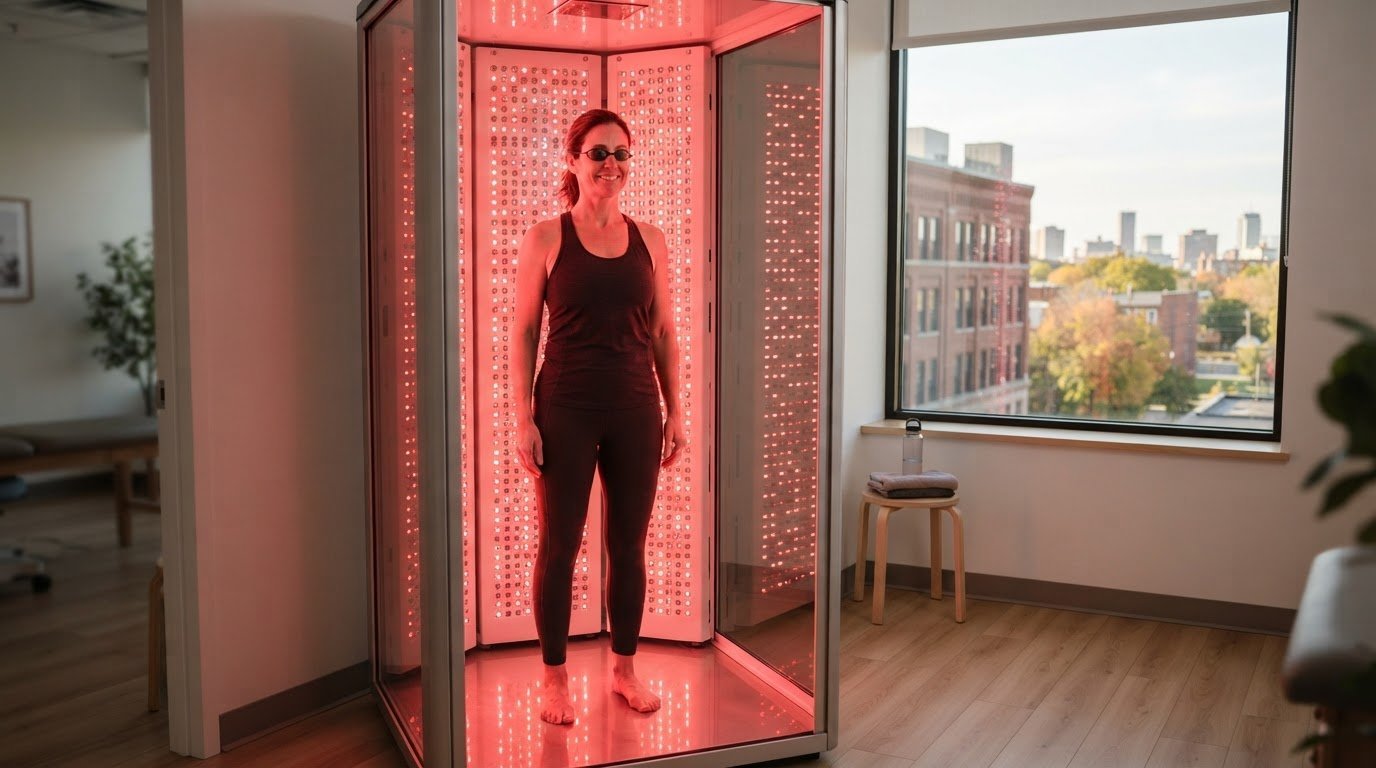
LED means light-emitting diode, a light source used in many device designs. Research protocols may use panels, smaller lamps, or wearable devices. A device’s shape alone doesn’t establish equivalent exposure. Distance from the skin, treated area, angle, and session timing all affect how a protocol is delivered.
A laser is a concentrated light source with a defined beam, while an LED panel spreads light across a broader area. These terms describe device form, not sleep effectiveness. To compare a laser study with an LED study, examine the exact wavelength, output, treatment location, and sleep outcome measured.
A sham device is designed to resemble active treatment without delivering the intended light exposure. It can help researchers distinguish treatment effects from expectation. When reviewing a sleep study, check whether it used a sham comparison and whether participants and assessors knew which treatment was assigned. These design details affect how confidently results can be interpreted.
Use this checklist when reading a study or discussing a device:
- Light: Is the wavelength stated precisely?
- Output: Are irradiance and delivered energy reported?
- Setup: Does the report identify device type, distance, and treatment site?
- Schedule: Are exposure duration and timing described?
- Outcome: Did researchers measure sleep stages or subjective sleep quality?
These distinctions prevent a common mistake: treating every red-light product as equivalent. A panel used near the body differs from a wearable device in coverage and positioning. A study reporting perceived restfulness also answers a different question from one measuring sleep stages. Compare like with like before applying research findings to a personal decision.
For Buffalo readers, the most useful device comparison focuses on the protocol, not the brand. Record the device category, wavelength, output, treatment site, and sleep measure, then compare those details with the research being discussed. If a provider describes only a color or device name, ask for the full protocol and how its outcomes relate to sleep.
Sleep protocols may examine red or near-infrared light delivered by LED panels, smaller lamps, or wearable devices; laser devices are another form discussed. The exact wavelength and device settings matter because broad color categories and device shape alone don’t establish equivalent exposure.
What treatment schedule and session duration are used for sleep optimization?
A treatment schedule specifies the timing and frequency of exposures. Session duration is the time spent receiving light during each exposure. These details should come from a defined protocol, not a universal sleep-treatment template. Published protocols can differ by device, wavelength, exposure site, and research question.
Start by identifying the exact device and protocol. Note its wavelength, light output, treatment area, distance, and session length, then compare those details with the study being discussed. A schedule tested with a head-mounted device, for example, can’t automatically be applied to a body panel. Similar color labels don’t establish equivalent exposure.
Frequency means how often sessions occur over a treatment period. Researchers may use repeated sessions to examine changes over time, but the appropriate interval depends on the protocol. Read a study’s treatment frequency alongside its total exposure period and outcome measurements. Frequency alone doesn’t describe the full exposure or show how long effects continue.
Timing means where a session falls within a participant’s daily routine. For sleep-focused research, note whether exposure occurs in the morning, afternoon, or evening. Also record bedtime, wake time, and shift-work patterns. A session scheduled near bedtime raises a different timing question from one delivered earlier, so the study should clearly report when exposure occurs.
Exposure duration is the time light reaches the intended treatment area. Interpret it alongside irradiance, distance, and device settings. A longer session doesn’t automatically mean stronger or more effective exposure. For example, a panel positioned farther away may deliver a different exposure than a closer source, even when session lengths match.
Use a consistent tracking process during any studied or clinician-guided plan:
- Before starting: Record bedtime, wake time, awakenings, and daytime symptoms.
- At each session: Note device, settings, treatment site, timing, and duration.
- During follow-up: Keep sleep conditions and tracking methods consistent.
- At review: Compare the same sleep measures across the observation period.
A sleep diary is a written record of sleep timing and symptoms. It helps distinguish an observed pattern from a vague impression. For example, note whether waking occurs after a session or follows a change in work schedule. Record caffeine timing, evening screen use, and bedtime routine too. These details help put changes in context.
For Buffalo readers, the practical question isn’t how to guess a session length. It’s how the protocol’s evidence, exposure details, and outcome tracking fit together. A meaningful comparison connects the schedule to the device and measured sleep result. Without that connection, session duration alone offers little guidance about sleep optimization.
There is no universal schedule or session duration. Protocols vary by device, wavelength, treatment site, and research question. Take frequency, daily timing, and exposure duration from the specific protocol, and consider them alongside light output, distance, and the total exposure period.
What are the risks, side effects, and contraindications of photobiomodulation
A risk is a possible harm linked to an intervention. For photobiomodulation, assess the device, light settings, treatment site, and personal health context together. A description such as “red light” doesn’t explain the full exposure. Ask which area receives light and how the session is controlled.
A side effect is an unintended response during or after treatment. Safety discussions should cover possible eye discomfort, skin changes, and unexpected symptom changes. These are issues to assess, not outcomes everyone should expect. Record when a response begins, which area was exposed, and whether it changes after treatment stops.
A contraindication is a circumstance that rules out treatment or requires specific clinical review. A useful screening conversation covers relevant health conditions, medicines, prior reactions to light-based procedures, and the proposed treatment site. Share these details before a session. They help determine whether the protocol needs adjustment or another approach deserves priority.
Photosensitivity is an increased response to light exposure. A clinician should review any history of light sensitivity and medicines that may affect it. Don’t stop prescribed medication on your own. Bring an up-to-date medication list, including topical products, so the review considers the full picture.
Eye protection is equipment or a procedure intended to limit unwanted eye exposure. Ask whether the device directs light near the face, what protective steps apply, and how staff manage exposure. Follow the device instructions rather than improvising with ordinary sunglasses. Keep the treatment area and positioning consistent with the planned protocol.
Use these practical steps before treatment:
- Describe: Share your health history, current medicines, and prior light-related reactions.
- Clarify: Ask for the device type, wavelength, treatment site, and session settings.
- Understand: Review eye protection, skin contact, and instructions during exposure.
- Track: Note the session date, settings, and any change afterward.
- Pause: Report unexpected discomfort or symptoms before another session.
Clear answers matter. A provider should explain the protocol in plain language and identify who oversees treatment. If instructions conflict with the device’s stated precautions, resolve the discrepancy before proceeding. For Buffalo residents, a documented plan also makes follow-up discussions more specific and easier to understand.
For a personal discussion of these safety considerations, contact My Health 360 to arrange a Meet and Greet with Medical Director Dr. Fatima and discuss whether a procedure is a good option for you. Contact My Health 360.
My Health 360: Emsculpt Neo
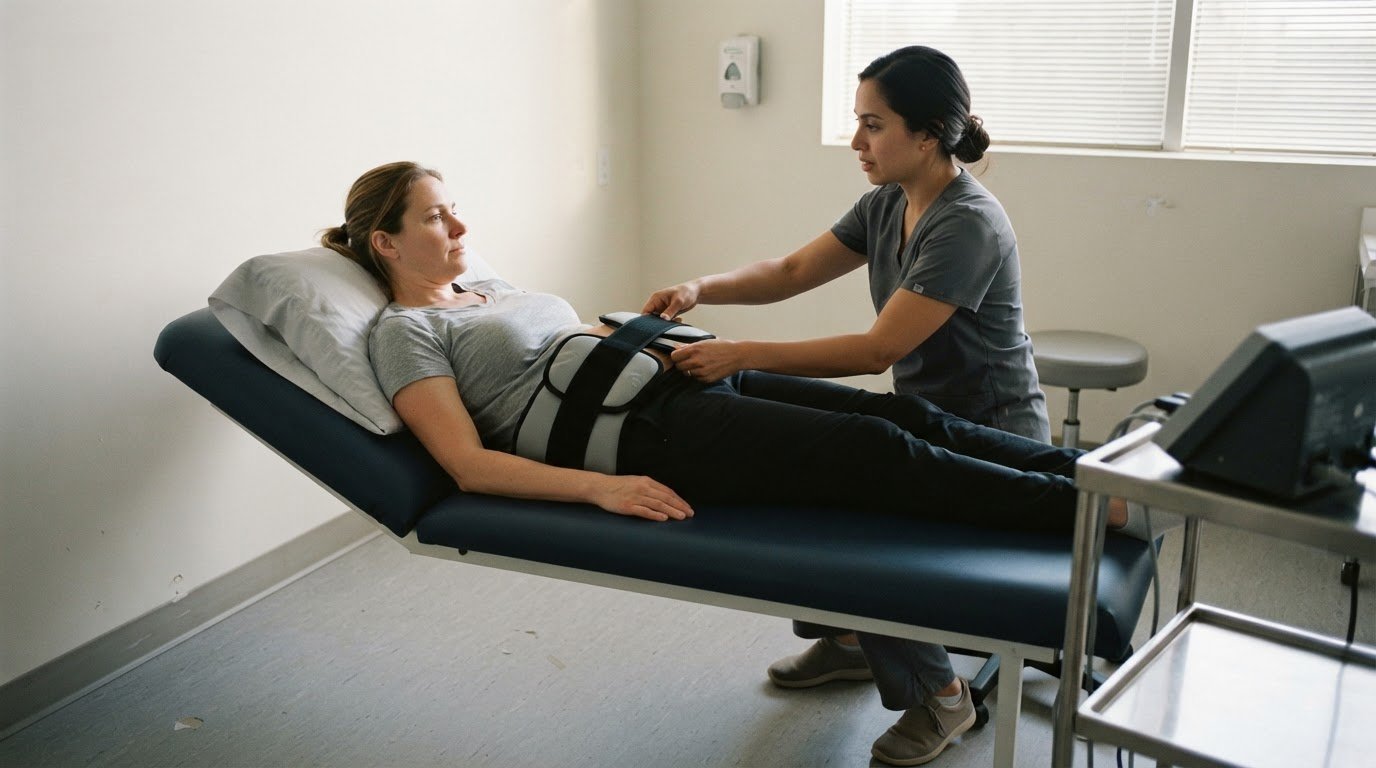
My Health 360 offers Emsculpt Neo for people exploring body-contouring care. It serves a different purpose from photobiomodulation research focused on sleep, so it shouldn’t be presented as a sleep treatment. The right next step depends on your goal: body contouring, recovery support, or a discussion about light-based wellness care. Matching the service to the intended outcome keeps expectations clear and the decision patient-centered.
If you’re considering Emsculpt Neo, BioPrime, or Bio-Restore, discuss your goals and health context first. Contact My Health 360 to arrange a Meet and Greet with Medical Director Dr. Fatima and discuss whether a procedure is a good option for you.
Choose a Next Step That Matches Your Goal
A thoughtful approach to photobiomodulation for deep sleep optimization in Buffalo starts by separating sleep goals from other wellness priorities. Keep your sleep observations and questions together to guide a focused conversation about next steps. If persistent sleep symptoms affect daily life, discuss them with a qualified clinician.
My Health 360 offers Emsculpt Neo, BioPrime pre-operative and pre-event whole-body habilitation, and Bio-Restore post-operative and injury whole-body habilitation. These offerings address goals distinct from sleep optimization, so clarity about your intended outcome matters. For a personalized conversation, arrange a Meet and Greet with Medical Director Dr. Fatima to discuss whether a procedure is a good option for you. Contact My Health 360 to begin that conversation and identify a next step that fits your priorities.
Frequently Asked Questions
What is photobiomodulation and how might it affect deep sleep?
Photobiomodulation uses red or near-infrared light as a non-invasive exposure. Researchers are exploring whether light-related cellular signaling could influence processes connected to sleep, but a proposed mechanism isn’t proof of deeper sleep. Feeling more rested after a session, for example, doesn’t establish that deep-sleep stages increased. That distinction matters when assessing claims and deciding which outcomes to track.