
Could a treatment promoted for firmer skin be right for your goals, or might its promises outpace what it can realistically deliver? RF microneedling for skin tightening combines tiny needle punctures with radiofrequency energy. The treatment is intended to support the skin’s collagen response, but suitability and results depend on individual factors. It deserves careful consideration rather than a one-size-fits-all promise.
If you’re weighing your options, you’ll want clear answers about what the procedure does, when changes may appear, how long they may last, and what complications to consider. This guide explains the treatment’s intended role, outlines realistic expectations and risks, and offers questions to raise with a physician. My Health 360 offers Morpheus8, an RF microneedling-related treatment. Only seek treatment if performed by an experienced physician. Avoid places where procedures are performed by mid-level providers under physician supervision. To explore whether it may suit your goals, contact My Health 360 for a Meet and Greet appointment and discuss your options with Medical Director Dr. Fatima.
Key Takeaways
- RF microneedling for skin tightening may support skin firmness, but suitability and results depend on your skin, goals, and medical context.
- Ask a physician what changes are realistic, when they may appear, how long they may last, and whether another approach may better match your goals.
- Discuss potential complications and aftercare before deciding. Only seek treatment if performed by an experienced physician.
- Avoid places where procedures are performed by mid-level providers under physician supervision. Ask about the treating physician’s experience and how they assess your individual risks.
- My Health 360 offers Morpheus8. Contact the center for a Meet and Greet appointment to discuss with Medical Director Dr. Fatima whether the procedure may be a good option for you.
What Is RF Microneedling for Skin Tightening?
If you’re noticing skin laxity, you may be wondering what a tightening treatment can reasonably address. The answer depends on where the change appears, what may be contributing to it, and what kind of improvement you’re seeking. As aesthetic providers like Enliven Skin emphasize, RF microneedling is intended to support firmer-looking skin, but it can’t promise a particular degree of tightening or replace an individualized physician assessment.
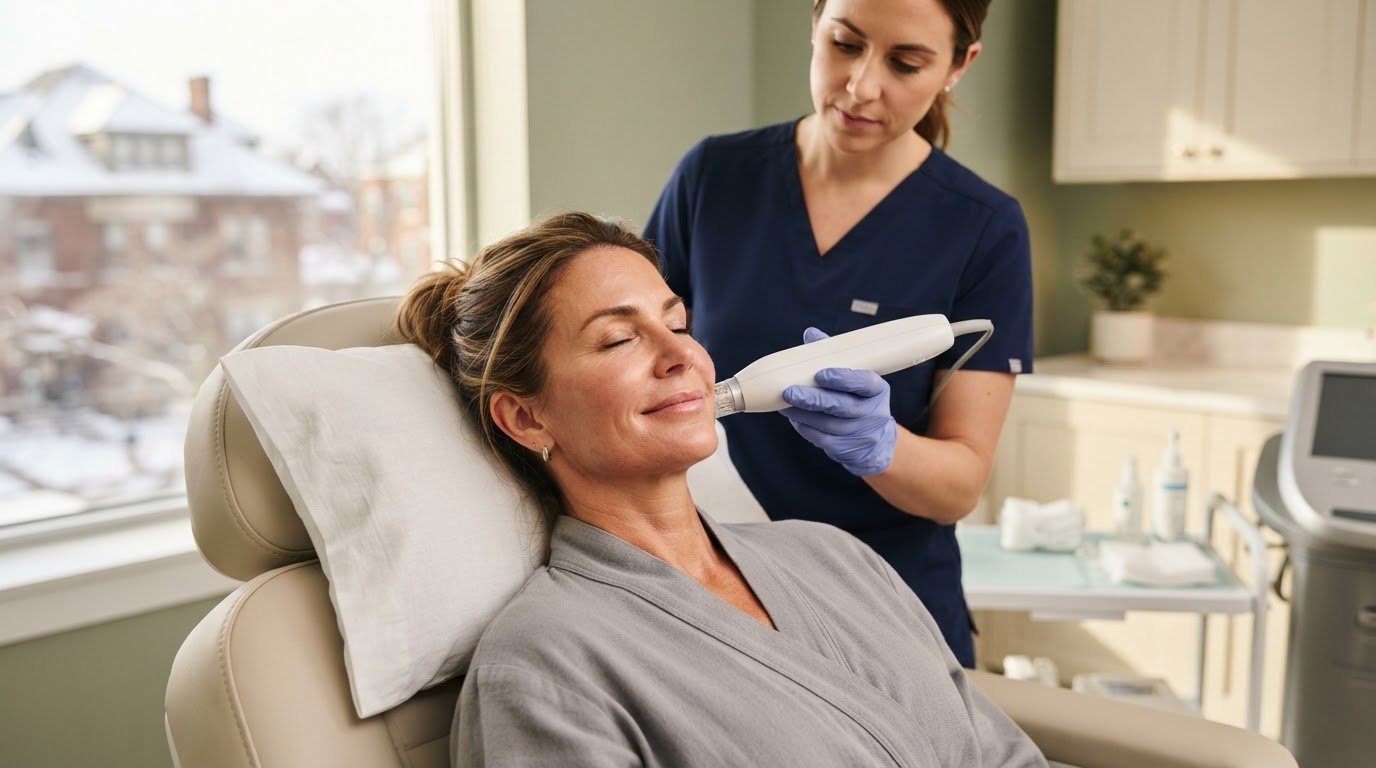
RF microneedling for skin tightening uses fine needles to create small openings in the skin while delivering radiofrequency energy into the tissue. The needles and radiofrequency energy serve different roles. The treatment’s intended effects depend on how your body responds.
How RF Microneedling Is Intended to Work
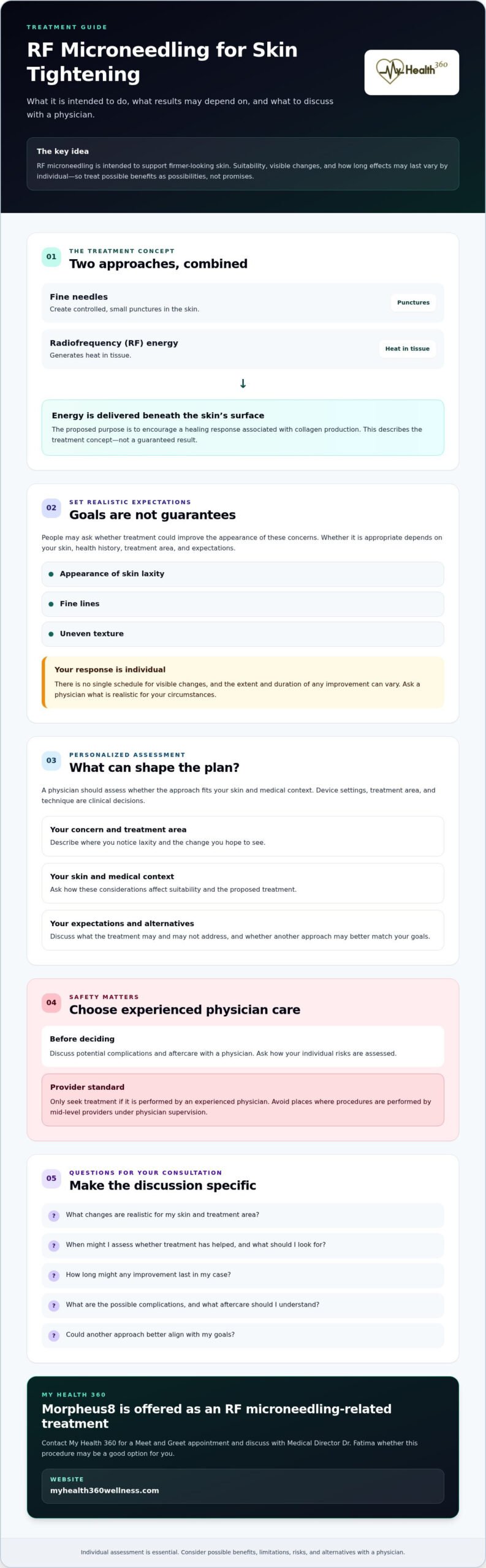
Microneedling uses fine needles to create controlled punctures in the skin. Radiofrequency, or RF, energy generates heat in tissue. RF microneedling combines these approaches, using needles to deliver energy beneath the skin’s surface. The proposed purpose is to encourage a healing response associated with collagen production. For a foundational overview, see how radiofrequency (RF) energy can heat skin.
This describes the treatment concept, not a guaranteed outcome. Individual response varies, and a physician should assess whether the approach fits your skin and medical context. Device settings, treatment area, and technique are clinical decisions. Ask the physician to explain how these considerations inform the proposed treatment for you.
What Skin-Tightening Goals Can It Address?
Skin laxity can mean different things to different people. You may be concerned about a particular area looking less firm, while a clinician may consider the degree of laxity, skin quality, and whether your desired change is achievable with this type of procedure. A careful discussion can help distinguish your aesthetic goal from an outcome that can reasonably be anticipated.
Before deciding, describe what you’d like to change and ask the physician what RF microneedling may and may not address in your case. Be specific about the area and the change you hope to see. Also ask whether another approach may better align with your goals. My Health 360 offers Morpheus8 as its RF microneedling-related treatment; see the Morpheus8 Treatment overview for more about that offering.
Only seek treatment if performed by an experienced physician. Avoid places where procedures are performed by mid-level providers under physician supervision. To discuss your goals and suitability, contact My Health 360 for a Meet and Greet appointment with Medical Director Dr. Fatima and ask whether the procedure may be a good option for you.
RF Microneedling Benefits, Results Timeline, and How Long Effects Last
What changes might you reasonably hope to see, and when? Those are useful questions, but a general treatment description can’t predict an individual result. Treat potential benefits of RF microneedling for skin tightening as possibilities, not promises. Ask a physician to explain which expectations are relevant to your concerns and circumstances.
What Benefits May Patients Ask About?
People considering treatment may ask whether it could improve the appearance of skin laxity, fine lines, or uneven texture. These are goals to discuss, not outcomes to assume. Whether treatment is appropriate depends on the concern being addressed and a physician’s assessment of your skin, health history, and expectations.
Make the conversation specific. Explain which area concerns you and how you hope it will look or feel. Then ask which aspects of that goal the treatment may address, what limitations to expect, and whether a different approach may be more suitable. Reputable skincare providers such as Arden Clinic emphasize that a useful consultation should distinguish between the result you want and what may be achievable.
When Might Benefits Appear, and How Long Could They Last?
There isn’t a single schedule that applies to everyone. The timing and extent of any visible change, as well as how long it may remain, can vary with individual factors. Ask a physician to explain what is realistic for your circumstances rather than relying on a general timeline.
Response to RF microneedling and the longevity of any effects vary by individual, so both require an individualized discussion with a physician. During your consultation, consider asking:
- What changes are realistic for my skin and treatment area?
- When might I assess whether the treatment has helped, and what should I look for?
- How long might any improvement last in my case?
- What factors could affect my response, and what follow-up might be appropriate?
For a personalized conversation about goals and suitability, request a Meet and Greet with My Health 360 and discuss with Medical Director Dr. Fatima whether the procedure may be a good option for you.
How RF Microneedling Compares With Other Skin-Tightening Approaches
If different treatments are all described as ways to improve firmness, compare them against your specific concern. Ask what each approach is intended to address and how a physician will determine whether it fits your needs. There’s no universally best option. A useful comparison takes your goals, health context, and preferences into account.
The table below is a framework for a physician conversation, not a clinical ranking. A qualified medical professional should explain the purpose and expected effects of any procedure based on the specific approach being considered.
| Comparison point | RF microneedling | Another approach |
|---|---|---|
| Treatment purpose | Ask which concerns it may be intended to address in your case, including whether your skin-tightening goal is appropriate to discuss. | Ask what concern the approach is designed to address and how that relates to your goal. |
| Physician assessment | Ask how your skin, medical context, and expectations inform the recommendation. | Ask what individual factors influence suitability and whether the approach has limitations for your concern. |
| Expectations | Discuss possible benefits, when changes might be assessed, how long effects could last, and potential complications. | Ask the same questions, including what recovery may involve and what outcomes shouldn’t be expected. |
| Questions to ask | “Why might this be considered for me, and what would make it unsuitable?” | “How does this option compare for my goal, and what are its trade-offs?” |
Questions That Make a Treatment Comparison Useful
Keep the comparison grounded in your priorities. Ask the physician to explain the intended purpose of each option, how suitability is determined, and what is known about possible benefits, timing, effect duration, complications, and recovery expectations. If an explanation relies on broad promises rather than your circumstances, ask for clarification. A comparison can organize your questions, but it can’t replace an individual medical consultation.
When Should You Explore Another Approach?
If your main goal and the proposed treatment don’t seem aligned, pause and ask the physician to reassess. Don’t assume a different procedure is automatically better. Discuss what each option may realistically address and whether its expected trade-offs fit your preferences. For a separate educational resource, see Advanced Skin Lifting with PDO Threads.
To discuss your goals and available options, contact My Health 360 for a Meet and Greet appointment with Medical Director Dr. Fatima and ask whether a procedure may be a good option for you.
RF Microneedling Complications and Measures to Minimize Risk
Any procedure involving needles and radiofrequency energy carries potential risks, so a balanced discussion should cover more than possible benefits. For RF microneedling for skin tightening, possible temporary effects may include redness, swelling, and a sunburn-like feeling. More serious complications can include burns, scarring, unwanted fat loss, or nerve damage. Ask a qualified medical professional to explain which risks are relevant to your proposed treatment.
A general article can’t determine your individual risk, and no procedure should be presented as risk-free. Discuss your medical history, the area being treated, and the proposed treatment plan with the physician who assesses your suitability.
Which Complications Should Patients Discuss?
Ask the physician to explain potential complications in plain language, including which effects may be temporary and which could require further medical attention. You can also ask how complications are recognized, what steps would be taken if one occurred, and whom you should contact with concerns after treatment. Clear answers help you understand the risks without relying on broad assurances or unsupported estimates.
What Measures Can Help Minimize Risk?
Ask who will personally perform the procedure and about their experience with RF microneedling. The physician should review your medical context, explain the proposed approach and its limitations, and discuss the risks that apply to you before you decide.
Physician supervision is not a substitute for having an experienced physician perform the treatment. If you feel rushed or your questions about the provider’s experience, potential complications, or how concerns would be addressed remain unanswered, seek clarity before proceeding.
For a physician-led conversation about your goals and suitability, contact My Health 360 to arrange a Meet and Greet and discuss with Medical Director Dr. Fatima whether the procedure may be a good option for you.
How to Decide Whether RF Microneedling Is Right for You
Deciding about RF microneedling for skin tightening starts with a clear conversation, not a promise of a particular result. Use this sequence to organize your discussion with a physician:
- Clarify your goal. Describe the area that concerns you and the change you hope to see. Be specific, while staying open to the physician’s assessment of what may be achievable.
- Discuss your medical context. Share relevant health information and ask how it may affect suitability. Your physician can consider your circumstances rather than relying on a generic checklist.
- Review expectations. Ask about possible benefits, when changes might be assessed, how long effects could last, potential complications, and what recovery may involve.
- Make the decision together. Consider whether the proposed approach fits your goals and whether you understand its limitations and risks. You can take time to decide or ask about other options if the recommendation doesn’t feel aligned.
What to Prepare for a Physician-Led Discussion
Bring your questions rather than assumptions about whether you qualify. You might ask, “What could this treatment reasonably address for me?” “How would we evaluate a response?” and “What risks or recovery considerations should I understand?” A useful discussion should make space for your priorities while helping you form realistic expectations based on an individualized medical assessment.
Discuss Morpheus8 With My Health 360
My Health 360 offers Morpheus8 as an RF microneedling-related treatment. A Meet and Greet is an opportunity to discuss your goals and ask Medical Director Dr. This conversation can help clarify suitability and next steps without assuming the treatment is right for everyone.
For a physician-led discussion, contact My Health 360 to schedule a Meet and Greet and speak with Dr. Fatima about whether the procedure is appropriate for your goals.
Make Your Next Step an Informed One
RF microneedling for skin tightening may be worth discussing if your goals align with what a physician believes the treatment can reasonably address. Benefits, timing, and how long effects may last vary by individual. A balanced decision should account for potential complications as well as the changes you hope to see.
My Health 360 is physician-owned and operated by Dr. Umbrine Fatima, an American Board Certified Internal Medicine specialist, and offers Morpheus8 as an RF microneedling-related treatment. A conversation can help you understand whether this option fits your goals and medical context, without assuming a particular outcome.
To discuss your questions and whether the procedure may be a good option for you, contact My Health 360 to schedule a Meet and Greet with Dr. Fatima. Taking time to make a thoughtful, physician-led decision is a positive step toward care that feels right for you.
Frequently Asked Questions
What benefits can RF microneedling offer for skin tightening?
Potential benefits may include an improvement in the appearance of skin laxity or firmness, depending on the individual and treatment plan. These are possibilities, not assured outcomes. Your goals matter: someone concerned about mild looseness may have different expectations from someone seeking a more substantial change. A physician can discuss whether the treatment may align with your concerns and what limitations to consider.
How long does it take to see RF microneedling benefits?
There isn’t one timeline that applies to every patient. Rather than relying on a general promise, ask the physician when changes might reasonably be assessed in your case and how you’ll evaluate whether treatment has helped. Your treatment plan and individual response inform that conversation, so avoid assuming a specific schedule before consultation.
How long do RF microneedling results last?
The duration of any effects varies and shouldn’t be presented as a guaranteed timeframe. Individual response and other clinical considerations may shape expectations, so a general estimate may not apply to your treatment plan. Ask the physician how they assess longevity for your goals, what factors could influence it, and whether follow-up might be appropriate. A clear discussion can help you weigh possible benefits without assuming a particular duration or maintenance schedule.
What complications are associated with RF microneedling?
Potential complications discussed for RF microneedling include temporary redness, swelling, or a sunburn-like sensation, as well as more serious concerns such as burns, scarring, unwanted fat loss, or nerve damage. Ask a qualified medical professional which risks may apply to you. The procedure shouldn’t be considered risk-free. Before deciding, ask how complications are recognized and addressed.
How can I minimize the risks of RF microneedling?
Discuss your medical context and concerns, and ask about the physician’s experience performing the procedure. Ask what complications to watch for and how they would be addressed. These steps support an informed discussion, but they can’t eliminate every risk or guarantee an outcome.
Is RF microneedling the right option for everyone seeking tighter skin?
No general article can determine whether RF microneedling is right for you. Your skin-tightening goals and medical context need an experienced physician’s assessment, and suitability and expectations vary. Before deciding, discuss possible benefits, a realistic timeline, how long effects may last, and potential complications. My Health 360 offers Morpheus8; contact the center for a Meet and Greet to ask Medical Director Dr. Fatima whether it may be a good option for you.