

Could an IV help you recover, or might drinking fluids be the more appropriate first step? IV hydration therapy for recovery is often presented as a quick way to feel better, but what it may offer depends on why you’re recovering and your individual health needs.
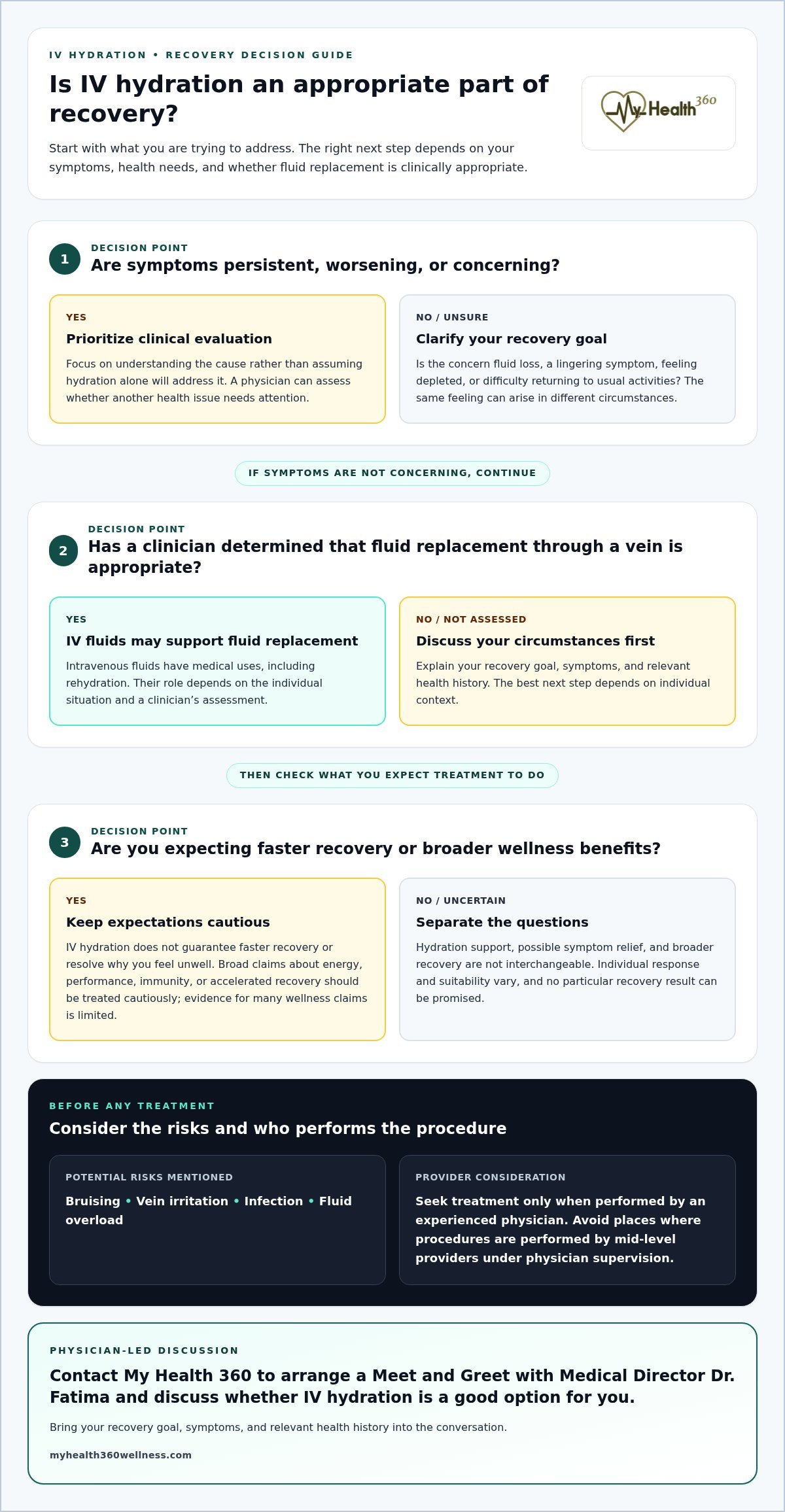
When fatigue, dehydration, or a demanding period leaves you feeling depleted, it’s natural to want clear answers. IV fluids have a role in treating dehydration in medical care, but that doesn’t mean an infusion will speed recovery or provide broader wellness benefits for everyone. Risks can include bruising, vein irritation, infection, or fluid overload, so personal suitability matters.
This article explains what IV hydration may and may not do, how it compares with everyday hydration, and what health factors deserve discussion with a physician. If you’re in Buffalo, Clarence, Orchard Park, Grand Island, Tonawanda, Elma, Amherst, Williamsville, or elsewhere in Western New York, contact My Health 360 to arrange a Meet and Greet with Medical Director Dr. Fatima and discuss whether IV hydration is a good option for you.
Key Takeaways
- Recovery can mean different things depending on your circumstances, so begin by clarifying what you hope to address.
- IV hydration therapy for recovery may support fluid replacement when appropriate, but that doesn’t guarantee faster recovery or broader wellness benefits.
- Discuss your recovery goal, symptoms, and relevant health history with a physician to understand whether IV hydration may suit your needs.
- Only seek treatment if performed by an experienced physician. Avoid places where procedures are performed by mid-level providers under physician supervision.
- Contact My Health 360 to arrange a Meet and Greet with Medical Director Dr. Fatima and discuss whether IV hydration is a good option for you.
IV Hydration Therapy for Recovery: What It Is and What Recovery Means
IV hydration therapy is the administration of fluids directly into a vein through an intravenous line. It can support fluid replacement when clinically appropriate, but receiving fluids this way doesn’t guarantee faster recovery or resolve the reason someone feels unwell. “Recovery” can mean replenishing fluids, feeling better after an illness, or returning to usual activities after physical strain. Being clear about which goal matters to you helps make the discussion more useful.
What does IV hydration therapy involve?
The defining feature is the route: fluid enters a vein rather than being swallowed. Intravenous therapy has medical uses that include rehydration, and the Intravenous Therapy Overview provides broader context about this method. However, delivering fluid directly into the bloodstream doesn’t, by itself, mean it is more effective or appropriate for every recovery goal.
A clinician should assess the person and the reason they’re considering treatment. Be ready to explain what “recovery” means to you, what symptoms you’re experiencing, and whether there may be an underlying health issue that needs attention. The same feeling of being depleted can arise in different circumstances, so the best next step depends on individual context.
Why do people ask about IV hydration for recovery?
People may explore IV hydration after feeling run down, depleted, or concerned that they haven’t recovered as expected. The question is understandable, especially when someone wants to return to work, exercise, or their regular routine. Still, keep your goal separate from claims about what an infusion can accomplish. Hydration support is not the same as evidence that treatment will address fatigue, restore performance, or accelerate recovery in every situation.
Before considering treatment, put your goal into practical terms. Are you concerned about fluid loss, a lingering symptom, or difficulty returning to your routine? If symptoms persist, worsen, or feel concerning, focus on understanding their cause rather than assuming hydration alone will address them. A medical assessment can help guide that decision.
This article offers general education, not a diagnosis or individualized medical advice. My Health 360 is a physician-owned center offering IV Hydration, with care led by Medical Director Dr. Fatima, an American Board Certified Internal Medicine specialist. A Meet and Greet gives you an opportunity to discuss whether IV hydration is a good option for your circumstances.
Potential Benefits of IV Hydration for Recovery, and Its Limits
What benefit is reasonable to expect? The clearest potential role of IV fluids is hydration support when a clinician determines that fluid replacement through a vein is appropriate. In medical care, intravenous fluids are used for defined clinical needs, including fluid resuscitation, as described in the Merck Manual’s overview of intravenous fluid resuscitation. That use is different from promising that an elective infusion will resolve general fatigue or speed recovery after exertion.
Hydration support and symptom relief aren’t interchangeable. If dehydration contributes to how someone feels, addressing fluid loss may be relevant to care. But symptoms such as low energy or feeling run down can have many possible causes. An infusion can’t be assumed to treat them simply because fluids are delivered directly into a vein. A clinician’s assessment helps determine whether hydration is part of the issue and whether IV treatment is appropriate for the individual.
Individual response and suitability vary, so no particular recovery result can be promised.
Broad claims about boosting energy, improving performance, strengthening immunity, or accelerating recovery in otherwise healthy people should be treated cautiously. Evidence supporting many wellness claims is limited. A plausible-sounding benefit isn’t the same as a demonstrated outcome for a specific person, and results shouldn’t be generalized from one person or treatment setting to another.
It may help to separate the decision into three questions:
- Hydration support: Is fluid replacement clinically appropriate for the person’s situation?
- Symptom relief: Could addressing hydration reasonably relate to the symptoms being experienced?
- Broader recovery: Is there reliable support for expecting an infusion to change the underlying recovery process?
The first two depend on an individual assessment. The third calls for particular care: IV hydration isn’t a cure-all, and receiving fluids doesn’t establish that the underlying cause of feeling unwell has been identified or treated. Recovery after illness, exertion, or another health concern may require attention to factors beyond hydration.
If symptoms persist, worsen, or feel concerning, prioritize clinical evaluation rather than relying on an infusion to explain or resolve them. A physician can consider your recovery goal and circumstances, and whether another cause needs assessment before discussing possible treatment. That distinction keeps the conversation focused on appropriate care, not a guaranteed result.
For individualized guidance, contact My Health 360 to arrange a Meet and Greet and discuss with Medical Director Dr. Fatima whether IV hydration is a good option for you.
Who May Consider IV Hydration, and When Recovery Needs Medical Assessment
There isn’t a general wellness category that makes IV hydration suitable for everyone. Your symptoms, health history, reason for seeking care, and current condition all matter. If you’re considering IV hydration therapy for recovery, expect the decision to follow an individualized clinical assessment, not a broad promise based on feeling tired, run down, or physically depleted.
This distinction is especially important if symptoms are new, persistent, severe, or getting worse. An infusion shouldn’t delay assessment of a possible medical problem. The appropriate next step may be evaluation rather than a wellness treatment.
What to discuss during an individualized assessment
Prepare to explain what you’re experiencing and what you hope will change. Share relevant health history and current concerns, including when symptoms began and whether they’re changing. This context can help a clinician consider whether IV hydration fits your circumstances or whether another kind of medical evaluation is more appropriate.
- Symptoms: Describe what feels different and how it’s affecting your usual activities.
- Recovery goal: Explain whether you’re focused on hydration, a particular symptom, or returning to a routine.
- Health context: Mention relevant medical history and any current concerns that could affect the discussion.
- Expectations: Be clear about the result you hope for, so the clinician can discuss what treatment may realistically address.
There’s no universal schedule or recovery protocol that can be assumed to fit each person. The clinician determines whether treatment is appropriate based on the assessment, rather than applying a one-size-fits-all approach.
When recovery concerns need medical attention
Some symptoms call for clinical assessment, not a wellness decision. Seek prompt medical attention for severe, persistent, or worsening symptoms. Sudden chest pain, difficulty breathing, fainting, or new confusion are examples of symptoms that warrant urgent medical evaluation. If you believe you may be facing an emergency, seek emergency care rather than waiting for an IV hydration appointment.
Even symptoms that seem less urgent deserve attention if they continue or interfere with daily activities. A wellness label doesn’t establish the cause or seriousness of a symptom, and IV fluids aren’t a substitute for diagnosing or treating an underlying condition. If you’re unsure what level of care is appropriate, contact a medical professional for guidance.
At My Health 360, questions about IV Hydration can be discussed within individualized, physician-led care. A Meet and Greet appointment is an opportunity to speak with Medical Director Dr. Fatima about whether the procedure is a good option for you.
IV Hydration Therapy Risks and Measures to Minimize Complications
IV hydration involves placing a line into a vein, so it carries procedure-related risks even when the goal is hydration support. Potential complications include bruising, fluid leaking into surrounding tissue (infiltration), and vein inflammation (phlebitis). Infection is also a concern. Less common but serious risks can include fluid overload, electrolyte imbalance, or an air embolism. The possibility and relevance of these concerns depend on the person and the clinical circumstances.
Some health conditions deserve particular attention in a risk discussion. For example, fluid overload and electrolyte imbalance may be especially concerning for people with pre-existing heart or kidney conditions. That doesn’t determine suitability on its own, but it makes sharing relevant health history important before considering IV hydration therapy for recovery.
Discuss risks in your clinical assessment
Use the assessment to raise questions about your health history, current symptoms, and concerns about treatment. Mention any heart or kidney condition and explain what you hope hydration will address. A physician can consider that information alongside the reason for seeking care and discuss whether the potential benefits justify the risks in your circumstances.
Ask for a clear explanation of the proposed treatment, its intended purpose, and the complications that matter in your case. You should have the opportunity to understand the discussion and make an informed decision. If you feel unwell during or after treatment, tell the treating physician promptly so the concern can be assessed.
Practical measures to reduce avoidable risk
Risk reduction begins with appropriate clinical judgment, careful communication, and physician-led decision-making. These steps can support a safer process, but they can’t eliminate every possible complication.
- Choose physician-performed treatment. Only seek treatment if performed by an experienced physician.
- Consider who performs the procedure. Avoid places where procedures are performed by mid-level providers under physician supervision.
- Share relevant information. Tell the physician about your health history, symptoms, and concerns before treatment is considered.
- Understand the decision. Discuss the intended purpose, possible complications, and why treatment may or may not fit your situation.
- Speak up about concerns. Report discomfort or other concerns during or after treatment to the treating physician.
No precaution makes an IV procedure risk-free. A careful assessment helps identify relevant concerns and supports a decision grounded in your individual needs, rather than a general wellness promise.
For a physician-led discussion about safety and personal suitability, contact My Health 360 to arrange a Meet and Greet with Medical Director Dr. Fatima.
Considering IV Hydration for Recovery in Buffalo? Make a Physician-Led Plan
Deciding whether IV hydration belongs in a recovery plan starts with a clear question: what are you hoping to address? Hydration support, relief from a symptom, and a broader goal of returning to your usual routine are not interchangeable. A thoughtful decision considers your goal, the limits of what an infusion may offer, and whether treatment fits your individual circumstances.
For IV hydration therapy for recovery, the next step should be a medical conversation, not an assumption based on a general wellness label. A physician can connect your concern with an individualized assessment, discuss relevant health context, and help set expectations without promising a particular result. If symptoms need further evaluation, that should guide the plan.
How a physician-led conversation supports an informed decision
My Health 360 is a physician-owned Buffalo-area center offering IV Hydration. Medical Director Dr. Umbrine Fatima is an American Board Certified Internal Medicine specialist. This physician-led setting gives you a place to discuss what you’re experiencing and whether IV hydration is a good option, with medical judgment and transparent expectations at the center of the conversation.
You can prepare by noting your main concern, what recovery means to you, and any health history or current symptoms you want to discuss. Be candid about the outcome you hope for. A useful consultation distinguishes what hydration may support from what it cannot be expected to resolve, and considers whether another medical evaluation is more appropriate. The goal is an informed choice, not a promotional promise.
Recovery questions can also sit within a broader view of health and wellbeing. My Health 360’s perspective on integrative medicine for longevity reflects that wider context, while the decision about IV hydration still depends on your specific reason for considering it and a physician’s assessment.
Take the next step with My Health 360
If you’re in Buffalo, Clarence, Orchard Park, Grand Island, Tonawanda, Elma, Amherst, Williamsville, or elsewhere in Western New York and are considering IV hydration, a Meet and Greet offers an opportunity to discuss your concerns directly with Medical Director Dr. Fatima. Bring questions about the purpose of treatment, its limits, potential risks, and how your own health context may affect suitability. The conversation can help you decide whether to proceed or consider a different next step.
There’s no need to arrive with a conclusion already formed. Start with your recovery goal, share what you’re experiencing, and make space for an individualized discussion. A calm, informed decision is more meaningful than expecting an infusion to guarantee a specific recovery outcome.
Contact My Health 360 to schedule a Meet and Greet and discuss with Dr. Fatima whether IV hydration is a good option for you.
Choose a Next Step That Fits Your Recovery
Your next step doesn’t have to be a decision about treatment. It can begin with a clearer understanding of what you’re experiencing and what you want support with. That gives a physician a useful starting point to discuss whether IV hydration therapy for recovery fits your circumstances or whether another approach deserves consideration.
For a personal conversation, contact My Health 360 to schedule a Meet and Greet and discuss with Medical Director Dr. Bring your questions and share what recovery means in your situation. A thoughtful discussion can help you move forward with greater clarity and confidence.
Frequently Asked Questions
Can IV hydration replace drinking fluids by mouth?
No, IV treatment shouldn’t be treated as a routine replacement for drinking fluids. Someone who can drink comfortably may have different needs from someone whose condition makes oral intake difficult. The appropriate approach depends on the person and situation, so don’t use an infusion as a substitute for an individualized hydration plan. If concerns about fluid intake continue, discuss them with a qualified clinician.
Can IV hydration address the cause of feeling unwell?
Not necessarily. IV hydration delivers fluids, but it doesn’t by itself identify why you feel unwell or resolve every possible cause. If you’re considering an infusion because you’ve had ongoing fatigue or another symptom, explain that concern during a clinical assessment rather than assuming hydration will address it. Persistent, worsening, or concerning symptoms deserve discussion with a qualified clinician who can advise on appropriate evaluation.
Is IV hydration appropriate for everyone?
No, suitability can’t be assumed based on a person’s interest in a wellness treatment. A clinician needs to consider individual circumstances, including the reason for seeking treatment and relevant health history. Share current concerns and any information you think could affect the decision. General educational information can help you prepare, but it can’t determine personal eligibility or replace medical advice.
Can IV hydration be used after an illness?
It depends on the person’s condition and why they’re seeking recovery support. The fact that someone recently felt ill doesn’t establish that an infusion is needed or appropriate. If you’re still feeling unwell, describe what has changed and what concerns remain to a clinician before considering a wellness treatment. Ongoing or concerning symptoms call for medical assessment, not an assumption that IV hydration can replace care.
When should someone seek urgent medical care instead of a wellness treatment?
Seek urgent medical attention for severe, rapidly worsening, or alarming symptoms rather than relying on a wellness service. Inability to stay awake, severe weakness, or persistent vomiting may need prompt clinical assessment, particularly if you’re struggling to manage fluids. This isn’t a complete triage guide. IV hydration offered as a wellness treatment is not emergency care; if you believe the situation is an emergency, seek emergency help.
How often should someone receive IV hydration for recovery?
There’s no standard frequency that can be recommended for everyone. Whether treatment is appropriate at all depends on a physician’s assessment of your circumstances and reason for considering it, so avoid following a schedule based on a general wellness claim. Buffalo-area readers can contact My Health 360 to arrange a Meet and Greet and discuss with Medical Director Dr. Fatima whether IV hydration is a good option for them.