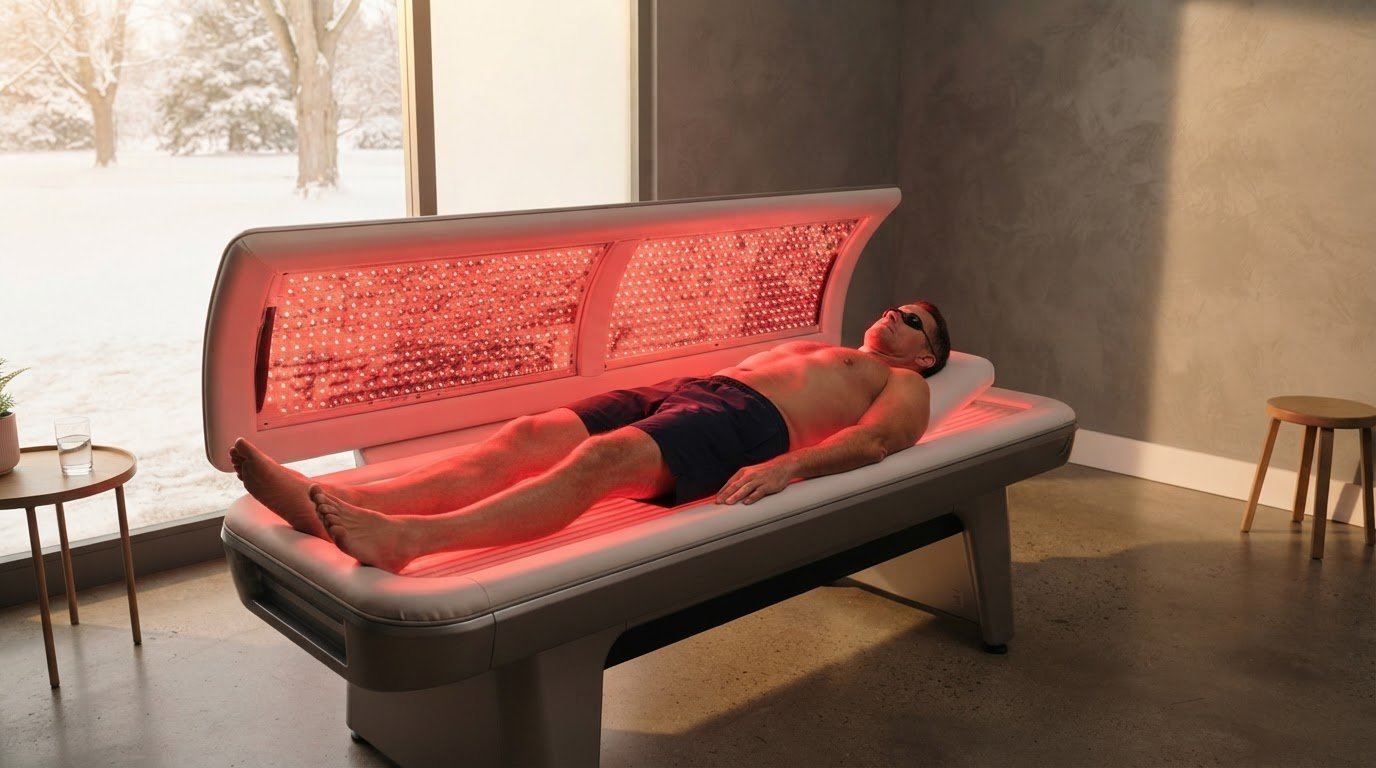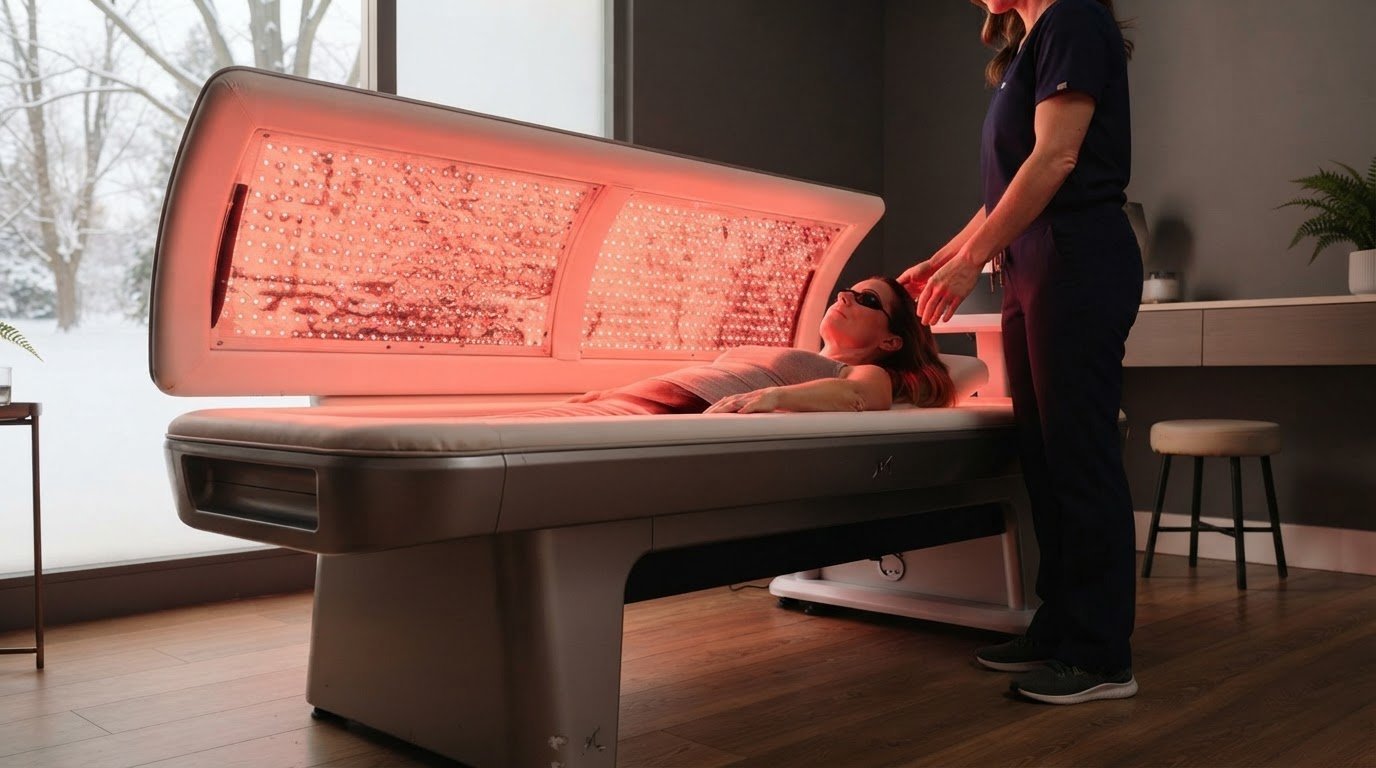
Could light directed at the body affect inflammation beyond the area being treated? For people exploring red light therapy for systemic inflammation in Amherst, the important distinction is that red and near-infrared light, together called photobiomodulation, is being studied for cellular effects, but its impact on systemic inflammation remains uncertain.
It’s understandable to wonder whether light-based treatment might help when inflammation, joint discomfort, or recovery concerns affect daily life. The details matter: wavelength influences how deeply light may reach, while a device’s coverage determines which areas it can treat.
This article explains how red light therapy works, what to know about wavelength and device coverage, and what research suggests about inflammation and joint pain. It also reviews studies involving specific medical conditions, helping distinguish potential uses from established treatment and showing how photobiomodulation may fit into broader care.
Key Takeaways
- Red and near-infrared light differ in wavelength and tissue reach, so the light spectrum matters when considering a treatment.
- Device coverage affects how easily light can be directed to one area or across the body.
- Research on joint pain and inflammation offers promising findings, but the strength of evidence varies by condition and outcome.
- Photobiomodulation studies include people with different medical conditions; their results don’t establish it as a replacement for medical care.
- Contact My Health 360 for a Meet and Greet appointment to discuss with Medical Director Dr. Fatima whether whole body red light therapy may be a good option for you.
Choosing wavelengths and device coverage
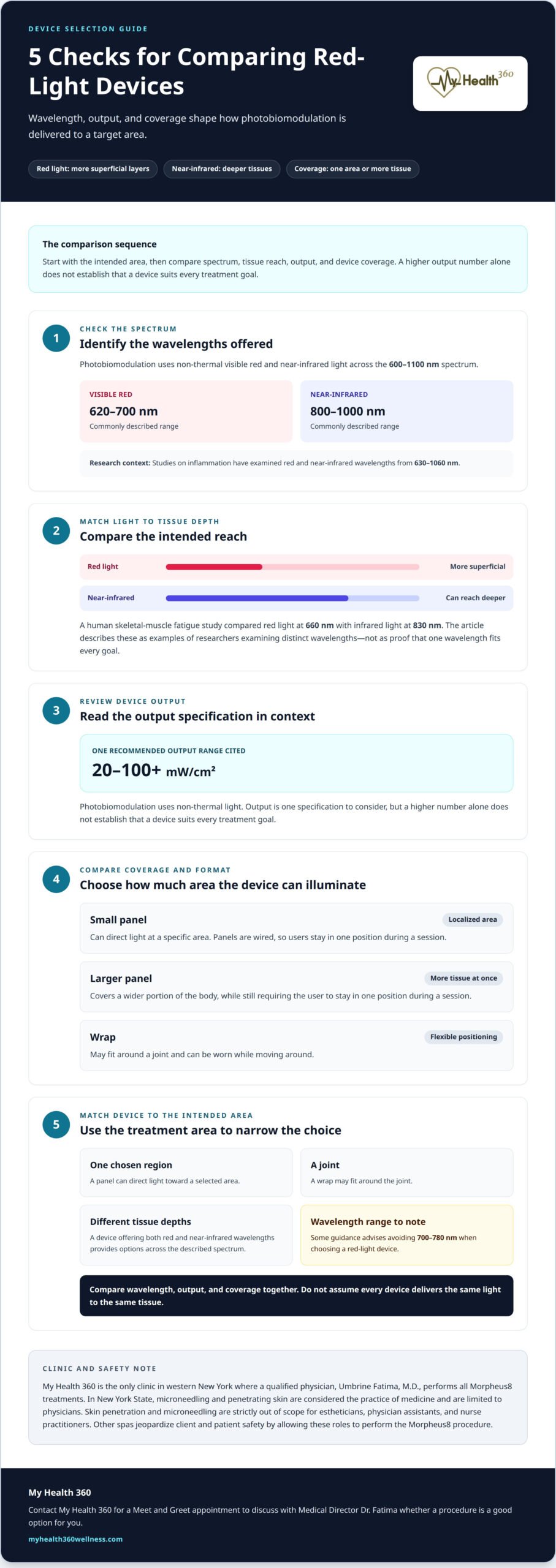
Photobiomodulation uses non-thermal visible red and near-infrared light across the 600-1100 nm spectrum. For people considering red light therapy for systemic inflammation in Amherst, wavelength and device coverage are important factors.
Red and Near-Infrared Wavelengths
Red and near-infrared wavelengths are parts of the light spectrum used in photobiomodulation. Visible red light is commonly described around 620 to 700 nm, while near-infrared light is described around 800 to 1000 nm. Research on inflammation has examined red and near-infrared wavelengths from 630 to 1060 nm. These ranges help explain why device specifications matter when considering light for healing or recovery.
Wavelength Selection and Tissue Depth
Wavelength selection relates to how far light may penetrate tissue: red light is associated with more superficial layers, while near-infrared light can reach deeper tissues. For example, a device aimed at a surface area may use a different combination than one intended to target deeper structures. A human skeletal-muscle fatigue study compared red light at 660 nm with infrared light at 830 nm, illustrating how researchers examine distinct wavelengths.
For broader versatility, a device that includes both red and near-infrared light can address different tissue depths. Photobiomodulation uses non-thermal light, so wavelength is not the only specification to consider. The device’s output and the area it illuminates also shape how treatment is delivered. One recommended output range is 20 and 100+ mW/cm², but a higher number alone does not establish that a device suits every treatment goal.
Coverage helps determine whether light reaches one specific area or a wider portion of the body. A small panel can direct light at a localized area, while a larger panel covers more tissue at once. Panels are wired, so users stay in one position during a session. Wraps allow different positions and may be worn while moving around.
Consider the treatment area before selecting a device. For example, a wrap may fit around a joint, while a panel can direct light toward a chosen region. A device offering both red and near-infrared wavelengths provides options across the described spectrum. Some guidance advises avoiding wavelengths in the 700-780 nm range when choosing a red light device. Match wavelength and coverage to the intended area, rather than assuming every device delivers the same light to the same tissue.
For those exploring red light therapy for systemic inflammation in Amherst, device specifications offer a practical way to compare options. Wavelength, output, and coverage each affect how treatment is delivered to the target area.
Potential effects on joint pain and inflammation
Photobiomodulation has been studied for pain related to exercise, joint conditions, and chronic musculoskeletal concerns. Findings vary according to the condition, treatment protocol, and outcome measured.
Pain and Inflammation Relief
Evidence for pain relief includes studies of specific conditions, rather than proof of a single effect across all inflammation. A controlled study reported that red light therapy reduced rheumatoid arthritis pain by 70% compared with placebo. For readers, the distinction matters: a result in one condition cannot establish the same benefit for every joint or inflammatory disorder.
Pain Relief and Inflammatory Cytokines
Inflammatory cytokines are signaling proteins involved in immune responses and processes associated with pain. Researchers study these signals to understand how light-based interventions may relate to inflammation, but pain scores and cytokine activity are different outcomes. A change in discomfort alone doesn’t show that inflammation has changed throughout the body.
Joint research offers examples, but each study has limits. A study of sacroiliac joint pain used near-infrared light at 830 nm, with 10 sessions over five weeks. Two-thirds of participants showed increased trunk mobility. This finding concerns movement in that study group; it doesn’t establish that every person with back or pelvic pain will respond similarly.
Osteoarthritis affects approximately 32.5 million Americans. Research suggests consistent red and near-infrared treatments may reduce osteoarthritis pain and improve mobility when combined with exercise. The exercise component matters: light therapy findings should be understood within the treatment context studied, not as a substitute for movement or an individual care plan.
Exercise-related muscle pain has also been examined. A systematic review of photobiomodulation for delayed-onset muscle soreness reported reduced perceived pain 72 hours after exercise. Athletes receiving treatment reported reduced perceived muscle pain 96 hours after exercise. These time points describe reported outcomes, not a guaranteed recovery schedule or a direct measure of tissue repair or energy restoration.
For chronic pain, the useful question is which outcome a study measured: pain, mobility, or another clinical marker. A change in range of motion may matter during daily activities, while a lower pain rating may affect exercise tolerance. Those outcomes are related, but they aren’t interchangeable. In Amherst, discussing joint-pain goals can help frame what matters most to your daily function.
These findings make photobiomodulation a subject of ongoing clinical interest, not a universal answer for inflammatory pain. Study design, diagnosis, treatment area, and accompanying exercise all affect how results should be interpreted. For example, evidence about muscle soreness after exercise doesn’t automatically apply to rheumatoid arthritis, osteoarthritis, or persistent pain from another cause.
What medical conditions can the therapy help?
Photobiomodulation has been studied for metabolic, musculoskeletal, and other medical concerns. Evidence varies by condition, and study protocols differ in duration, frequency, distance, and treatment area.
In obese patients, photobiomodulation interventions were associated with an average total body-weight reduction of 3.54 kilograms, according to the Authors of the systematic review and meta-analysis. That finding describes an average among study participants, not a treatment protocol for weight management. It also doesn’t establish photobiomodulation as a standalone approach to obesity or related disease.
Research has also examined fatigue and pain. A study of patients with fibromyalgia reported reduced fatigue, with a clinical effect size of 1.25. Another study found that near-infrared and infrared therapy reduced chronic low back pain. These outcomes relate to particular study groups; they don’t show that every person with fibromyalgia, back pain, or arthritis experiences the same response.
Other conditions remain at earlier evidence stages. Preclinical models suggest light in the 670-830 nm range may mitigate oxidative stress in chronic kidney disease. Preclinical findings come from models rather than treatment outcomes in people, so they don’t establish clinical effectiveness for kidney disease. The distinction helps separate a research direction from an established medical use.
Session plans in the research vary. One suggested starting point is 5-10 minutes, 3-5 days per week, with the body’s response assessed before moving to daily use. General guidance also describes sessions lasting three to 15 minutes. These approaches are not identical protocols; the treatment area, device, and condition studied influence duration and frequency.
For acute inflammation, one suggested protocol is 10-15 minutes daily for 5-7 days. For chronic inflammation, another describes full-body sessions of 15-20 minutes, 4-5 times per week. A separate routine suggests 10-20 minutes per area, 3-5 times weekly for 4-8 weeks. Those differences illustrate why a session schedule should be understood in its specific context.
Distance also affects delivery. One recommendation places the device 15-30 cm from the treatment area. Coverage matters too: a full-body session treats a broader area than a targeted session for one joint. Device output and position help determine how much light reaches the tissue.
Safety depends on exposure and individual sensitivity. High light levels can cause redness, swelling, or blistering; people who develop skin redness may need lower doses. Protective goggles are advised because light can damage the eyes. Photobiomodulation should not replace wound care, including disinfection, or medical treatment for inflammatory disease.
Evidence for photobiomodulation and inflammation
What conditions involving systemic inflammation have been studied with red light therapy? Studies include obesity-related insulin resistance and inflammation associated with acute or chronic disease. Findings vary by outcome, so a change in one cellular or clinical measure doesn’t establish a broad effect throughout the body.
Treatment Protocols and Evidence Limitations
Photobiomodulation protocols vary in wavelength, dose, treatment area, and frequency, making direct comparisons difficult. One suggested routine uses 10-20 minutes per area, 3-5 times weekly for 4-8 weeks, unless a clinician advises otherwise. Other studies use different schedules, so their results describe the protocols tested, not a universal treatment plan.
Study size and outcome also shape interpretation. A systematic review included data from over 9,000 participants, while the Son 2025 umbrella review summarized 204 randomized controlled trials, 15 meta-analyses, and 35 endpoints. Those totals cover diverse applications; they don’t mean every condition has equally strong evidence. An outcome such as pain, insulin resistance, or tissue inflammation measures a different aspect of health.
Conditions With Limited Evidence
Evidence for some systemic conditions remains limited, as findings may come from early-stage studies or specific populations. For example, an association in people with obesity doesn’t establish that the same effect applies to people with another disease or metabolic profile. Preclinical results also differ from outcomes measured in people, so study type matters when assessing possible clinical relevance.
Inflammation-related research also examines distinct endpoints rather than one universal marker. Photobiomodulation interventions were associated with a 0.46-point reduction in insulin-resistance metrics among obese patients, according to the Authors of the systematic review and meta-analysis. Insulin resistance is a metabolic measure, not a direct measurement of all systemic inflammation. That distinction helps readers understand what the reported result does and doesn’t describe.
Studied Conditions Involving Systemic Inflammation
Studies have examined photobiomodulation in relation to obesity-related metabolic measures and inflammation associated with acute and chronic diseases. Conditions and endpoints vary, so this research doesn’t establish one disease-specific protocol. To understand how closely a finding applies to a particular concern, identify the population studied and the outcome measured.
Photobiomodulation has also been studied for localized inflammatory complications. The World Association for Photobiomodulation Therapy recommends it for managing radiation dermatitis and oral mucositis as oncology complications. These are specific treatment contexts, not evidence that red light treats cancer itself or resolves inflammation throughout the body.
Across these studies, distinguish a measured association from an established treatment effect. Insulin-resistance metrics, radiation dermatitis, and oral mucositis represent different outcomes. Wavelength, dose, and treatment area also vary across protocols. Reviewing evidence by condition and endpoint gives a more precise picture than treating all inflammation research as interchangeable.
What is red light therapy?
Photobiomodulation uses red and near-infrared light to study how light exposure may influence cellular function. Its proposed effects on inflammation remain under investigation.
How does red light therapy compare with established treatments for inflammation? It isn’t a substitute for diagnosis or established medical treatment. Studies examine it as a separate approach, with results tied to specific conditions and outcomes.
What should patients ask a provider before starting? Ask what outcome the treatment targets, how wavelength and dose are selected, what eye protection is used, and how the treatment fits alongside current care.
Potential Effects on Systemic Inflammation
Potential systemic effects refer to possible changes beyond the area exposed to light. This distinction matters: relief in one joint doesn’t prove that inflammation has changed throughout the body.
Early studies suggest red light therapy may affect systemic inflammation, but evidence doesn’t establish a consistent effect across conditions. Researchers examine cellular responses and measures such as insulin resistance rather than treating “inflammation” as a single outcome. A change in a metabolic marker, for example, isn’t the same as demonstrating reduced inflammation in every tissue.
Photobiomodulation is also studied for specific effects, including tissue repair and cellular function. These proposed processes don’t establish that light changes the development of inflammatory conditions or prevents disease. Exercise, diagnosis, and other care remain distinct parts of a person’s health plan, not effects that can be inferred from light exposure alone.
Dose-Dependent Effects
Dose-dependent effects mean responses may vary with the amount of light delivered, including exposure time and intensity. Increasing exposure doesn’t automatically lead to greater benefit.
High levels of red light can cause skin redness, swelling, or blistering. People who develop redness may need lower light doses. Protective goggles are advised because exposure can damage the eyes. Device settings and the treatment area are important considerations for safe use.
Use for cancer treatment side effects is a distinct application. The World Association for Photobiomodulation Therapy recommends photobiomodulation to manage radiation dermatitis and oral mucositis as oncology complications. That recommendation concerns those side effects; it doesn’t mean red light treats cancer itself. People with a history of skin or eye cancer should consult their oncologist or primary care physician before use.
Before considering treatment, discuss the intended outcome, exposure plan, eye protection, and how it coordinates with existing medical care. If you’re addressing a condition, clarify whether the evidence relates to that condition or to a different outcome, such as pain or mobility. This helps keep expectations aligned with what studies actually measure.
Contact My Health 360 to arrange a Meet and Greet and discuss with Medical Director Dr. Fatima whether whole body red light therapy is a good option for you.
My Health 360: Whole body red light therapy
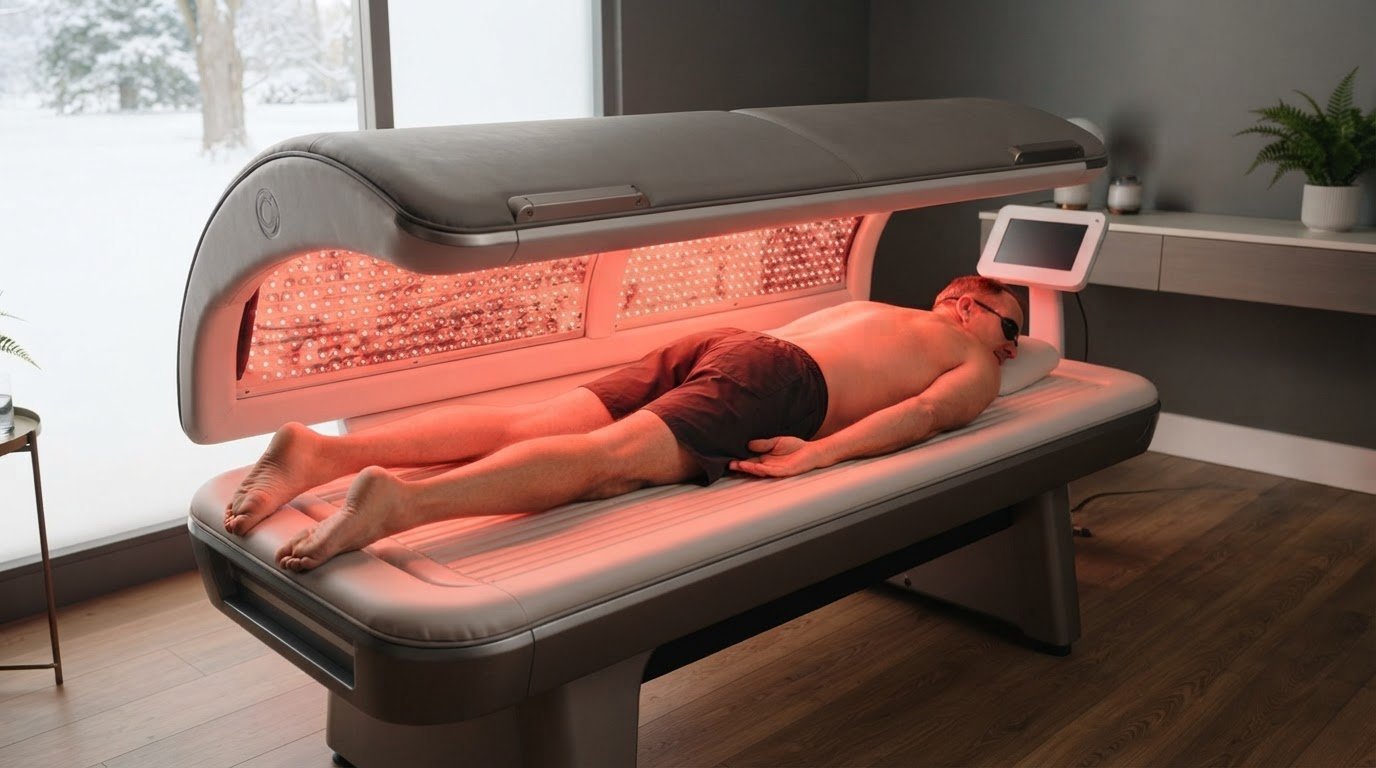
My Health 360 offers whole body red light therapy for people exploring light-based support across a broader treatment area. It may be a point of discussion if you’re considering photobiomodulation alongside your existing care, especially when your goals involve general wellness, recovery, or inflammation-related concerns.
Research findings vary by condition and treatment protocol, so a conversation can clarify what the evidence does and doesn’t say about your situation. At a Meet and Greet appointment, discuss your goals, medical history, and current treatments with Medical Director Dr. Fatima, including whether this procedure is a good option for you.
Contact My Health 360 to arrange a Meet and Greet and discuss whole body red light therapy with Dr. Fatima.
Choose a thoughtful next step
Deciding whether light-based care belongs in your health plan starts with a clear purpose. Consider the concern you want to address, how it affects daily life, and what meaningful progress would look like. This makes a conversation about red light therapy for systemic inflammation in Amherst more practical and personal, without treating a promising area of research as a substitute for established medical care.
A Meet and Greet offers space to discuss your goals, relevant medical history, and questions about whole body red light therapy. Speak with Medical Director Dr. Fatima about whether the procedure is a good option for you and how it may fit alongside your current care.
Contact My Health 360 to arrange a Meet and Greet and discuss your next step with Dr. Fatima. A considered conversation can help you move forward with greater clarity.
Frequently Asked Questions
What is red light therapy and how might it affect systemic inflammation?
Red light therapy, also called photobiomodulation, applies specific red or near-infrared light to the body. Researchers are studying how light exposure may influence cellular processes related to inflammation, but findings from a treated area don’t necessarily indicate a change throughout the body. Local comfort and a systemic inflammatory marker are different outcomes, so the intended treatment goal matters.
What does clinical research say about red light therapy for systemic inflammation?
Clinical research offers early signals, not an established treatment for systemic inflammation. Studies examine different conditions and outcomes, including metabolic measures, pain, and localized inflammation-related complications. These findings aren’t interchangeable or proof that the therapy addresses every inflammatory disease. To interpret a study, identify who participated, what outcome researchers measured, and whether that outcome matches the concern being considered.
What wavelengths and treatment doses are used for inflammation?
Research has examined red and near-infrared wavelengths; the selected spectrum and dose depend on the device and treatment aim. Before beginning, clarify which wavelengths the device emits, how its output is measured, and how the treatment area affects exposure. A plan for one joint differs from whole-body coverage. Session time alone doesn’t describe dose, because intensity and distance also shape light delivery.
What are the risks, side effects, and contraindications of red light therapy?
Potential side effects of high light exposure include skin redness, swelling, or blistering. Eye protection is advised because light can damage the eyes, and people who develop redness may need a lower dose. Anyone with a history of skin or eye cancer should consult their oncologist or primary care physician before use. Discuss medications, existing conditions, and the treatment area with a medical professional, especially if you’re unsure whether light therapy is suitable.
Red light therapy clinics near Amherst, New York
My Health 360 offers whole-body red light therapy and invites people to schedule a Meet and Greet with Medical Director Dr. Fatima.
Red light therapy prices and packages in Amherst, New York
Does insurance cover red light therapy for inflammation in New York?
Red light therapy is not usually covered by insurance.