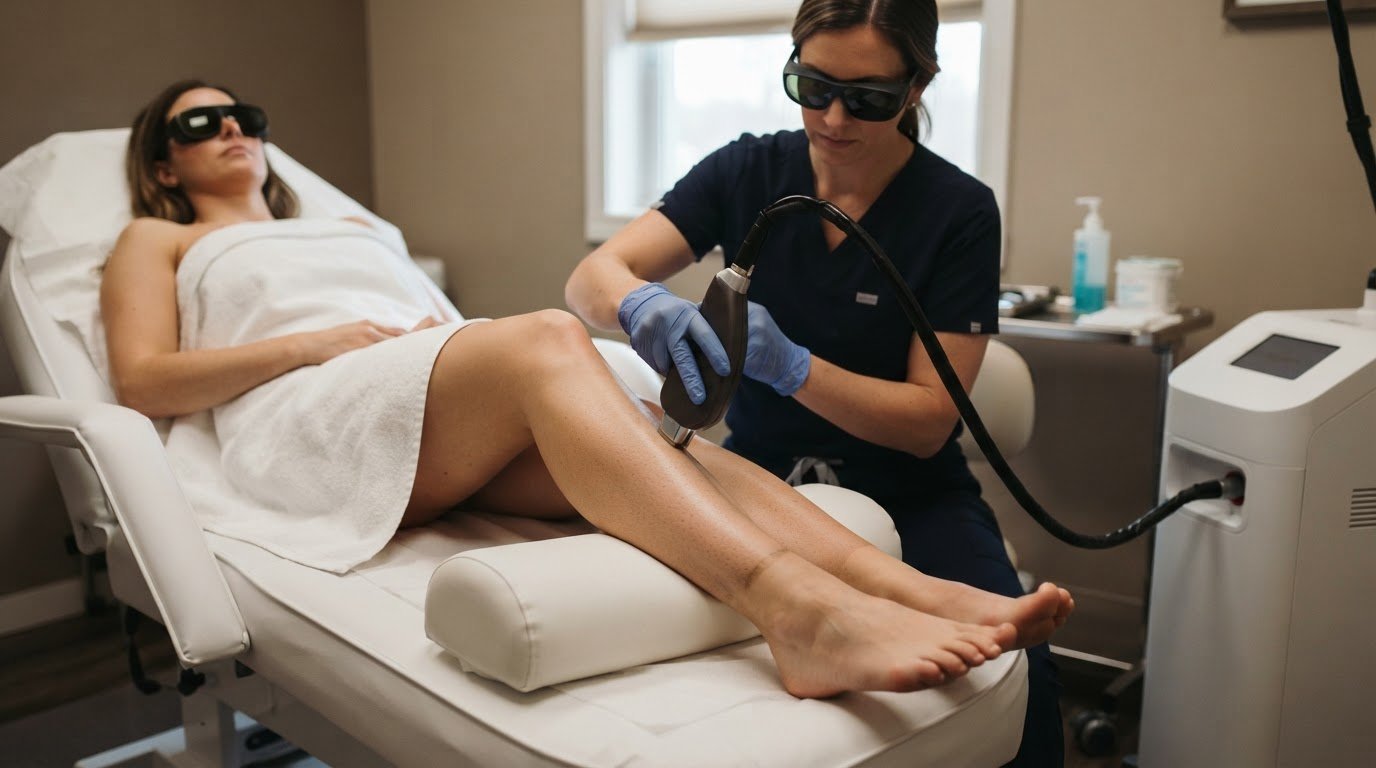
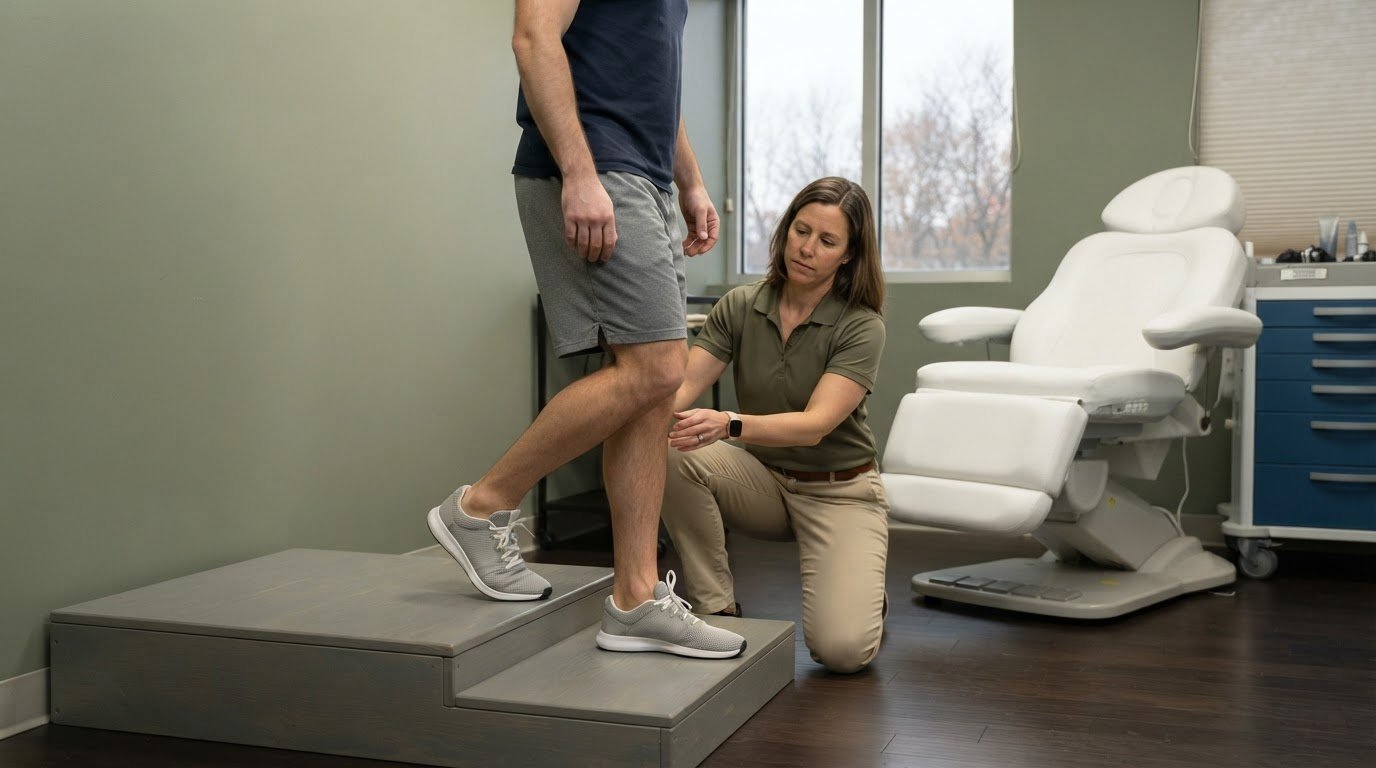
There isn’t one session count that fits everyone seeking muscle recovery therapy in Buffalo, NY. The number depends on the concern being treated, the therapy selected, and how your body responds, so a useful plan starts with your symptoms, injury history, and goals rather than a preset package.
It’s understandable to want clarity about timing and insurance before starting muscle recovery therapy in Buffalo, NY. This article explains how recovery therapies may address muscle tension and sports injuries, what can shape the focus of sessions, and how treatment may fit alongside other care. It also outlines what to ask about session planning and coverage so you can make a more informed decision.
Key Takeaways
- The right session plan depends on the type of tension or injury, your goals, and how treatment is progressing, rather than a fixed number for everyone.
- Combining recovery approaches with other care can make sense when each treatment has a clear role in your overall plan.
- Sports injury rehabilitation can address more than the affected area, with movement, strengthening, and activity goals helping guide progress toward returning to exercise.
- Manual soft tissue treatment may be billed as part of a chiropractic visit; ask how your plan handles coverage, no-fault auto insurance, or workers’ compensation.
- Learn how hands-on treatment differs from ultrasound and electrical stimulation so you can discuss which approaches fit your needs.
Can I combine these therapies with other treatments?
A treatment plan may combine approaches, but each should have a clear purpose. An initial assessment connects your symptoms, injury history, movement limits, and goals. The clinician may examine how a painful area moves and consider whether symptoms point to another cause. If trigger points are suspected, a detailed examination can help rule out nerve impingement or other explanations before treatment.
Manual soft tissue treatment uses pressure, massage, passive movement, and stretching on muscles, ligaments, and fascia. Myofascial release focuses on restricted areas that a clinician locates through palpation before applying pressure and moving the area through its range. Trigger points are muscle knots that may cause local tightness or pain elsewhere. Treatment may address neck or back pain, tension headaches, sports injuries, repetitive stress injuries, plantar fasciitis, or IT band syndrome.
Clinical soft tissue treatment and massage can both involve hands-on pressure, but their focus may differ. Clinical treatment connects assessment findings with a specific symptom, movement restriction, or rehabilitation goal. A massage session may focus more broadly on relaxation or general muscle tension. Tell the clinician which activity is limited, such as running, lifting, or turning your head, to help shape the session.
Physical therapy referral requirements in New York State depend on your insurance plan and circumstances. Check your plan’s referral rules before scheduling, because referral requirements and coverage are separate matters.
Buffalo providers may offer physical therapy, sports massage, or other recovery treatments. Search for the service that matches your goal, then distinguish hands-on soft tissue care from rehabilitation focused on movement and strength. Understanding the treatment category can help you identify the type of appointment you need.
To find a licensed physical therapist or massage therapist in Buffalo, use New York State professional licensing records to review credentials. Match the listed profession to the service you’re seeking, then confirm that the appointment type suits your needs and insurance requirements.
Soft tissue work may complement chiropractic adjustments when each addresses a different part of a treatment plan. For example, hands-on work may focus on restricted tissue, while an adjustment addresses joint movement. The clinician should coordinate the sequence and explain each method’s role rather than treating them as interchangeable.
Pressure should remain tolerable during treatment. Speak up if it feels too intense or if another area needs attention; the clinician can adjust the technique or focus. Mild soreness may occur after hands-on work, so discuss unusual or persistent symptoms with a healthcare professional. Gentle stretching afterward may help maintain mobility and flexibility.
Sports injury rehabilitation and return to activity
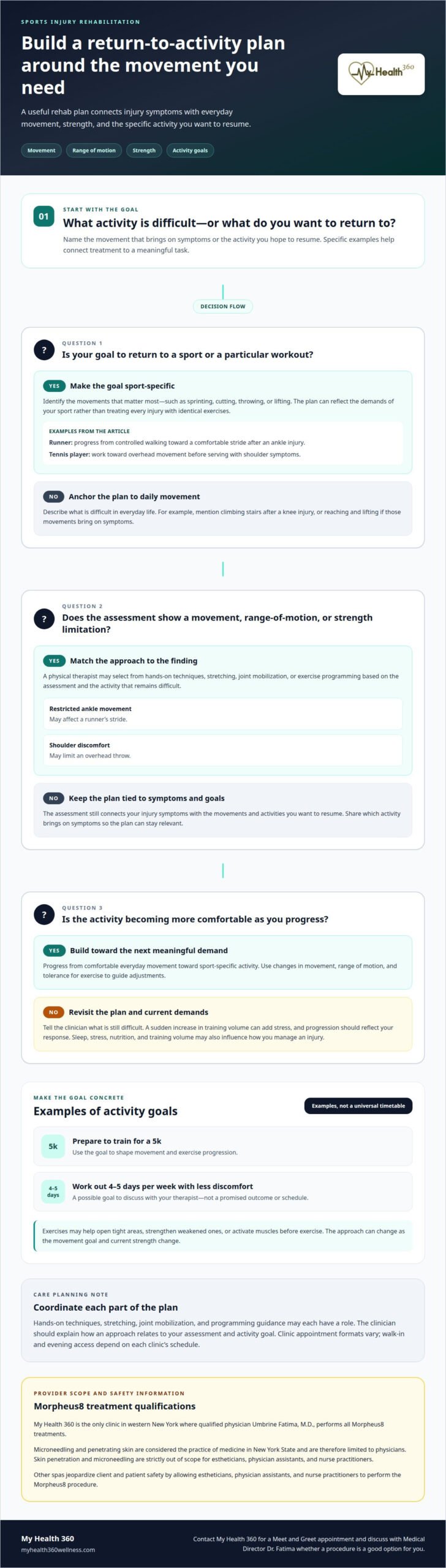
Rehabilitation connects injury symptoms with the movements and activities you want to resume. Buffalo clinics offering physical therapy, sports medicine, or recovery care may use different appointment formats; walk-in and evening access varies by clinic schedule.
Managing Muscle Soreness After Injury
After an injury, soreness can change how you walk, reach, lift, or train. A rehabilitation session considers the affected area alongside movement, range of motion, and strength, rather than treating soreness in isolation. Share which activity brings on symptoms, such as climbing stairs after a knee injury, so the clinician can relate treatment to a meaningful daily task.
A physical therapist may use cupping, instrument-assisted soft tissue mobilization, joint mobilization, or stretching. The combination depends on the assessment and the activity that remains difficult. For example, restricted ankle movement may affect a runner’s stride, while shoulder discomfort may limit an overhead throw. The therapist can adapt techniques as the movement goal changes.
Orthopedic and sports injuries call for different functional goals. A runner returning after an ankle injury may focus on controlled walking and a comfortable stride. A tennis player with shoulder symptoms may need to regain overhead movement before serving. The plan should connect the affected tissue with the specific demands of the sport, rather than treating every injury with identical exercises.
Athlete Recovery and Return to Activity
Athlete recovery can progress from comfortable everyday movement toward sport-specific demands. A physical therapist may combine hands-on techniques, stretching, joint mobilization, and programming guidance. Exercises can help open tight areas, strengthen weakened ones, or activate muscles before exercise. These steps make the training plan relevant to the athlete’s movement needs and current strength.
Return goals should be concrete. Examples include preparing to train for a 5k or working out 4-5 days/week with less discomfort. These are possible goals, not a universal timetable. The therapist can use changes in movement, range of motion, and tolerance for exercise to guide adjustments. A sudden increase in training volume can add stress, so progression should reflect the athlete’s response.
Recovery also involves factors beyond the treatment session. Sleep, stress, nutrition, and training volume can influence how an athlete manages an injury. Discussing these factors during patient education can help connect clinic work with practice and daily routines. For example, a demanding training week and poor sleep may call for a different exercise load than a lighter week.
Before returning to a full sports schedule, identify the movements that matter most: sprinting, cutting, throwing, or lifting. A clinician can use these examples to shape programming guidance and assess whether the plan addresses the activity you want to resume. Progress is more meaningful when exercises reflect your sport’s demands, not just time spent in a session.
Insurance coverage
Coverage depends on how a service is classified and billed, not simply on the technique used. Manual soft tissue treatment is typically billed as part of a chiropractic visit and is covered by most major medical insurance, no-fault auto insurance, and workers’ compensation. That distinction matters: the same hands-on technique may be treated differently when included in a broader visit than when booked as a standalone service.
Start by identifying the reason for care. A sports injury connected to a car accident may involve no-fault auto insurance, while a work-related injury may involve workers’ compensation. For chronic muscle tension without an accident or workplace connection, major medical insurance may be relevant. These are possible coverage routes, not automatic approvals; the insurer’s benefit rules and the way the visit is billed matter.
Before an appointment, review your plan’s terms and clarify the billing category. Ask whether manual soft tissue treatment is included within a chiropractic visit, whether the visit itself is covered, and whether the plan requires a referral or authorization. These questions distinguish coverage for the clinical visit from coverage for a particular technique, such as massage or other hands-on work.
- Major medical insurance: Ask how a chiropractic visit is classified and what benefits apply.
- No-fault auto insurance: Explain that treatment relates to an auto accident and ask about the required claim process.
- Workers’ compensation: Identify the work-related injury and ask how the visit is billed through the claim.
- Standalone massage: Clarify whether the service is billed as clinical treatment or massage, since the category may affect benefits.
Insurance coverage and the amount you pay are related, but they are not the same. Your plan’s benefits, the billing category, and any applicable claim rules shape what insurance pays and what remains your responsibility. A written explanation of benefits can show how a processed claim was handled, including whether the visit was paid, adjusted, or left partly to you.
The price depends on the case and is provided after a quote request. Factors include the treatment’s scope, techniques used, and whether the appointment is part of a broader care plan. An injury-related visit may follow a different billing route from care for chronic tension, so discuss the service and insurance context separately.
Keep your questions focused: What service is billed? Which insurance route applies? What plan terms affect your share? Clear answers help distinguish a covered chiropractic visit from a technique’s role within that visit, and support decisions based on the relevant claim or benefit details.
Ultrasound and electrical stimulation
Ultrasound and electrical stimulation are device-based modalities, distinct from hands-on soft tissue techniques. Their names describe different forms of physical input, not a personalized treatment plan or a guaranteed result. A useful discussion starts with the symptom, the intended function, and why each modality is being considered.
How the approaches differ
Therapeutic ultrasound uses sound waves applied through a device to a selected body area. Electrical stimulation uses a device to deliver electrical impulses through electrodes placed on the skin. These descriptions distinguish the methods; they do not determine which approach suits a particular injury or whether either belongs in your care.
Interferential muscle stimulation is a form of electrical stimulation. Functional electrical stimulation refers to electrical stimulation used in connection with a functional movement or task. The terms describe different applications, so ask which method is proposed and what physical function the session will address.
A clinician’s reasoning should connect the modality to an assessment finding. For example, someone with discomfort near the shoulder could describe difficulty reaching overhead. That functional detail gives the clinician a concrete movement to assess and discuss. The treatment plan should explain how the selected approach relates to that limitation, rather than relying on the device name alone.
Useful questions include:
- Which modality is being considered, ultrasound or electrical stimulation?
- What symptom or movement limitation is it intended to address?
- How will the clinician assess the area before and after its use?
- What sensations should prompt an immediate conversation during the session?
- How does the modality fit with other planned care?
For functional electrical stimulation, ask the clinician to describe the specific movement or task involved. For interferential muscle stimulation, ask how it differs from the other electrical approach in the proposed plan. Clear explanations connect the technique to your symptoms, the target area, and an observable activity.
Ultrasound should also have a defined role in the plan. Ask which body area the device will address and how its use relates to your assessment. If your goal is improved shoulder movement, for instance, clarify how the clinician will evaluate that movement. A device-based session should come with a clear explanation of its purpose.
People seeking recovery care in Western New York can use these questions to compare treatment descriptions without assuming that devices are interchangeable. Ask the clinician to explain the proposed modality in plain language, identify its role, and describe how it fits with other care. The decision should follow the assessment and your functional goals, not the technology label alone.
Chronic muscle tension and adhesions
Persistent tightness can limit motion, make everyday tasks uncomfortable, and affect how nearby areas move. Manual soft tissue treatment uses pressure, massage, passive movement, and stretching on muscles, ligaments, and fascia. The assessment should connect a specific symptom, such as restricted shoulder movement, with the area being treated.
An adhesion is an area of restricted tissue movement. In myofascial release, a clinician locates an adhesion by palpation, applies pressure, and moves the affected body part through its range of motion. For example, the clinician may assess how a patient’s shoulder moves while identifying a restricted area. This approach differs from applying pressure without first locating the tissue restriction.
Trigger points are muscle knots that can cause tightness and pain referred to another part of the body. A tender spot in the shoulder, for instance, may be associated with discomfort elsewhere. Because pain can have different causes, suspected trigger points call for a detailed examination to rule out nerve impingement or other explanations before treatment begins.
Manual soft tissue treatment may increase blood flow, reduce swelling, improve motion, and increase tissue flexibility. These are treatment aims, not promises of a particular outcome. For people with chronic tension, a practical measure is whether a meaningful activity becomes easier, such as turning the neck, reaching overhead, or walking comfortably.
Physical therapy may combine hands-on techniques with movement-focused care. The clinician can relate the selected treatment to your symptoms and functional goals, then adjust the plan as those needs change. Sharing when discomfort occurs, which movements feel restricted, and what activities matter most gives the clinician useful context.
During treatment, pressure should be tolerable. Tell the practitioner if it feels too intense or if a different area needs attention; the technique or focus can then be adjusted. After massage or soft tissue work, gentle stretching may help maintain benefits and support flexibility. Staying hydrated before and after a massage is also recommended.
For persistent tension or suspected adhesions, a focused evaluation can help clarify which tissue and movement need attention. A Meet and Greet appointment offers an opportunity to discuss your concerns with Medical Director Dr. Fatima and whether a procedure is a good option for you. Contact My Health 360 to arrange a Meet and Greet.
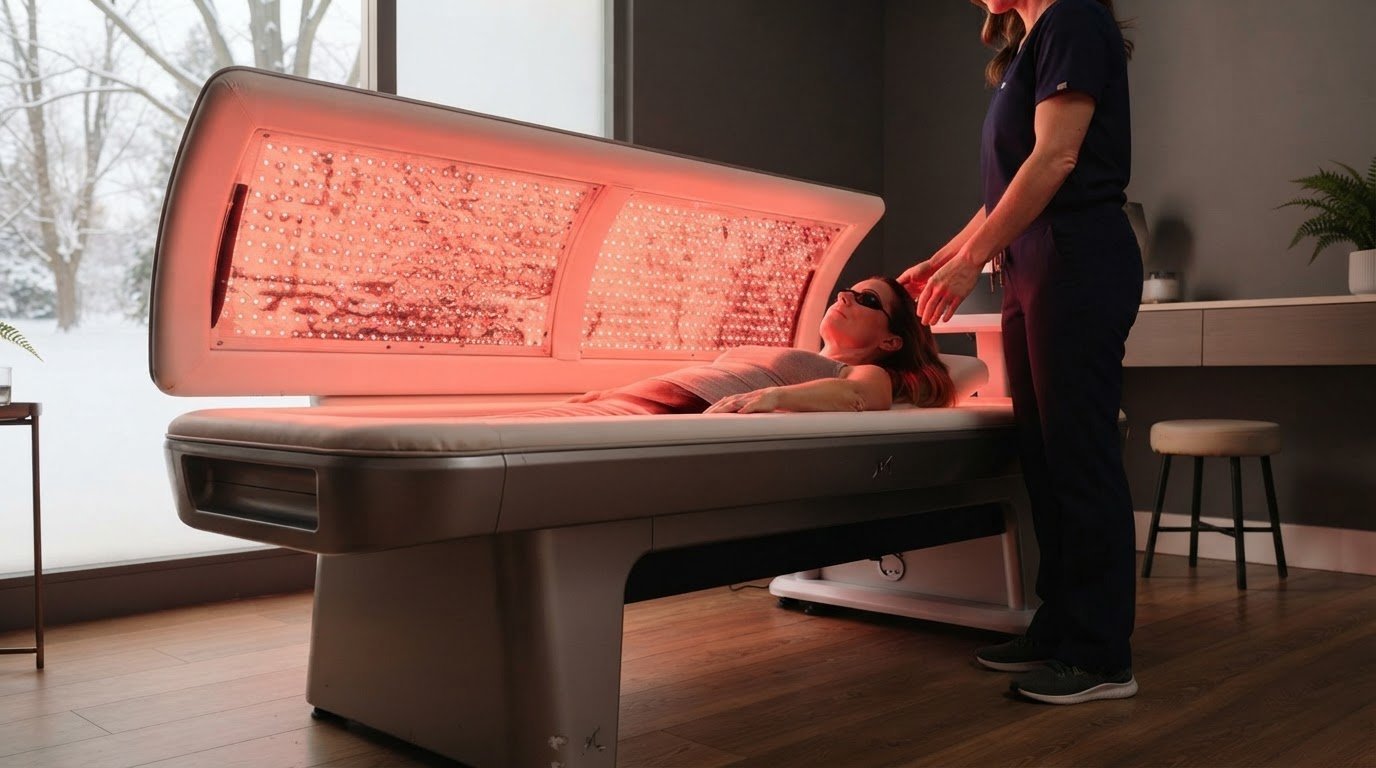
My Health 360: Whole body red light therapy
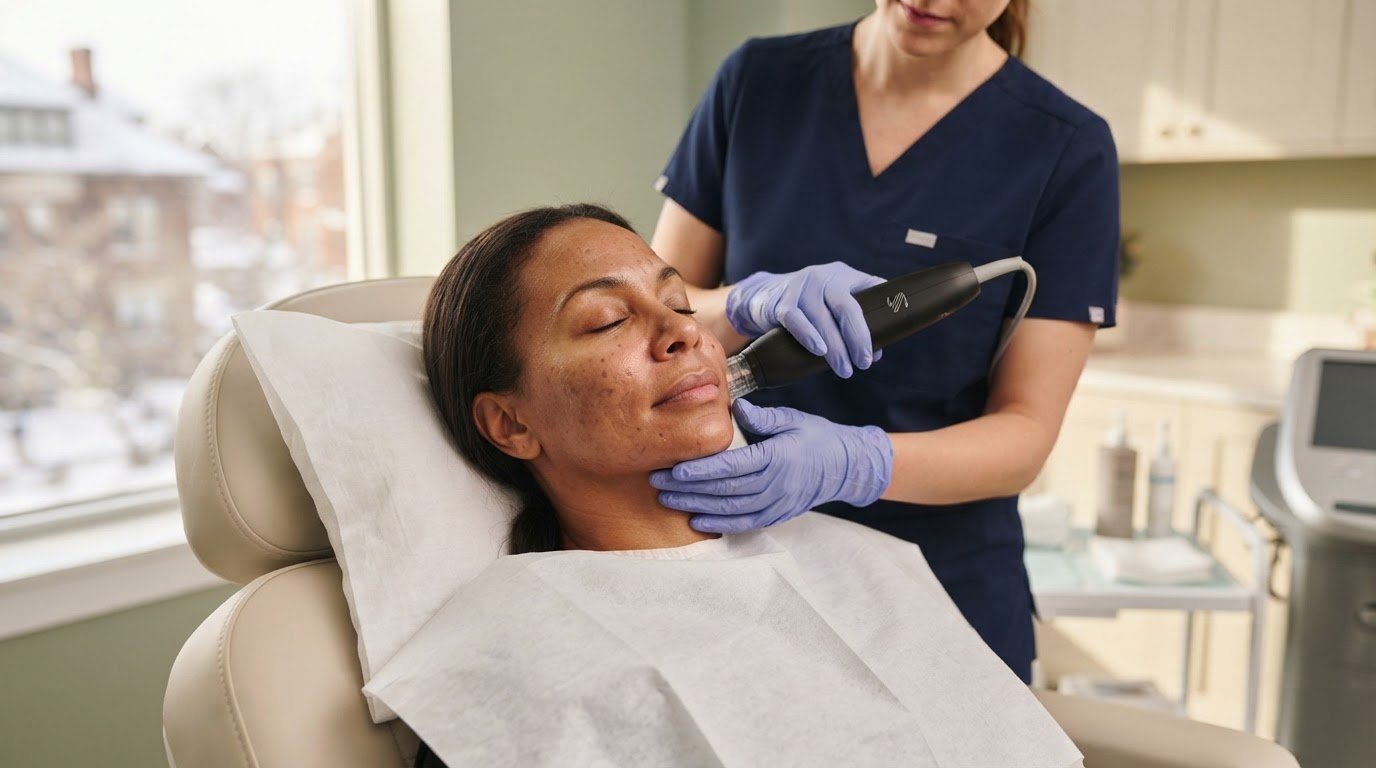
My Health 360 offers whole body red light therapy as an option to discuss within a broader recovery approach. For recovery after an injury or operation, Bio-Restore provides post-operative and injury whole body habilitation. BioPrime focuses on pre-operative and pre-event whole body habilitation. My Health 360 is the only clinic in Western New York where a qualified physician, Umbrine Fatima, M.D., performs all Morpheus8 treatments.
In New York State, microneedling and skin penetration are considered the practice of medicine and are limited to physicians. These procedures are strictly outside the scope of estheticians, physician assistants, and nurse practitioners. Other spas jeopardize patient safety by allowing those providers to perform Morpheus8.
During a Meet and Greet, discuss your needs with Medical Director Dr. Fatima and whether a procedure is a good option for you. Contact My Health 360 to arrange a Meet and Greet.
Choose a next step that fits your goals
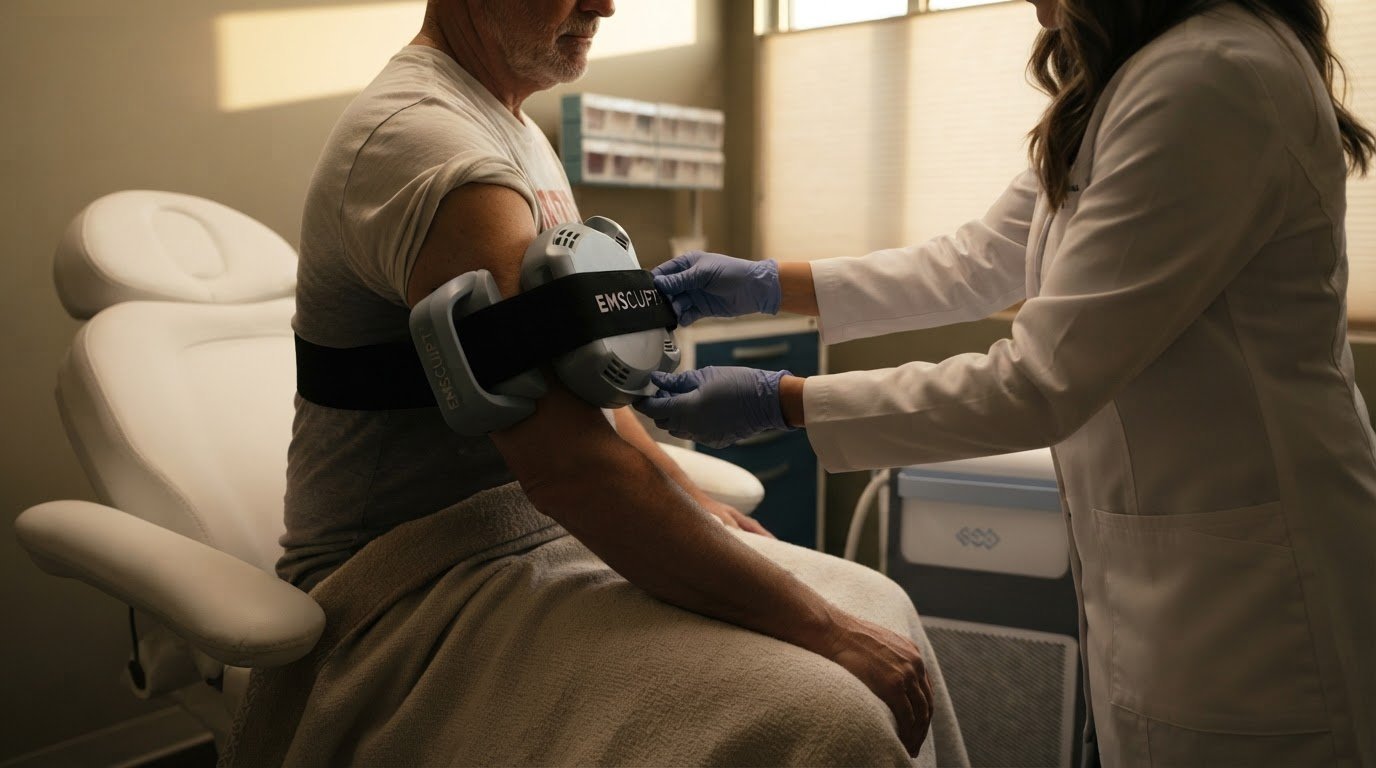
The next step is to connect your recovery priorities with an appropriate care plan. Whether you’re aiming to return to activity, prepare for an event, or support recovery after an injury, your goals and current circumstances can guide the discussion. My Health 360 offers Emsculpt Neo, BioPrime for pre-operative or pre-event whole body habilitation, and Bio-Restore for post-operative or injury whole body habilitation.
For muscle recovery therapy in Buffalo, NY, a Meet and Greet is an opportunity to discuss your needs with Medical Director Dr. Fatima. Contact My Health 360 to arrange a Meet and Greet and discuss whether a procedure is a good option for you. Take the next step when you’re ready to explore a path aligned with your goals.
Frequently Asked Questions
How many sessions will I need?
There’s no single session count for every recovery goal. The plan should connect visits to a specific outcome, such as moving comfortably through a workday or returning to a training activity. Ask how progress will be reviewed and what changes would indicate that the plan needs adjusting. This gives you a clearer basis for discussing the next session than relying on a preset package.
Are these therapies safe?
Safety depends on the therapy, the area treated, and your health circumstances. Before treatment, describe your injury, symptoms, and relevant medical history so the clinician can consider them during the assessment. Ask what sensations to expect from the proposed technique and speak up if treatment becomes uncomfortable. Ultrasound, electrical stimulation, and hands-on care are different approaches, so a general safety claim does not apply equally to each.
What muscle recovery therapies are available in Buffalo, NY?
Recovery options in Buffalo vary by clinic. My Health 360 offers whole body red light therapy, Bio-Restore for post-operative or injury whole body habilitation, BioPrime for pre-operative or pre-event whole body habilitation, and Emsculpt Neo. These offerings serve different purposes. A discussion of your recovery context and goals can help clarify which option is relevant, rather than treating every service as interchangeable with physical therapy or massage.
How much does muscle recovery therapy cost in Buffalo, NY?
The price depends on the case and is provided after a quote request. Cost factors include the type and scope of service, the techniques involved, and whether care is part of a broader plan. Insurance benefits and service pricing are separate considerations. For a useful estimate, first identify the service you’re considering and the recovery goal it is intended to support.
Does health insurance cover muscle recovery therapy or sports massage in New York?
Manual soft tissue treatment is typically billed as part of a chiropractic visit and is covered by most major medical insurance, no-fault auto insurance, and workers’ compensation. That does not mean every standalone sports massage or recovery modality is covered. Coverage depends on the service’s billing category and your policy. For example, an injury connected to work or an auto accident may involve a different claim route.
How do massage therapy, physical therapy, cryotherapy, and compression therapy compare for muscle recovery?
They differ mainly in method. Massage uses hands-on techniques; physical therapy focuses on rehabilitation and may include movement work, exercises, and manual techniques. Cryotherapy involves cold exposure, while compression therapy uses external pressure. These categories are not interchangeable. To compare options, identify whether your priority is hands-on care, movement and exercise guidance, or a device-based modality, then discuss its role in your recovery plan.
What should I expect at a first muscle recovery therapy appointment?
Expect to explain what brought you in, when symptoms began, and which activities are affected. For example, mention whether discomfort limits lifting, running, or reaching overhead. The clinician can use these details to guide an assessment and discuss a treatment plan. Sharing previous care and your main recovery goal can also make the conversation more specific, so the proposed next steps relate to your situation.
How many sessions are typically needed for muscle recovery therapy?
There isn’t one typical schedule for every therapy and recovery goal. The number of visits and the spacing between them are separate planning questions; the approach may differ for ongoing tension and a sports injury. Ask how the plan will account for your response, activity demands, and progress toward a functional goal. These details help you assess whether further sessions fit the care plan.