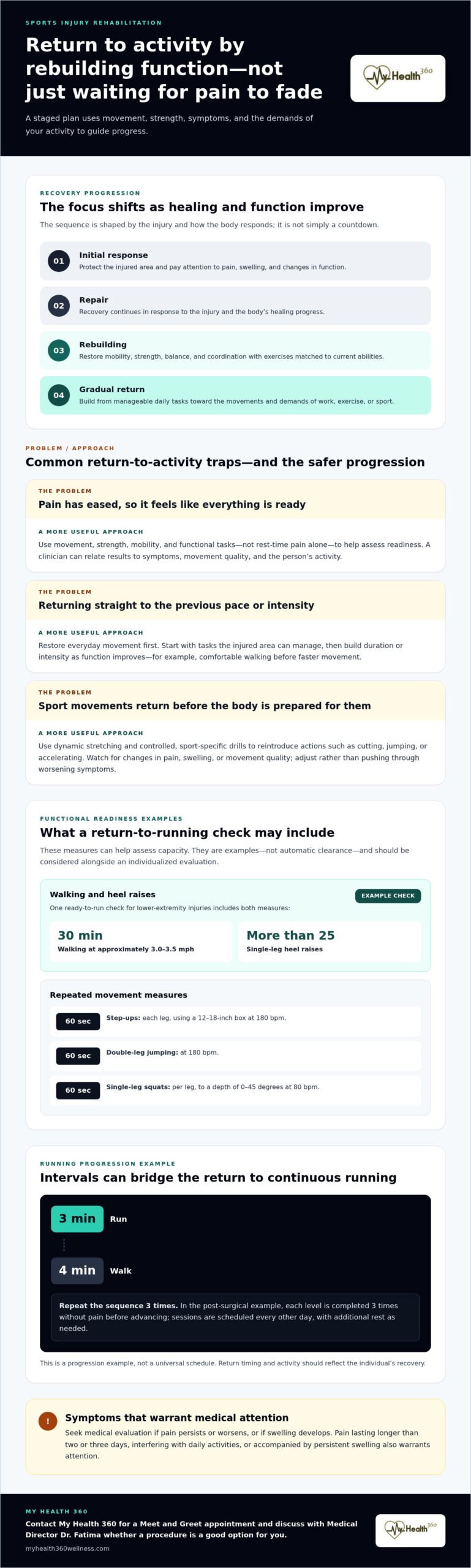
A safe return to activity depends on rebuilding function in stages, not simply waiting for pain to fade. A post-injury recovery program typically progresses through an initial response phase, repair, rebuilding, and a gradual return to activity, with the plan shaped by the injury and how the body responds.
It’s understandable to want to resume training as soon as possible, especially when rest has interrupted your routine. Sports injury rehabilitation addresses that pressure by combining an assessment of movement, strength, and personal goals with targeted exercises and progress checks. The aim is to restore the abilities your sport requires without rushing back and increasing the risk of reinjury.
This article explains what rehabilitation can involve, how recovery phases differ, and how pain management and gradual, sport-specific progression support recovery. You’ll also learn how readiness to return can be assessed through strength, mobility, and functional movement, so the next step is guided by more than how the injured area feels at rest.
Key Takeaways
- Rehabilitation can address more than pain, including mobility, strength, balance, and confidence in movement.
- Recovery progresses through distinct phases, and the focus shifts as the injured area heals and function improves.
- Acute injuries and overuse conditions call for different considerations when shaping a recovery plan.
- Use pain, swelling, and changes in function as cues to protect the injured area and seek appropriate medical attention.
- A gradual return that rebuilds sport-specific movement and maintains strength can help support lasting progress.
What Is Sports Injury Rehabilitation?
Sports injury rehabilitation uses assessment and targeted activity to restore movement and function after injury. Goals may include returning to work or sport while building habits that support the injured area.
Strength, Mobility, Flexibility, and Coordination
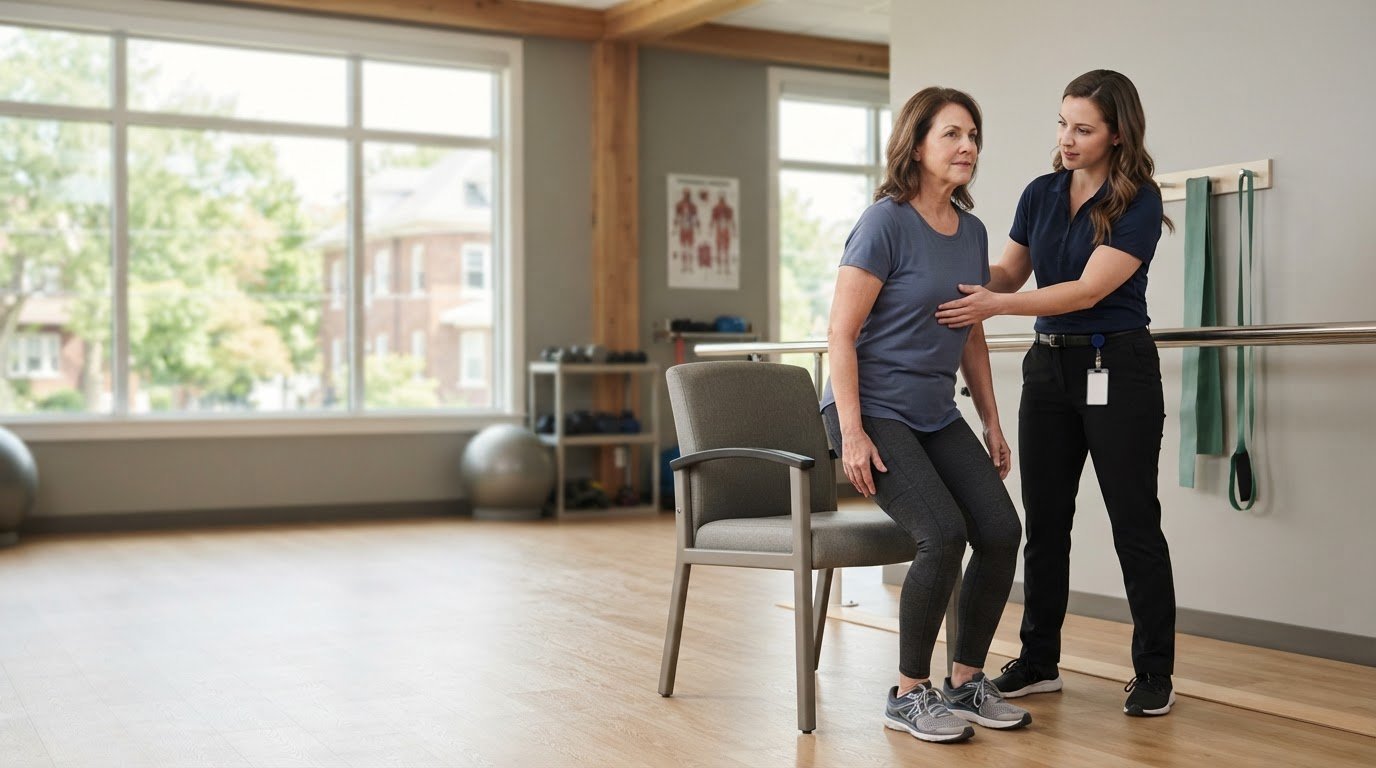
These abilities show how well your body moves, controls joints, and produces force. Rehabilitation may assess range of motion, strength, and personal goals to identify what needs attention. For example, an injured ankle may need better flexibility and balance before it can handle changes in direction. A worker who lifts boxes may need a different mobility and strength focus than a runner. Matching exercises to these demands connects recovery with everyday function.
Exercises and Ongoing Training
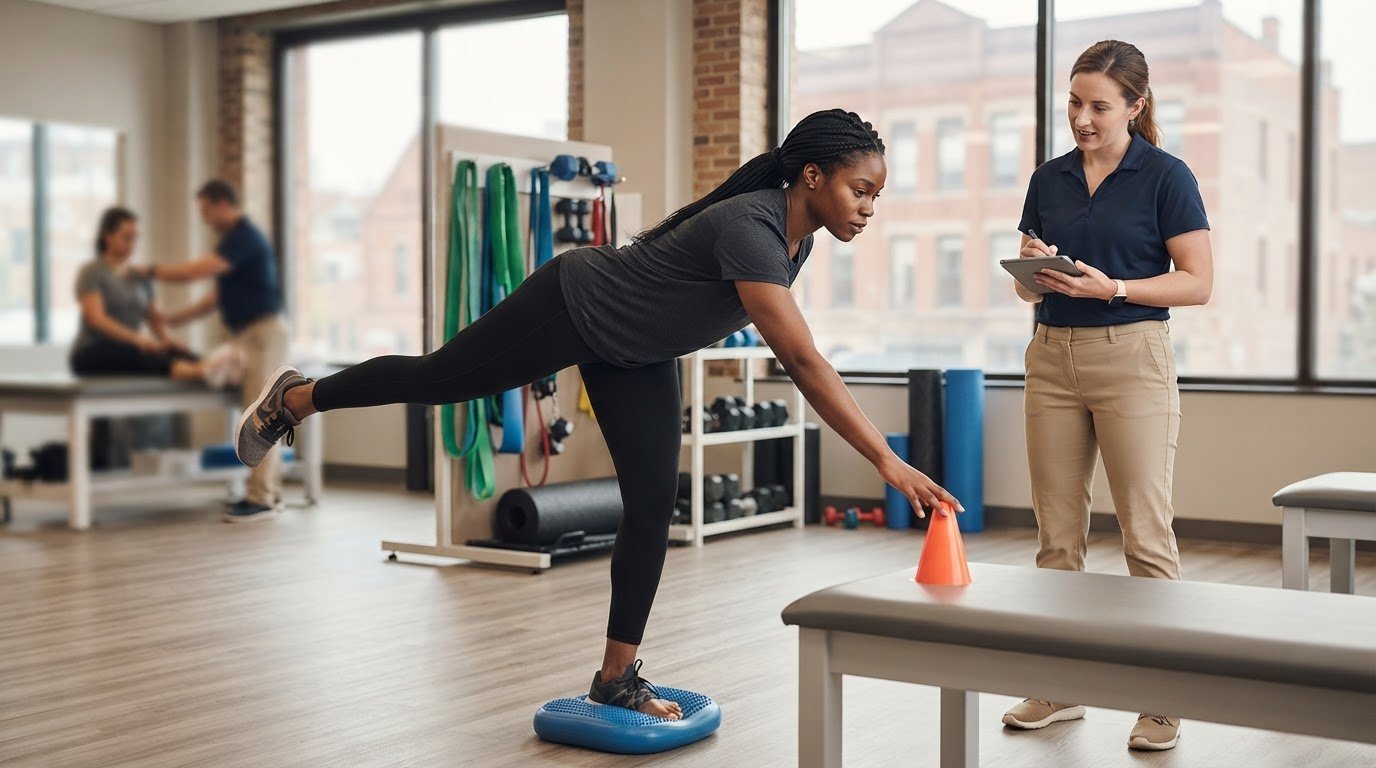
Rehabilitation exercises build mobility, strength, and balance in ways that match your abilities and progress. A plan might begin with gentle movement, then advance from isometric muscle work to more dynamic exercises. Weekly strength and plyometric sessions can be incorporated when appropriate to the person’s recovery goals. Plyometric exercises involve controlled, forceful movements, such as jumping and landing. Consistent movement habits matter after formal rehabilitation, too: maintaining strength and noticing how you lift, turn, or land can reduce unnecessary strain on the recovering area.
Rehabilitation Program Approaches
Physical therapy, home rehabilitation, and sports rehabilitation differ in setting and focus. Physical therapy can include an evaluation and individualized exercises, while home rehabilitation carries prescribed movement into daily routines. Sports rehabilitation focuses on restoring abilities relevant to athletic demands, such as balance when changing direction or coordination when landing. These approaches can complement one another: someone might practice clinician-guided exercises at home, then build toward sport-specific movements as strength and function improve.
Healthcare Professionals and Medical Evaluation
Physicians and physical therapists may contribute to assessment and recovery planning. An evaluation can include your injury history, a physical examination, and special tests; strength, mobility, and functional testing can help assess movement. Seek medical evaluation if pain persists or worsens, or if swelling develops. Pain lasting longer than two or three days, interfering with daily activities, or accompanied by persistent swelling also warrants attention. For example, difficulty walking after an ankle injury shifts the priority from training progression to assessing function.
Return-to-play guidance and reinjury prevention
A return plan rebuilds activity in stages, using function and task demands to guide progress. Returning too soon can increase the risk of injury.
Gradual Return to Daily Activities
A gradual return restores everyday movement before adding more demanding exercise. Start with routine tasks the injured area can manage, then build duration or intensity as function improves. For example, someone recovering from a leg injury might resume comfortable walking before adding faster movement. This progression lets the body adapt and helps identify when an increase in activity is too much.
Work goals matter, too. A job involving prolonged standing, lifting, or repeated reaching places different demands on the body than desk-based work. Return-to-work readiness can be assessed through task-specific movement, strength, and mobility. In Missouri, an injured worker may be released to light or modified duty before returning to full duty. Modified tasks can provide a transition while capacity is rebuilt.
After surgery, running progressions can use run-walk intervals rather than an immediate return to continuous running. One example includes running for 3 minutes, walking for 4 minutes, and repeating that sequence three times. In a post-surgical running program, each level is completed three times without pain before advancing; sessions are scheduled every other day, with additional rest as needed. These are progression examples, not a universal schedule.
Injury Prevention During Return to Activity
Injury prevention means preparing the body for the movements and forces an activity requires. Strength, mobility, and functional tests can help assess readiness for sport or exercise. For lower-extremity injuries, one ready-to-run test includes walking for 30 minutes at approximately 3.0-3.5 mph and completing more than 25 single-leg heel raises. These checks assess capacity, but they don’t replace an individualized evaluation.
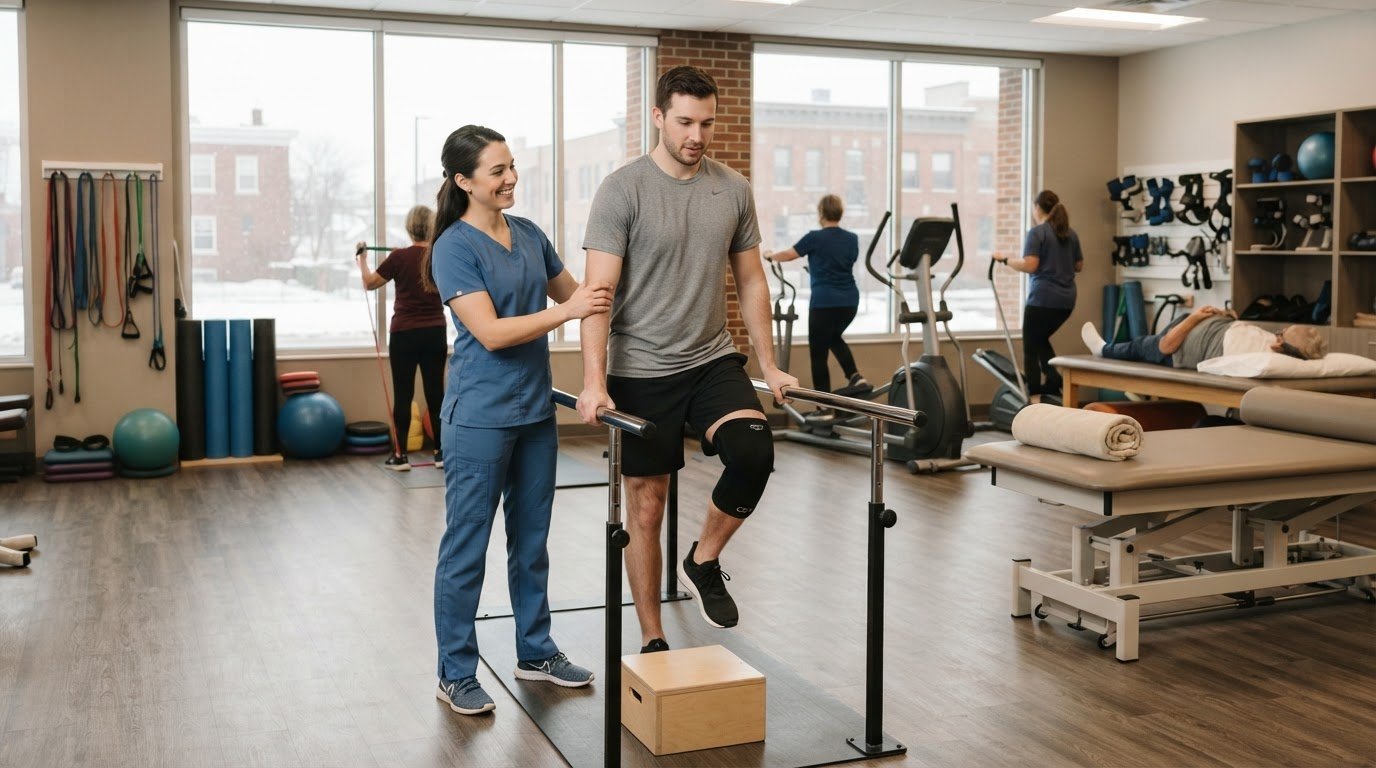
Other functional measures can examine repeated movements: step-ups for 60 seconds on each leg using a 12-18-inch box at 180 bpm, double-leg jumping for 60 seconds at 180 bpm, and single-leg squats for 60 seconds per leg to a depth of 0-45 degrees at 80 bpm. A clinician can relate results to the person’s sport, symptoms, and movement quality rather than treating one test as automatic clearance.
Before running, dynamic stretching can prepare the body for movement. Sport-specific drills then help reintroduce actions such as cutting, jumping, or accelerating in a controlled way. Notice changes in pain, swelling, or movement quality as activity increases, and adjust the progression instead of pushing through worsening symptoms. For guidance on recovery options, contact My Health 360 to arrange a Meet and Greet and discuss with Medical Director Dr. Fatima whether a procedure is a good option for you.
Rehabilitation for acute and chronic sports injuries
Rehabilitation is adapted to injury type, severity, healing, and the activities a person needs to resume. Acute injuries happen suddenly, while chronic injuries develop through repeated stress, so assessment and exercise priorities can differ.
Injury Severity and Rehabilitation Stages
The injury’s severity and the tissue involved influence rehabilitation goals and progression. A minor sprain may recover within a few weeks, while recovery after surgical repair, such as ACL reconstruction, can take several months. Tendon, ligament, and joint injuries may need more time because these tissues have less blood flow. A plan connects the injury’s demands with current function, then adjusts exercises as movement and strength change.
Visit Frequency and Progress Reassessment
Visit frequency depends on the person’s needs, injury, and progress, not a fixed schedule. An evaluation may include injury history, a physical examination, and special tests. Later assessments can compare movement, strength, and performance on relevant tasks. For example, a runner’s progress may be measured by their ability to control movement during training. Reassessment helps determine when to continue, modify, or advance exercises, including those done at home between visits.
Personalized Rehabilitation Technologies
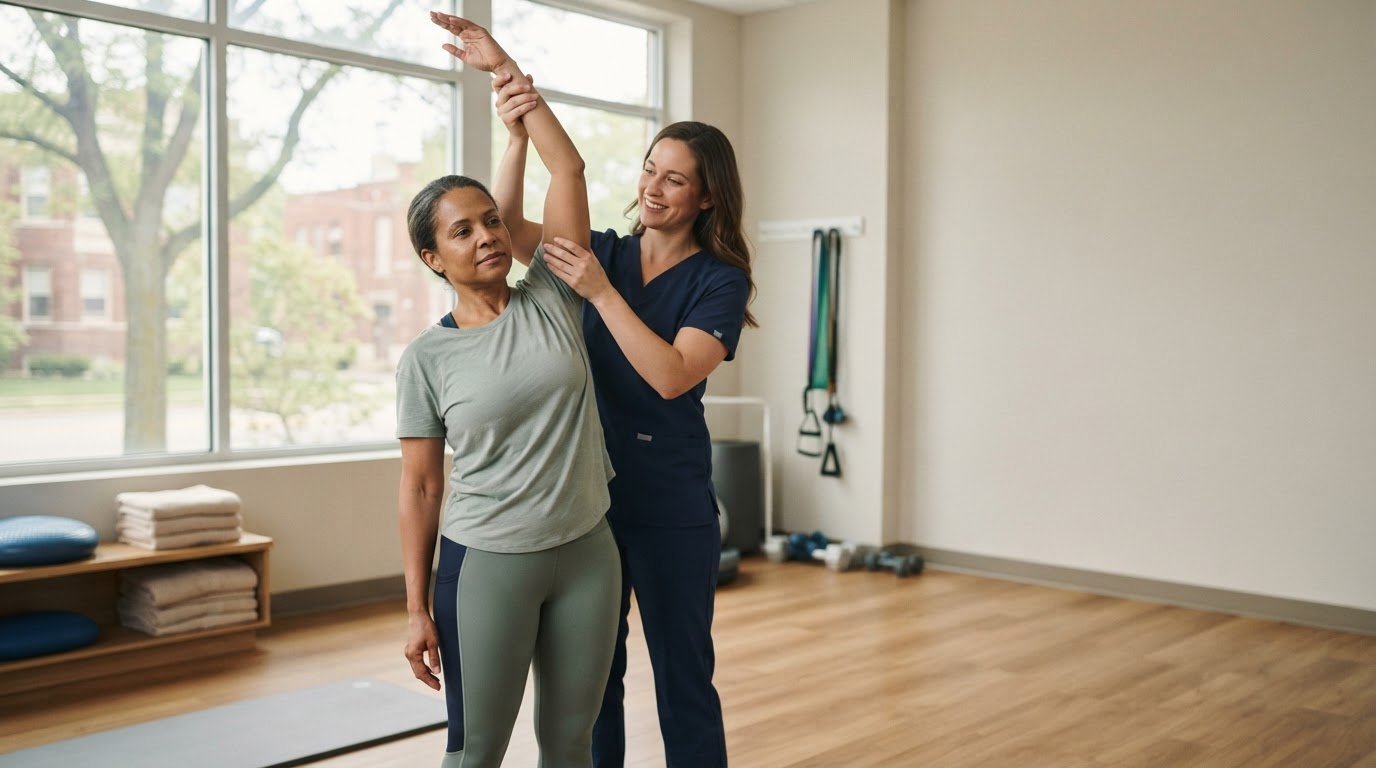
Rehabilitation technologies can support targeted goals, but their role depends on the individual’s injury and plan. They should complement assessment and appropriate exercise, not replace them. A program might combine mobility work with strengthening around an injured joint, then track whether a daily task becomes easier. For instance, someone with a shoulder injury could monitor comfortable reaching before progressing to more demanding movements. What matters is how treatment supports recovery and function.
Work Injury Rehabilitation
Work injury rehabilitation matches exercises and goals to the physical demands of a person’s job. In the United States, workers’ compensation coverage and claim requirements vary by state and case. In some cases, a worker may return to modified tasks before resuming full duties. A warehouse employee, for example, may need to rebuild lifting capacity, while someone at a desk may focus on sustained sitting and comfortable movement. Job-specific goals make progress relevant to work.
Rehabilitation costs depend on the case and are provided after a quote request; factors include injury complexity, services, and visit frequency. Insurance coverage depends on the plan, benefits, and any claim requirements. To find a program near you, search using your activity and location, such as injury rehabilitation in Buffalo, Amherst, or Williamsville.
Pain management and protecting the injured area
Pain management during injury rehabilitation balances symptom control with protection and gradual movement. Delayed-onset muscle soreness often appears 24-48 hours after exercise and typically resolves within 72 hours. Mild soreness for a day or two after a harder session can occur. Pain that persists longer than two or three days, worsens, interferes with daily activities, or comes with persistent swelling calls for medical evaluation.
During the acute phase, protecting the injured area can reduce unnecessary strain. Initial guidance for orthopedic injuries includes limiting weight or use of the affected area during the first 24 to 48 hours. An ice pack may be applied for 20 minutes at a time, once every four hours during the first 48 hours. A medical bandage may support compression during the first 48 to 72 hours, while elevation above heart level can help manage swelling.
These measures are not a substitute for assessment, especially if pain or swelling is worsening. A brace may support an injured area and limit strain while it heals. Compression, elevation, and manual techniques may also be used in early rehabilitation to address pain and inflammation. The appropriate approach depends on the injury and the person’s symptoms, not a universal routine.
Drug-free pain management can include ice or heat therapy, compression, elevation, and guided movement. Gentle range-of-motion exercises can help an injured joint or muscle begin moving without excessive strain. After the first two to three days, small, controlled movements may be introduced when consistent with medical advice. For example, an ankle recovery plan may restore comfortable movement before adding exercises that challenge balance.
Movement should be tailored to the injured area and current function. Too much rest can contribute to stiffness, while returning to strenuous activity too quickly can add strain. A sound rehabilitation plan balances protection with gradually increasing movement and strength. For example, someone with a shoulder strain may need to adjust reaching and lifting before resuming overhead activity. Track how symptoms respond during and after exercise, and report worsening pain or swelling during follow-up.
“Normal” soreness should not be used to dismiss signs of a more serious problem. A fall followed by persistent swelling, worsening pain, or difficulty using the affected area warrants evaluation. Clinicians can assess the injury and determine whether imaging, such as an X-ray or ultrasound, is needed. This assessment helps match pain management to the injury rather than relying on a generic routine.
Phases of orthopedic injury recovery
Orthopedic recovery often progresses through an initial response, repair, rebuilding, and return phase. These phases describe changing priorities, not a fixed calendar for every injury.
The acute phase typically occurs within the first week after injury and usually lasts around five days. Swelling, pain, and limited movement can shape early care. After the first two to three days, small, gentle movements may begin when they align with medical advice. For example, someone with an ankle injury might start with comfortable range-of-motion activity rather than immediately testing a fast turn.
During the repair phase, the body works to restore injured tissue, while the plan continues to protect the area and maintain appropriate mobility. The first recovery phase typically lasts five to 10 days. During this period after the acute phase, a doctor may recommend a heating pad or warm compress instead of ice to increase circulation. That shift illustrates why phase-based care follows changing needs, not a single remedy repeated throughout recovery.
Building strength becomes more important as movement improves and the injured area tolerates activity. Rehabilitation can progress from gentle range-of-motion exercises to resistance work, with exercise choices reflecting the injury and current function. For example, someone recovering from a leg injury may begin with controlled, low-resistance movements before attempting more demanding actions. The goal is to develop capacity without mistaking early improvement for full recovery.
The return phase reconnects those abilities with everyday tasks, work, or sport. Someone returning to tennis, for example, needs more than comfortable walking; the body must also manage repeated court movement and changes in direction. Functional progress can be assessed through strength, mobility, and task-specific movement. If swelling or pain increases after activity, that response can help guide the next step.
Phases can overlap, and progress may not follow a perfectly straight line. A fracture, tendon injury, or ligament injury can involve different healing demands. Joint, tendon, and ligament injuries may take longer because these tissues have less blood flow and need more time to rebuild. The key is to match each phase to demonstrated function: control symptoms, restore movement, build strength, then progress toward the demands of the activity.
For people recovering after orthopedic injury or surgery, contact My Health 360 to arrange a Meet and Greet and discuss with Medical Director Dr. Fatima whether a procedure is a good option for you.
My Health 360: Emsculpt Neo
My Health 360 offers Emsculpt Neo and Bio-Restore, its post-operative and injury whole-body habilitation program. For readers focused on recovery after injury, Bio-Restore is the offering most directly aligned with that goal. Emsculpt Neo is a separate procedure, so it shouldn’t be treated as a substitute for an individualized rehabilitation plan or return-to-play assessment.
The next step is a conversation about your recovery goals and whether a procedure fits your circumstances. Contact My Health 360 to arrange a Meet and Greet appointment and discuss with Medical Director Dr. Fatima whether a procedure is a good option for you.
Take Your Next Step With a Plan
Your next move is to connect recovery goals with the support that fits them. A Post-injury recovery program should reflect what you need to regain and the activities you hope to resume, rather than treating every recovery as identical. For post-operative or injury whole-body habilitation, My Health 360 offers Bio-Restore. BioPrime is designed for pre-operative or pre-event whole-body habilitation, while Emsculpt Neo is a separate offering, not a replacement for injury rehabilitation.
A conversation can help clarify which service aligns with your goals and whether a procedure is appropriate for you. Contact My Health 360 to arrange a Meet and Greet appointment and discuss your options with Medical Director Dr. Fatima. Contact My Health 360 to schedule a Meet and Greet, and take your next step with a clear, individualized direction for recovery.
Frequently Asked Questions
What is injury recovery?
Injury recovery is the process of regaining movement and abilities affected by damage to the body. It can involve healing, symptom management, and rebuilding function for daily tasks or sports. For example, someone with a wrist injury may work toward gripping a cup, turning a handle, and eventually returning to racquet sports. Goals depend on the injury and the activities that matter to the person.
How Will I Know My Rehab Plan Is Working?
A rehab plan is progressing when you can perform meaningful tasks with better control or function. You might find that stairs feel easier, your range of motion improves, or a work task becomes more manageable. Progress can also be assessed through repeated measures of strength, mobility, and functional movement. Share setbacks or new symptoms during follow-up so the plan can adapt to changes in your recovery.
Is Soreness Normal During Rehab?
Mild muscle soreness after a new or harder exercise session can occur. Exercise-related soreness may peak 24 to 72 hours after activity and fade within a few days. Soreness differs from pain that worsens, persists, disrupts daily activities, or accompanies ongoing swelling. For example, pay attention if an ache after strengthening limits walking or grows more intense instead of easing as you recover.
What Happens at Your First Rehab Visit?
Your first rehabilitation visit commonly includes a discussion of your injury history, a physical examination, and special tests. The clinician may ask how the injury happened, which movements are difficult, and what you hope to resume. A recreational basketball player might describe discomfort when landing, while a worker may report difficulty lifting. Imaging, such as an X-ray or ultrasound, may be used when needed to assess the injury.
What are the four phases of recovery?
The four phases are the initial response phase, repair phase, rebuilding phase, and return phase. They describe changing recovery priorities rather than a universal timetable. Early care addresses the injury’s immediate effects; later work develops capacity and reconnects it with daily or athletic tasks. Someone recovering from a knee injury, for instance, progresses toward the demands of sport as movement and function improve.
What is a post-injury recovery program?
A post-injury recovery program is a planned approach to restoring movement and function after an injury. It connects assessment, symptom management, appropriate exercise, and progress review with personal goals. The plan may address daily tasks before activities requiring greater strength or coordination. Its purpose goes beyond easing discomfort: it identifies the abilities to rebuild for work, exercise, or sport.
What are the steps in a post-injury recovery program?
Common steps include assessing the injury and goals, selecting appropriate rehabilitation activities, tracking changes, and progressing toward relevant tasks. Each step can adapt as function changes. For example, someone struggling to reach overhead might first work on comfortable shoulder movement, then practice reaching for objects at different heights. Progress should reflect movement quality and the demands of the next activity, not an arbitrary calendar.
How is a recovery program tailored to different injuries and injury severity?
A tailored plan reflects the injured tissue, severity, health history, current abilities, and desired activities. A mild muscle strain and a surgically repaired ligament have different rehabilitation demands and recovery courses. Assessment helps determine which movements to prioritize and how exercises progress. In Buffalo and Western New York, contact My Health 360 to arrange a Meet and Greet and discuss with Medical Director Dr. Fatima whether a procedure is a good option for you.