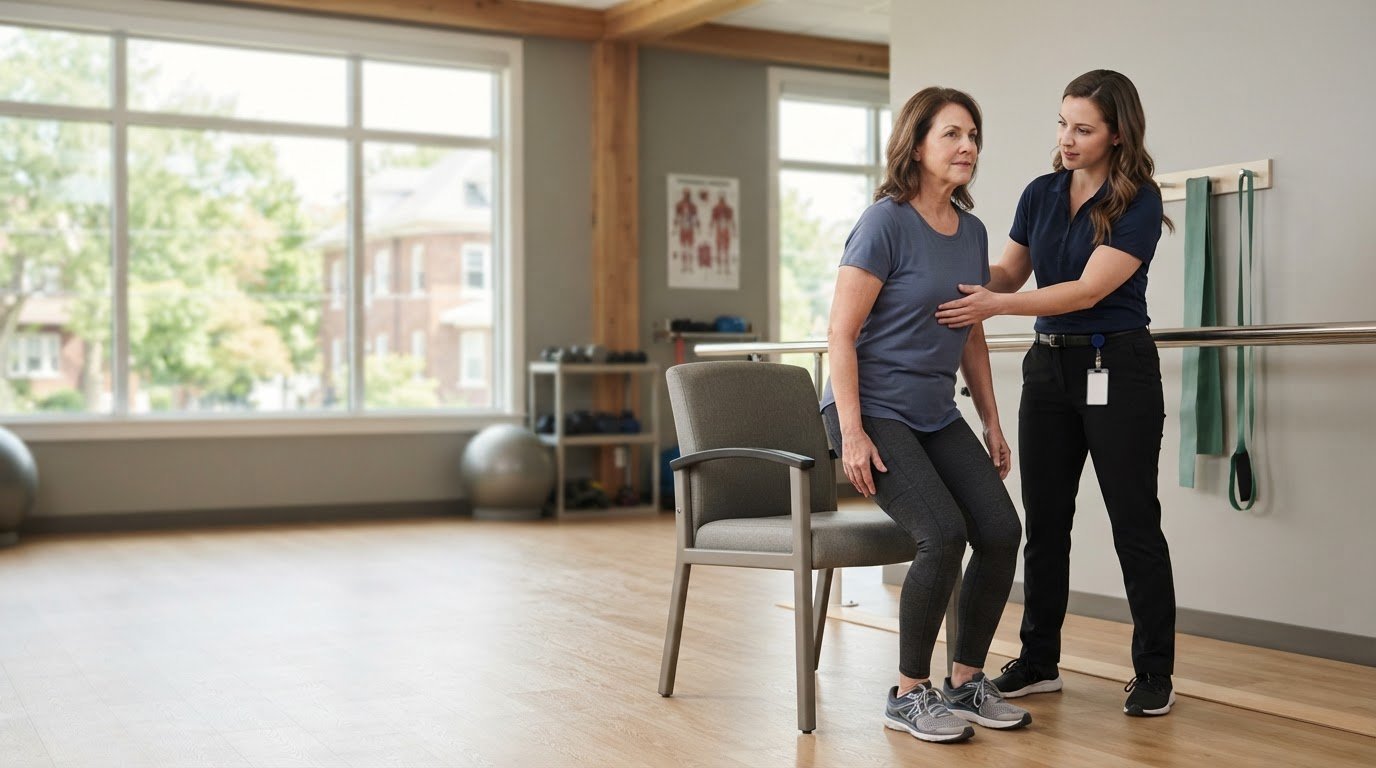
Safe movement is part of recovery, not something to postpone until you feel fully strong. Post-surgical physical restoration combines protection of the healing area with gradual movement and progressive exercise, shaped by the procedure and your recovery. Rehabilitation often moves from early mobility and symptom management toward strength and function, with higher-level activities commonly addressed over 3-6 months.
It’s understandable to worry that movement could strain the surgical area, while too little activity may contribute to stiffness and weakness. A carefully progressed plan balances protection with restoring mobility, strength, and confidence in everyday movement. This article explains how recovery stages fit together, how personalized rehabilitation and pain management can support progress, and why safe movement and gradual strengthening matter. You’ll also learn how to approach the transition from early recovery to functional activity while keeping your surgical needs at the center.
Key Takeaways
- Recovery progresses from protecting the healing area to restoring movement and function, but the pace depends on the procedure and individual recovery.
- Communicating about pain and swelling helps rehabilitation stay responsive and supports participation in movement as recovery advances.
- A personalized plan considers the surgery, overall health, recovery goals, and the surgeon’s recommendations.
- Gradual strength, balance, and mobility work can help rebuild function while reducing the risk of stiffness and compensatory movement.
- Safe everyday movement matters: learn how to sit, stand, and walk in ways that protect the surgical area during recovery.
Pain and swelling management
During the first 1-7 days after surgery, rehabilitation often prioritizes pain management, wound care, and early movement. As recovery progresses, treatment can adapt to discomfort and swelling so patients can participate safely.
Managing Pain During Rehabilitation
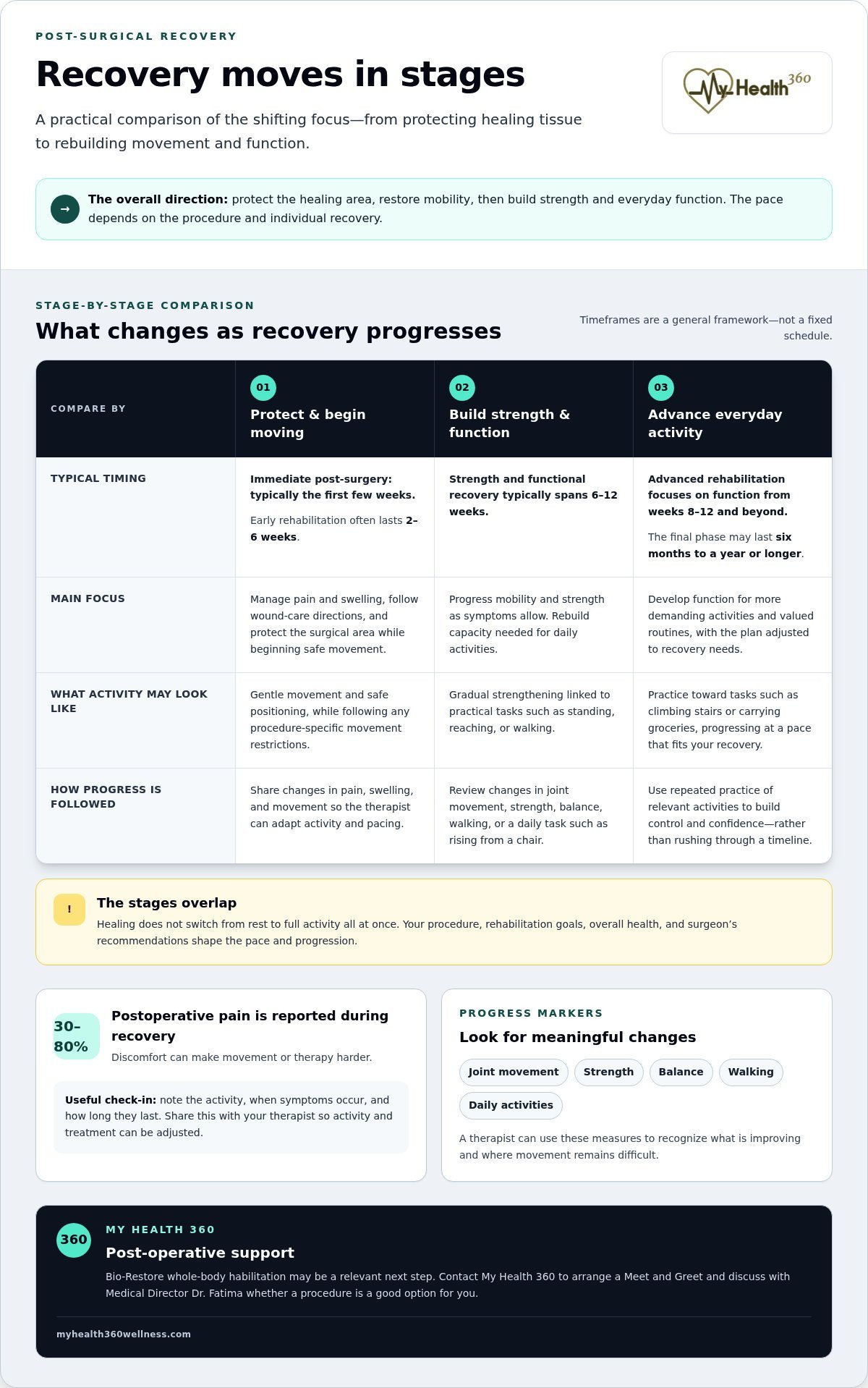
Pain management combines symptom relief with adjustments that help patients continue rehabilitation. An estimated 30-80% of people experience postoperative pain during recovery, and discomfort can make movement or therapy harder. Tell your therapist how pain changes during and after an activity, such as walking or bending a knee. That information helps guide pacing and treatment choices instead of pushing through symptoms without a plan.
Controlling Swelling and Inflammation
Swelling management may involve positioning, pacing activity, and appropriate therapies to ease symptoms as tissues heal. Depending on the procedure and recovery stage, a physical therapist may use cold or heat, gentle massage, compression, or electrical stimulation. Targeted movement can also support circulation. For example, if swelling makes a joint harder to move, a therapist can adapt an exercise and build activity as symptoms allow.
In the early phase, the surgical area may need protection or temporary immobilization while pain and swelling begin to decrease. Follow the movement restrictions and wound-care directions provided for your surgery, since the right approach depends on the procedure. A therapist can guide safe positioning and gentle activity rather than applying the same routine to every operation. The goal is to manage symptoms while preserving mobility and function.
Track what changes your discomfort: note the activity, when symptoms occur, and how long they last. Share those details with your therapist, especially if pain interferes with exercises or daily movement. The therapist can adjust positioning, activity pacing, manual techniques, or exercise intensity. Physical therapy may also include relaxation exercises and gentle massage. These approaches can complement prescribed pain care, but they do not replace guidance from your surgical team.
Does health insurance cover post-surgical rehabilitation? Coverage depends on your plan, the rehabilitation setting, and the benefits that apply to your care. Review your outpatient therapy coverage, referral or authorization requirements, and any cost-sharing before treatment begins.
How much does post-surgical physical therapy cost in the United States? There is no standard cost. The amount depends on factors such as location, care setting, session length, number of visits, and insurance benefits.
How can you find a licensed post-surgical physical therapist near you? Start with your surgeon’s referral or your health plan’s provider directory, then look for physical therapists who treat your type of surgery. Confirm the therapist’s active license through your state licensing board and ask about experience with the movements and goals relevant to your recovery.
Early, intermediate, and advanced recovery
Recovery after surgery unfolds in stages as tissue healing, movement, and daily function change. Timelines provide a general framework, but the procedure and rehabilitation goals shape the pace.
Recovery Stages and Goals
Recovery stages organize care around protection, mobility, and functional return, helping match activity to healing. The immediate post-surgery period typically covers the first few weeks, while early rehabilitation often lasts 2-6 weeks. Strength and functional recovery typically spans 6 and 12 weeks; advanced rehabilitation focuses on function from weeks 8-12 and beyond.
These stages overlap: healing does not switch from rest to full activity all at once. Early therapy may focus on gentle movement and precautions. Later, therapy can build strength and prepare you for tasks such as climbing stairs or carrying groceries. The final phase may last six months to a year or longer, depending on recovery needs.
Tracking Progress and Building Confidence
Progress monitoring compares your current abilities with recovery goals, allowing therapy to respond to meaningful changes. A therapist may track joint movement, strength, balance, walking, or a daily task such as rising from a chair. Reviewing these measures shows what is improving and where movement remains difficult.
Confidence grows through repeated practice of relevant activities, not by rushing through a timeline. Someone returning to longer walks, for example, might first work on walking steadily and comfortably. The therapist can adjust the plan as ability changes, helping you recognize progress and approach everyday movement with greater control.
Strength and Functional Recovery
Strength and functional recovery rebuild the capacity needed for daily activities and valued routines. Muscles around the surgical area can weaken after pain, swelling, or reduced activity. Rehabilitation therefore connects strengthening with practical tasks such as standing, reaching, or walking, rather than treating strength as an isolated goal.
Most patients experience significant improvement within three to six months after surgery, although rehabilitation may continue longer. Inpatient and outpatient rehabilitation together may span a few weeks to a few months. The setting and duration depend on the support and functional work needed. A gradual transition to independent home exercises can help maintain progress.
For post-operative support, Bio-Restore whole-body habilitation may be a relevant next step. Contact My Health 360 to arrange a Meet and Greet and discuss with Medical Director Dr. Fatima whether a procedure is a good option for you.
Personalized post-surgical rehabilitation plans
A personalized plan connects the operation and healing needs with practical goals. It allows physical therapy to address mobility without treating every recovery the same way.
Rehabilitation Phases and Timing
Rehabilitation phases organize care around protection, tissue repair, and rebuilding movement. They matter because the surgical area’s needs change as healing progresses. The protection phase may extend from the first few days through 2 weeks; repair commonly occurs during weeks 2-6. Remodeling begins at 6 weeks and continues beyond that point, with activities adapted to healing and function.
Physical therapy may start during early recovery, including the first 1-7 days when care can focus on early mobilization. The timing and permitted techniques depend on the procedure and postoperative instructions. Rehabilitation can involve movement practice, exercise, manual techniques, and education about precautions and home activities. The plan should fit the operation rather than follow a fixed calendar.
Therapy Frequency and Recovery Timelines
Therapy frequency is tailored to the surgery, recovery goals, and changes in function. The plan may be adjusted as mobility improves or symptoms affect participation. A therapist can use progress with specific tasks, such as walking or reaching, to guide the next session and home exercises. No single attendance schedule fits every operation.
How do rehabilitation timelines differ by type of surgery? The affected area, surgical restrictions, tissue healing, and starting function all shape the plan. A joint procedure may emphasize mobility and safe loading, while other operations call for different precautions and functional goals.
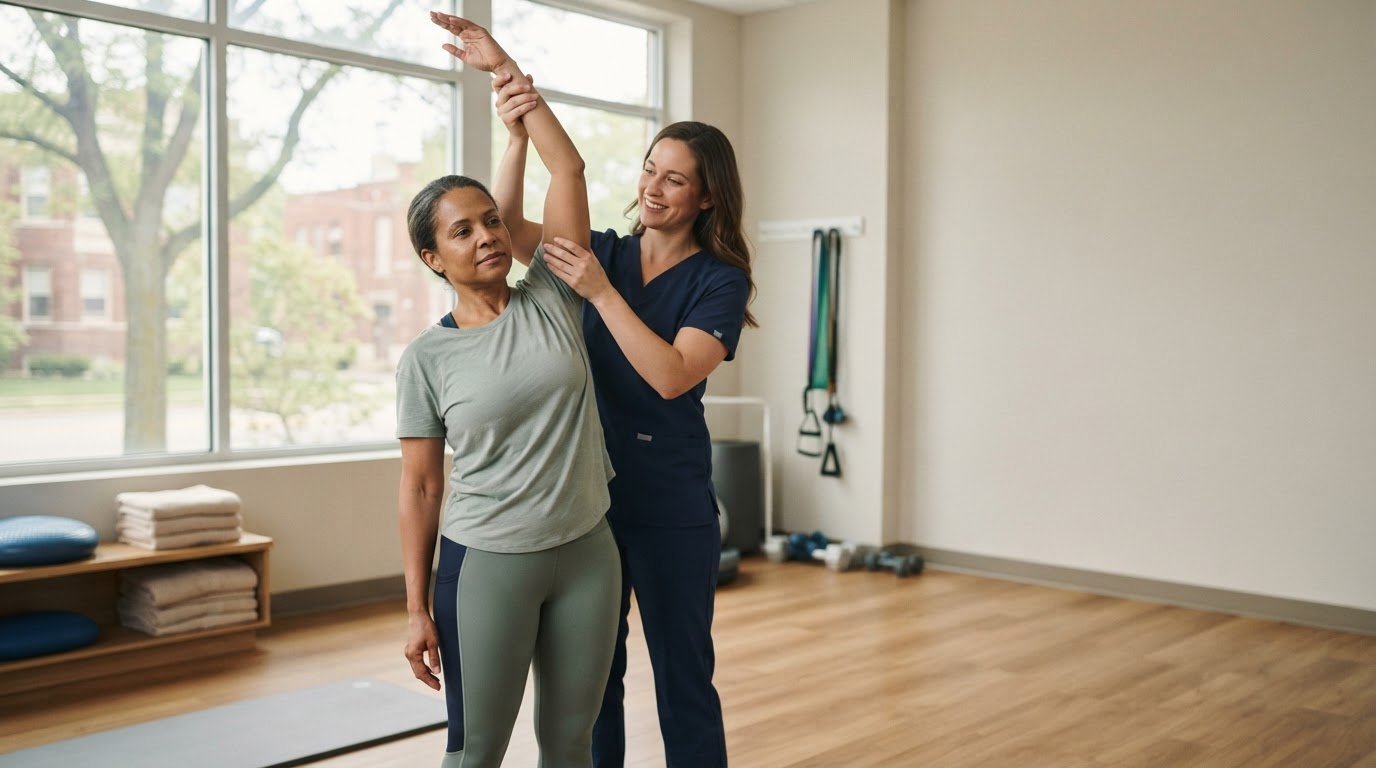
Hand and upper-extremity rehabilitation focuses on the specific needs of the hand, wrist, arm, or shoulder. A hand therapist can tailor exercises and movement practice to the procedure and daily tasks, such as gripping a cup or fastening clothing. Protecting healing tissue while restoring useful motion helps support independence.
What does post-surgical physical rehabilitation involve? It may include assessment, individualized exercises, manual techniques, education, and a home program. How often should you attend physical therapy after surgery? Frequency depends on procedure-specific needs, progress, and goals, and can be adjusted as function changes.
What warning signs after surgery require urgent medical attention? Concerning changes around the wound or a sudden change in recovery warrant prompt contact with your surgical team. Follow your postoperative instructions for wound care and urgent symptoms, since they reflect your procedure and its risks.
Hand therapists can design personalized rehabilitation programs for people recovering from hand and upper-extremity conditions, injuries, or surgery. The clinic develops post-surgical rehabilitation plans around each patient’s surgery, overall health, and recovery goals, in collaboration with the patient and their surgeon’s recommendations.
Challenges after surgery can include surgical trauma, tissue damage, immobility, scar tissue, adhesions, infection, nerve damage, and pre-existing health conditions that affect recovery. Physical therapists create individualized plans based on each patient’s recovery objectives. The clinic’s rehabilitation goal is to help patients regain their pre-surgery functional abilities and potentially surpass them.
Progressive strength training
Strength training after surgery builds gradually alongside mobility and flexibility work. Progression should reflect healing, the procedure, and the movements needed for daily function.
Gradually Rebuilding Strength
Progressive strengthening increases exercise demand in measured steps, helping muscles regain capacity without skipping recovery stages. During weeks 1-4, rehabilitation may build range of motion and begin strengthening muscles around the surgical area. The pace depends on healing and surgical precautions, so the goal is steady, appropriate progress rather than reaching a particular load quickly.
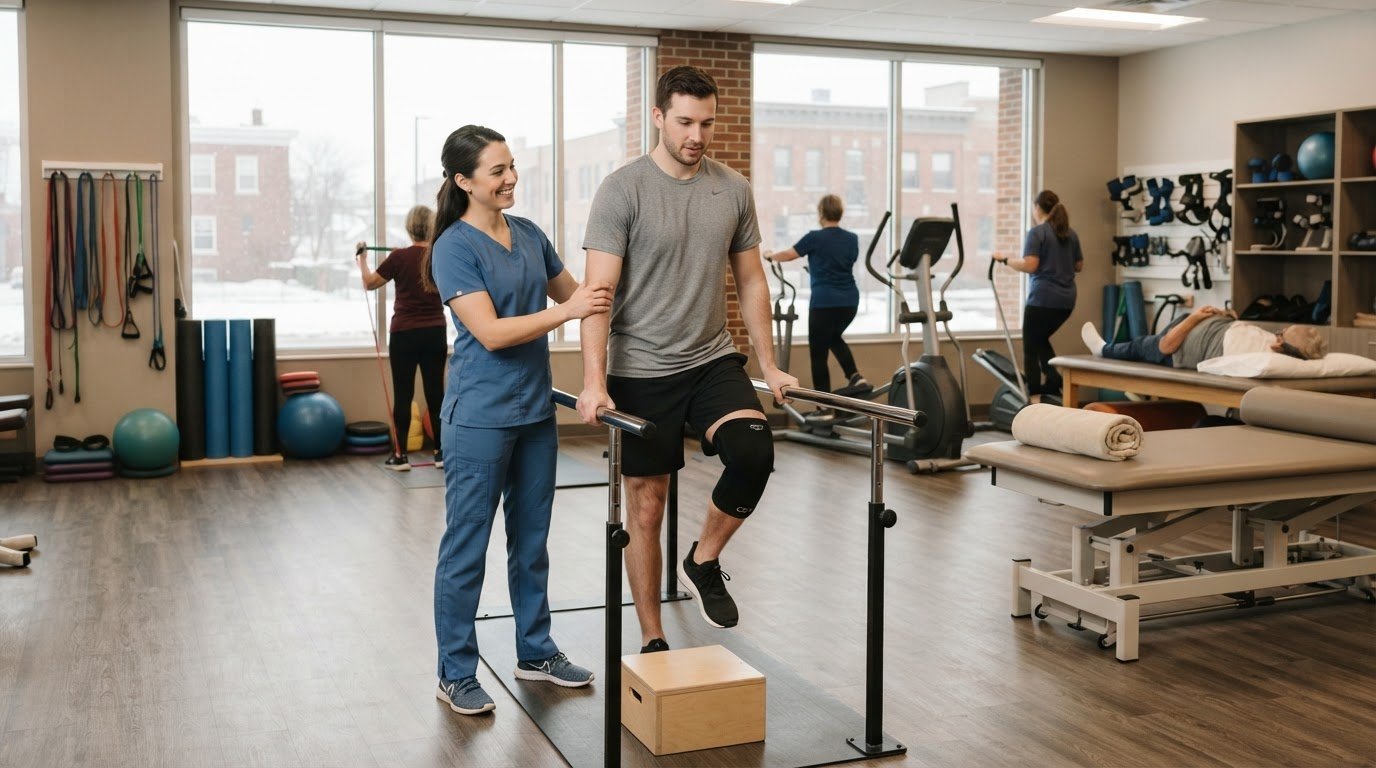
For example, after lower-body surgery, a program may progress from supported movement to more active strengthening as function improves. Repetitions, resistance, and range of motion can be adjusted separately. If movement quality declines, the exercise can be modified before adding more demand. This approach connects muscle work with useful mobility and supports a gradual return to everyday activity.
Muscles can weaken after surgery because of swelling, discomfort, or reduced activity. Targeted exercise addresses affected muscle groups while preserving movement in nearby joints. Range-of-motion work also supports flexibility, which may become limited during recovery. Gradually increasing exercise intensity gives the body time to adapt as strength and function develop.
Strengthening Movement Patterns
Movement retraining pairs strengthening with the way you perform everyday actions. This matters because strength alone does not ensure that walking, standing, or reaching feels coordinated. A therapist can observe a task, identify compensatory movement, and select exercises to help restore a more controlled pattern.
For instance, someone rebuilding leg strength may practice controlled standing and stepping, as appropriate for their recovery. During weeks 4-8, rehabilitation may progress strengthening while adding balance and proprioceptive training. These elements help connect muscle control with stability during movement, rather than focusing only on isolated exercises.
Building Joint Stability
Joint stability training develops the strength and control needed to support movement. It matters because a joint may feel less secure when surrounding muscles are weak or coordination has changed. Exercises can combine strengthening with balance practice, particularly during recovery after lower-body surgery.
Progressive exercises aim to improve range of motion, stability, and function. A therapist can adjust the challenge by changing support, movement range, or task complexity. For example, balance work may progress in a controlled setting before similar demands arise in daily activities. As function improves, an independent home exercise program can help maintain strength and support independence.
Strength rebuilding is not a straight line from surgery to full activity. Advanced rehabilitation may transition toward independent exercise and a gradual return to work or recreation. Matching each exercise to current ability helps develop useful strength, mobility, and confidence without treating the calendar as proof of readiness.
Safe movement and protection of the surgical area
Safe movement means staying active within the precautions set for your operation. Physical therapy can help you practice daily tasks while protecting healing tissue and rebuilding function.
Protecting the Surgical Area
Protection combines procedure-specific precautions with controlled movement, so healing tissue is not exposed to demands it cannot yet manage. Your therapist can teach you how to sit, stand, and walk while limiting strain on the surgical area. For example, practicing a supported sit-to-stand transition can make an essential daily movement more controlled.
Postoperative education also covers positioning, body mechanics, and activities at home. Follow the movement restrictions and wound-care instructions provided for your surgery, and use therapy to practice tasks that fit those directions. Safe movement does not mean avoiding all activity: guided mobility can help limit stiffness while supporting circulation and function.
During a practical session, a therapist might observe how you rise from a chair, then adjust your foot position or support. The same principle applies to walking: use the movement strategy taught for your recovery rather than changing your gait to avoid discomfort. Manual therapy or positioning guidance may also support mobility when appropriate for your plan.
Risks of Returning Too Soon
Returning too soon means resuming activity beyond the healing area’s current capacity. This matters because excessive demands can aggravate discomfort and interfere with safe movement. What are the risks of returning to activity too soon after surgery? You may strain healing tissue or develop compensatory movement patterns, while too little guided movement can contribute to muscle weakness and joint stiffness.
Rehabilitation balances protection with activity. A therapist can break a goal, such as walking farther or returning to household tasks, into manageable movement demands. Progress should reflect your function and your procedure’s precautions, not pressure to match someone else’s timeline. Tell your therapist if a task changes your symptoms or movement.
Safe movement also helps prevent complications associated with immobility, including blood clots, muscle atrophy, and joint stiffness. Appropriate activity depends on the operation and its restrictions. Physical therapy can teach movement strategies and help you regain function through guided practice, rather than leaving you to guess which activities are suitable.
Contact My Health 360 to arrange a Meet and Greet appointment and discuss with Medical Director Dr. Fatima whether a procedure is a good option for you.
Physical therapists can teach you to sit, stand, and walk safely during recovery. Use practice sessions to make sure each movement follows your operation’s precautions and wound-care directions. Work through everyday transitions at a pace that keeps you in control, and ask your therapist to adjust the approach if a movement feels difficult or changes your symptoms. When walking or changing position, follow the strategy taught for your recovery instead of improvising to avoid discomfort. Keep activity within the limits set for healing, and discuss a task before increasing its demands. This connects daily movement with the protection and functional goals of rehabilitation.
My Health 360: Emsculpt Neo
My Health 360 offers Emsculpt Neo and Bio-Restore, a post-operative and injury whole-body habilitation program. After surgery, Bio-Restore may be relevant for people seeking structured whole-body support alongside recovery guidance. Emsculpt Neo is another offering, but this section does not establish when it is appropriate during post-surgical recovery. The timing and suitability of any procedure depend on your healing, activity restrictions, and individual goals.
For a thoughtful next step, contact My Health 360 to arrange a Meet and Greet appointment and discuss with Medical Director Dr. Fatima whether a procedure is a good option for you.
Choose a thoughtful next step for recovery
Let your next step reflect what you want to regain, whether that means moving more comfortably, rebuilding strength, or preparing for a future procedure. Post-surgical physical restoration is a personal process, and a conversation about your goals can help clarify which type of support may fit. My Health 360 offers Bio-Restore for post-operative or injury whole-body habilitation, BioPrime for pre-operative or pre-event whole-body habilitation, and Emsculpt Neo. These offerings have distinct purposes, so the discussion should center on your circumstances and what you hope to achieve.
Contact My Health 360 to arrange a Meet and Greet appointment and discuss with Medical Director Dr. Fatima whether a procedure is a good option for you. Request a Meet and Greet and take a considered step toward your next recovery goal.
Frequently Asked Questions
What are the typical stages of recovery after surgery?
Post-surgical physical restoration generally progresses from protecting the surgical area to restoring mobility, building strength, and returning to functional activity. Judge progress by what you can do safely, not by the calendar alone. A milestone might be completing a daily task with controlled movement, then working toward a more demanding version. Your procedure’s precautions and changes in function shape how these stages unfold.
What exercises are commonly prescribed after surgery, and which should be avoided?
Common exercises include gentle range-of-motion work, strengthening, balance practice, and walking, selected to fit the procedure and recovery goals. In post-surgical physical restoration, there is no universal list of exercises to avoid. Follow your postoperative instructions, and do not add movements or resistance that conflict with them. For example, if your instructions limit a joint’s range, avoid exercises beyond that limit until your care team updates the guidance.