

What if your healthcare investment was measured not by the absence of illness, but by the deliberate accumulation of biological equity? For many, the traditional insurance-based model has become a source of profound frustration, defined by fragmented specialist visits and a reactive approach to “sick care” that often ignores the nuances of human longevity. You’ve likely felt the friction of hidden fees and the lack of a cohesive, professional strategy for your long-term vitality. It’s natural to seek a more transparent, integrated alternative that prioritizes a personalized physiological roadmap over a one-size-fits-all solution.
This comprehensive guide clarifies the concierge medicine cost in 2026, providing the clinical and financial context you need to evaluate this investment. We’ll explore how moving toward a physician-led membership model offers a measurable ROI through proactive performance optimization and direct access to expert care. You’ll learn about the latest shifts in HSA eligibility and how an integrated approach to aesthetics and internal medicine creates a foundation for sustained health. We’ll outline the strategic value of having a dedicated medical guide to curate your path toward peak physical performance.
Key Takeaways
- Understand why concierge medicine cost serves as a strategic investment in biological equity, prioritizing long-term longevity over simple, reactive sick-care models.
- Explore the clinical advantages of smaller patient panels, allowing for extended physician consultations and the integration of advanced performance technologies.
- Learn how “Whole Body Habilitation” programs like BioPrime and Bio-Restore provide a structured, professional roadmap for both pre-operative and post-injury recovery.
- Identify the economic and physical benefits of a proactive medical approach that focuses on early detection and the optimization of key health markers.
- Discover how to effectively combine concierge physician access with your existing high-deductible health plan to ensure comprehensive, 360-degree care.
Understanding the Concierge Medicine Model and Pricing Tiers
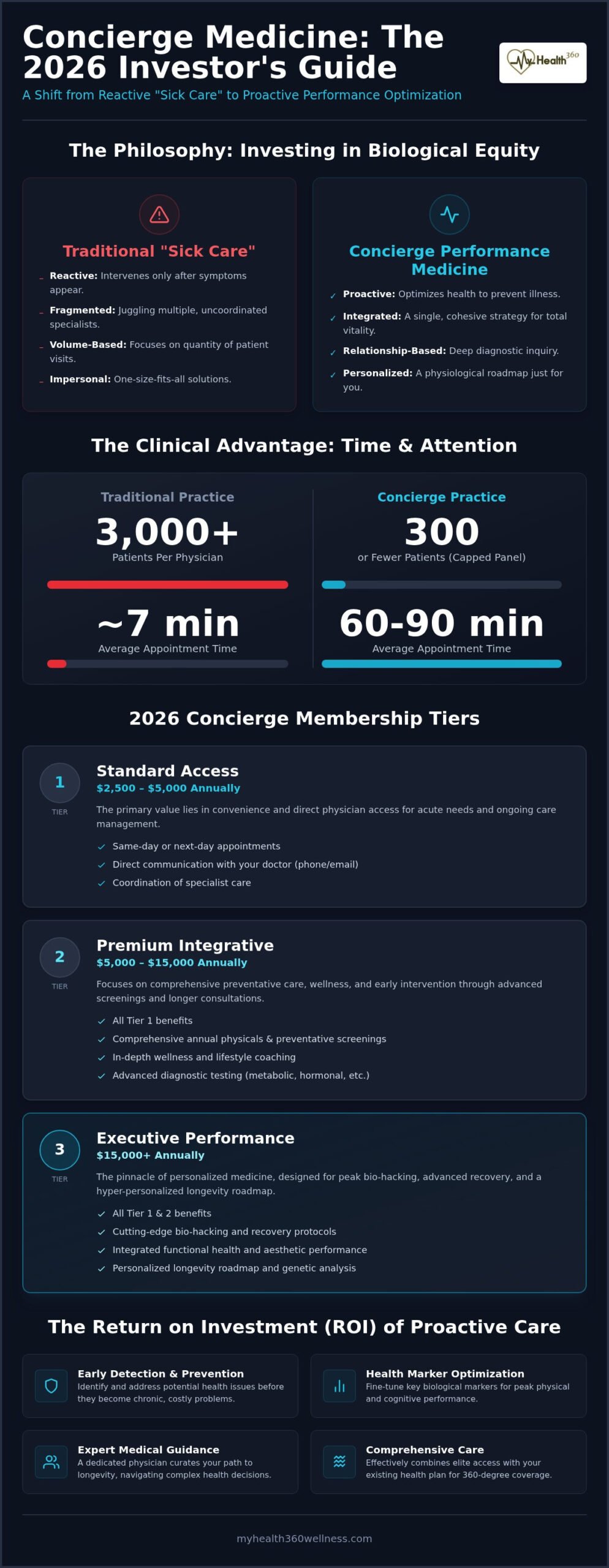
What defines the modern concierge experience? It isn’t just about avoiding a crowded waiting room or securing a same-day appointment. At its core, the Concierge Medicine Model represents a fundamental shift from volume-based care to relationship-based medicine. By maintaining significantly lower patient-to-physician ratios, often capped at a few hundred individuals rather than the thousands seen in traditional practices, physicians can dedicate the time necessary for deep diagnostic inquiry. When evaluating the concierge medicine cost, you’re essentially investing in the physician’s undivided attention and a proactive strategy for your long-term vitality.
High-end practices in 2026 have moved beyond “sick care,” where intervention only occurs after symptoms manifest. Instead, they focus on performance medicine. This discipline views the human body as a high-performance system that requires constant tuning and optimization. This transition is why many professionals now view their membership fee not as an expense, but as a contribution toward their biological equity. It ensures that every aspect of health, from metabolic markers to aesthetic goals, is managed under a single, authoritative medical lens.
Concierge Medicine vs. Direct Primary Care
While often grouped together, the fee structures of Direct Primary Care (DPC) and concierge medicine differ significantly. DPC models typically bypass insurance entirely, charging a flat monthly fee that covers all primary care services. In contrast, concierge medicine usually functions as a premium overlay. You still maintain your health insurance for specialist visits and hospitalizations, while the membership fee provides elite access and services that insurance doesn’t cover. This includes intensive specialist coordination and a level of diagnostic depth that traditional models can’t facilitate. A physician-led concierge model is critical here; it provides the academic rigor needed to navigate complex longevity planning and integrated treatments safely.
The Three Tiers of Membership in 2026
The market for personalized care has matured into three distinct tiers, each reflecting a different level of clinical involvement. National averages for these memberships vary based on the depth of service provided.
- Tier 1: Standard Access. These memberships generally range from $2,500 to $5,000 annually. The primary value lies in convenience, offering same-day appointments and direct communication with the doctor during business hours.
- Tier 2: Premium Integrative. Often priced between $5,000 and $15,000 per year, this tier introduces comprehensive preventative screenings. It focuses on wellness and early intervention, often including more frequent, longer consultations.
- Tier 3: Executive Performance. This ultra-premium tier can exceed $15,000 annually. It’s designed for those seeking the pinnacle of bio-hacking, advanced recovery protocols, and a hyper-personalized longevity roadmap that integrates both functional health and aesthetic performance.
What Drives the Cost: Behind the Membership Fee
Why does the concierge medicine cost vary so significantly between different practices? The answer lies in the clinical infrastructure and the depth of physician involvement required to maintain elite health standards. When you engage with a physician-owned longevity center, your membership fee finances a specialized environment where an American Board Certified Internal Medicine specialist manages every facet of your physiological profile. This high-level oversight ensures that aesthetic goals and functional performance are never treated in isolation but are managed as part of a cohesive biological strategy that requires meticulous attention to detail.
Panel Size and the Luxury of Time
Traditional primary care physicians often manage panels of 3,000 patients or more. This volume mathematically restricts them to approximately seven minutes per patient encounter, a pace that favors reactive “sick care” over proactive optimization. Concierge models disrupt this by capping panels at 300 or fewer individuals. This reduction isn’t merely for convenience; it’s a clinical necessity. It transforms the standard visit into a 60 to 90 minute dialogue, allowing your physician the time needed for deep diagnostic discovery. This “luxury of time” enables the identification of subtle physiological shifts and metabolic trends before they manifest as chronic illness, providing a level of precision that traditional models simply can’t offer.
Advanced Diagnostic and Therapeutic Technology
The overhead of a high-performance practice includes the acquisition and maintenance of sophisticated medical-grade technology. Integrating whole body red light therapy and Low-Level Laser Therapy (LLLT) into a clinical setting requires significant investment in both hardware and specialized training. Advanced body contouring technologies like Emsculpt Neo, which utilizes HIFEM energy, and Morpheus8, which leverages Radiofrequency (RF), demand expert oversight to ensure patient safety and optimal tissue response. These aren’t merely aesthetic enhancements. They’re medical procedures that rely on a physician’s deep understanding of anatomy and recovery protocols to drive measurable performance outcomes.
Beyond the visible technology, there’s the significant administrative burden of high-touch care coordination. This includes specialist advocacy and the synthesis of fragmented medical data into a single, actionable plan. For those Navigating Medicare with Concierge Care, understanding how these fees complement existing coverage is a vital step in financial planning. This level of dedicated advocacy ensures that you’re never navigating the complexities of the healthcare system alone. If you’re seeking a more disciplined approach to your vitality, you might consider how a physician-led performance membership can serve as the foundation for your long-term wellness goals.
Beyond the Basics: Performance and Longevity Value Add
Why should your medical care stop at the simple absence of disease? In a high-performance practice, the concierge medicine cost isn’t merely a fee for access; it’s an investment in “Whole Body Habilitation.” This concept transcends traditional primary care by treating the body as an integrated system that requires both functional maintenance and aesthetic refinement. Research into The Value of Concierge Medicine suggests that the economic benefit of this model lies in its ability to provide highly specialized, proactive oversight that traditional insurance models often neglect. By merging clinical rigor with advanced wellness technologies, you create a foundation for sustained longevity that reactive models can’t match.
BioPrime and Bio-Restore: Performance Habilitation
Central to this approach are specialized programs like BioPrime and Bio-Restore. BioPrime focuses on pre-operative or pre-event optimization. It ensures your body is in a peak biological state before undergoing significant physical stress, which dramatically improves surgical or athletic outcomes. Conversely, Bio-Restore serves as an intensive post-operative or post-injury recovery protocol. It uses targeted medical interventions to accelerate healing and restore functional integrity. These programs don’t just improve quality of life; they reduce long-term healthcare costs by ensuring that initial treatments succeed and that you avoid the physical decline often associated with prolonged recovery periods. When calculating the concierge medicine cost, it’s essential to account for the value of these specialized habilitation protocols.
Integrative Aesthetics and Medical Oversight
The clinical synergy between internal medicine and medical aesthetics represents the next frontier of performance care. When a physician oversees your Morpheus8 treatment or Emsculpt Neo sessions, the focus shifts from surface-level beauty to anatomical health. This physician-led oversight is a cornerstone of integrative medicine for longevity, ensuring that every procedure aligns with your overall metabolic and physiological roadmap. It removes the guesswork often found in fragmented aesthetic clinics and replaces it with a disciplined medical strategy.
Integrative care also includes access to medical gym memberships and IV hydration, which work in tandem with your primary care plan. These aren’t standalone treatments but are clinically managed components of your performance strategy. Having an internal medicine expert guide these aesthetic and performance interventions provides a level of safety and precision that’s absent in non-medical environments. It ensures that your outward appearance reflects an inward state of health, creating a harmonious balance between performance and aesthetics.
The ROI of Proactive Care: Is Concierge Medicine Worth the Investment?
How do you quantify the value of a decade of peak physical performance? When assessing concierge medicine cost, the focus must shift from short-term fees to the long-term return on biological equity. The traditional reactive model waits for symptoms to appear before intervening, often leading to costly treatments for advanced conditions that could’ve been managed earlier. In contrast, a proactive model led by an internal medicine expert focuses on optimizing health markers today to prevent chronic decline tomorrow. This early detection has clear economic value, as preventing a single major medical event often outweighs the annual cost of a premium membership.
For high-achieving professionals, the “Productivity ROI” is often the most compelling metric. Downtime caused by illness or fragmented care is a significant financial drain that many simply can’t afford. Having direct access to a physician who understands your specific physiological roadmap ensures that minor issues are addressed before they compromise your performance. A framework for calculating this value includes three key pillars: the time saved by avoiding fragmented appointments, the risk mitigated through deep diagnostic discovery, and the performance gained through optimized metabolic health.
Traditional Care vs. Concierge Longevity
Traditional high-volume practices are engineered for throughput, often resulting in weeks-long wait times and rushed, seven-minute visits. These environments increase the risk of “missed diagnoses,” where subtle metabolic shifts are overlooked until they become symptomatic. Concierge longevity care provides the depth necessary for comprehensive preventative screenings and seamless specialist coordination. If a medical crisis occurs, your physician acts as a dedicated advocate, ensuring your care is integrated rather than scattered across disconnected systems. This high-touch coordination prevents the administrative friction that typically plagues insurance-based models.
The Cost of Physical Decline
Protecting your functional integrity is a far more strategic financial move than attempting to restore it after a significant loss. Concierge performance medicine is designed to delay the onset of age-related dysfunction by utilizing advanced interventions early in the aging process. For instance, maintaining pelvic health through Emsella treatments is a disciplined, non-invasive alternative to the high cost and recovery time of future surgical intervention. By preserving your physical health, you effectively extend your “wealth-building years,” allowing you to remain active and productive well into your later decades. If you’re ready to secure your biological future, explore how our physician-led performance membership can transform your approach to longevity.
Navigating Your Membership: Integrating Concierge Care
Integrating the concierge medicine cost into your broader financial strategy requires a nuanced understanding of how premium care interacts with traditional insurance frameworks. For those utilizing High-Deductible Health Plans (HDHP), concierge care acts as a specialized overlay that manages your daily performance while the HDHP provides a safety net for catastrophic events. Transitioning from a traditional, high-volume practice to this model involves a fundamental shift in mindset; you’re moving from a patient who is merely “seen” to a partner who is actively “managed.” Central to this partnership is a physician-guided longevity plan, which serves as a living document that evolves alongside your physiological data and performance milestones.
HSAs, FSAs, and Membership Fees in 2026
When interviewing a potential physician, your inquiry should focus on their clinical philosophy regarding the intersection of internal medicine and performance aesthetics. Start with these targeted questions:
- What is your specific philosophy on performance and longevity versus standard preventative care?
- How do you integrate aesthetic treatments like Morpheus8 or Emsculpt Neo with functional medical oversight?
- What specific physiological markers do you prioritize when adjusting my longevity roadmap?
The ideal physician-patient partnership for longevity is a disciplined, data-driven collaboration where clinical expertise and personal performance goals achieve a state of biological harmony. The process of transitioning is methodical, beginning with a comprehensive review of your medical history and an initial consultation to ensure alignment on long-term objectives. This allows your new physician to assume the role of an authoritative guide, streamlining your path toward peak physical state and ensuring your healthcare investment yields a measurable return in vitality.
Securing Your Biological Future through Strategic Healthcare
Choosing a personalized medical model is a profound commitment to your future self. It represents a fundamental shift from reactive symptom management to a disciplined, data-driven strategy for sustained vitality. When you evaluate the concierge medicine cost, remember that you are financing a clinical infrastructure designed for precision. This investment secures the academic rigor of an American Board Certified Internal Medicine specialist and the integration of specialized habilitation protocols like BioPrime and Bio-Restore. These programs ensure your body remains in a peak state, whether you are preparing for a major physical event or recovering from injury.
By merging functional health with aesthetic performance, you create a harmonious path toward longevity. This physician-owned performance center provides the specialized oversight necessary to navigate the complexities of modern medical technology safely and effectively. You deserve a healthcare partner who views your body through a holistic lens and prioritizes your physical integrity over the long term. Taking control of your health today is the most strategic move you can make for your future productivity and quality of life.
Ready to redefine your approach to wellness? Optimize your performance with a Physician-Led Concierge Consultation and begin building your biological equity today. Your journey toward peak longevity starts with a single, informed decision.
Frequently Asked Questions
Is concierge medicine the same as a medical spa?
No. Concierge medicine is a physician-led primary care model focused on internal medicine and longevity. While it may integrate aesthetic treatments like Morpheus8 or Emsculpt Neo, it’s rooted in allopathic expertise and clinical oversight. Medical spas often focus on superficial treatments without the deep diagnostic integration or the continuous physician-patient relationship found in a concierge practice. This professional structure ensures that every procedure aligns with your broader physiological roadmap.
Does concierge medicine replace my regular health insurance?
Regular health insurance remains a necessity even with a membership. You still require traditional coverage to handle hospitalizations, specialist visits, and emergency room care. The concierge membership fee provides direct access to your physician and performance-driven services that insurance models typically exclude. It’s often paired with a High-Deductible Health Plan to ensure comprehensive coverage for both preventative optimization and catastrophic medical events, providing a 360-degree approach to your health. To ensure your underlying coverage is optimized for this transition, you can check out Medicare Mentors for expert guidance.
Generally, membership fees for access are not eligible for HSA or FSA reimbursement. However, the specific clinical services, laboratory tests, and diagnostic screenings performed during your care often qualify as medical expenses. It’s a disciplined approach to use pre-tax dollars for the scientific components of your plan while paying the access fee separately. Regulations in 2026 have updated DPC rules, but concierge models remain distinct due to their insurance-billing structure.
How much does a typical concierge medicine membership cost per month?
Monthly costs vary based on the tier of service and clinical depth provided. National averages suggest that entry-level access often starts around $100 to $200 per month, while elite performance-focused memberships can exceed $1,000 per month. When evaluating the concierge medicine cost, consider the value of extended physician time, advanced diagnostic technology, and the integration of performance habilitation programs like BioPrime to ensure a high return on your investment.
Are lab tests and imaging included in the concierge membership fee?
Diagnostic tools like blood panels or MRIs are usually billed separately to your insurance or paid out-of-pocket. While the membership fee covers the physician’s time and specialized care coordination, these external diagnostics remain separate costs. However, a concierge physician provides the significant benefit of synthesizing these results into a cohesive longevity roadmap. This ensures every data point is used to optimize your metabolic health rather than just identifying standard ranges.
Is concierge medicine worth it if I am currently healthy?
Yes, because it shifts the focus from treating illness to optimizing biological equity. For healthy individuals, the concierge medicine cost is an investment in proactive longevity and performance. By identifying subtle metabolic shifts early, you can delay age-related decline and maintain a peak physical state. This proactive strategy preserves your wealth-building years and ensures you aren’t just living longer, but living with much higher functional integrity and vitality.
How does concierge care improve post-operative recovery?
Clinical programs like Bio-Restore provide a structured, physician-led protocol to enhance healing. This program uses advanced technologies like red light therapy and LLLT to accelerate tissue repair and restore functional strength. Unlike traditional models where post-op care is often fragmented, concierge medicine ensures continuous oversight. This professional coordination reduces the risk of complications and ensures a more rapid return to your baseline physical performance, effectively minimizing your total recovery downtime.
What is the difference between concierge medicine and Direct Primary Care?
The primary difference lies in insurance integration. Direct Primary Care (DPC) typically bypasses insurance entirely, charging a flat fee for all primary care services. Concierge medicine usually bills insurance for clinical visits while the membership fee provides elite access and non-covered performance treatments. Concierge models often provide a higher level of specialist advocacy and diagnostic depth, making them better suited for those seeking a sophisticated blend of internal medicine and aesthetic integration.