
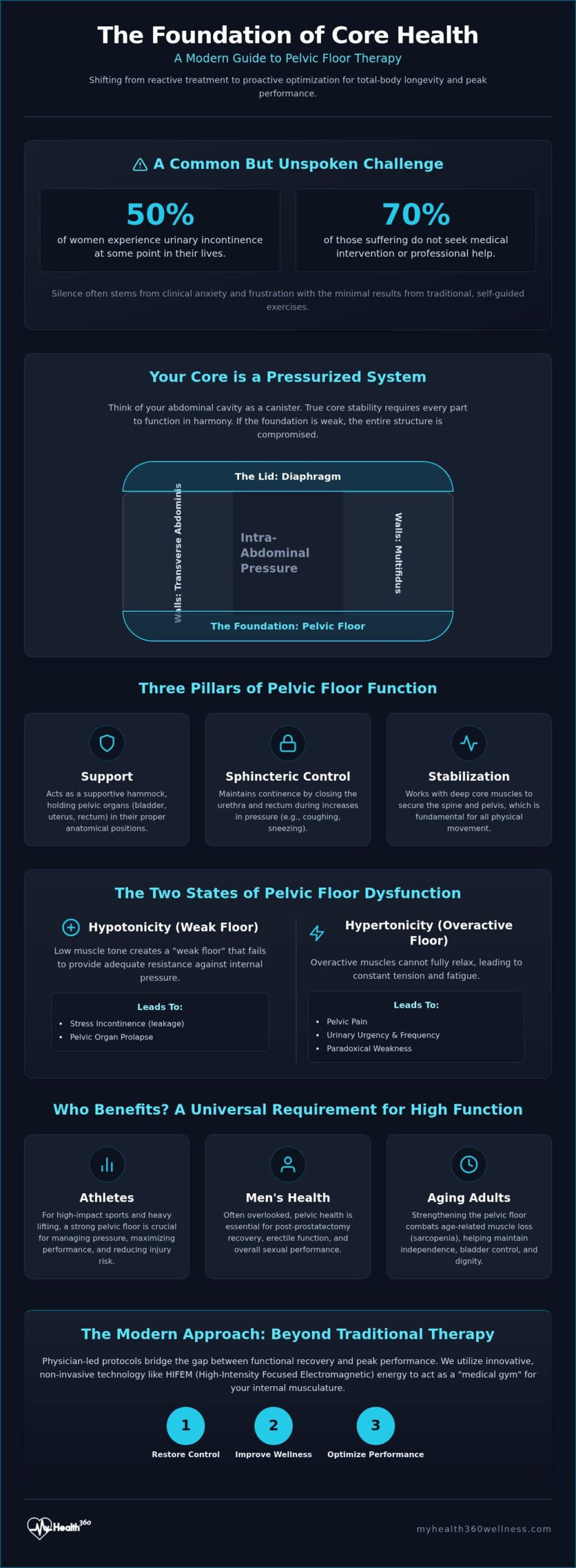
Did you know that nearly 50% of women experience urinary incontinence, yet an estimated 70% of those suffering do not seek medical intervention? This silence often stems from a combination of clinical anxiety and the frustration of seeing minimal results from traditional, self-guided exercises. If you’ve ever felt that your core stability is disconnected from your internal health, or if you’ve worried about the invasive nature of standard physical exams, your concerns are both valid and common. Modern pelvic floor therapy is no longer just a reactive treatment for dysfunction; it is a sophisticated, proactive strategy for total-body longevity and core performance.
In this comprehensive guide, you’ll discover how advanced pelvic floor therapy restores essential neuromuscular control, improves intimate health, and stabilizes the body’s physical foundation. We will explore the intersection of clinical expertise and innovative technology, such as the non-invasive Emsella chair, which functions as a medical gym for your internal musculature. By understanding the transition from basic recovery to optimized performance, you can regain confidence in your body’s most fundamental functions and achieve a state of lasting physical harmony.
Key Takeaways
- Understand why the pelvic floor is the essential foundation of your core stability and a critical component of total-body longevity.
- Identify the physiological differences between muscle weakness and overactivity to ensure your treatment addresses the root cause of dysfunction.
- Discover how non-invasive pelvic floor therapy using HIFEM technology provides a modern, efficient alternative to traditional internal manual therapies.
- Learn how physician-led protocols at My Health 360 bridge the gap between functional recovery and peak athletic performance.
- Explore the connection between pelvic health, improved bladder control, and enhanced intimate wellness through personalized clinical care.
What is Pelvic Floor Therapy? Understanding the Foundation of Core Health
What exactly constitutes the “core” in modern wellness? Most people visualize the rectus abdominis or the “six-pack” muscles, yet the true foundation of human stability lies much deeper. Pelvic floor physical therapy addresses the intricate network of muscles, ligaments, and connective tissues that reside at the base of the pelvis. Pelvic floor therapy is a clinical discipline that restores neuromuscular control to the pelvic diaphragm. At My Health 360, we view this work through a lens of aesthetic sensitivity and clinical rigor, ensuring that every patient feels heard and supported through a personalized approach to health.
Think of your abdominal cavity as a pressurized canister. The diaphragm is the lid, the transverse abdominis and multifidus are the walls, and the pelvic floor is the literal floor. If this floor is compromised, the entire system loses its structural integrity. We’re witnessing a necessary shift from reactive treatment, which focuses solely on fixing existing problems like leakage or pain, to proactive optimization. This approach views pelvic health as a cornerstone of longevity, ensuring the body’s foundation remains resilient against the stressors of time and activity.
The Functional Role of the Pelvic Diaphragm
The pelvic diaphragm isn’t a static structure; it’s a dynamic system with three primary responsibilities. First, it provides essential support by acting as a hammock that keeps pelvic organs, including the bladder, uterus, and rectum, in their proper anatomical positions. Second, it serves a sphincteric function, maintaining continence by closing the urethra and rectum during sudden increases in intra-abdominal pressure, such as coughing or sneezing. Finally, it plays a vital role in stabilization. By working in concert with the deep abdominal muscles, it secures the spine and pelvis, which is fundamental for every physical movement from walking to high-intensity training.
Who Can Benefit? Beyond the Post-Partum Narrative
While post-partum recovery is a significant focus of our Women’s Health services, pelvic health is a universal requirement for high-level function. The following groups often find that focused therapy unlocks new levels of wellness:
- Athletes: High-impact sports and heavy lifting require precise management of intra-abdominal pressure. If the pelvic floor can’t meet these demands, performance suffers and the risk of injury increases.
- Men’s Health: Men often overlook this area, but it’s essential for prostate-related recovery and maintaining sexual performance.
- Aging Adults: Sarcopenia, the natural loss of muscle mass with age, affects the pelvic floor just like any other muscle group. Strengthening these tissues is a cornerstone of maintaining independence and dignity throughout the aging process.
This integrative perspective is why Dr. Umbrine Fatima incorporates pelvic health into our Concierge Performance Medicine programs. It isn’t just about addressing a single symptom. It’s about building a body that performs with harmony and precision for decades.
The Anatomy of Dysfunction: Why Pelvic Muscles Fail
Why do the muscles of the pelvic floor, which are designed for constant resilience, eventually lose their functional integrity? Dysfunction within this complex system typically manifests in two distinct states: hypotonicity and hypertonicity. Hypotonicity, or low muscle tone, creates a “weak floor” that fails to provide adequate resistance against internal pressure. This is the primary driver of stress incontinence and pelvic organ prolapse. Conversely, hypertonicity involves overactive muscles that cannot fully relax. This state of constant tension leads to pelvic pain, urgency, and a paradoxical weakness where the muscle is too fatigued to function correctly. Understanding these nuances is essential when embarking on pelvic floor therapy, as the treatment for a weak muscle differs significantly from the treatment for a tight one.
Beyond simple muscle tone, pelvic health is deeply influenced by systemic factors such as chronic inflammation and postural alignment. Poor posture can alter the tilt of the pelvis, which in turn disrupts the nerve signaling required for proper muscle activation. When these signals are compromised, the body often attempts to find stability elsewhere. This is why we frequently see a direct correlation between pelvic floor issues and persistent lower back pain or hip instability. If the pelvic foundation is unstable, the surrounding skeletal structures must overcompensate, leading to a cycle of pain and restricted mobility. Identifying these connections is the first step toward reclaiming your physical foundation.
Common Pelvic Floor Disorders
Urinary incontinence is often the first sign of dysfunction. Stress incontinence occurs when physical movement, such as jumping or laughing, puts pressure on the bladder. In contrast, urge incontinence is characterized by a sudden, intense need to urinate, often caused by involuntary muscle contractions. Pelvic Organ Prolapse (POP) represents a more advanced stage of hypotonicity, where organs shift from their anatomical positions due to weakened support structures. For those experiencing dyspareunia or chronic pelvic pain, the issue is often neurological tension, where the muscles remain in a state of hyper-vigilance.
Root Causes and Risk Factors
Hormonal shifts play a significant role in tissue health. Estrogen is vital for maintaining the elasticity and thickness of pelvic tissues; as levels fluctuate during menopause or postpartum, the pelvic floor may become more vulnerable. Additionally, post-surgical recovery is a critical period for pelvic health. Whether recovering from abdominal surgery or a gynecological procedure, the body often requires targeted insights into What to Expect from Therapy to prevent long-term dysfunction. Finally, chronic pressure from respiratory issues or habitual heavy lifting can strain the pelvic floor over time, leading to cumulative micro-trauma that requires specialized intervention.
Traditional Physical Therapy vs. HIFEM Technology: A Comparison
Is the choice between manual intervention and technological innovation a matter of preference, or is one objectively superior for your specific physiological needs? When exploring pelvic floor therapy, patients often encounter two distinct paths: the traditional, hands-on methodology of physical therapy and the revolutionary application of High-Intensity Focused Electromagnetic (HIFEM) energy. Both approaches offer unique clinical advantages, yet they serve different roles in the journey toward neuromuscular restoration and core optimization.
Manual Therapy: The Hands-On Approach
The traditional model of pelvic care relies on internal and external manipulation to identify and treat musculoskeletal imbalances. This method allows a clinician to address specific trigger points and provide real-time biofeedback through manual assessment. According to Johns Hopkins Medicine on Pelvic Floor Therapy, this hands-on guidance is essential for complex pain syndromes and specific neuromuscular re-education. It provides an intimate understanding of the body’s unique tensions and structural misalignments.
However, the “art” of manual therapy comes with practical considerations. It requires a significant time commitment and involves invasive internal exams that necessitate disrobing, which can be a barrier for those experiencing clinical anxiety. This approach remains the gold standard for hypertonic (overactive) muscles that require down-training and relaxation techniques rather than pure strengthening. It’s a methodical process that prioritizes tactile feedback and gradual adjustment.
HIFEM Technology (Emsella): The Modern Alternative
For those focused on rapid strengthening and functional recovery, Emsella represents a paradigm shift in pelvic care. Often described as a “medical gym” for the pelvic floor, this device utilizes HIFEM technology to induce thousands of supramaximal muscle contractions while the patient remains fully clothed. A single 28-minute session can induce the equivalent of 11,200 Kegel exercises, a feat of efficiency that traditional methods cannot replicate. While a voluntary Kegel relies on the conscious neuromuscular pathway and is limited by rapid muscle fatigue, the involuntary supramaximal contractions induced by HIFEM technology bypass the central nervous system to stimulate the entire pelvic floor with a frequency and intensity that is impossible to achieve through willpower alone.
This non-invasive approach is highly effective for stress and urge incontinence, as well as broader goals within Women’s Health and performance optimization. It’s important to note that because Emsella utilizes powerful electromagnetic energy, it isn’t suitable for patients with pacemakers or metal implants. For the majority, however, it offers a streamlined, dignified path to restoring the “hidden core” without the discomfort of traditional invasive procedures. By integrating this technology into a broader wellness plan, patients can achieve results that were previously unattainable through exercise alone.
The Journey to Recovery: What to Expect from Therapy
How does one transition from recognizing a subtle physiological imbalance to achieving a state of functional harmony? The path to restoration is a methodical progression that prioritizes clinical precision and patient comfort. When you engage in pelvic floor therapy at My Health 360, the process is far removed from the cold, impersonal nature of traditional medical environments. Instead, it is a structured journey designed to empower you with both immediate relief and long-term resilience.
The process begins with a comprehensive clinical assessment. This foundational step is crucial for identifying whether your specific concerns stem from hypotonicity (weakness) or hypertonicity (overactivity), as discussed in previous sections. Once the diagnosis is clear, we move to designing the protocol. This bespoke plan balances the use of advanced Emsella technology with essential lifestyle modifications, ensuring that your recovery is supported by your daily habits. During the treatment phase, you will experience a unique sensation of tingling and rhythmic muscle contractions as the HIFEM energy stimulates the pelvic diaphragm. Finally, we focus on maintenance and longevity, integrating these gains into a broader wellness routine that preserves your neuromuscular foundation.
Recognizing the Signs: When to Start
Many individuals wait until symptoms become debilitating before seeking intervention. However, early detection often leads to more efficient outcomes. It may be time to consider a professional evaluation if you experience any of the following:
- Do you experience minor leakage when you laugh, jump, or engage in high-impact running?
- Do you feel a frequent, urgent need to urinate that disrupts your focus during the day or your sleep at night?
- Are you struggling with persistent lower back or hip pain that has not responded to traditional physical therapy or chiropractic adjustments?
Timeline for Results
While every biological response is unique, the efficiency of modern technology allows for a relatively swift recovery timeline compared to manual exercises alone. Many patients report noticeable initial improvements in bladder control and core stability after just 2 to 3 sessions. To achieve maximum efficacy and neuromuscular re-education, a full protocol typically consists of 6 sessions administered over a 3-week period. The longevity of these results is maintained through occasional maintenance sessions, which serve to reinforce the strength of the “hidden core” and prevent the natural regression associated with aging or physical stress. If you are ready to begin your journey toward restored stability, schedule your clinical assessment with our expert team today.
This systematic approach ensures that pelvic floor therapy is not merely a temporary fix but a cornerstone of your ongoing health. By viewing the body through a holistic lens, we help you bridge the gap between functional recovery and peak physical performance—often supported by home wellness resources like Freedom Fit Fuel—allowing you to move through the world with renewed confidence and precision.
The My Health 360 Approach: Integrative Pelvic Performance
Why settle for fragmented care when your physical foundation requires a unified clinical strategy? At My Health 360, we transcend the traditional boundaries of pelvic floor therapy by viewing the body through an integrative, physician-led lens. Under the expert guidance of Dr. Umbrine Fatima, our protocols are designed to ensure that every intervention is as safe as it is effective. Physician oversight is not merely a formality; it is the cornerstone of our practice, allowing us to align your pelvic recovery with your broader metabolic and structural health goals. This sophisticated approach ensures that your treatment isn’t just about symptom management, but about achieving a state of optimized longevity.
Pelvic health doesn’t exist in a vacuum. It is a critical component of our Concierge Performance Medicine programs. By linking pelvic stability to total-body performance, we help patients reclaim their athletic potential and daily confidence. For those recovering from surgery or injury, our Bio-Restore program offers a distinct advantage. This whole-body habilitation plan utilizes pelvic therapy as a key pillar of post-operative recovery, ensuring that the internal support structures are rehabilitated alongside external tissues. We believe that true rejuvenation requires addressing the body from the inside out.
Innovation at My Health 360 often involves the strategic combination of advanced technologies to achieve comprehensive results. For instance, many patients find that pairing the internal strengthening of Emsella with the deep tissue remodeling of Morpheus8 treatment creates a powerful synergy for total-body rejuvenation. While Emsella restores the neuromuscular foundation of the pelvic floor, Morpheus8 addresses skin laxity and tissue quality, providing a holistic solution for those seeking both functional and aesthetic excellence.
A Sophisticated, Private Experience
We’ve meticulously designed our clinical environment to feel like a high-end wellness sanctuary rather than a cold, traditional office. We prioritize your comfort through the ‘walk-in, walk-out’ nature of our non-invasive treatments. There’s no need to disrobe or endure invasive internal exams during your Emsella sessions. Every consultation is handled with the utmost discretion, respecting the sensitive nature of pelvic health while providing the transparent, scientific grounding you need to feel confident in your care plan.
Your Next Steps Toward Pelvic Vitality
Reclaiming your performance begins with a single, purposeful step. To book a consultation at our Longevity and Performance Center, simply reach out to our team to schedule a time that fits your lifestyle. For your first appointment, please bring a summary of your medical history and a clear vision of your functional goals. Whether you’re seeking to restore bladder control, enhance intimate wellness, or stabilize your core for high-impact sports, we’re here to guide you. It’s time to stop managing dysfunction and start pursuing peak vitality. Reclaim your confidence and performance by partnering with My Health 360 today.
Elevating Your Standard of Core Health and Longevity
The evolution of pelvic health marks a vital transition from reactive symptom management to proactive physical optimization. We’ve explored how the pelvic diaphragm serves as the structural floor of your core, influencing everything from bladder control to spinal stability and athletic performance. By integrating physician-led expertise with the non-invasive power of HIFEM technology, you can bypass the limitations of traditional exercises and achieve rapid, sustainable results. Whether you’re addressing postpartum recovery or seeking to enhance your intimate wellness, modern pelvic floor therapy at My Health 360 provides a dignified, efficient path to restoration.
Our physician-owned longevity center is dedicated to bridging the gap between clinical excellence and aesthetic sensitivity. Through our Emsella protocols and integrative medical gym memberships, we offer a comprehensive framework for maintaining your internal strength. You don’t have to accept dysfunction as a natural consequence of aging or life events. Instead, you can choose a path of precision and harmony that supports your body for the long term. Ready to transform your foundation? Schedule Your Pelvic Performance Consultation and begin your journey toward peak vitality. Your body deserves a foundation that is as resilient as your goals.
Frequently Asked Questions
Is pelvic floor therapy only for women after giving birth?
No, pelvic floor therapy is a universal health requirement for anyone seeking core stability, not just those in the postpartum phase. While it’s a cornerstone of our Women’s Health services, we also treat athletes managing intra-abdominal pressure and aging adults facing natural muscle loss. Any individual experiencing pelvic instability or neuromuscular dysfunction can benefit from a targeted clinical protocol designed to restore the functional integrity of the pelvic diaphragm.
What does an Emsella session actually feel like?
An Emsella session feels like intense but manageable muscle contractions accompanied by a mild tingling sensation. Because the technology induces thousands of supramaximal contractions, you’ll feel the muscles of your pelvic floor engaging in a way that’s impossible to achieve voluntarily. Most patients find the experience comfortable enough to read or relax while they remain fully clothed. There’s no pain, only the physical awareness of your muscles working at a high frequency.
How many sessions of pelvic floor therapy will I need to see results?
Most patients require a standard protocol of six sessions over a three-week period to achieve optimal neuromuscular re-education. While many individuals report a noticeable improvement in bladder control after just two or three treatments, completing the full cycle is essential for long-term efficacy. This structured approach ensures the pelvic muscles are sufficiently strengthened and stabilized to support your body’s functional demands and longevity goals.
Can pelvic floor therapy help with lower back pain?
Yes, pelvic floor therapy can significantly alleviate lower back pain by restoring the foundational stability of your core. The pelvic floor acts as the bottom of your “abdominal canister,” working with the deep back and stomach muscles to support the spine. When this foundation is weak or dysfunctional, the lower back often overcompensates, leading to chronic pain. Strengthening the pelvic diaphragm helps rebalance these forces and improves overall postural alignment.
Is a physician referral required for pelvic floor therapy at My Health 360?
A physician referral isn’t strictly required to begin care at My Health 360, as we are a physician-owned and operated longevity center. Every patient undergoes a comprehensive clinical assessment with our expert team to ensure the chosen protocol is safe and appropriate for their specific needs. This integrative approach allows us to manage your care in-house, from the initial diagnostic phase through to performance optimization and maintenance.
Are the results of pelvic floor therapy permanent?
The results of pelvic floor therapy are long-lasting, but like any muscle-based training, they require occasional maintenance to preserve peak function. Factors such as aging, hormonal shifts, and physical stress can impact muscle tone over time. We recommend periodic maintenance sessions within our Medical Gym Membership framework to preserve the neuromuscular gains achieved during your initial protocol. This proactive strategy ensures your hidden core remains resilient throughout your life.
Can men benefit from pelvic floor therapy?
Men absolutely benefit from pelvic floor therapy, particularly for addressing prostate-related recovery and enhancing sexual performance. Pelvic dysfunction in men can manifest as urinary urgency or pelvic pain, often linked to high-impact athletics or post-surgical changes. Our protocols help men regain neuromuscular control and improve local circulation, which is vital for both functional health and performance optimization. It’s an essential component of a holistic approach to men’s wellness.
Is there any downtime after a pelvic floor treatment session?
There’s zero downtime following an Emsella session at our center. The non-invasive nature of the technology means you can immediately return to your daily activities, including exercise or work. Since the treatment is performed while you’re fully clothed and doesn’t involve surgery or sedation, it’s a true “walk-in, walk-out” procedure. This efficiency makes it an ideal solution for busy individuals prioritizing their long-term health and recovery.