Persistent fatigue can make everyday routines demanding, so it’s understandable to look beyond simply pushing through. For people exploring red light therapy for chronic fatigue in Orchard Park, the key point is that this light-based approach is being studied for possible effects on cellular energy and oxidative stress, but it is not a proven cure for chronic fatigue. Responses can vary, and the underlying cause of fatigue matters.
It’s reasonable to want more than a general promise of feeling better. Knowing what the treatment aims to do, what a session involves, and what remains uncertain can help you decide whether it belongs in a broader care plan. This article explains how red and near-infrared light are thought to interact with the body, what to expect during sessions, and how to interpret possible effects on energy and fatigue. Red light therapy should not replace evaluation of persistent symptoms.
Key Takeaways
- Learn what a whole-body red light therapy session involves and which practical details shape the experience.
- Understand how researchers describe the relationship between light exposure, mitochondria, and cellular energy production.
- Explore how oxidative stress and inflammation may relate to fatigue, and why these mechanisms don’t by themselves establish symptom relief.
- See how red and near-infrared light differ in their interaction with the body.
- Consider how whole-body red light therapy may fit into a broader approach to chronic fatigue, alongside attention to its possible causes and individual needs.
Treatment sessions and downtime
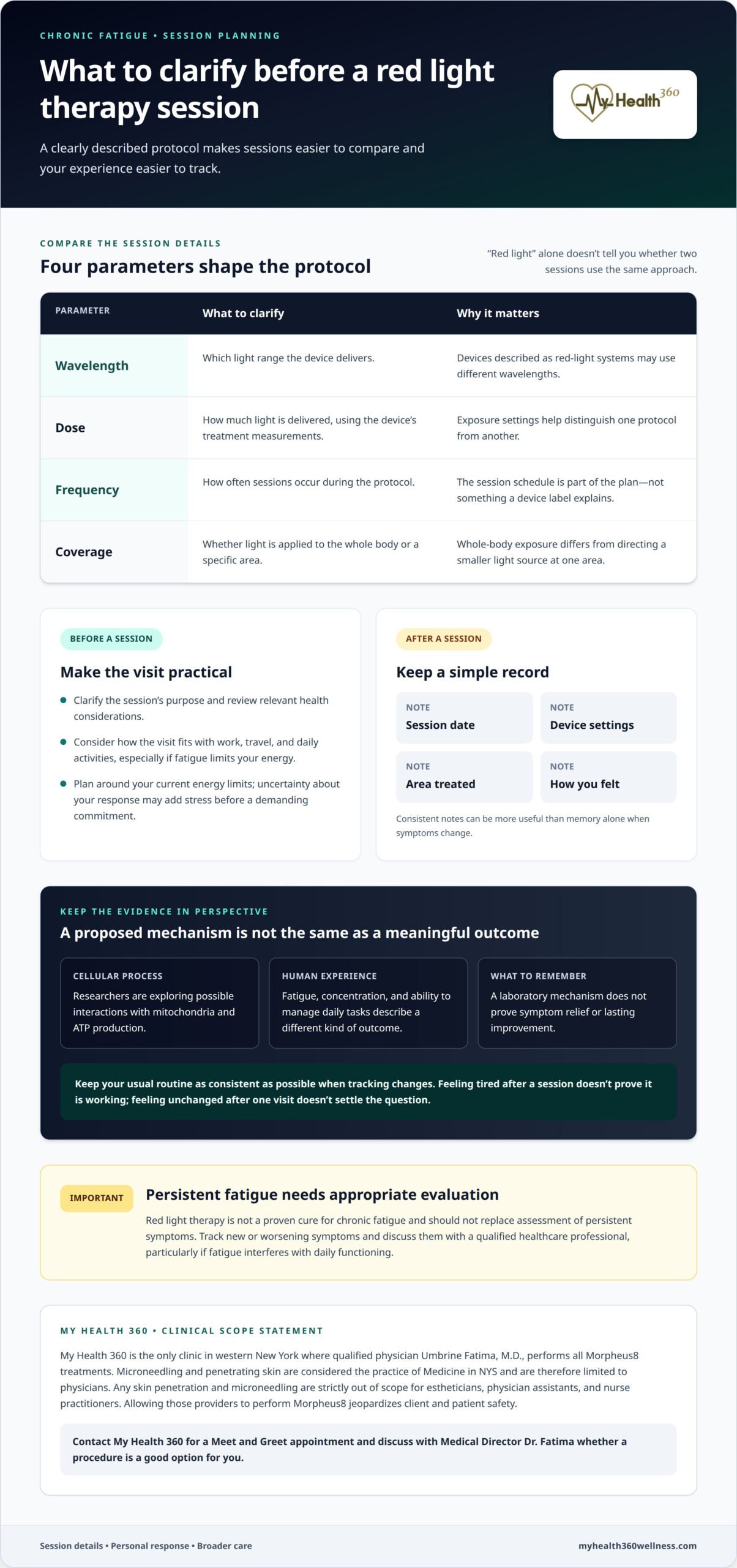
For fatigue, a treatment protocol is defined by wavelength, delivered dose, and frequency. No single combination should be considered a universal schedule for chronic fatigue. A session plan should specify these parameters rather than rely on a device label or a broad description such as “red light.”
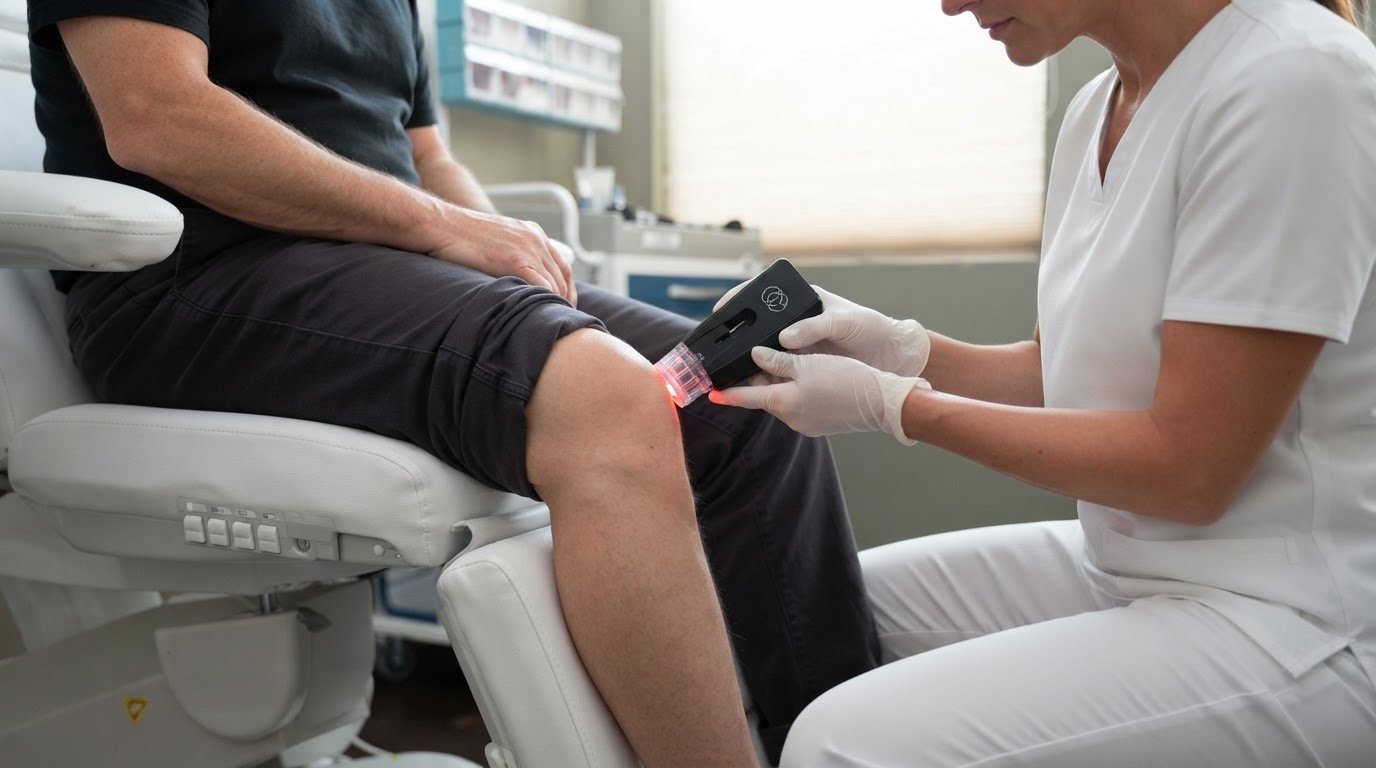
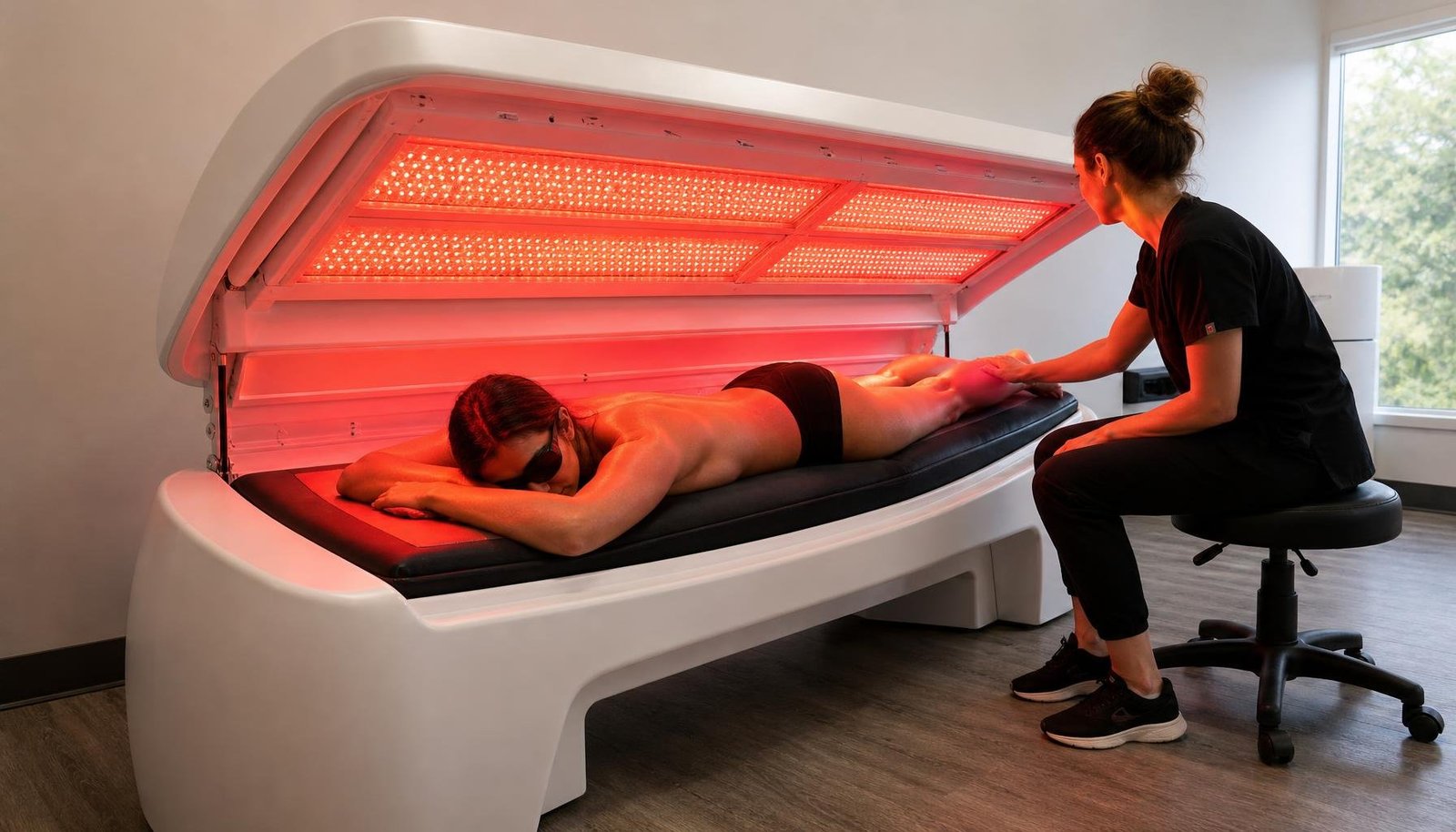
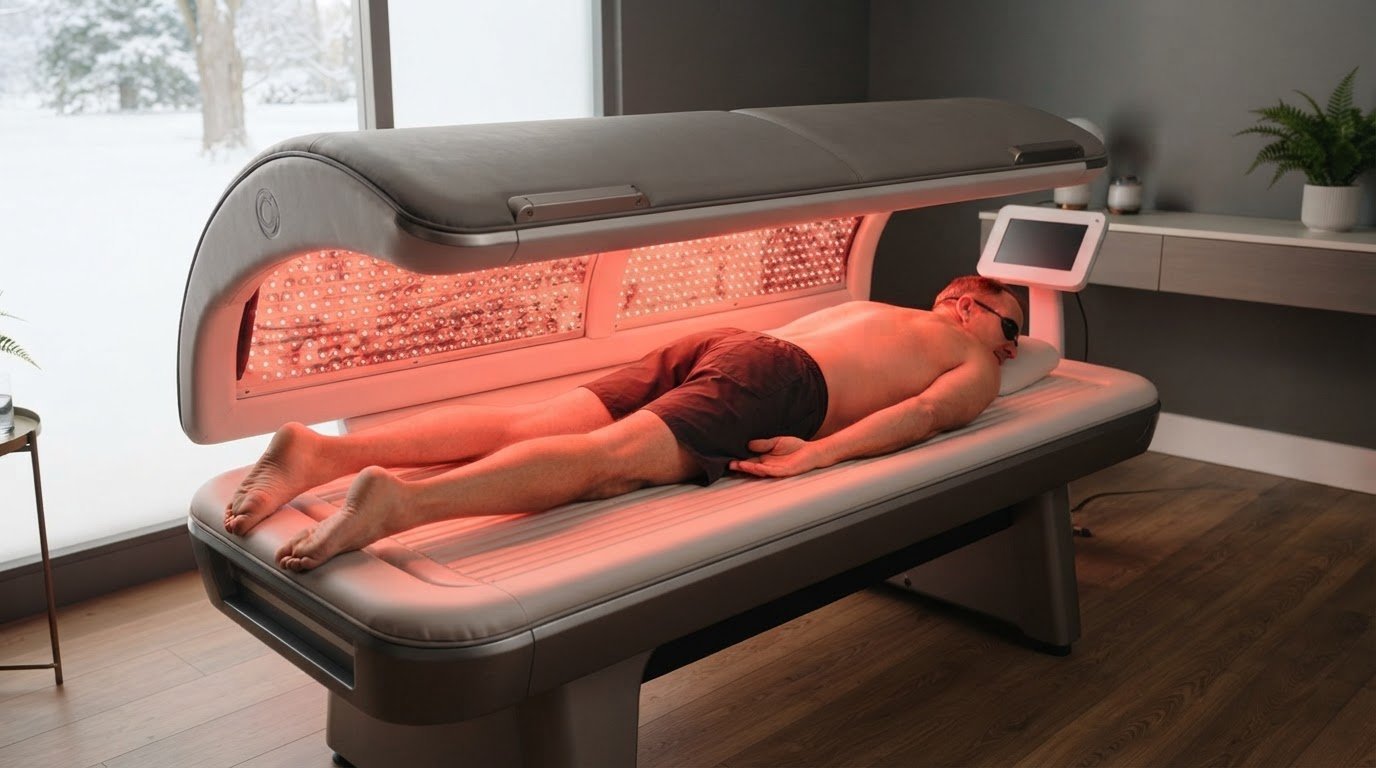
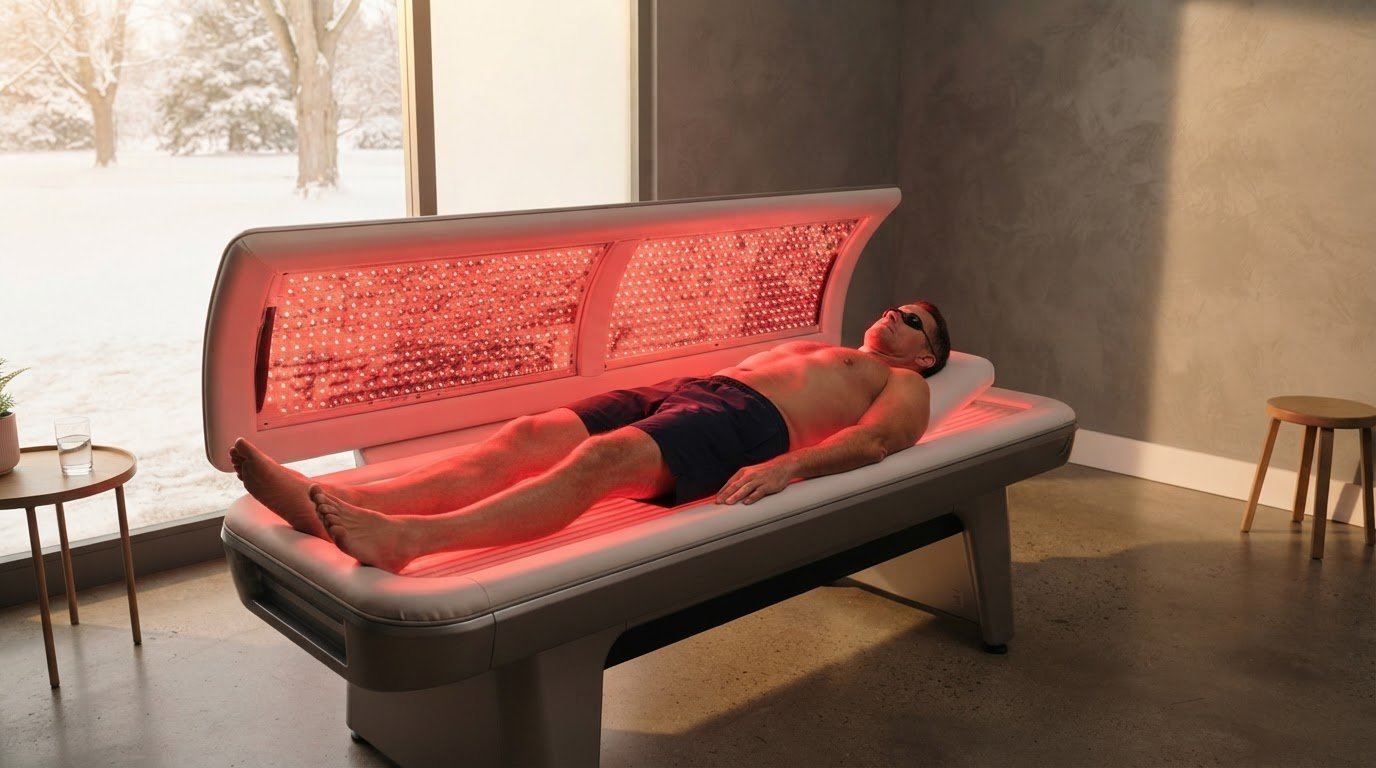
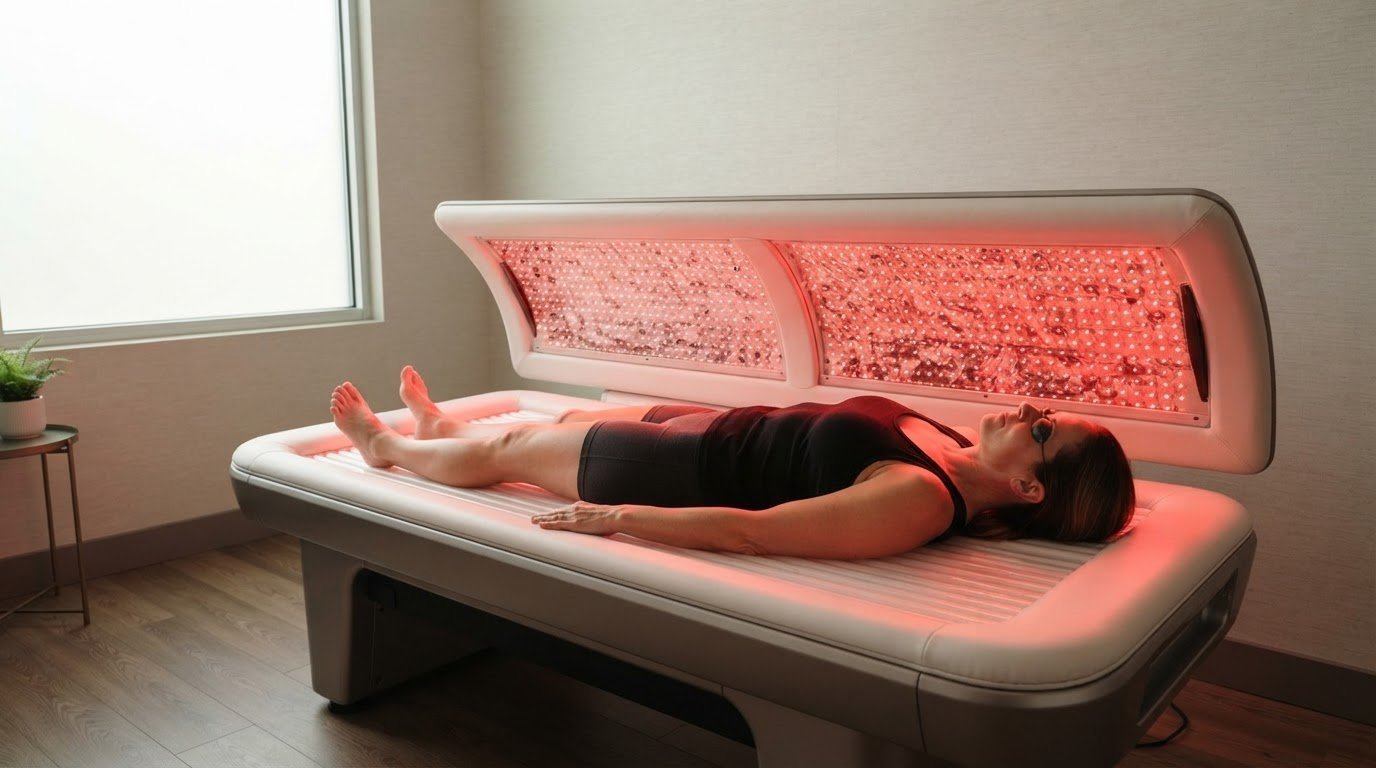
A visit typically begins by clarifying the session’s purpose and reviewing relevant health considerations. The device and treatment area determine how the light is applied. Whole-body exposure differs from directing a smaller light source at a specific area. That distinction matters when comparing protocols or tracking a response.
Before treatment, clarify the planned exposure details. Useful details include:
- Wavelength: the light range delivered by the device.
- Dose: the amount of light delivered, described using the device’s treatment measurements.
- Frequency: how often sessions occur during the protocol.
- Coverage: whether exposure is whole-body or directed toward a particular area.
These details distinguish one session from another. For example, two devices described as red-light systems may use different wavelengths or exposure settings. Comparing device names alone won’t establish that their protocols match.
Downtime is a practical consideration as well as a medical one. Think about how a visit fits with work, travel, and daily activities, especially if fatigue limits your energy. Keep a simple record of the session date, device settings, area treated, and how you felt afterward. If symptoms change, these notes can be more useful than memory alone.
Plan around your current energy limits. For example, avoid scheduling a first session just before a demanding commitment if uncertainty about your response could add stress. Keep your usual routine as consistent as possible so changes in fatigue are easier to interpret. Feeling tired after a session doesn’t prove the treatment is working, and feeling unchanged after one visit doesn’t settle the question.
Red light therapy should not replace an assessment of persistent fatigue. Track new or worsening symptoms and discuss them with a qualified healthcare professional, particularly if fatigue interferes with daily functioning. A clearly described protocol, realistic scheduling, and consistent symptom notes can help you evaluate sessions without treating any single visit as a definitive test.
For infrared sauna use, first-time users are advised to begin with a 20-minute session and work up to a 30-minute sauna session. People with health conditions or under medical care should get clearance from a doctor before their first infrared sauna session. The page claims that one 30-minute infrared sauna session can burn about 250 calories, a claim specifically about infrared sauna use.
Cellular energy and ATP production
Adenosine triphosphate, or ATP, is a molecule cells use to transfer energy. Muscle contraction, nerve signaling, and routine cell maintenance all use ATP. Mitochondria produce much of it through oxidative phosphorylation, which uses nutrients and oxygen. Cells also make ATP through glycolysis, which takes place outside mitochondria. These pathways work together, so energy production is not a single switch that light can simply turn on.
Red and near-infrared light are being studied for their possible interactions with cellular processes. One proposed explanation involves cytochrome c oxidase, a protein in the mitochondrial electron transport chain. Researchers have explored whether light absorption could influence that chain and downstream ATP production. This is a proposed biological mechanism, not proof that someone with chronic fatigue will produce more usable energy or feel less fatigued.
Cellular ATP is not the same as a person’s felt energy. Someone may feel exhausted during ordinary activity, while a test of a specific cellular pathway measures a narrower process. Fatigue can have multiple contributors, and a theory about mitochondria does not establish its cause for any individual. When considering red light claims, separate laboratory mechanisms from changes in daily function.
When considering ATP claims, look at what an outcome actually measures:
- Cellular process: Does the report examine ATP production or another mitochondrial marker?
- Human experience: Does it assess fatigue, concentration, or ability to manage daily tasks?
- Intervention details: Are wavelength, dose, treatment area, and frequency described?
- Comparison: Is the reported change compared with a baseline or another condition?
These distinctions help prevent an early step in an explanation from being mistaken for a final health outcome. A change in a laboratory marker, if measured, would not automatically demonstrate improved stamina, fewer symptoms, or a lasting effect. A person’s symptom report describes lived experience, but doesn’t by itself identify an ATP mechanism. Each type of information answers a different question.
For chronic fatigue, the practical question is whether a proposed cellular pathway corresponds to meaningful changes in function. A useful discussion can connect the treatment rationale with concrete goals, such as managing a routine activity or maintaining concentration through a task. That is more specific than asking whether red light “boosts energy.” It also leaves room to consider other possible causes of persistent symptoms.
In short, ATP is a plausible area of study for photobiomodulation, but a proposed mechanism is not a treatment outcome. Keep cellular explanations, measured symptoms, and day-to-day function distinct when assessing red light therapy for chronic fatigue.
Effects on oxidative stress and inflammation
Oxidative stress describes an imbalance between reactive molecules and the body’s antioxidant defenses. Reactive oxygen species also have normal roles in cell signaling. Their presence alone doesn’t mean damage or explain chronic fatigue. Context matters, including where they’re produced and how cells respond.
Inflammation is a coordinated immune response, not a single marker. For example, local inflammation after an injury differs from persistent, body-wide symptoms. Researchers studying red light therapy examine whether light exposure influences processes related to cellular signaling and inflammatory responses. That proposed connection does not establish that therapy reduces inflammation in someone with chronic fatigue.
The relationship between oxidative stress and inflammation can be complex. In some biological settings, inflammatory signaling and reactive molecules interact. But fatigue is a symptom, not a direct measurement of either process. Low energy alone, for instance, cannot show elevated oxidative stress or identify inflammation as its cause.
To interpret claims about red light and these pathways, separate three kinds of information:
- Mechanism: A proposed explanation for how light could affect cell signaling.
- Biological marker: A laboratory measurement related to oxidative balance or inflammation.
- Daily function: A person’s reported fatigue or ability to complete routine activities.
Each answers a different question. A proposed mechanism doesn’t prove that a marker changes, and a marker change doesn’t automatically demonstrate less fatigue. A symptom report likewise doesn’t reveal which cellular pathway is involved. Keeping these distinctions clear helps prevent a biological explanation from being presented as a clinical result.
For example, someone may hope to manage everyday tasks with less effort. That’s a meaningful goal, but it requires tracking function directly. A discussion of oxidative stress alone cannot establish whether red light therapy changes that experience or replace assessment of other possible contributors to persistent fatigue.
When reviewing a treatment rationale, note whether it identifies the measured outcome and explains its relevance. Does it discuss a specific marker, a symptom, or everyday function? Are these outcomes described separately? These questions help you assess whether the explanation moves from a cellular hypothesis to evidence about lived experience, without treating the two as interchangeable.
Oxidative stress and inflammation are areas of study in photobiomodulation, but they don’t provide shortcuts to explaining fatigue. Researchers are exploring possible biological effects, while claims about symptom improvement require evidence that measures symptoms or function directly. For someone considering treatment, that distinction supports a grounded discussion about goals and outcomes that matter in daily life.
How red light therapy works
Red light therapy exposes the body to red or near-infrared light. Red light is associated with skin appearance and surface-level recovery, while near-infrared light reaches deeper tissues and is used to support muscle recovery and overall well-being. A whole-body device differs from a light source aimed at one area. Wavelength, dose, and coverage help define the exposure, so the treatment name alone doesn’t describe a protocol.
Insurance coverage for red light therapy in New York depends on the individual plan and how the service is classified. Before making financial decisions, review your benefits or ask your insurer whether the specific treatment is covered and what documentation is required. Coverage terms vary by plan, so a general statement about insurance can’t establish what an individual policy will pay.
Potential risks and side effects depend on the device, exposure, and individual circumstances. Ask about eye protection and follow the device’s safety instructions. Share relevant health conditions and medications during a clinical discussion, as these details can matter when considering light exposure. If you’ve been advised to avoid light exposure or can’t follow the safety instructions, postpone treatment and discuss the concern with a qualified healthcare professional.
People exploring red light therapy for chronic fatigue in Orchard Park can discuss whole-body treatment with My Health 360. The local service is a light-based option, but that does not establish it as a proven treatment specifically for chronic fatigue. Device format and intended use are useful details to clarify, especially if you’re comparing whole-body exposure with treatment directed at a smaller area.
Before starting, ask what the device is intended to address, which wavelength and dose it uses, and whether exposure covers the whole body or a specific area. Clarify the safety instructions, how your health history informs the discussion, and which outcome will be tracked. These questions help you understand what a session involves and whether its stated purpose relates to your goals.
The answers should connect the treatment approach to its intended use, rather than suggest that every light device works the same way. For example, surface-level skin support and deeper muscle recovery are distinct goals. Ask how the provider describes the service and how to distinguish its rationale from evidence of a particular health outcome.
For anyone considering red light therapy for chronic fatigue in Orchard Park, keep fatigue assessment and treatment goals in the same conversation. A proposed cellular mechanism doesn’t show by itself that daily energy will change. Describe how fatigue affects your routine, and discuss persistent or worsening symptoms with a qualified healthcare professional. This context supports a more informed decision about whether light exposure fits your broader care.
Potential benefits for chronic fatigue syndrome
For someone with chronic fatigue syndrome, a useful treatment goal must connect to daily life. Red light therapy is being explored for possible effects on energy-related processes, but that mechanism alone doesn’t establish symptom relief. A practical question is whether a person can manage a meaningful activity, such as preparing a meal or concentrating on a conversation, with less difficulty.
Chronic fatigue can affect more than stamina. Someone may also describe difficulty concentrating, unrefreshing sleep, or feeling worse after exertion. These experiences differ, so “more energy” can be too broad to evaluate. For example, one person might track whether reading a short passage feels easier, while another focuses on completing a household task.
Before considering a session, identify one manageable functional goal and note how it feels on ordinary days. Record the activity, the effort it required, and any symptoms afterward. Keep the description consistent. “Prepared lunch, then needed to rest” provides more useful context than a general rating of feeling better or worse.
Potential outcomes to discuss include:
- Daily activity: Whether a routine task feels more manageable.
- Concentration: Whether a familiar activity, such as reading, takes less effort.
- Recovery after exertion: Whether usual activity is followed by a noticeable symptom change.
- Sleep experience: Whether rest feels more restorative in the person’s own account.
These are observation points, not promised effects. A change in one area doesn’t mean every symptom has changed, and it doesn’t identify why the difference occurred. Notes about routines and other relevant changes can help you avoid attributing every fluctuation to light exposure. If activity worsens symptoms, don’t increase exertion just to test a treatment.
Red light therapy should be considered as part of a broader approach to chronic fatigue, not as a substitute for evaluating persistent symptoms. A clinician can consider your health history, current concerns, and treatment goals. This is especially relevant when fatigue is new, worsening, or substantially interfering with daily life. An energy-related explanation alone cannot determine the cause or the right course of care.
For a grounded discussion, describe the specific task you hope to manage more comfortably, the symptoms that limit it, and what you would count as a meaningful change. Contact My Health 360 to arrange a Meet and Greet and discuss with Medical Director Dr. Fatima whether this approach is a suitable option for you.
My Health 360: Whole body red light therapy
My Health 360 offers whole-body red light therapy for people considering light-based support as part of a broader approach to wellbeing. For Morpheus8, My Health 360 is the only clinic in Western New York where qualified physician Umbrine Fatima, M.D., performs every treatment.
Microneedling and other skin-penetrating procedures require careful consideration of provider qualifications and patient safety. Patients should ask who will perform these procedures and confirm that the provider is appropriately qualified. Allowing those providers to perform Morpheus8 jeopardizes patient safety.
Contact My Health 360 to arrange a Meet and Greet and discuss with Medical Director Dr. Fatima whether whole-body red light therapy is a good option for you.
Choose a thoughtful next step
If you’re considering red light therapy for chronic fatigue in Orchard Park, begin with a clear conversation about what you hope to address. A useful next step is to connect your day-to-day concerns with a realistic treatment goal while keeping evaluation of persistent fatigue within your broader care. Responses can differ, and red light therapy shouldn’t be treated as a guaranteed solution.
My Health 360 also offers Emsculpt Neo and whole-body habilitation through BioPrime for pre-operative or pre-event preparation, and Bio-Restore for post-operative or injury recovery. These services address different goals, so the right discussion depends on what support you’re seeking.
Arrange a Meet and Greet with My Health 360 to discuss with Medical Director Dr. Fatima whether whole-body red light therapy may be a suitable option for you. A considered conversation can help you take your next step with greater clarity.
Frequently Asked Questions
What is Red Light Therapy?
Red light therapy exposes the body to red or near-infrared light. Its use depends on the device and goal: red light is associated with skin appearance and surface-level recovery, while near-infrared light reaches deeper tissues. A whole-body setup differs from a device directed at one area, so the treatment format helps clarify what a session is intended to address.
What is red light therapy and how might it affect chronic fatigue?
Red light therapy uses light exposure that may influence biological processes, but that possibility doesn’t show that it will relieve chronic fatigue. A practical way to consider it is to define a personal goal, such as making routine activities less difficult, then distinguish that goal from a proposed cellular explanation. Persistent fatigue can have different causes, so light therapy shouldn’t replace appropriate assessment or care.
What evidence supports red light therapy for chronic fatigue syndrome or ME/CFS?
Evidence relevant to ME/CFS would need to study people with the condition and measure outcomes that matter, such as fatigue symptoms and daily function. Findings about a biological mechanism alone can’t establish those benefits. When reviewing a claim, distinguish studies of light exposure in other contexts from research that directly addresses ME/CFS, and consider whether results measure meaningful changes rather than only laboratory processes.
Do Orchard Park providers offer red light therapy specifically for chronic fatigue?
My Health 360 offers whole-body red light therapy in Orchard Park; its availability doesn’t mean the treatment is established specifically for chronic fatigue. A Meet and Greet provides an opportunity to discuss your goals and whether this procedure may suit your circumstances. Contact My Health 360 to arrange a Meet and Greet and speak with Medical Director Dr. Fatima about whether it’s a good option for you.