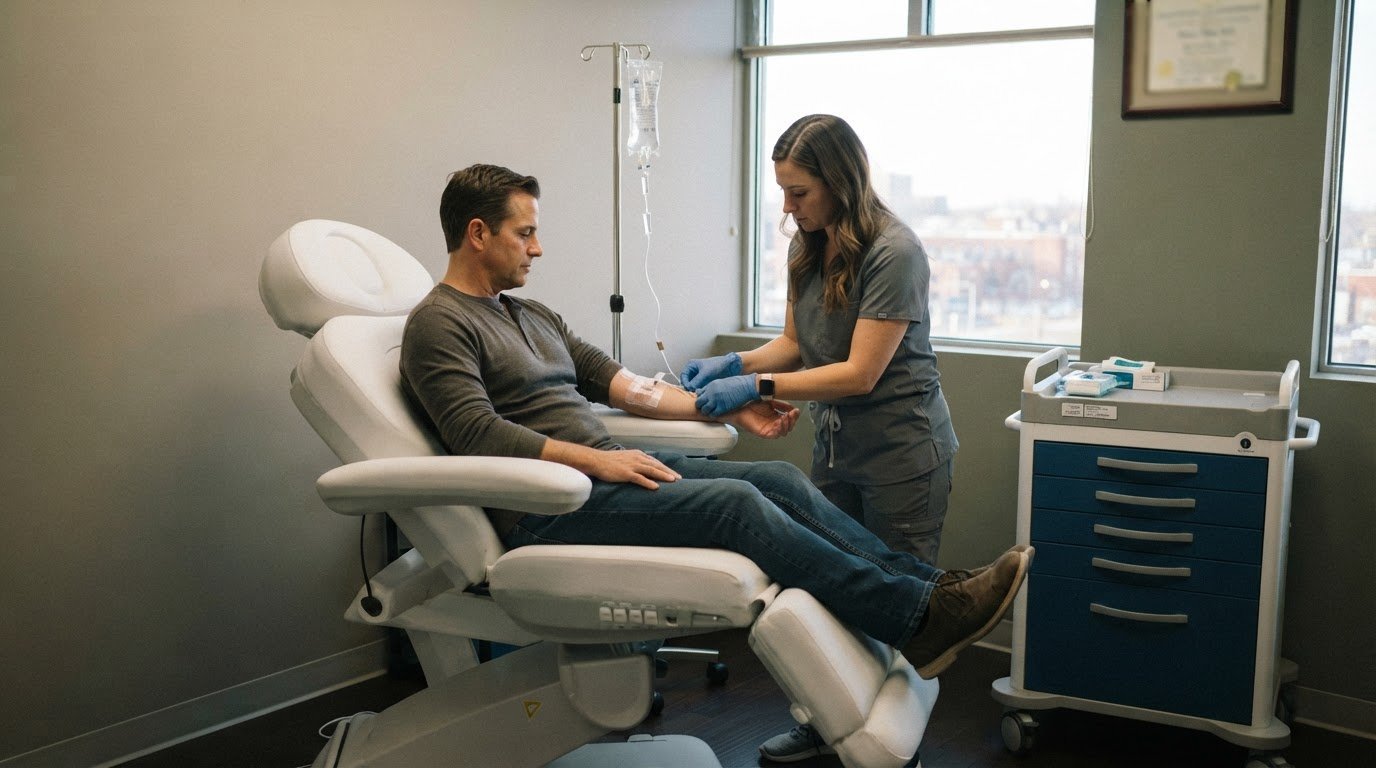
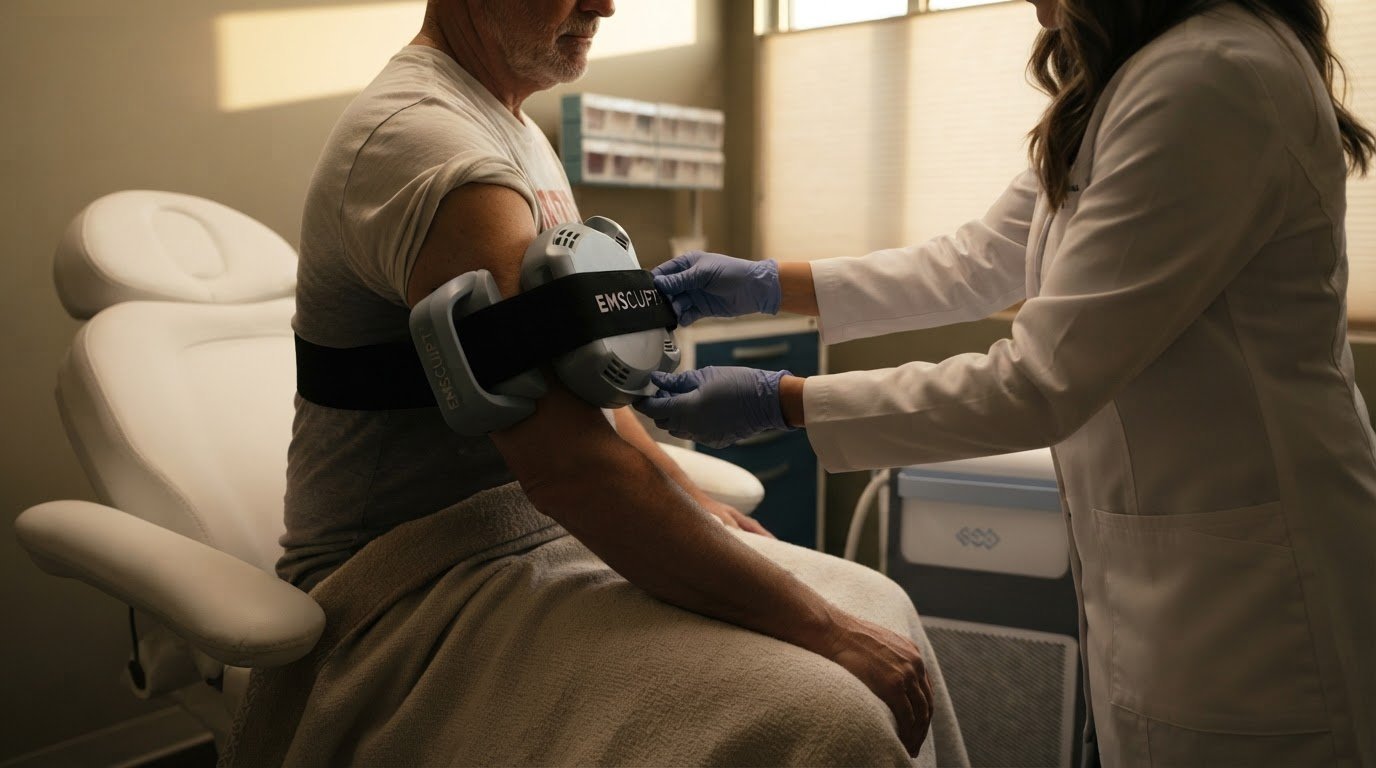
The best option for pain may not be the device with the most dramatic name. Choosing between red light for pain, Emsculpt Neo, functional LLLT, low-level laser treatment, and shockwave starts with understanding that these approaches work differently and target different goals.
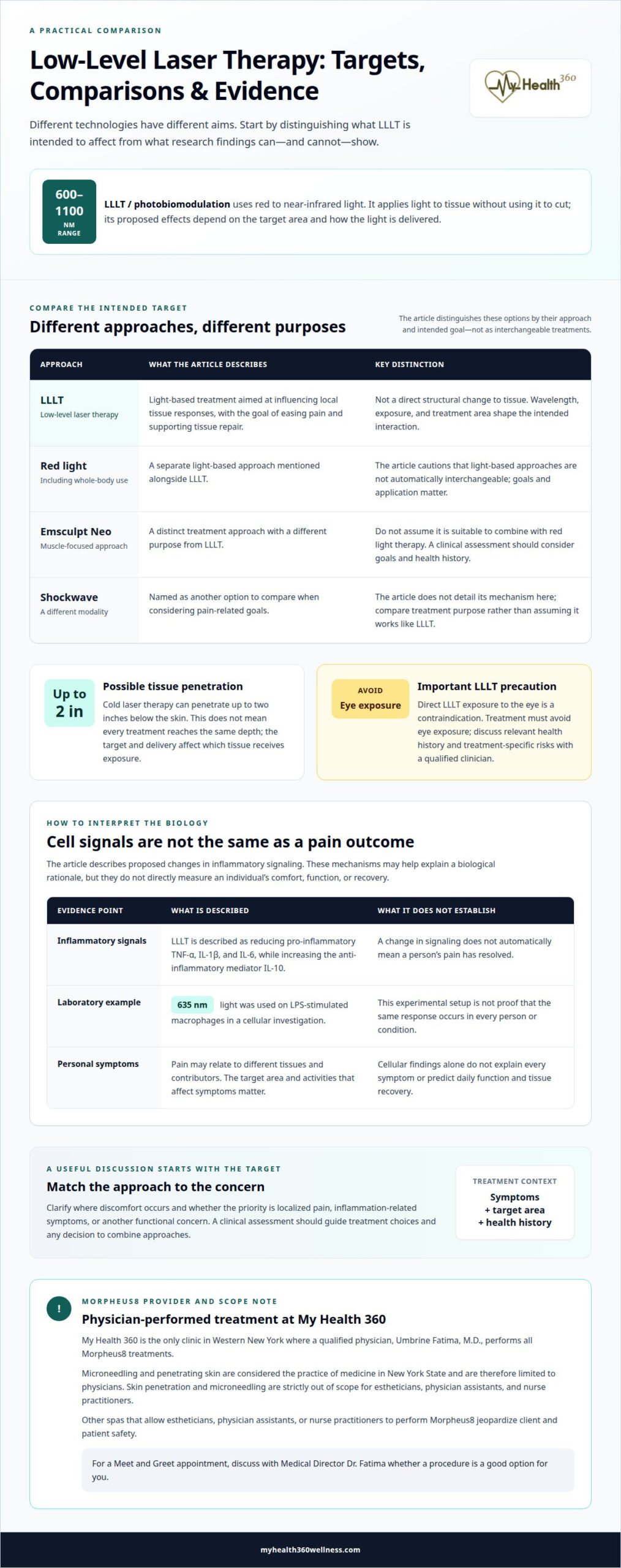
It’s natural to look for one treatment that can ease discomfort and help you return to everyday activities. Low-level laser therapy, also called photobiomodulation, uses red to near-infrared light, typically within the 600-1100 nm range, and may help address pain and inflammation. That doesn’t make it interchangeable with other technologies.
This guide explains how low-level laser treatment works, what it may be used for, and how its purpose compares with red light therapy, Emsculpt Neo, and shockwave. You’ll get a clearer sense of which goals each approach may suit and why the source and location of discomfort matter when considering options in Clarence, NY.
Key Takeaways
- Understand how low-level laser therapy uses red and near-infrared light, and how it differs from other light-based approaches.
- See why pain relief and inflammation reduction are discussed in relation to the body’s response to light therapy.
- Explore the range of conditions for which laser therapy may be considered, including how treatment goals shape its use.
- Learn what treatment protocols can involve and why the number and duration of sessions may vary by condition.
- Compare LLLT with Emsculpt Neo, whole body red light therapy, and shockwave by focusing on the goal each approach is intended to address.
What is Low Level Laser therapy?
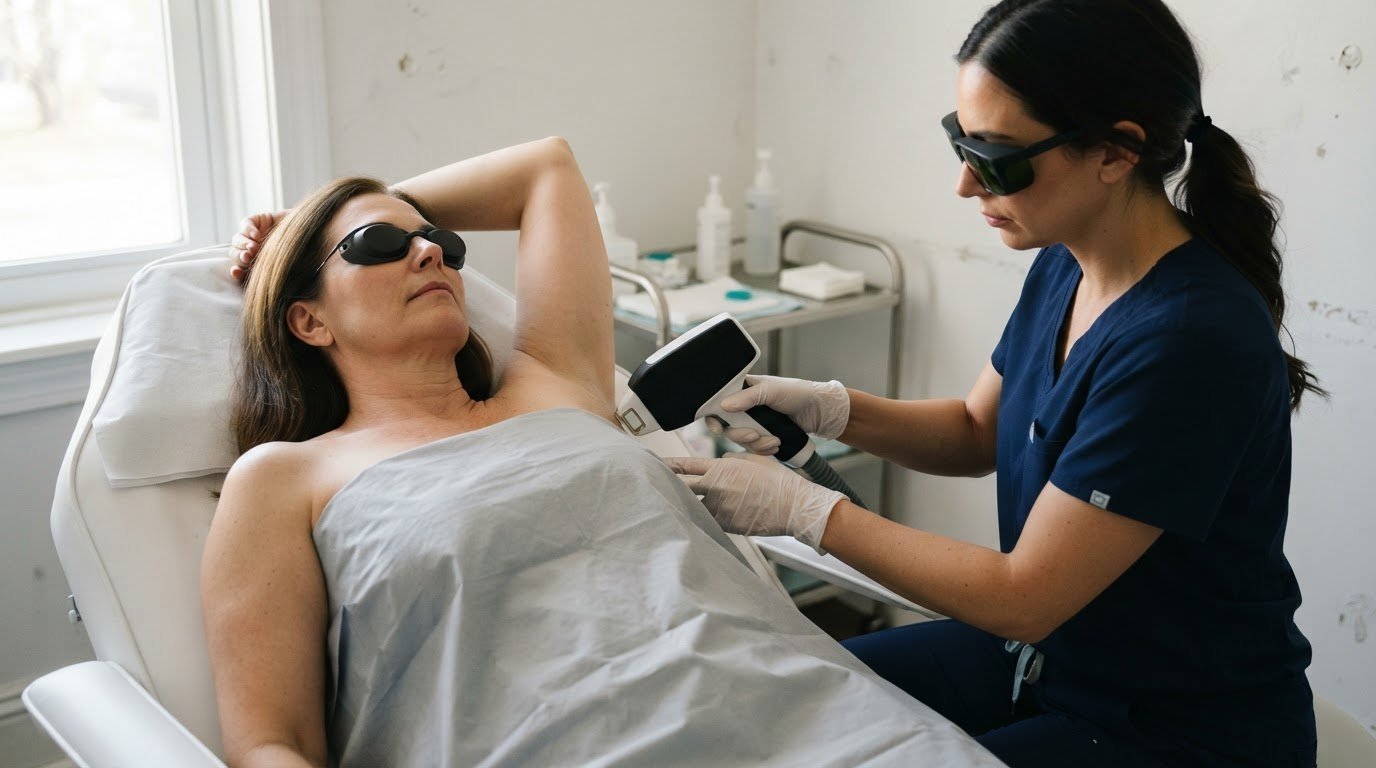
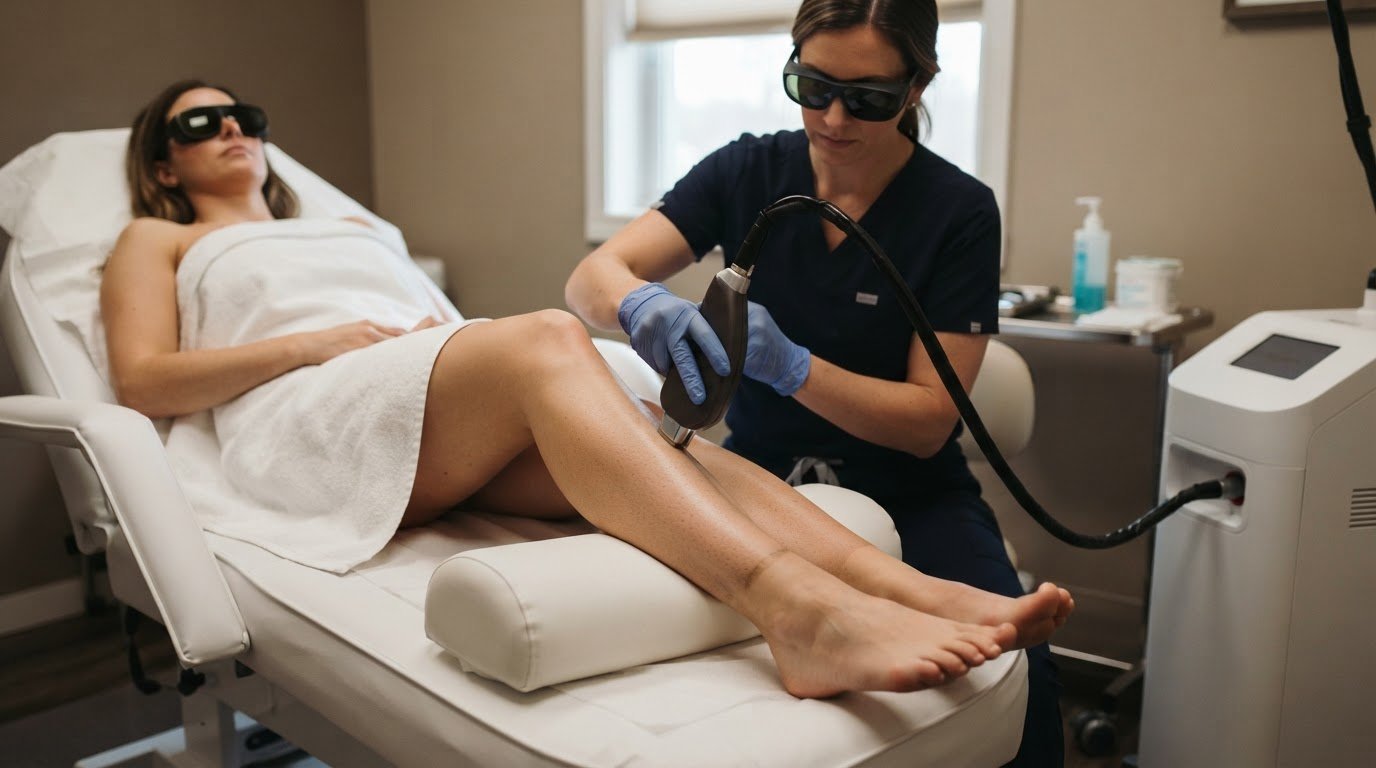
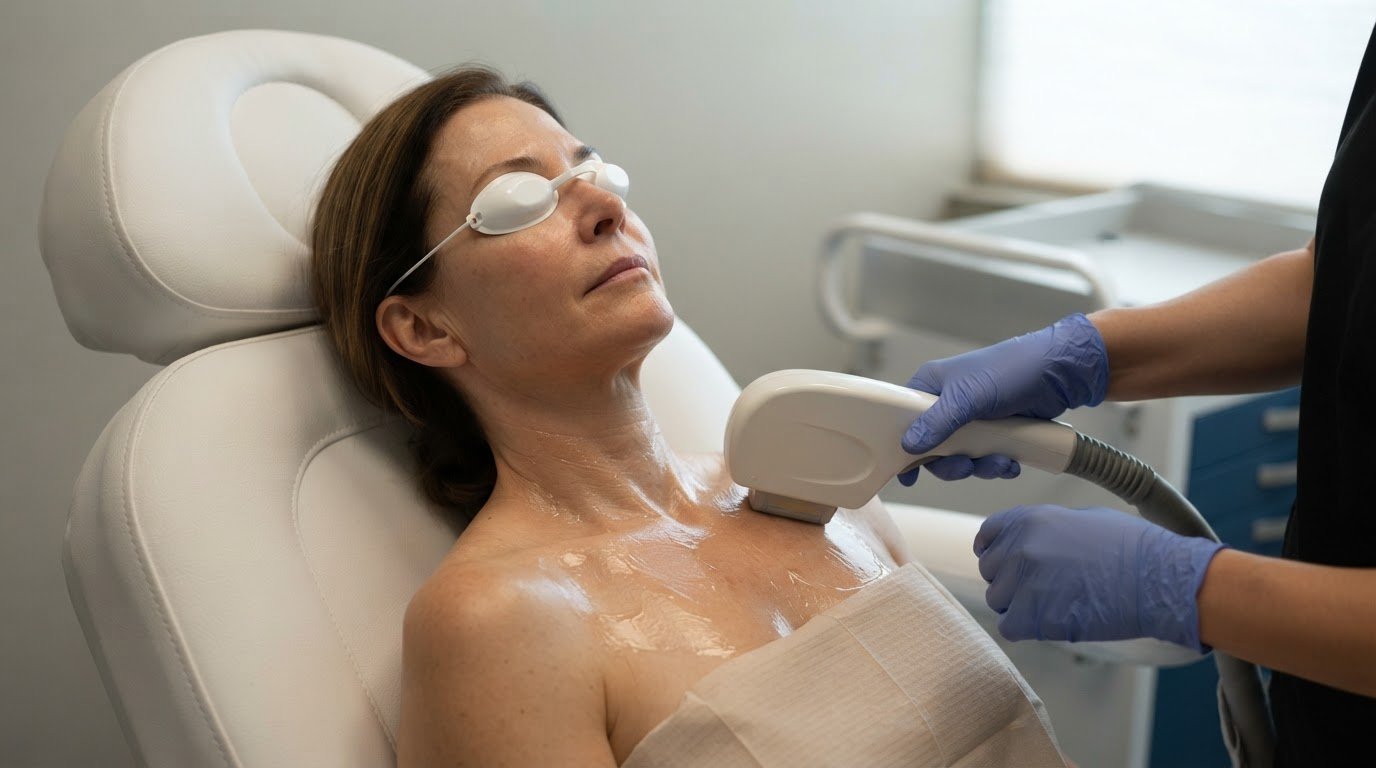
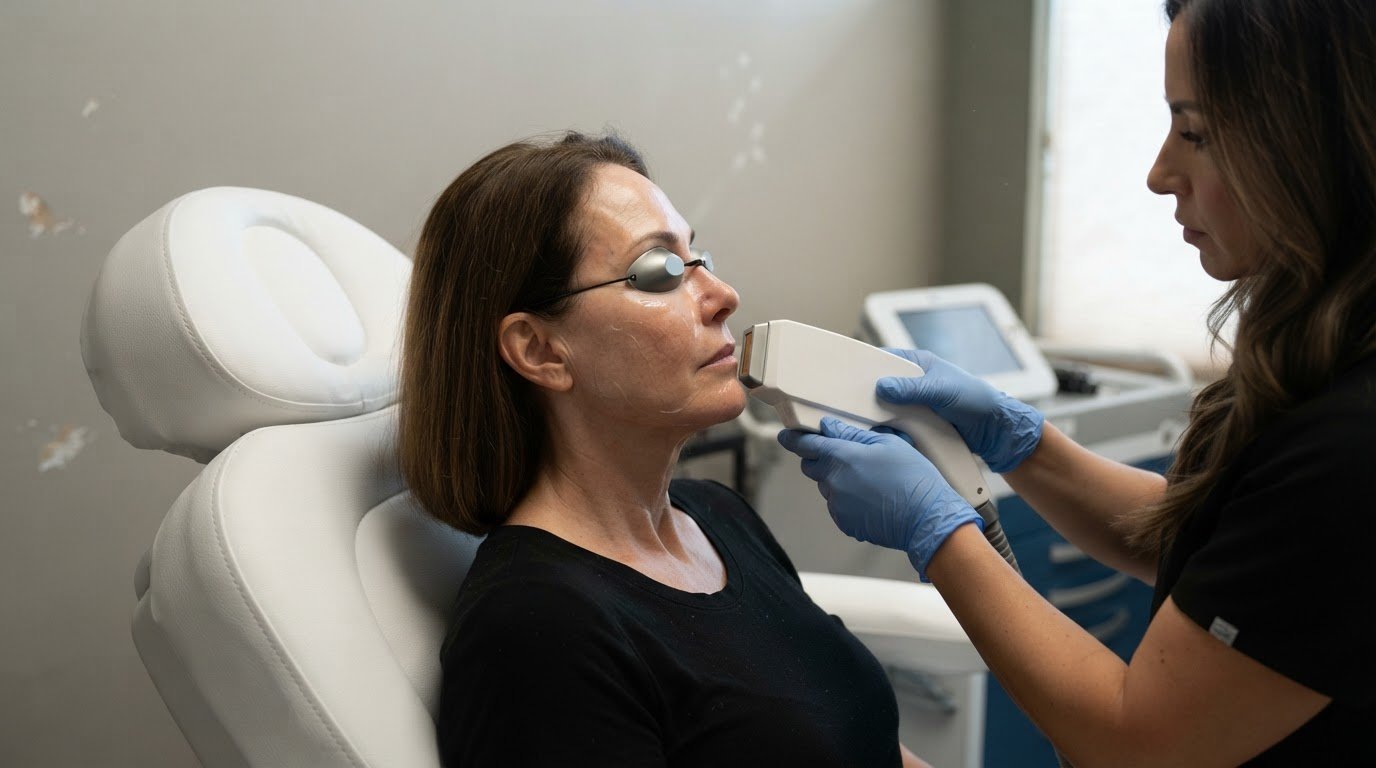
Low-level laser therapy (LLLT), also called photobiomodulation, applies light to tissue without using it to cut. Its proposed effects depend on how light interacts with the targeted area, so the treatment’s purpose and application matter.
Cold Laser and Tissue Penetration
Cold laser therapy uses light intended to affect tissue without the heat associated with lasers used to cut or remove tissue. The term distinguishes the treatment approach, but it doesn’t tell you how deeply light reaches or whether it suits a particular pain concern.
Cold laser therapy can penetrate up to two inches below the skin. This depth may matter when comparing a surface-level concern with discomfort in underlying tissue, but it doesn’t mean every treatment reaches the same depth. The target area and how the light is delivered influence which tissue receives exposure.
Proposed Cellular and Tissue Effects
Photobiomodulation describes the proposed influence of red or near-infrared light on cellular activity and tissue responses. Rather than mechanically stretching or strengthening tissue, LLLT aims to prompt biological responses through light exposure.
For someone considering treatment, this distinction clarifies the approach’s purpose. The effect is not simply that light reaches tissue: the wavelength, exposure, and treatment area shape the intended interaction. These factors also explain why LLLT is not interchangeable with muscle-focused or mechanical approaches.
Pain Relief and Tissue Repair
LLLT is used with the aim of easing pain and supporting tissue repair, rather than directly changing tissue structure. Treatment is considered in relation to the symptoms, location, and underlying concern.
This matters because pain can occur alongside different tissue conditions. A light-based approach may be considered when the goal is to influence local tissue responses, while another modality may have a different target. Treatment selection should match the method to the specific concern, not rely on the word “laser” alone.
Can Emsculpt and red light therapy be used together safely? They use different approaches, so don’t assume they are suitable for simultaneous use. A clinical assessment should guide whether combining them fits an individual’s goals and health history.
What are the risks, side effects, and contraindications of LLLT and Emsculpt? Direct LLLT exposure to the eye is a contraindication, so treatment must avoid eye exposure. Risks and exclusions differ between LLLT and Emsculpt. Before proceeding, discuss the specific treatment and relevant health history with a qualified clinician.
These distinctions help frame the comparison: LLLT is a light-based approach directed at tissue responses, while Emsculpt and red light therapy have distinct treatment purposes. Understanding the intended target is a useful first step in considering which method may fit a pain-management goal.
Pain relief and inflammation reduction
Pain and inflammation can overlap, but they describe different processes. Pain is a sensory experience; inflammation involves tissue responses to irritation or injury. Low-level laser therapy (LLLT) is used with the aim of easing pain and influencing inflammatory activity. A change in inflammatory signaling does not automatically mean a person’s pain has resolved.
Inflammatory cytokines
Inflammatory cytokines are signaling molecules involved in the body’s immune response. LLLT is described as reducing pro-inflammatory TNF-α, IL-1β, and IL-6, while increasing the anti-inflammatory mediator IL-10. These named molecules help explain the proposed biological rationale, but they aren’t a direct measurement of someone’s comfort or function.
A specific example comes from research using 635 nm light on LPS-stimulated macrophages. Macrophages are immune cells, and LPS was used to stimulate them in that investigation. This experimental setup examined photobiomodulation and inflammatory effects at a cellular level. It shouldn’t be read as proof that the same response occurs in every person or condition.
What this may mean for pain
For someone with localized soreness, the proposed benefit is a change in tissue responses that may support symptom relief. The target area matters: discomfort around a joint, muscle, or other tissue may have different underlying contributors. LLLT is not a general treatment for every kind of pain.
Inflammatory signaling is only part of the picture. Pain can also relate to tissue strain, sensitivity, or changes in movement, and a cytokine response alone doesn’t explain every factor. A practical assessment considers where symptoms occur, which activities affect them, and whether the treatment’s intended target matches the concern.
Interpret the 635 nm macrophage example as one piece of mechanistic evidence, not a treatment protocol. It describes a laboratory investigation, rather than a personal outcome or a recommended number of sessions. The distinction helps keep cellular findings separate from claims about an individual’s pain, daily function, or tissue recovery.
When discussing light-based treatment, focus on the target area and goal. For example, clarify whether the priority is localized discomfort, inflammation-related symptoms, or another functional concern. These details help make the clinical discussion useful without assuming that a named cytokine explains every symptom.
To discuss how these considerations relate to your situation, contact My Health 360 for a Meet and Greet appointment. Speak with Medical Director Dr. Fatima about whether a procedure is a good option for you.
Photobiomodulation using red and near-infrared light
For LLLT or Emsculpt near Clarence, look for a qualified clinician who explains the modality, intended target, and relevance to your health history. A useful discussion distinguishes light-based photobiomodulation from Emsculpt’s different treatment purpose instead of treating the names as interchangeable.
How red and near-infrared wavelengths fit
Photobiomodulation uses red to near-infrared light, typically across wavelengths from 600-1100 nm. That range describes the light used, not a single setting or identical protocol. Red and near-infrared light are therefore related parts of a broader category, rather than evidence that every device delivers the same treatment.
For example, a clinician discussing a sore area can explain which light-based approach is being considered and why. The wavelength range alone doesn’t identify the treatment goal, targeted tissue, or whether an option fits the concern. Those details explain the intended use, not just the device label.
Why light type matters
Red and near-infrared light are grouped in the photobiomodulation range, but “red light” may be used broadly in everyday conversation. Clarify what the term means in the treatment discussion: Does it describe the light category, whole-body exposure, or localized treatment for a particular area?
This distinction is useful when comparing pain-focused care with general wellness goals. A localized concern, such as discomfort around a shoulder, differs from a whole-body session in its target and intended application. The treatment description should clarify which area is exposed and what outcome it aims to support.
Separating light therapy from other modalities
Photobiomodulation is light-based; Emsculpt is a separate modality. The name “red light” doesn’t make a treatment equivalent to Emsculpt or shockwave, because their methods and intended targets differ. Comparing device branding alone can obscure the central question: what concern is each approach meant to address?
For a knee concern, for instance, clarify whether the proposed method aims to address localized symptoms or serves another treatment goal. The treatment name, targeted area, and purpose should align. This gives you a clearer basis for comparing light-based treatment with muscle-focused or mechanical approaches.
Near-infrared light also shouldn’t be confused with a promise of deeper or stronger results. The stated 600-1100 nm range identifies wavelengths, not a guaranteed depth, dose, or clinical outcome. Ask the clinician to explain how the proposed application relates to your specific concern, and how it differs from other modalities under consideration.
For a practical comparison, identify the treatment goal first, then the modality and target area. A discussion of red or near-infrared light should connect these details rather than rely on a broad device label. This helps clarify what photobiomodulation is intended to do in a pain-management plan.
Conditions treated with laser therapy
Laser therapy isn’t one uniform treatment for every diagnosis. The wavelength and delivery method matter: a study compared 308 nm LED light with a 308 nm excimer laser for localized psoriasis. That example helps distinguish a specific investigation from broad claims about every condition or laser modality.
The psoriasis comparison focused on localized disease and two light sources at the same wavelength. It doesn’t establish that all forms of laser therapy treat psoriasis, or that red and near-infrared LLLT uses the same approach. In particular, 308 nm is distinct from the typical 600-1100 nm range used for photobiomodulation.
That difference matters when evaluating whether a study applies to a treatment being considered. A finding about 308 nm LED light or an excimer laser can’t automatically be transferred to red-light or near-infrared protocols. The name “laser therapy” covers approaches that differ in wavelength, device, and intended application.
For a localized concern, start by identifying the diagnosis and the specific method under discussion. Then compare the study’s wavelength and treatment approach with the proposed therapy. If the study concerns 308 nm light for localized psoriasis, it is not direct evidence for a red-light protocol using a different wavelength.
- Localized psoriasis: the referenced comparison examined 308 nm LED light and a 308 nm excimer laser.
- Red and near-infrared photobiomodulation: the typical wavelength range is 600-1100 nm, a different range from 308 nm.
- Other conditions: the psoriasis example alone doesn’t establish effectiveness for another diagnosis or treatment method.
These distinctions help keep a condition, device, and wavelength connected to the evidence being described. A study’s population and method matter as much as its diagnosis. For example, results from localized psoriasis research don’t by themselves establish a role for LLLT in joint, muscle, or other concerns.
How much do red light therapy and Emsculpt treatments cost in the United States? Pricing depends on the modality, treatment area, and proposed protocol. A case-specific price is provided after a quote request.
For a useful discussion, describe the condition being addressed and the treatment method under consideration. A clinician can then explain whether the evidence relates to that specific diagnosis, rather than relying on a broad label such as “laser.” For localized psoriasis, the 308 nm comparison is a distinct example, not a stand-in for every light-based treatment.
What does clinical research say about LLLT effectiveness and treatment protocols for pain?
LLLT research and treatment protocols don’t reduce to one session count. Some conditions may be resolved with one treatment, while some chronic or deep-seated conditions may require as many as 10 treatments. That range shows why protocol details need to be considered alongside the condition and treatment target.
Laser therapy treatments last between 8 and 20 minutes, depending on the injury and body part treated. Duration describes the session, not its effectiveness. A shorter appointment doesn’t necessarily indicate a less comprehensive approach, just as a longer one doesn’t promise a better outcome.
Reported guidance says patients should notice improvement within 5 to 10 brief treatments. This is a response window, not a guarantee that every person will improve on the same schedule. It also differs from the number of treatments that some chronic or deep-seated conditions may require.
For pain management, compare red light, Emsculpt, functional LLLT, and low-level laser treatment by the goal each approach is intended to address. Their names alone don’t show that they work the same way or follow the same protocol. The condition, target area, and intended outcome make the comparison meaningful.
- One treatment: some conditions may be resolved with a single session.
- 5 to 10 treatments: reported guidance places improvement within this treatment window.
- As many as 10 treatments: some chronic or deep-seated conditions may require this course.
- 8 and 20 minutes: session duration varies with the injury and body part treated.
These figures describe different parts of a protocol: possible session count, a response window, and appointment duration. They shouldn’t be combined into a guaranteed timeline. For example, the possibility of one treatment for some conditions doesn’t replace a longer course that may be used for certain chronic or deep-seated concerns.
When weighing pain management options, compare red light, Emsculpt, functional LLLT, and low-level laser treatment according to your specific goal. To discuss laser therapy, contact My Health 360 to arrange a Meet and Greet appointment with Medical Director Dr. Fatima.
My Health 360: Emsculpt Neo
My Health 360 offers Emsculpt Neo, whole body red light therapy, and LLLT Low Level Laser. For pain goals, red light, Emsculpt, functional LLLT, and low-level laser treatment shouldn’t be treated as interchangeable; each needs to be discussed according to its intended purpose.
At a Meet and Greet, discuss whether pain-focused red light, functional LLLT, low-level laser treatment, or Emsculpt Neo better aligns with your goals. Medical Director Dr. Fatima can help you consider whether a procedure is a good option for you.
Contact My Health 360 to arrange a Meet and Greet and discuss your options with Dr. Fatima.
Choose a Next Step That Fits Your Goals
Your next step is to connect your treatment question to the outcome you want, such as addressing discomfort, pursuing a functional goal, or preparing for an event or recovery period. Choosing among pain-focused red light, Emsculpt, LLLT, and low-level laser treatment starts with clarifying what you hope to address, not choosing by device name alone.
My Health 360 offers Emsculpt Neo for a distinct treatment goal, BioPrime for pre-operative or pre-event whole-body habilitation, and Bio-Restore for post-operative or injury whole-body habilitation. These options have different purposes, so a conversation about your goals and health history can help frame the next step.
Contact My Health 360 to arrange a Meet and Greet and discuss with Medical Director Dr. Fatima whether a procedure is a good option for you. A thoughtful conversation is a steady place to begin.
Frequently Asked Questions
How does the LASER treatment work?
Laser treatment directs light toward a selected tissue area, and its intended effect depends on the device and application. For low-level laser therapy, the aim is to influence tissue responses rather than cut tissue. A treatment discussion should identify the body area, intended goal, and type of laser being considered. The word “laser” alone doesn’t describe a specific treatment protocol.
How many treatments are required before I see results?
Reported guidance says improvement should be noticed within 5 to 10 brief treatments, but that isn’t a universal schedule. Some conditions may be resolved with one treatment, while some chronic or deep-seated conditions may require as many as 10 treatments. A practical way to assess progress is to track the symptom or activity that matters to you, such as discomfort during a usual daily task.
Is the laser FDA approved?
FDA status applies to specific devices and uses, not automatically to every laser treatment. Class IV laser therapy was cleared by the FDA in 2003. A laser was first approved on Feb. 11, 2002, for the treatment and management of carpal tunnel syndrome. These statements describe particular milestones; they don’t establish that every device or application has the same FDA status.
What is red light therapy (LLLT) and how does it work for pain?
Red light therapy for pain generally refers to applying light to support a treatment goal, while LLLT describes low-level laser therapy. The approach is intended to influence local tissue responses rather than mechanically work the area. For example, a discussion about discomfort near a joint should clarify whether the proposed application targets that location or serves another purpose.
What conditions and types of pain can low-level laser therapy treat?
LLLT is used for different conditions, but the diagnosis and treatment method matter. Research cited for localized psoriasis compared 308 nm LED light with a 308 nm excimer laser; that example doesn’t establish that every laser treats psoriasis or other conditions. Carpal tunnel syndrome is also associated with the stated 2002 laser approval milestone. These examples aren’t a universal list of indications.
What is the difference between red light therapy, LLLT, and photobiomodulation?
Photobiomodulation is the broader term for using light to influence biological responses; LLLT is also called photobiomodulation. Red and near-infrared light are commonly used within this approach, typically at wavelengths of 600-1100 nm. In conversation, “red light therapy” may describe a light category or a treatment format, so clarify the method and target area being discussed.
How does Emsculpt work, and is it intended to treat pain?
Emsculpt Neo uses technology to contract muscles while heating and permanently destroying fat cells. These muscle-toning and body-composition goals differ from a light-based approach directed at tissue responses. Don’t assume it treats pain simply because it involves muscle contractions. If your main concern is localized discomfort, clarify whether the proposed treatment aims to address that symptom.
How many LLLT sessions are typically needed, and how long does pain relief last?
Some conditions may resolve after one treatment, while some chronic or deep-seated conditions may require as many as 10; treatments last between 8 and 20 minutes, depending on the injury and body part. The duration of relief is tied to the underlying cause, the tissue involved, and whether the factors provoking symptoms continue. Session count alone doesn’t establish how long relief will last.