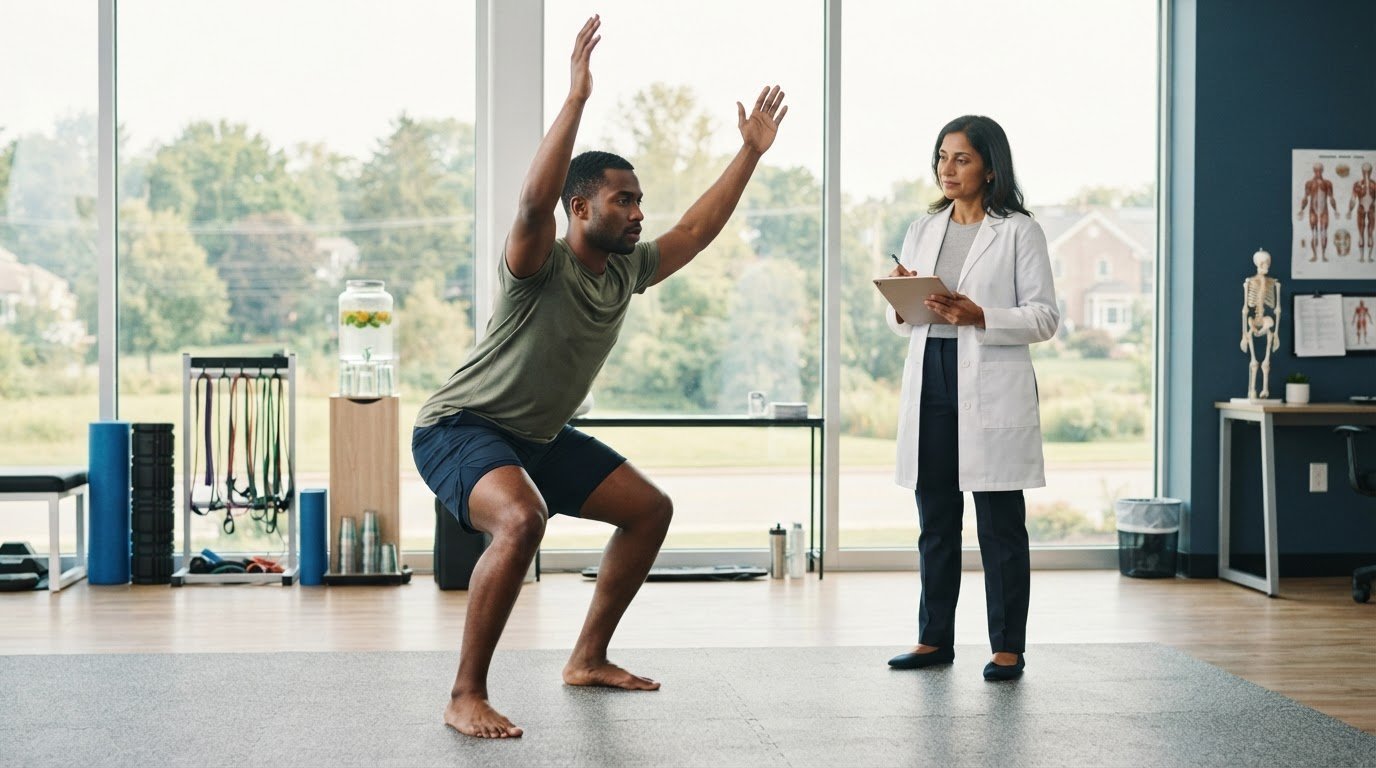
Repeated sports movements can place ongoing stress on joints and contribute to overuse injuries such as tendonitis, tennis elbow, and rotator cuff injuries. A sports injury recovery clinic evaluates the affected area and how it moves, then uses those findings to guide treatment and rehabilitation. The type and severity of the injury shape the recovery plan.
It can be frustrating when training, a game, or a familiar movement leads to pain, especially when you’re unsure whether to rest or keep moving. An assessment may include a physical examination, movement analysis, and review of imaging results to clarify what’s affected and what support may help.
This article explains how sports injuries are evaluated and treated, what rehabilitation can involve, and how equipment in a recovery center may support a gradual return to activity. You’ll also learn why repetitive movements can contribute to injury and how care may address strength, mobility, and the demands of your sport.
Key Takeaways
- Learn how manual therapy may fit into a broader recovery plan, alongside movement and strengthening work.
- Use range-of-motion and muscle-strength evaluation to identify functional limitations and guide rehabilitation priorities.
- Understand how repetitive-use injuries can be managed by addressing the affected area and the activity patterns that stress it.
- See how rehabilitation after a ligament or tendon tear can focus on restoring strength and movement around the injury.
- Explore how recovery center equipment may support rehabilitation goals and a gradual return to activity.
Why did I sustain a sports injury?
Sports injuries often arise when repeated movement places ongoing stress on joints, tendons, or muscles. A racket swing or repeated throwing, for example, can contribute to tennis elbow, rotator cuff injuries, tendonitis, or arthritis. Injury can also follow a sudden event, such as a fall during a game or a forceful change of direction.
Training load is only part of the picture. Technique, recovery between sessions, and the demands of a specific activity can affect how the body tolerates stress. Someone preparing for a 10K run may need different conditioning from an athlete preparing for a major game or tryout. Physical therapy can address injury recovery while also building conditioning suited to the activity.
What is the difference between sports medicine, physical therapy, and rehabilitation clinics? Sports medicine focuses on evaluating and managing activity-related health concerns. Physical therapy uses movement-based treatment, including exercise and manual therapy. A rehabilitation clinic provides structured support to restore function after injury, surgery, casting, or bracing.
When should I see a sports injury specialist instead of a primary care doctor? Consider a sports injury evaluation when pain persists, movement is limited, or an injury affects training, such as shoulder pain during a throwing motion. A specialist can assess sport-specific function and review imaging results, while a primary care doctor can address broader health concerns.
How much does sports injury treatment or physical therapy cost in the United States? Price depends on the injury, evaluation, treatment plan, and services involved; it’s given after a quote request. A physical examination, imaging review, and the amount of guided therapy needed are among the factors that shape care.
What services does a sports injury recovery clinic provide? Services may include injury evaluation, physical therapy, rehabilitation exercises, stretching, strengthening, and manual therapy. For example, care may address a sprain while helping restore movement and strengthen nearby muscles.
How do I choose a sports injury clinic near me? Look for care that addresses your injury and the movements your sport requires. For example, an evaluation of knee pain should consider how symptoms affect running, jumping, or changing direction.
What qualifications should sports injury clinic providers have? Choose providers whose professional training and scope of practice fit the care you need, such as physical therapy or medical evaluation. Ask how the assessment connects your symptoms, movement, and sport-specific goals.
What are the risks of returning to sports too soon after an injury? An injured area may not yet tolerate the demands of practice or competition, increasing the chance of renewed strain. A previously stretched ligament is more likely to be sprained again, so return should account for restored strength and movement.
Manual therapy may be one part of a broader treatment plan. A therapist can use hands-on techniques alongside stretching and strengthening exercises to improve mobility. For example, an athlete with restricted shoulder movement may work on motion before progressing to sport-specific activity. After surgery, postoperative physical therapy can support the transition back to normal activities. A personalized plan considers the injury, current function, and the physical demands of the athlete’s sport.
Range-of-motion and muscle-strength evaluation
What should I expect at my first sports injury clinic appointment? Expect to discuss your symptoms, sport, recent activity, and how the injury affects movement. The evaluation may include a physical examination, range-of-motion checks, muscle-strength testing, and review of imaging results you bring.
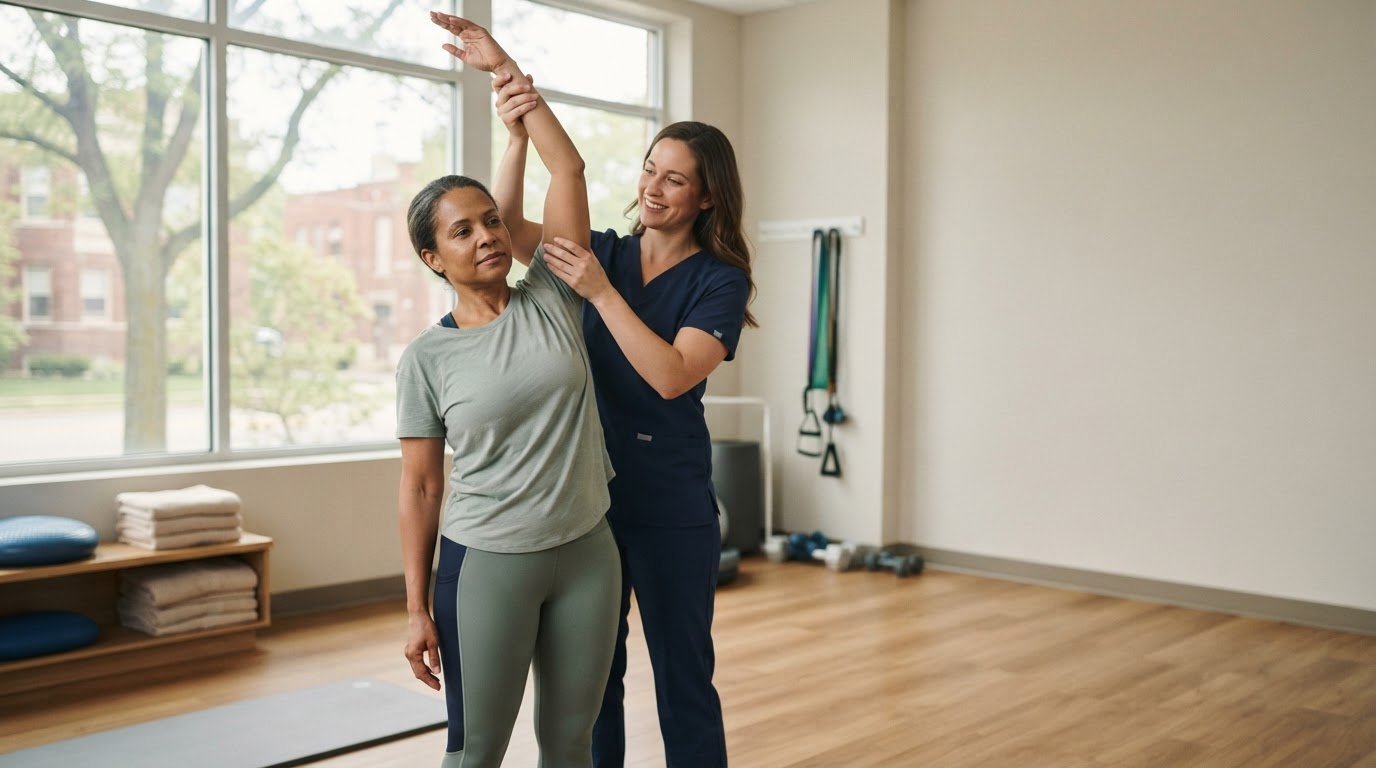
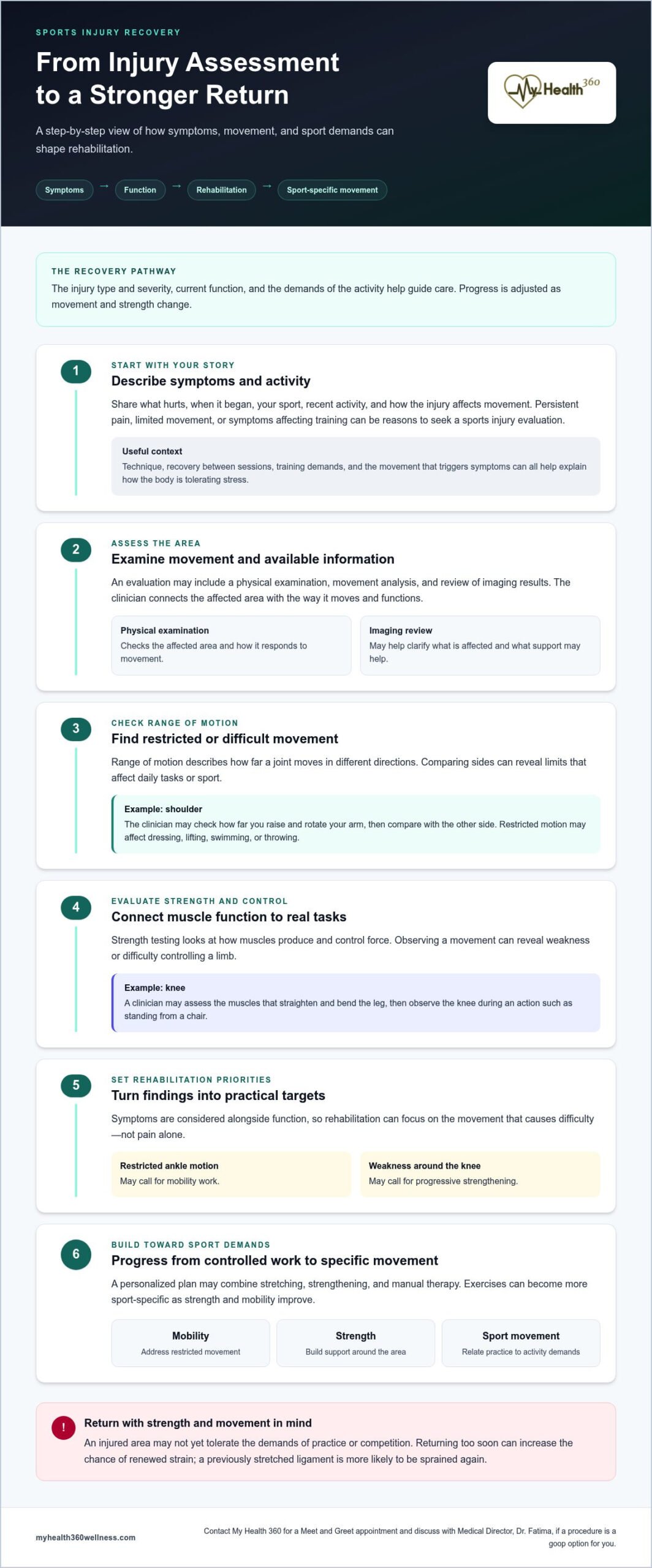
Range of motion describes how far a joint moves in different directions. A clinician may assess an injured shoulder as you raise and rotate your arm, then compare those movements with the other side. The comparison helps identify restricted motion that may affect dressing, lifting, swimming, or throwing.
Strength testing examines how muscles produce and control force. For a knee concern, a clinician may assess the muscles that straighten and bend the leg, then observe how the joint behaves during an action such as standing from a chair. Findings can reveal weakness or difficulty controlling the limb.
These checks connect symptoms to function. An athlete might report discomfort while climbing stairs but show reduced knee control during a squat. Recording the movement that triggers difficulty gives rehabilitation a practical target, rather than relying on pain alone to describe progress.
A personalized plan can combine stretching and strengthening exercises selected for the injury and the athlete’s activity. Restricted ankle motion may call for mobility work, while weakness around the knee may call for progressive strengthening. The clinician adjusts the exercise focus as movement and strength change.
Muscles around an injured area also matter. If pain limits use of a shoulder, nearby muscles may lose strength because the athlete avoids reaching or lifting. Rehabilitation can gradually challenge those muscles while respecting current motion and function. The goal is to rebuild support for the affected joint and everyday tasks.
Strength, conditioning, and flexibility work should relate to the demands of the sport. A runner needs control through repeated steps; a racket-sport athlete needs shoulder and trunk movement for swings. Exercises can progress from controlled practice to more sport-specific movements as strength and mobility improve.
Useful details to share include the movement that first caused symptoms, activities that now feel difficult, and changes since the injury. Bring relevant imaging reports if available. These examples help connect examination findings to exercise choices, so the plan addresses the movements that matter to your activity.
Treatment of repetitive-use sports injuries
Care for repetitive-use injuries starts by identifying the movement and tissues involved. The treatment plan then addresses symptoms, function, and the activity that repeatedly stresses the area.
Customized Assessment and Treatment Plans
At an appointment, describe which movement brings on discomfort, when it began, and how it affects activity. Repeated racket swings, throwing, or running place different demands on the body, so the assessment should connect symptoms with the specific action.
A plan may combine manual therapy, stretching, and strengthening exercises to improve mobility and support the affected area. For example, an athlete with shoulder symptoms during throwing may need a plan that considers shoulder movement and the demands of that activity. Injury type and severity also influence the pace of care.
Nonsurgical Treatment Options
Nonsurgical care may include guided exercise, stretching, strengthening, and manual therapy. These approaches can target movement and mobility while building strength around the affected area. The goal is not simply to keep training through pain, but to address the limitation that makes a repeated movement difficult.
Sports injury rehabilitation may also use specialized massage, taping, or electronic nerve stimulation to help minimize pain and support healing. The approaches used depend on the injury and treatment goals. A useful plan explains how each relates to the affected area and the athlete’s desired activity.
Surgical and Nonsurgical Care
Repetitive-use symptoms don’t automatically mean surgery is needed. Care depends on the injury’s type and severity, and treatment may begin with nonsurgical approaches such as exercise or manual therapy. Treatment for sports-related tendon or ligament tears may include rehabilitation, and the appropriate approach depends on the injury.
After a procedure, postoperative physical therapy can support the transition back to normal activities. The treatment plan should account for the area involved and the movement it needs to regain. Shoulder rehabilitation, for example, differs from care focused on a knee or ankle because each area serves different functions during sport.
Sports Injuries Treated
Repetitive sports movements can contribute to tennis elbow, rotator cuff injuries, tendonitis, or arthritis. Sports-related inflammation can affect the shoulders, elbows, hips, ankles, and knees. Identifying the affected site helps direct treatment toward the specific movement that triggers symptoms.
Recovery time depends on injury type and severity. Many patients experience significant improvement within weeks when following a consistent, guided treatment plan. For an athlete, progress can be tracked through changes in symptoms and the ability to perform relevant movements, such as swinging a racket or running.
Rehabilitation for torn ligaments and tendons
Tears, fractures, and periods of immobilization can change how an athlete moves and uses nearby muscles. Rehabilitation focuses on rebuilding function around the affected area and preparing it for activity.
Sports-related tendon and ligament tears can occur in the knees, shoulders, and groin. Treatment depends on the injury; surgery followed by physical therapy is often prescribed for these tears. A physical therapist can then help restore strength and range of movement with exercises suited to the affected area.
A sprain occurs when a ligament connecting one bone to another stretches beyond its limits. A previously stretched ligament is more likely to be sprained again, making gradual rehabilitation important. For a knee sprain, a program may focus on surrounding muscle strength and controlled movement before adding sport-specific demands.
Rehabilitation may also use specialized massage, taping, or electronic nerve stimulation to help minimize pain and support healing. Muscles around an injured area can weaken when the athlete can’t use them normally. A therapist may target those muscles with strengthening work, while manual therapy can support a movement-focused plan.
Fractures need time for the bone to recover, but rehabilitation can help strengthen the affected area during that process. After a cast or crutches, athletes may also need to address muscle weakness from prolonged immobilization. Following a dislocation, rehabilitation can focus on restoring movement and strength in the affected area after acute care.
Recovery After Casting or Bracing
Once casting or bracing has limited movement, returning to normal activity may require rebuilding strength and range of motion. A physical therapist can assess which movements are restricted and help restore them through a tailored program.
For example, after a leg fracture, rehabilitation may address weakness around the affected area and the movement needed for walking. Progression should reflect the injury and current function, rather than moving directly from immobilization to demanding exercise.
Athletic Injury Rehabilitation
Athletic rehabilitation connects recovery exercises to the movements required by a sport. A shoulder injury, for instance, may affect reaching or throwing; a knee injury may change running or direction changes. These demands help shape exercise selection and progression.
As function improves, a program can build toward sport-specific activity and fitness goals. Therapists may combine strengthening, mobility work, and selected manual therapy to address the affected area. A practical marker is improved ability to perform relevant movements, not simply completing exercises.
Recovery center equipment
Equipment matters when it supports a clear rehabilitation goal, not simply because it looks advanced. A stationary bike, for example, can let an athlete practise controlled leg movement, while resistance bands can add adjustable challenge to strengthening exercises. Specialists match each tool to the injury, current function, and next activity goal.
A treadmill can help structure a gradual return to walking or running. Speed, incline, and duration change the movement demands, so a rehabilitation professional can adjust the task to the athlete’s current ability. The useful question is how treadmill work connects to a real goal, such as tolerating a steady run.
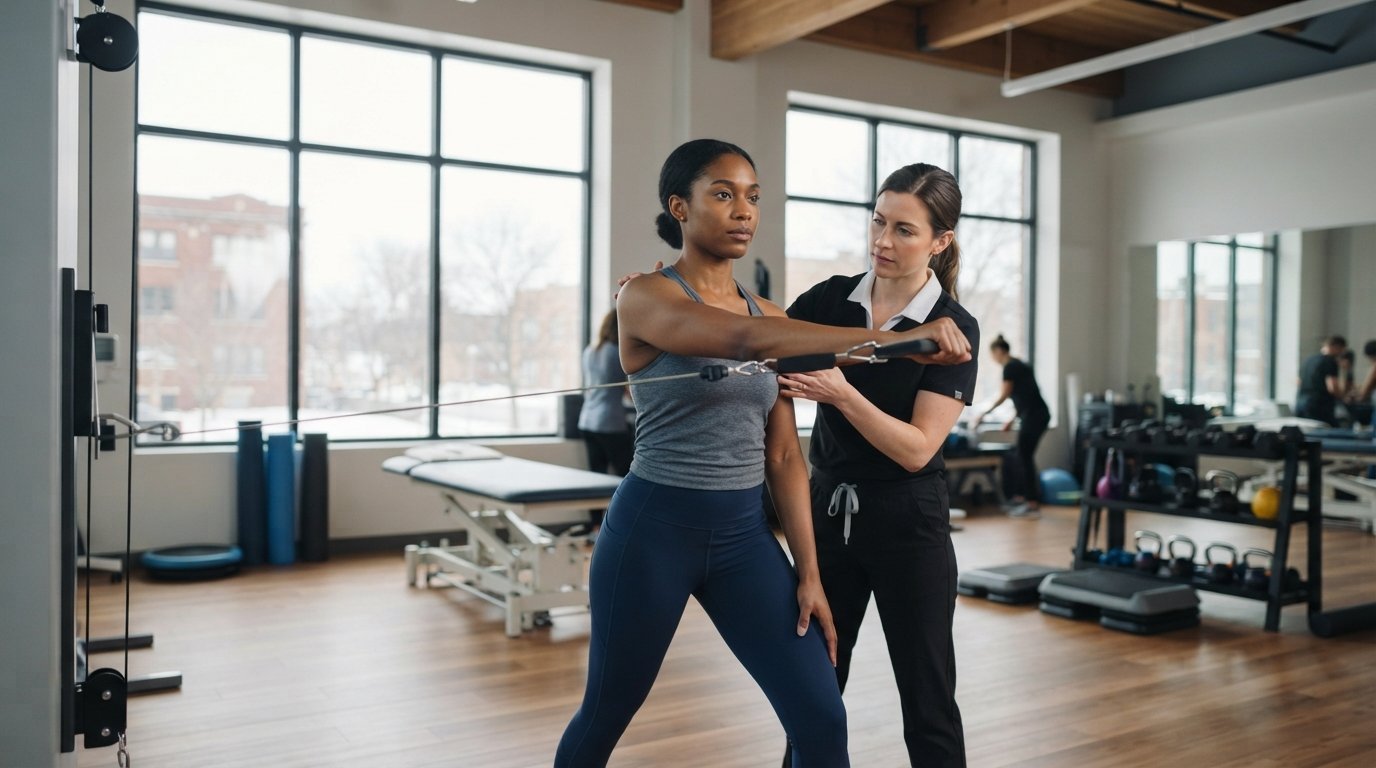
Resistance equipment supports progressive strengthening. Bands, cable machines, and free weights each provide different ways to challenge muscles; the chosen option should suit the movement being retrained. For example, an athlete rebuilding leg strength may practise a controlled sit-to-stand before progressing to a weighted movement.
Balance tools, such as a stability pad, can introduce a changing surface during controlled movement practice. This may help specialists observe how an athlete manages posture and coordination. The exercise should relate to a functional need, such as maintaining control while stepping or changing direction, rather than adding instability without purpose.
Range-of-motion work can use simple tools as well as machines. A wall, bench, or exercise strap can help guide a shoulder or ankle through a comfortable movement. The important question is whether the exercise addresses a specific restriction and fits the rehabilitation plan.
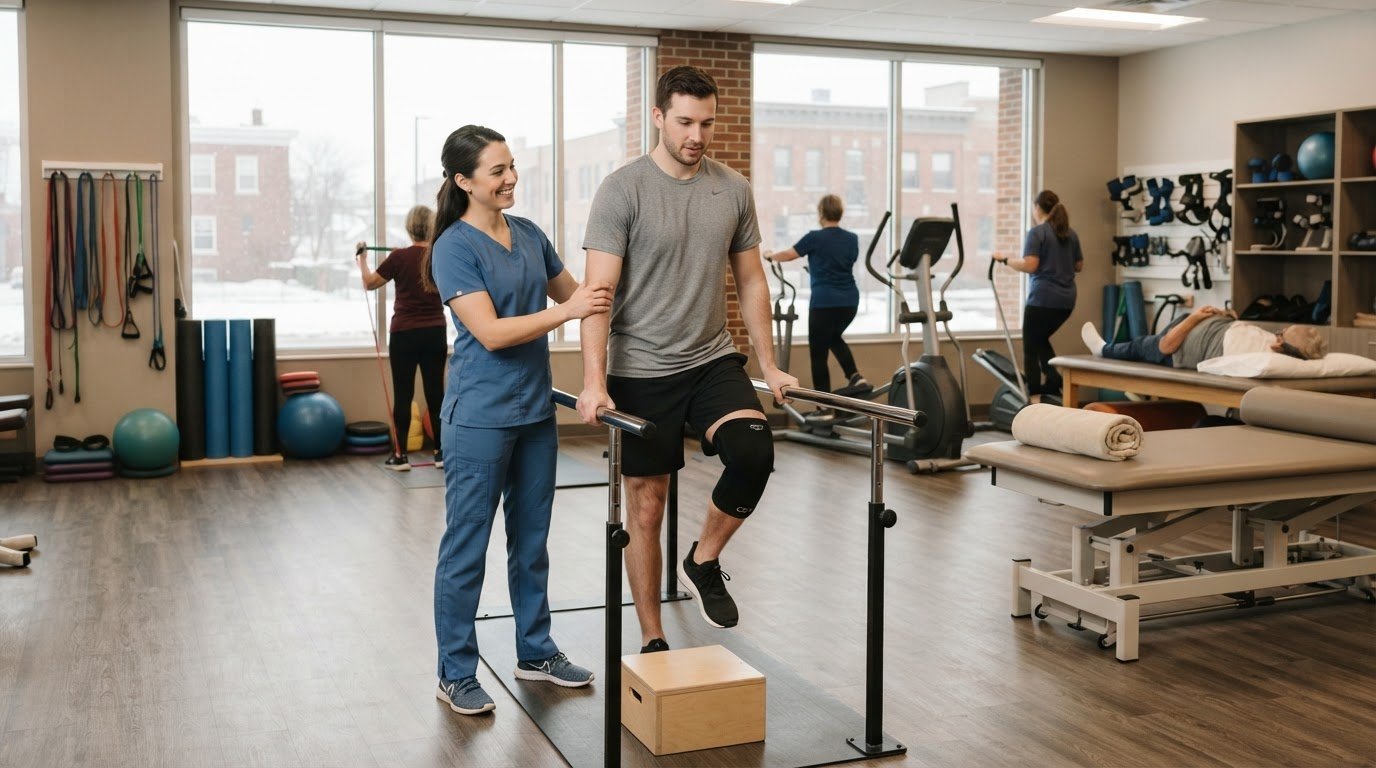
Equipment can also help track a task consistently. Repeating a step-up onto the same platform, for instance, gives the therapist a practical way to observe movement quality across sessions. Progress includes control, tolerance, and technique, not simply increasing resistance or speed.
Recovery equipment does not replace assessment or individualized exercise. A machine may support conditioning, but the athlete still needs a plan that connects exercise with lifestyle and sport demands. Someone returning to running may need different practice from someone preparing for repeated overhead movement.
To make a visit more useful, describe the activity you want to resume and ask how each tool supports that goal. If a treadmill, resistance station, or balance pad is included, understand what movement it trains and how the exercise progresses. Equipment is most relevant when it serves a defined step in rehabilitation.
My Health 360: Emsculpt Neo
My Health 360 offers Emsculpt Neo, alongside Bio-Restore, its post-operative and injury whole-body habilitation program. These offerings address different goals: Emsculpt Neo is a treatment option, while Bio-Restore focuses on whole-body habilitation after injury or surgery. They are not substitutes for evaluating an acute injury or following a rehabilitation plan for a torn ligament, tendon, or fracture.
If you’re considering a procedure as part of your broader recovery or performance goals, arrange a Meet and Greet with My Health 360. You can discuss with Medical Director Dr. Fatima whether a procedure is a good option for you.
Contact My Health 360 to arrange your Meet and Greet appointment.
Choose a thoughtful next step for your recovery
Your next step can be a conversation about how your current goals relate to your wider health and activity plans. A sports injury recovery clinic may support injury-focused care, while other services address different needs and shouldn’t be treated as substitutes for injury evaluation or rehabilitation.
My Health 360 offers Bio-Restore for post-operative or injury whole-body habilitation and BioPrime for pre-operative or pre-event whole-body habilitation. Emsculpt Neo is another available offering, with a distinct purpose from injury rehabilitation. Discuss your goals and relevant medical history before deciding whether a procedure fits your needs.
Contact My Health 360 to arrange a Meet and Greet appointment and discuss with Medical Director Dr. Fatima whether a procedure is a good option for you. Contact My Health 360 to arrange a Meet and Greet and take a considered step toward your next goal.
Frequently Asked Questions
Do You Treat Non-Athletes Too?
Yes. Sports-related care can help recreational exercisers and other active people, not only competitive athletes. A weekend tennis player, for example, may need support for elbow discomfort affecting their swing, while someone preparing for a community run may want guidance on activity and conditioning. In Buffalo and Western New York, My Health 360 offers Bio-Restore, a whole-body habilitation program for post-operative recovery or injury.
How Long Does Recovery Take?
Recovery depends on the injury type and severity, so a sprain and a tendon tear don’t follow the same timeline. Many patients experience significant improvement within weeks when following a consistent, guided treatment plan. Improvement in daily comfort and readiness for demanding sport are different milestones; work, sleep, and training demands can influence how quickly normal routines resume.
How does physical therapy help?
Physical therapy helps restore function through structured movement and exercise. For example, someone whose shoulder pain makes reaching overhead difficult can work toward that specific daily task before adding more demanding activity. A therapist can adapt the exercise challenge as function changes, helping bridge routine movement and the physical demands of work, recreation, or sport.
What Types of Injuries Do You Treat?
Sports injury care commonly addresses sprains, tears, fractures, and overuse problems. Examples include a ligament injury in the knee, a tendon issue in the shoulder, or tennis elbow associated with repeated activity. The affected body area and activity limitations help shape care. For a bone injury, rehabilitation may support strength as the bone recovers and movement resumes.
Does health insurance cover sports injury recovery clinic visits?
Coverage depends on your plan and the type of service. A physical therapy visit, medical evaluation, and whole-body habilitation program may be classified differently by an insurer. Relevant factors can include network status, referral or authorization requirements, deductibles, copayments, and exclusions. Review your plan’s benefits for the specific service before scheduling, since coverage for one category doesn’t establish coverage for another.
How long does recovery take for common sports injuries?
There isn’t one recovery timetable for all sprains, tendon injuries, or fractures. Injury severity, the affected area, and the demands of the activity all matter. A patient may notice improvement before being ready for full training or competition. For instance, walking comfortably after an ankle injury doesn’t necessarily mean the ankle is prepared for repeated cutting or jumping.
What treatments help recover from sprains, strains, and tendon injuries?
Treatment may combine guided exercise, stretching, strengthening, and manual techniques selected for the injury and its effects on movement. Rehabilitation may also use taping, specialized massage, or electronic nerve stimulation to help minimize pain and support healing. For example, a care plan for a sprain can address the injured area and surrounding muscles, which may weaken when normal use is limited.