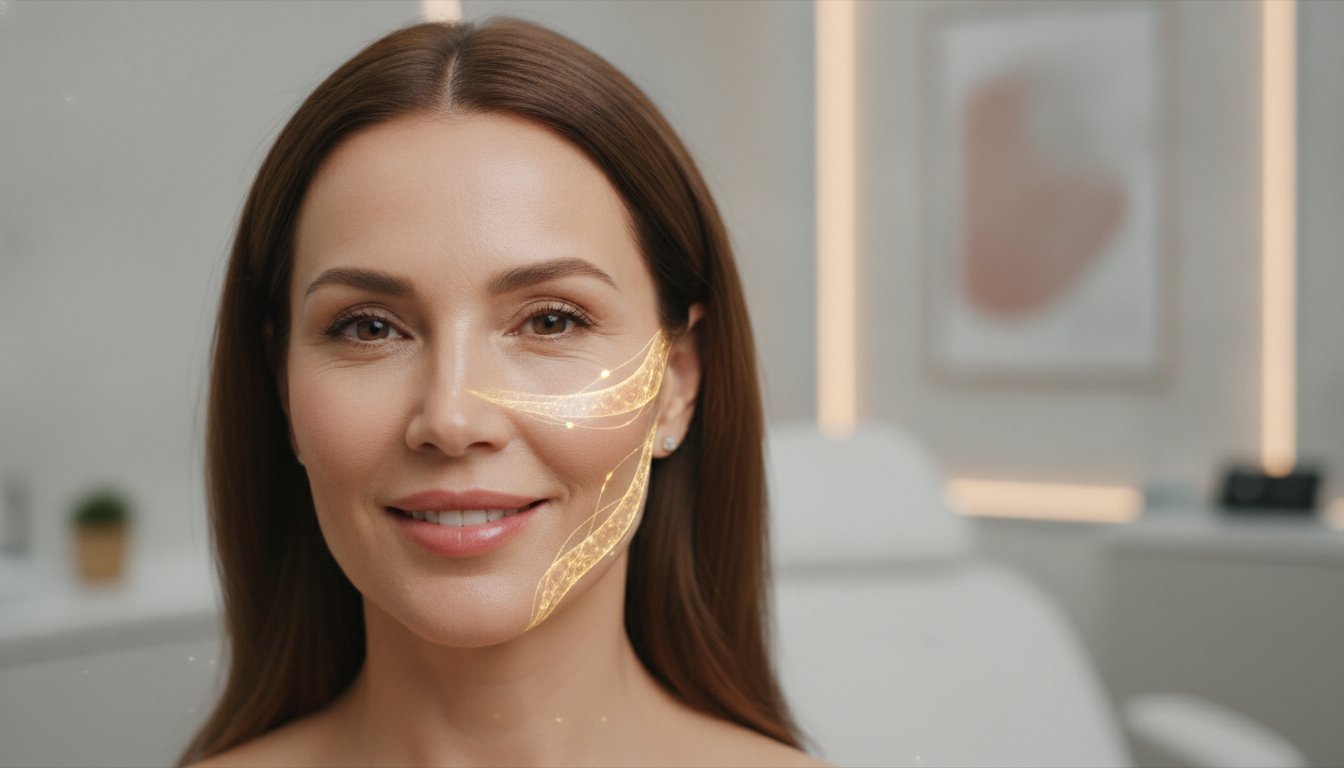
Have you ever wondered if there’s a sophisticated middle ground between the temporary volume of dermal fillers and the invasive commitment of a surgical facelift? Many patients find themselves at a crossroads when they notice visible skin laxity in the lower face and neck, yet they hesitate to explore options like pdo threads due to a lack of clinical clarity. You might feel a deep-seated anxiety about the “frozen” look often associated with over-treatment or the significant downtime required for surgery. It’s a common concern for those who value an authentic, refreshed appearance over a dramatic, artificial change.
In this physician-led guide, you’ll discover how these medical-grade sutures offer a solution that bridges the gap between traditional aesthetics and longevity medicine. By leveraging your body’s natural regenerative powers, we don’t just provide a mechanical lift; we initiate a biological process that reprogrammes your skin’s structural integrity from the inside out. We’ll examine the clinical science behind this treatment, explore how it restores natural facial contours through collagen induction, and explain why a holistic, expert-led approach is essential for achieving harmonious, natural-looking rejuvenation.
Key Takeaways
- Understand the clinical history of Polydioxanone, a biocompatible material used in cardiovascular surgery that now serves as the foundation for sophisticated skin lifting.
- Learn how pdo threads trigger neocollagenesis, a natural biological response that builds a new structural framework within your skin as the threads safely dissolve.
- Distinguish between barbed, mesh, and smooth thread varieties to identify which technical approach best addresses your specific goals for either mechanical lifting or skin tightening.
- Gain insight into the procedural steps and recovery expectations, ensuring you feel empowered and informed before beginning your rejuvenation journey.
- Discover the vital importance of physician-led care in navigating complex facial anatomy and how integrating threads with other modalities can optimize your long-term results.
What are PDO Threads? Defining the Non-Surgical Lift
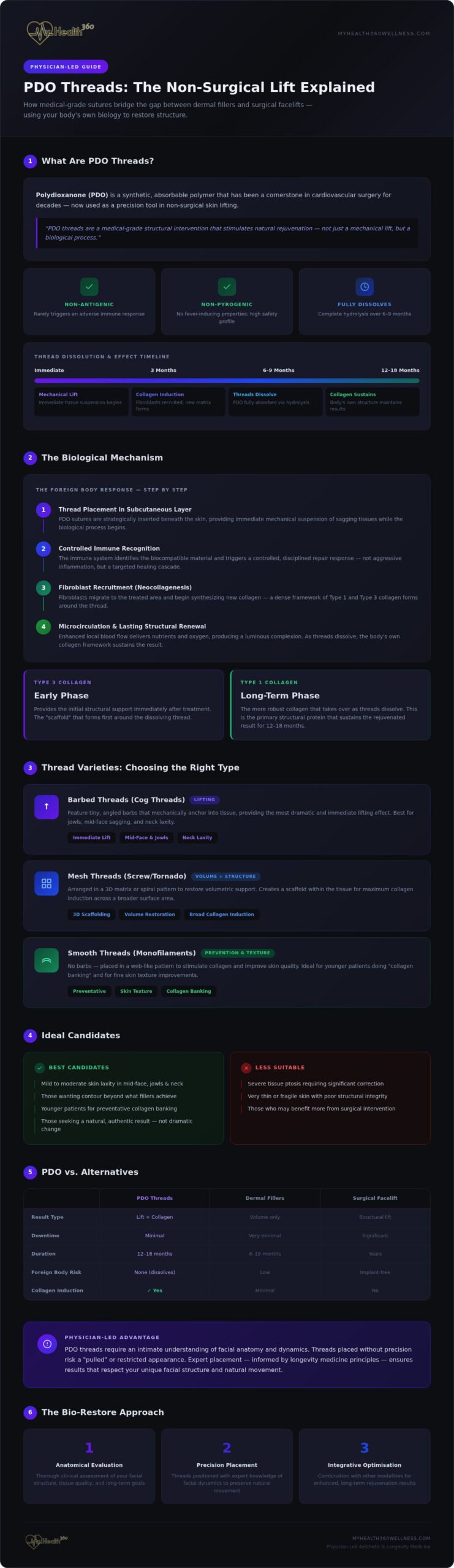
What exactly constitutes a sophisticated, non-surgical lift? At its core, the procedure utilizes Polydioxanone, a synthetic, absorbable polymer that has served as a cornerstone in cardiovascular surgery for several decades. Its transition into the aesthetic space represents a shift toward treatments that prioritize biological harmony alongside mechanical correction. PDO threads are a medical-grade structural intervention that stimulates natural rejuvenation. By placing these sutures within the subcutaneous layer of the skin, we provide an immediate, subtle suspension of sagging tissues while simultaneously triggering the body’s internal repair mechanisms.
This material is considered the gold standard for safety because of its predictable hydrolysis. Unlike permanent implants that can cause long-term complications, Polydioxanone dissolves completely over a period of six to nine months. The safety profile is exceptionally high. The material is non-antigenic and non-pyrogenic, meaning it rarely triggers an adverse immune response. This predictability allows physicians to plan treatments with a high degree of precision, ensuring that the structural support remains effective until the body’s own collagen can take over. Because of this, pdo threads offer a reliable path to rejuvenation that avoids the risks of foreign body retention.
The Evolution of Thread Lifting
The history of thread lifting has moved through several distinct phases. Early iterations often relied on permanent materials, such as “gold threads,” which frequently led to complications or an unnatural, restricted appearance. Modern 2026 standards have moved far beyond these static techniques. Today, we prioritize natural movement and facial expression. Our physician-led approach ensures that the threads are placed with an intimate understanding of facial dynamics, avoiding the “pulled” look that characterized earlier decades. This evolution reflects a broader trend in longevity medicine. We work with the body rather than forcing it into an artificial shape. This disciplined methodology, overseen by Dr. Umbrine Fatima, ensures that every placement respects the delicate balance of your unique facial structure.
Ideal Candidates for PDO Rejuvenation
Identifying the right candidate is a clinical art form. Those experiencing mild to moderate skin laxity in the mid-face, jowls, and neck often see the most significant benefits. For these patients, the threads provide a refined contour that fillers alone cannot achieve. We also see an increasing number of younger patients seeking “smooth” threads for preventative collagen banking. This proactive strategy strengthens the skin’s foundation before significant sagging occurs. Conversely, individuals with severe tissue ptosis or very thin, fragile skin may be better served by surgical interventions. A thorough evaluation at our center ensures that your treatment plan aligns with our Bio-Restore philosophy. We focus on your anatomical needs and long-term aesthetic goals to ensure the most harmonious results.
The Biological Mechanism: How PDO Threads Stimulate Collagen
How does the body transform a medical suture into a youthful facial contour? The answer lies in a controlled biological reaction known as the Foreign Body Response. While the term may sound intimidating, it’s actually a sophisticated healing mechanism that physicians leverage to restore skin quality. When pdo threads are strategically placed, the immune system identifies the material and begins a targeted repair process. This doesn’t involve the aggressive inflammation of an injury; instead, it’s a disciplined recruitment of fibroblasts to the area.
Beyond the immediate mechanical lift, these threads improve microcirculation and skin texture simultaneously by increasing local blood flow to the treated tissues. This enhanced vascularity delivers essential nutrients and oxygen, resulting in a healthier, more luminous complexion that develops over several weeks. Because this process happens at a cellular level, the transformation feels gradual and entirely natural. It’s a biological reprogramming that works from the inside out.
Neocollagenesis and Elastin Production
Neocollagenesis is the clinical term for the production of new collagen. During this phase, the body builds a dense framework of Type 1 and Type 3 collagen around the thread. Type 3 collagen provides the initial structural support, while the more robust Type 1 collagen eventually takes over to ensure long-term firmness. This biological “scaffold” replaces the temporary support of the thread itself. Additionally, the process stimulates elastin production. Elastin is the protein responsible for the skin’s “snap-back” or resilience. Without it, skin remains saggy even if it’s thick. By restoring both collagen and elastin, we help the skin regain its youthful elasticity and structural integrity. Understanding these nuances is why consulting with a board-certified physician is vital for tailoring the treatment to your specific skin density.
The Absorption Process
The beauty of Polydioxanone is its safe and predictable absorption through a process called hydrolysis. Over a period of six to nine months, the body uses water to break down the polymer into simple, harmless components: carbon dioxide and water. These are then naturally excreted. This slow dissolution rate is critical. If the threads vanished too quickly, the body wouldn’t have enough time to establish a permanent collagen framework. Instead, the gradual exit of the thread ensures the new tissue is strong enough to stand on its own. Even after the threads have completely vanished, the newly formed collagen remains in place. This explains why patients often enjoy visible results for 12 to 18 months, long after the physical material has been absorbed.
Barb vs. Mesh vs. Smooth: Navigating Thread Varieties
How does a clinician decide which specific tool will best restore your facial architecture? The choice between different varieties of pdo threads is not merely a technical preference; it’s a strategic decision based on your unique anatomical needs and the specific degree of tissue ptosis. We categorize these medical instruments into three primary groups: barbed threads for mechanical lifting, smooth threads for skin thickening, and screw threads for localized volume restoration. To learn more about the sourcing of these professional clinical tools, check out GetMedicalDevice. Each type serves a distinct purpose in the overarching goal of non-surgical rejuvenation.
A successful outcome relies heavily on a customized ‘thread map.’ This is a detailed blueprint designed by a physician that dictates the depth, direction, and type of thread required for each zone of the face. Without this disciplined planning, results can appear asymmetrical or fail to address the underlying structural concerns. At My Health 360, we view this mapping process as the intersection of medical science and aesthetic art. By combining different thread types, we can address multiple layers of aging simultaneously, from surface texture to deep tissue suspension.
Lifting Threads for Facial Contouring
Barbed (Cog) threads serve as the primary instrument for repositioning sagging tissue in the mid-face and jawline. These specialized sutures feature microscopic barbs that anchor securely into the sub-dermal layers, allowing the physician to physically elevate and suspend the tissue. This provides an immediate, visible improvement in the appearance of marionette lines and sagging cheeks. Beyond the lower face, we utilize these pdo threads to achieve a refined ‘cat eye’ effect or a subtle brow lift. This technique offers a refreshed look that maintains your natural expressions while restoring the crisp contours of a younger profile.
Tightening Threads for Texture and Volume
Smooth (Mono) threads function differently, focusing on ‘collagen banking’ rather than immediate mechanical elevation. We often place these in a mesh-like pattern to create a structural foundation that thickens thinning skin over time. This technique is particularly effective for delicate areas such as the skin under the eyes, horizontal neck lines, and radial cheek lines. For patients seeking a more subtle restoration of facial fullness, Screw (Twist) threads provide a focused volume boost in sunken areas like the nasolabial folds. These varieties offer a compelling alternative to traditional dermal fillers for those who prefer an understated, biologically-driven approach to rejuvenation, a philosophy shared by experts providing the Morpheus8 treatment Sydney at Cosmetic Wellness.
The Procedure and Recovery: What to Expect
What does the actual experience of a thread lift entail? Unlike surgical alternatives, the placement of pdo threads is a streamlined, office-based procedure that typically concludes within 30 to 60 minutes. While the process is minimally invasive, it requires a high degree of clinical precision to ensure both safety and aesthetic harmony. Patients usually describe the sensation as a series of light pressure points rather than acute pain. This is largely due to our comprehensive numbing protocols, which prioritize your comfort from the moment you enter the treatment room. The sensation is manageable, and the procedure doesn’t require general anesthesia.
The first 72 hours following the procedure are critical for the initial “setting” of the threads. During this time, the skin begins to adapt to the new internal structure; a brief settling period occurs where minor irregularities or a feeling of “tightness” naturally resolve as the tissue integrates with the sutures. While some competitors might claim “zero downtime,” we believe in providing a realistic clinical perspective. You should expect a few days of social downtime to allow for the natural resolution of mild swelling or bruising. This transparency is a cornerstone of our patient-centered care.
Preparation and Procedure Steps
A successful procedure begins long before the first cannula is inserted. Every treatment at My Health 360 starts with a detailed physician consultation to assess facial symmetry and skin quality. Once the “thread map” is finalized, we apply a local anesthetic to the entry points. Using a sterile technique, we then guide a thin cannula into the subcutaneous layer to deposit the pdo threads. This method minimizes trauma to the surrounding vasculature and nerves, ensuring a safer experience than traditional needle-based techniques. Our commitment to a sterile, medical-grade environment is non-negotiable for preventing post-procedural complications.
The ‘Bio-Restore’ Recovery Path
Recovery is an active process that we manage through our Bio-Restore philosophy. To protect the integrity of the lift, you must avoid high-impact exercise, facial massages, and excessive facial movements for at least two weeks. Common side effects like mild bruising or a “tugging” sensation are normal and typically peak within the first 48 hours. To support faster tissue healing and reduce systemic inflammation, many of our patients choose to incorporate IV Hydration therapy into their recovery plan. For those who want to take a more comprehensive approach, understanding the principles of pre-surgical optimization can help you bio-prime your physiology for a smoother, faster healing process. Patients who are committed to maximizing their recovery outcomes may also benefit from exploring whole body habilitation, a proactive physician-led strategy that fortifies your physical state before and after any aesthetic or medical procedure. This integrative approach ensures your body has the micronutrients necessary for optimal collagen synthesis. If you’re ready to begin your journey toward a more contoured profile, we invite you to schedule a consultation with our clinical team.
Integrative Rejuvenation: The Physician-Led Advantage
Why is physician oversight the most critical factor in a successful outcome? While many facilities offer aesthetic procedures, the application of pdo threads requires an exhaustive understanding of facial anatomy that only rigorous medical training provides. The face is a complex network of nerves, muscles, and critical vasculature. A misplaced thread doesn’t just result in a poor aesthetic result; it can compromise functional health or lead to vascular complications. At My Health 360, our philosophy is rooted in clinical precision. We ensure that every structural intervention respects the delicate biological systems beneath the surface, prioritizing your safety as much as your visual transformation.
Our approach view’s the human body through a holistic lens, considering how aesthetic goals intersect with overall wellness. By choosing a physician-led center, you’re not just receiving a treatment; you’re entering into a managed medical journey. This oversight ensures that your rejuvenation plan is grounded in scientific reality and tailored to your specific physiological needs. It’s about moving beyond the surface to create a foundation of health that supports your aesthetic goals for years to come. For patients who want to maximize the long-term value of treatments like these, exploring a structured medical spa membership can transform a series of individual appointments into a cohesive, physician-led longevity plan.
Synergistic Treatments for Superior Results
We often view rejuvenation through a multi-dimensional lens. While threads provide structural support and lifting, combining them with a Morpheus8 treatment creates a synergistic effect that addresses both deep tissue laxity and surface texture. This “power couple” utilizes radiofrequency energy to remodel the skin while the pdo threads provide the mechanical suspension discussed in earlier sections. Additionally, maintaining optimal body composition through Emsculpt Neo supports the overall aesthetic foundation, ensuring that facial rejuvenation aligns with a healthy, toned physique. This isn’t about a one-time fix; it’s about developing a comprehensive longevity plan that evolves with you. For patients whose overall vitality goals extend beyond aesthetics, exploring the regenerative protocols available at a sexual wellness clinic can complement a holistic longevity strategy by addressing the full spectrum of physical performance and wellbeing.
Safety Protocols and Risk Mitigation
Risk mitigation is an ongoing discipline in our practice. Complications like thread migration, extrusion, or visible “puckering” are often the result of improper depth or poor patient selection. Having a Board Certified physician like Dr. Umbrine Fatima manage your journey means that these risks are identified and neutralized before the procedure begins. We adhere to a “less is more” approach, favoring sophisticated, subtle results over aggressive over-correction. This disciplined methodology ensures that your rejuvenation looks authentic and remains structurally sound for the long term. By viewing the body through a holistic lens, we bridge the gap between traditional medicine and modern aesthetics.
This commitment to professional excellence and compassionate care is vital during all of life’s transitions; for those who need support with end-of-life arrangements, we recommend you visit Horizon Funeral Home.
Reclaim Your Natural Contours with Clinical Precision
Choosing a path toward rejuvenation is a significant decision that deserves a foundation of medical expertise and holistic insight. We’ve examined how pdo threads function as a biological catalyst, stimulating your body’s own collagen and elastin production to restore structural integrity from within. It’s clear that the success of this procedure isn’t just about the material itself; it’s about the disciplined “thread map” and anatomical precision provided by a Board Certified physician. By integrating these advanced sutures with our specialized Bio-Restore recovery protocols, we ensure your transition to a refreshed appearance is as smooth as it is effective.
At My Health 360, an Advanced Longevity and Performance Center, we view your aesthetic goals through the lens of long-term health and functional vitality. Under the leadership of Dr. Umbrine Fatima, our team is committed to providing results that are both sophisticated and subtle. Don’t leave your facial architecture to chance when you can rely on clinical authority. Schedule your physician-led PDO thread consultation at My Health 360 today. We look forward to guiding you toward a more confident, naturally rejuvenated version of yourself.
Frequently Asked Questions
How long do PDO threads actually last in the skin?
The physical material typically remains in the subcutaneous layer for six to nine months before it is safely absorbed through hydrolysis. However, the visible lifting and tightening effects often persist for 12 to 18 months. This longevity is due to the robust collagen framework your body builds around the sutures during the healing process. The structural benefits continue long after the threads have completely vanished from your system.
Are PDO threads painful during or after the procedure?
Most patients describe the sensation as a series of mild pressure points rather than acute pain. We utilize advanced numbing protocols and local anesthesia to ensure your comfort throughout the 30 to 60 minute procedure. While you may experience a “tight” or “tugging” sensation for a few days afterward, this is easily managed. Our clinical team provides detailed post-care instructions to minimize any temporary discomfort during the initial healing phase.
What is the difference between a PDO thread lift and a surgical facelift?
A PDO thread lift is a minimally invasive, non-surgical procedure that requires no general anesthesia or large incisions. Unlike a surgical facelift, which involves removing excess skin and repositioning deep muscles, threads focus on repositioning tissue and stimulating natural collagen. While surgery offers more dramatic, permanent results for severe laxity, pdo threads provide a sophisticated middle ground with significantly less risk and a much faster recovery timeline.
Can I see the threads under my skin after the treatment?
You should not be able to see the threads once they have been properly inserted into the subcutaneous layer. A physician’s deep understanding of facial anatomy ensures that the sutures are placed at the correct depth to avoid visibility or “puckering.” While you might feel a slight firmness in the treated area during the first week, this sensation resolves as the tissue integrates with the new internal structure and the threads begin to settle.
How many threads will I need for a full face lift?
The number of threads required is highly individualized and depends on your specific anatomical needs and aesthetic goals. Generally, a comprehensive mid-face and jawline lift may involve four to eight barbed threads for mechanical suspension. We often supplement these with several smooth threads to address fine lines and improve skin density. During your initial consultation, we create a detailed “thread map” to determine the exact quantity needed for a harmonious result.
What happens if I don’t like the results of my PDO threads?
Because Polydioxanone is a fully absorbable material, the results are temporary and will naturally fade as the threads dissolve. If minor adjustments are needed shortly after the procedure, a physician can often manipulate the tissue or the thread to refine the contour. Unlike permanent implants or surgery, the biological nature of the treatment means your face will return to its baseline state over time, providing a safety net for those hesitant about permanent changes.
Is there an age limit for getting PDO threads?
There is no chronological age limit; instead, we prioritize the clinical condition of your skin and the degree of tissue laxity. Most candidates fall between the ages of 30 and 65. Younger patients often utilize smooth threads for preventative collagen banking, while those with moderate sagging seek barbed threads for corrective lifting. If the skin is excessively thin or has severe sun damage, we may recommend alternative physiological interventions for better safety and efficacy.
Can PDO threads be combined with Botox or dermal fillers?
Combining pdo threads with neuromodulators or fillers is a common practice for achieving a “total rejuvenation” effect. While threads provide the structural lift and suspension, fillers can restore lost volume in areas like the temples or mid-face. Botox is often used to relax dynamic wrinkles, allowing the threads to set without being disturbed by excessive muscle movement. This integrative approach allows us to address multiple layers of the aging process simultaneously for a more balanced outcome. Patients who invest in multiple complementary treatments often find that a physician-led medical spa membership provides the structured follow-up and cost efficiency needed to sustain these results long-term.