

What if the true expense of pelvic floor dysfunction isn’t the clinical intervention itself, but the hidden, compounding cost of incontinence products and restricted lifestyle choices over a lifetime? When researching the emsella treatment cost, you likely encounter a confusing array of price points that make it difficult to assess the actual value of this non-invasive therapy. It’s understandable to feel frustrated by this lack of transparency, especially when you’re trying to weigh the benefits of HIFEM technology against the significant downtime and risks associated with surgical alternatives.
This physician-led guide will help you navigate the clinical and financial variables of Emsella therapy so you understand exactly what you’re investing in for your pelvic health. We’ll explore the long-term ROI of this treatment, compare its safety profile to surgical options, and provide the clarity needed to choose a provider with confidence. By looking through a holistic lens, we can move beyond simple numbers to focus on the precision and results that define true medical excellence.
Key Takeaways
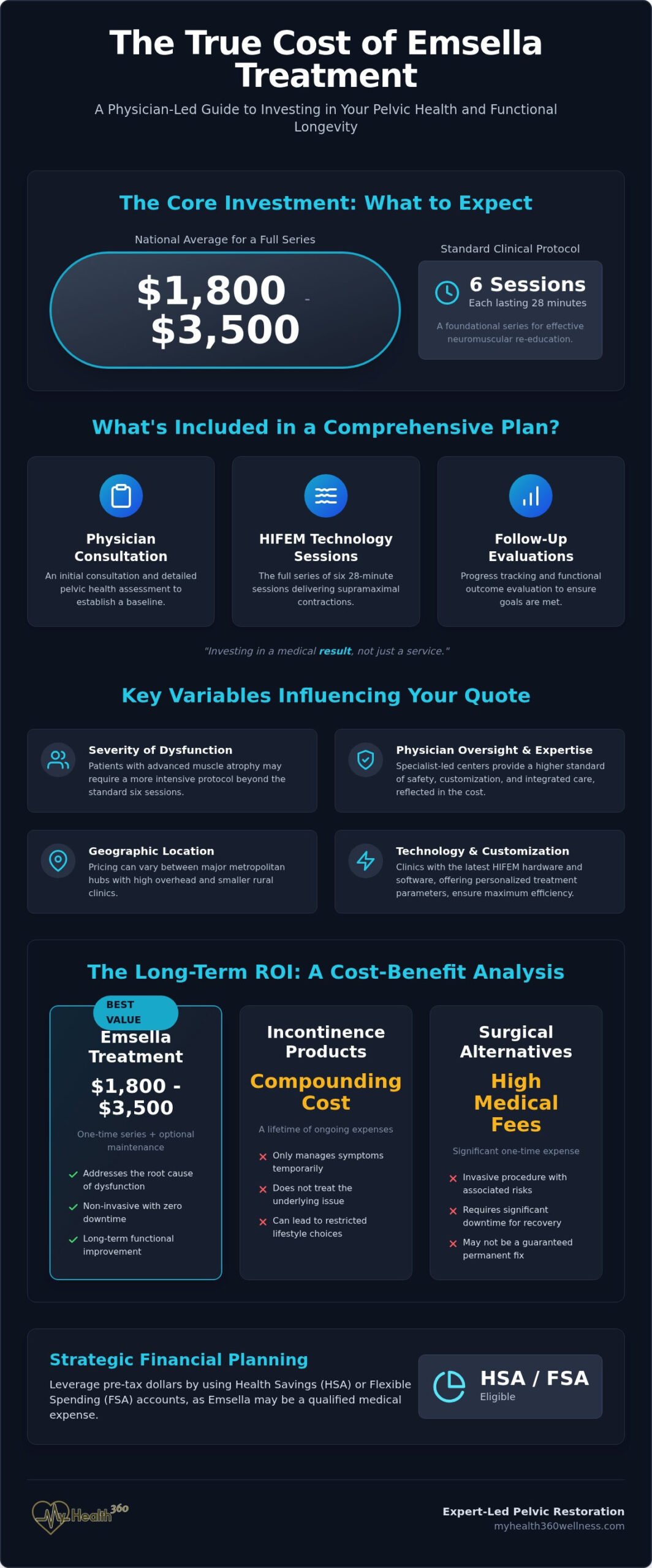
- Understand the clinical standard of a six-session protocol and why national averages for a full series typically range from $1,800 to $3,500.
- Evaluate the long-term ROI of HIFEM technology compared to the compounding expense of incontinence products or the significant medical fees associated with surgery.
- Identify how specific clinical variables, such as the severity of pelvic floor dysfunction and the level of physician oversight, directly influence your personalized emsella treatment cost.
- Discover how to leverage pre-tax dollars through HSA or FSA accounts to strategically invest in your pelvic health and functional longevity.
- Learn why a physician-led approach within a dedicated Women’s Health or Bio-Restore program provides a higher standard of safety and clinical precision than aesthetic-only facilities.
The True Cost of Emsella: National Averages and Pricing Models
Evaluating the emsella treatment cost requires a departure from standard retail thinking. Unlike a single aesthetic injection, this therapy functions as a functional rehabilitation of the pelvic floor muscles. To achieve the supramaximal contractions necessary for neuromuscular re-education, clinical protocols typically dictate a foundational series of six sessions. While individual needs fluctuate, national data suggests that a full treatment course generally commands an investment between $1,800 and $3,500. This variance often reflects the depth of clinical oversight provided during the patient journey.
Pricing models for Emsella are rarely “one-size-fits-all” because pelvic health is deeply personal. Most reputable centers prioritize a package-based approach for the initial series. This ensures you receive the cumulative biological benefits required for lasting muscle hypertrophy. Once this foundation is established, many providers offer single maintenance sessions at a reduced rate. These periodic “tune-ups” help sustain the structural integrity of the pelvic floor without the need to repeat a full series. It’s vital to distinguish these clinical-grade programs from “promotional pricing” often found at high-volume discount centers. Lower prices can sometimes indicate a lack of diagnostic screening or the absence of a qualified physician to manage your care.
What is Included in the Treatment Price?
A transparent quote should encompass more than just the time spent in the chair. A comprehensive investment usually includes:
- The initial physician consultation and a detailed pelvic health assessment.
- Six 28-minute sessions utilizing High-Intensity Focused Electromagnetic (HIFEM) technology.
- Follow-up evaluations to track muscle strengthening progress and functional outcomes.
These components ensure that the emsella treatment cost covers a medical result rather than just a service. Post-series evaluations are particularly important. They allow your provider to determine if you have reached your specific performance goals or if your protocol needs adjustment.
Why Prices Vary Across the United States
Key Variables Influencing Your Emsella Treatment Quote
How do you determine the specific value of a pelvic health intervention? While national averages provide a baseline, your individual emsella treatment cost is dictated by several clinical and operational variables. The most significant factor is the current state of your pelvic floor. A randomized clinical study has demonstrated the efficacy of HIFEM technology for stress urinary incontinence, but patients with advanced muscle atrophy may require a more intensive protocol than the standard six sessions. This biological reality means that a customized plan is essential for achieving the ROI you expect.
Geographic location and the “tier” of the facility also play a role. A center located in a major metropolitan hub with high overhead will naturally have different pricing than a rural clinic. However, the most critical variable isn’t just location, it’s the level of customization. High-volume centers often use factory-setting protocols that apply the same energy levels to every patient. In contrast, a boutique longevity center adjusts the treatment parameters to your specific tolerance and physiological needs, ensuring every minute in the chair contributes to your recovery.
Medical Oversight and Clinical Expertise
Why do physician-led centers often have different pricing structures than high-volume aesthetic shops? It’s because the “art” of medicine involves more than just pressing a button. At a specialist-led facility, you aren’t just paying for the chair; you’re paying for a comprehensive medical screening. Board-certified Internal Medicine specialists bring a higher register of diagnostic precision. They identify underlying health issues that might mimic pelvic floor dysfunction and ensure you don’t have contraindications like metal implants or cardiac pacemakers. This level of safety and clinical rigor justifies a premium, as it minimizes risk and maximizes the likelihood of a successful outcome.
Package Deals and Membership Integration
Financial efficiency often comes through integration. Many patients find that the emsella treatment cost becomes more manageable when viewed as part of a broader longevity strategy. For example, incorporating Emsella into a Medical Gym Membership or a specialized Women’s Health program can reduce the per-session investment. We often see patients combine pelvic restoration with other modalities, such as Morpheus8 for tissue remodeling or Emsculpt Neo for core strengthening. This “whole-body” approach, often structured within a Bio-Restore habilitation program, addresses health from multiple angles. It’s a strategic way to consolidate your wellness spending while achieving a more harmonious result. If you’re curious about how these therapies work together, you can explore our full range of integrative performance services to see which combination aligns with your goals.
When evaluating the emsella treatment cost, it’s essential to look beyond the immediate invoice and consider the “total cost of ownership” for your pelvic health. Traditionally, patients have been caught between two extremes: the passive, recurring expense of conservative management and the high-risk, high-cost reality of surgical intervention. Emsella represents a sophisticated “middle path” that offers clinical-grade restoration with zero recovery time. To understand the true value, we must analyze the efficiency of High-Intensity Focused Electromagnetic (HIFEM) technology. One 28-minute session delivers the equivalent of approximately 11,000 supramaximal contractions, a feat of neuromuscular re-education that would require months, if not years, of traditional pelvic floor therapy to replicate.
Financial ROI: The Hidden Costs of Incontinence
The financial burden of “managing” symptoms rather than treating the cause is often underestimated. Many patients spend thousands of dollars over a decade on disposable incontinence liners, specialized laundry detergents, and replacement clothing. These are “sunk costs” that offer zero curative value and do nothing to halt the progression of pelvic floor weakening. Beyond the ledger, there’s a significant emotional and social tax; many individuals withdraw from fitness communities, travel, or intimate social settings due to bladder anxiety. When you calculate the recurring investment in disposable products, the three-year cost of incontinence pads frequently surpasses a complete Emsella series without providing any structural improvement to the pelvic floor.
Emsella vs. Mesh Surgery
Surgical interventions, such as the placement of a synthetic mesh or mid-urethral sling, carry a heavy financial and physiological price tag. While insurance may cover a portion of these procedures, the out-of-pocket expenses for hospital facility fees, anesthesiology, and post-operative medications can easily exceed $10,000. This doesn’t account for the indirect costs of several weeks of lost income during recovery or the potential for expensive revision surgeries if complications arise. In contrast, a $3,000 investment in Emsella avoids the risks of anesthesia and surgical scarring entirely. This makes the emsella treatment cost a more predictable and often more affordable long-term strategy for those seeking to regain functional control. As clinical preferences shift toward non-invasive “first-line” therapies, Emsella stands out as a high-ROI choice that respects both your health and your time.
- Surgical Path: High initial cost, significant downtime, risk of complications.
- Conservative Path: Perpetual recurring costs, zero restoration, lifestyle limitations.
- Emsella Path: Fixed investment, zero downtime, active muscle rehabilitation.
Planning Your Investment: Financing, Insurance, and Maintenance
How can you strategically manage the emsella treatment cost within your annual wellness budget? While many traditional insurance providers still categorize HIFEM therapy as an elective or wellness-focused procedure, several sophisticated financial tools exist to help you optimize this investment. Most patients find that even without direct insurance reimbursement, the ability to utilize pre-tax dollars or flexible financing makes the transition from symptomatic management to clinical restoration highly accessible. Third-party healthcare financing platforms, such as CareCredit, are also commonly utilized to distribute the investment over several months, ensuring that financial timing doesn’t delay your physiological recovery.
Navigating HSA and FSA for Pelvic Health
The most effective way to reduce the net emsella treatment cost is by leveraging your Health Savings Account (HSA) or Flexible Spending Account (FSA). Because Emsella treats a diagnosed medical condition-urinary incontinence-it is generally an eligible expense when supported by the correct documentation. To ensure a seamless reimbursement process, you should follow these steps:
- Request a formal Letter of Medical Necessity (LMN) from your board-certified physician during your initial assessment.
- Ensure your clinical documentation clearly identifies the functional impairment, such as stress or urge incontinence, that necessitates pelvic floor therapy and strengthening.
- Keep detailed records of your treatment protocol to justify the clinical need for the full six-session series.
By using these pre-tax funds, you effectively reduce the out-of-pocket expense by your marginal tax rate, which can represent significant savings for many wellness-focused individuals.
Protecting Your Investment
Maintaining the structural integrity of the pelvic floor requires a proactive approach that extends beyond the initial treatment series. To maximize the ROI of your Emsella therapy, we recommend integrating the procedure into a broader longevity strategy. This might include weight management and core-strengthening exercises that reduce intra-abdominal pressure on the pelvic floor. For those seeking comprehensive oversight, integrating Emsella with a Direct Primary Care membership allows for ongoing health monitoring and the early identification of lifestyle factors that could impact your results.
Clinical data suggests that “booster” sessions every 6 to 12 months are the most efficient way to sustain your progress. These single-session maintenance appointments prevent the gradual neuromuscular decline that can occur over time, ensuring you don’t need to repeat a full foundational series in the future. To begin your personalized assessment and discuss which financing options best suit your health goals, you can schedule a consultation with our clinical team today.
The My Health 360 Advantage: Expert-Led Pelvic Restoration
Choosing a provider for pelvic rehabilitation is as much about clinical safety as it is about the financial bottom line. At My Health 360, we view the emsella treatment cost through the lens of medical outcomes rather than simple retail transactions. As a physician-owned longevity and performance center, we ensure every protocol is grounded in academic rigor and patient safety. We don’t just offer a service; we provide a guided path toward functional restoration within a sophisticated, patient-centered environment designed for sensitive health concerns.
Our integrative approach treats pelvic health as a fundamental pillar of longevity. For many, the goal isn’t just to stop a symptom but to optimize physical performance. This is why we often incorporate Emsella into customized Bio-Restore programs. These initiatives go beyond the chair, looking at the harmony between your pelvic floor, core stability, and overall musculoskeletal health. By viewing the human body through a holistic lens, we ensure your investment leads to a more resilient and functional version of yourself.
Why Physician Oversight Changes the Outcome
The advantage of a Board-Certified Internal Medicine specialist lies in the ability to view the body as an interconnected system. Pelvic floor dysfunction is rarely an isolated issue. It’s often intertwined with your broader medical history and physiological response. By tailoring the HIFEM intensity to your specific muscle feedback, we maximize the ROI of every session. This level of precision is frequently absent in high-volume med-spa environments where factory settings are the norm. For patients seeking a comprehensive approach to structural health, combining pelvic restoration with other tissue-remodeling modalities, such as those detailed in our Morpheus8 treatment guide, can provide a more harmonious path to total rejuvenation.
Next Steps: Your Pelvic Health Consultation
Your journey begins with a detailed performance and wellness assessment. This isn’t a cursory screening. It’s a deep dive into your clinical history and functional goals to ensure you’re a safe and ideal candidate for HIFEM technology. During this consultation, we provide a transparent breakdown of your personalized emsella treatment cost, ensuring you understand exactly how your investment maps to your expected results. Whether you aim to return to high-impact athletics or simply wish to navigate daily life with renewed confidence, we provide the medical-grade framework necessary for physical freedom. We invite you to experience a clinical environment where your health is prioritized through precision, experience, and an unwavering commitment to patient-first care.
Investing in Functional Pelvic Restoration
Evaluating the emsella treatment cost requires shifting the perspective from a short-term expense to a long-term investment in your functional longevity. By analyzing national averages against the clinical efficiency of HIFEM technology, it’s clear that the true value lies in achieving a non-invasive, restorative result that avoids the inherent risks of surgery and the perpetual costs of conservative management. Whether you’re navigating the complexities of HSA eligibility or selecting a provider with specialized medical expertise, the ultimate goal remains a return to confidence and physical freedom.
At My Health 360, we combine board-certified physician oversight with advanced performance and longevity technology to ensure your treatment protocol is as precise as it is effective. Our commitment to concierge-level patient care ensures you’re a partner in a holistic health journey. We invite you to move beyond temporary solutions and embrace a scientifically grounded path to pelvic restoration. Ready to reclaim your quality of life?
Schedule Your Physician-Led Pelvic Health Consultation today and discover the difference that clinical precision makes. You deserve a life defined by freedom, not by the limitations of pelvic floor dysfunction.
Frequently Asked Questions
Does insurance cover the cost of Emsella treatment in 2026?
Insurance coverage for Emsella remains limited in 2026, as most major carriers still categorize the procedure as an elective wellness treatment. While standard medical insurance rarely provides direct reimbursement, some patients successfully utilize secondary physiotherapy benefits if the treatment is prescribed as part of a formal rehabilitation plan. It’s advisable to consult your provider to see if “neuromuscular re-education” of the pelvic floor is a covered benefit under your specific policy.
How many Emsella sessions are typically required for noticeable results?
A standard clinical protocol requires a series of six sessions, typically scheduled twice weekly over a three-week period. While many patients report a subtle improvement in bladder control after the first or second visit, the cumulative biological effect of the full series is necessary for lasting change. Completing the entire course ensures that the pelvic floor muscles undergo the necessary hypertrophy to provide sustained structural support.
Is Emsella more cost-effective than traditional pelvic floor physical therapy?
Emsella is often more cost-effective when you factor in the “time-value” of results compared to traditional physical therapy. A single 28-minute session delivers thousands of supramaximal contractions that would require months of manual exercises to replicate. When evaluating the total emsella treatment cost against the cumulative expense of months of weekly co-pays and travel for manual therapy, the efficiency of HIFEM technology often provides a higher ROI.
Can I use my HSA or FSA to pay for Emsella?
You can typically use HSA or FSA funds to pay for your treatment if it is used to address a diagnosed medical condition such as urinary incontinence. To ensure compliance with tax guidelines, your physician should provide a Letter of Medical Necessity that identifies the functional impairment being treated. This allows you to utilize pre-tax dollars, which effectively reduces your net out-of-pocket expenditure for pelvic restoration.
What happens if I only do one or two sessions instead of the full six?
Stopping treatment after only one or two sessions will likely result in incomplete muscle strengthening and a poor return on your investment. The physiological process of neuromuscular re-education relies on a cumulative series of stimuli to build sustained muscle tone. Without completing the full foundational protocol, the initial improvements are unlikely to persist, and you may find that your symptoms return relatively quickly.
Are there any hidden costs associated with Emsella therapy?
There are typically no hidden fees associated with the procedure itself, as most clinical centers provide transparent package pricing for the initial six-session series. However, you should clarify during your consultation if the initial physician-led diagnostic assessment and any future maintenance sessions are included in the primary emsella treatment cost quote. Reputable providers prioritize total price transparency to ensure you can budget accurately for your pelvic health journey.
How long do the results of Emsella last before I need a maintenance session?
Results generally remain stable for six to twelve months, though this duration depends on your baseline muscle tone and lifestyle factors. Because the pelvic floor is a muscle group that requires ongoing engagement, it needs periodic stimulation to maintain peak performance. Most patients find that a single “booster” session every six months is sufficient to protect their initial investment and prevent the recurrence of symptoms.
Is the price of Emsella different for men than for women?
The pricing for Emsella is identical for both men and women because the technology and the 28-minute treatment duration remain consistent regardless of the patient’s gender. The device is FDA-cleared to treat urinary incontinence in all adults, and the clinical protocol of six sessions is the standard for both sexes. Your specific quote will depend on the clinical severity of your condition rather than gender-based variables.