What if persistent facial redness is driven partly by visible surface blood vessels? IPL for rosacea treatment at a medical spa in Clarence may help reduce redness by directing light energy toward blood in small vessels near the skin’s surface. Sessions are commonly spaced 4-6 weeks apart, with the plan shaped by the skin’s response and the rosacea symptoms being addressed.
If persistent redness and visible vessels are your main concerns, IPL for rosacea treatment may be more relevant than treatment aimed at bumps or pustules. This guide explains how IPL works, what to expect during recovery, and how it may fit into ongoing rosacea management. It also covers how skin sensitivity and symptom patterns inform treatment planning, so you can make a considered decision.
Key Takeaways
- IPL targets visible surface vessels and may help reduce persistent redness, but it is generally more relevant to redness and visible vessels than to bumps or pustules.
- Session spacing is commonly 4-6 weeks, while the number of sessions depends on rosacea severity and how the skin responds.
- After treatment, temporary warmth, redness, or mild swelling may occur; sun protection and gentle care support recovery.
- Rosacea requires ongoing management, and maintenance IPL sessions may be considered after an initial course as symptoms and results change.
- A careful assessment of skin sensitivity, symptom patterns, and treatment history helps determine whether IPL fits into an individual’s rosacea care.
How does IPL treat Rosacea?
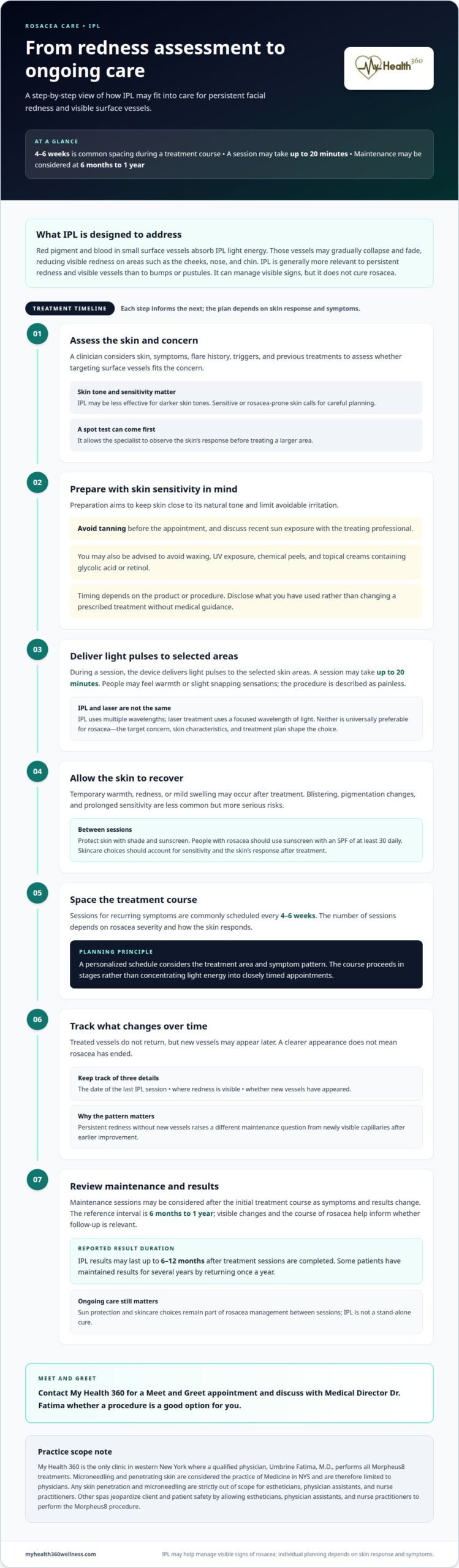
Intense pulsed light, or IPL, delivers several wavelengths of light into the skin. Red pigment and blood in small surface vessels absorb the energy. The vessels may gradually collapse and fade, reducing visible redness on areas such as the cheeks, nose, and chin. IPL is generally considered for persistent redness and visible vessels, rather than bumps and pustules as the main concern. It can manage visible signs, but it does not cure rosacea.
Before treatment, a clinician assesses your skin, symptoms, flare history, triggers, and previous treatments. This helps determine whether targeting surface vessels suits your concerns. Skin tone matters: IPL may be less effective for darker skin tones, and sensitive or rosacea-prone skin requires careful planning. A spot test allows the specialist to observe your skin’s response before treating a larger area.
Preparation aims to keep your skin close to its natural tone and limit avoidable irritation. Avoid real or artificial tanning before your appointment, and discuss recent sun exposure with the treating professional. You may also be advised to avoid waxing, UV exposure, chemical peels, and topical creams containing glycolic acid or retinol. Timing depends on the product or procedure, so disclose what you have used instead of changing a prescribed treatment without medical guidance.
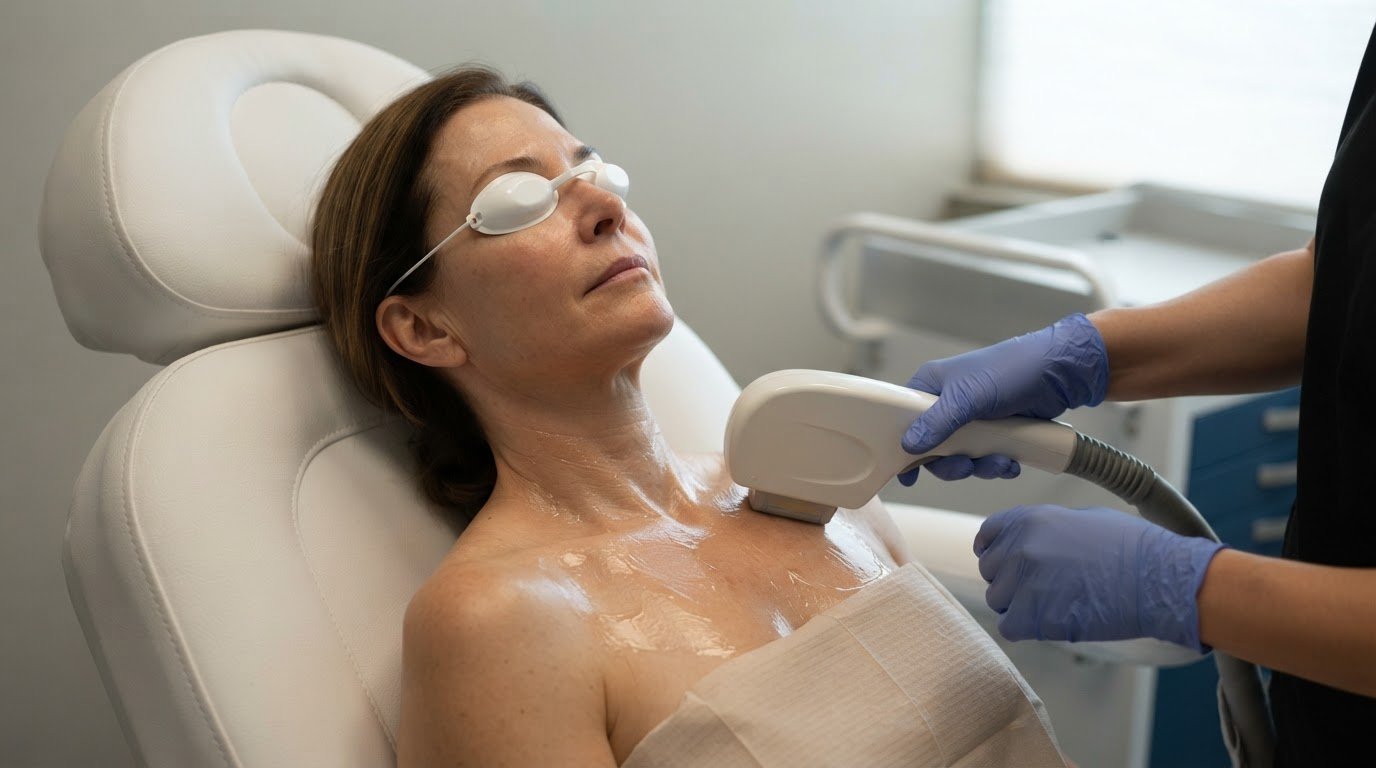
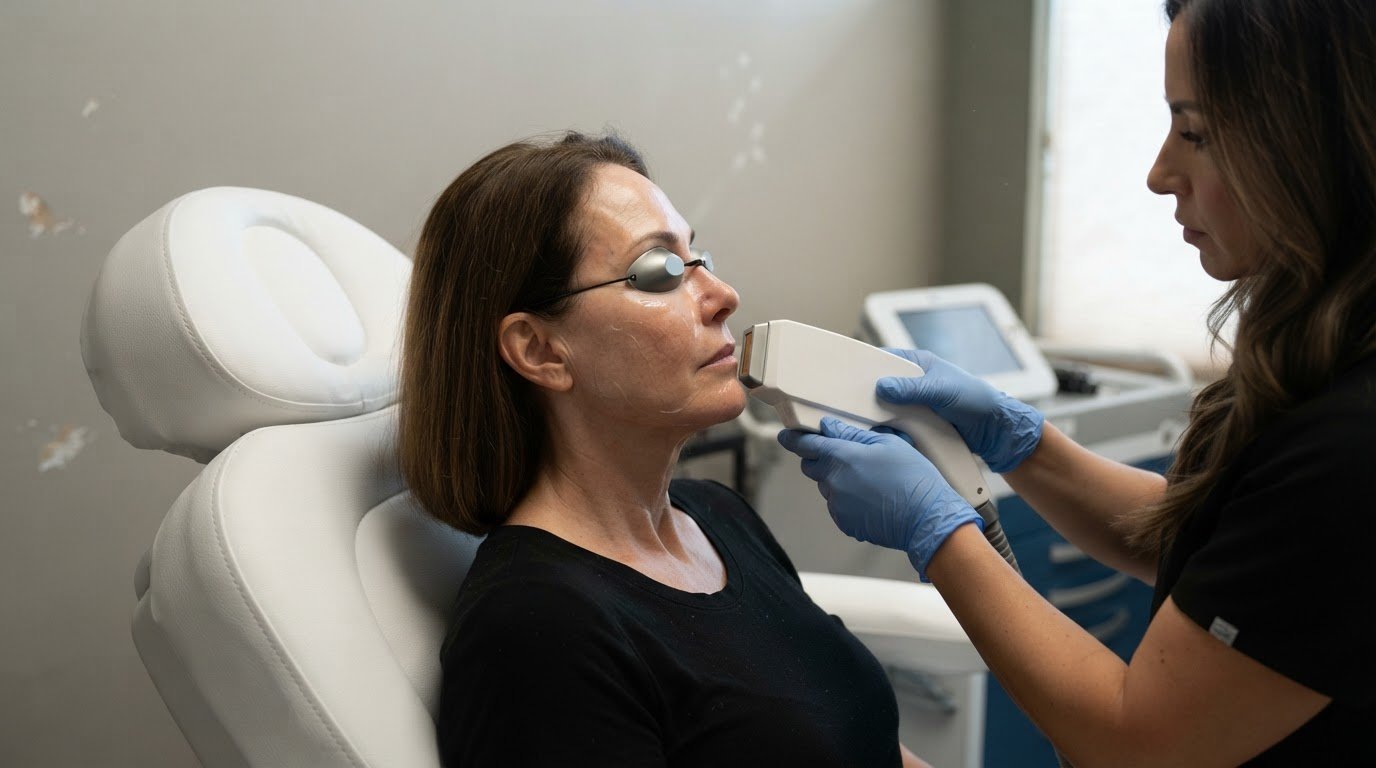
During an IPL session, the device delivers light pulses to the selected skin areas. A session may take up to 20 minutes. People may feel warmth or slight snapping sensations during treatment; the procedure is described as painless. IPL uses multiple wavelengths, while laser treatment uses a focused wavelength of light. That difference does not make one universally preferable for rosacea; the target concern, skin characteristics, and treatment plan shape the choice.
Does Clarence Medical Spa offer IPL treatment for rosacea? The name alone doesn’t establish which practice is providing treatment, so an IPL service can’t be attributed to that business here. What IPL device does Clarence Medical Spa use? No specific model should be assigned based only on the business name; IPL systems vary. These distinctions matter because device settings and skin response are part of individualized treatment planning.
IPL can cause temporary warmth, redness, or mild swelling after treatment. Blistering, pigmentation changes, and prolonged sensitivity are less common but more serious risks. A clinician considers these possibilities alongside the location and visibility of vessels, skin tone, and rosacea pattern. A clinical assessment connects your visible concerns with your skin’s response, rather than treating redness as an isolated cosmetic issue.
Maintenance and ongoing rosacea management
Managing rosacea often involves steps to help keep inflammation under control. IPL maintenance is one part of ongoing care: treated vessels do not return, although new vessels may appear later.
Treatment Intervals and Maintenance
Maintenance refers to follow-up IPL sessions after the initial treatment course and desired results. The interval used for maintenance is 6 months to one year. This timing gives the skin time between treatments while allowing a plan to address visible vessels that develop later. A consultation can review symptom changes and help determine whether another session fits the current pattern.
Rosacea Results Over Time
Results describe changes in visible redness and vessels after treatment, not a permanent cure for rosacea. IPL results last up to 6-12 months once the treatment sessions have been completed. Some patients have maintained results for several years by returning once a year. These timelines help distinguish fading of treated vessels from the possibility of new vessels appearing in the future.
That distinction matters: treated blood vessels do not return, but rosacea can still lead to new visible capillaries. A clearer appearance after IPL does not mean the condition has ended. Note changes such as renewed redness across the cheeks or new broken vessels around the nose. These details make follow-up discussions more specific than a general impression that symptoms have changed.
Ongoing care also includes attention to sunlight, a known concern in rosacea management. After IPL, protect the skin with shade and sunscreen; people with rosacea should use sunscreen with an SPF of at least 30 daily. Consistent protection supports the care plan between sessions, while skincare choices should account for sensitivity and the skin’s response after treatment.
A practical review can track three details: the date of your last IPL session, where redness is visible, and whether new vessels have appeared. Comparing these observations over time can help distinguish a temporary change from a recurring pattern. For example, persistent redness without new vessels raises a different maintenance question from newly visible capillaries after earlier improvement.
Maintenance is not simply repeating treatment on a fixed schedule. The 6-month-to-one-year interval provides a reference point, while visible changes and the course of rosacea inform whether follow-up is relevant. A consultation can also put IPL results in context with continuing skincare and sun protection, rather than treating each session as a stand-alone solution.
For information about IPL treatment planning and recovery for another area, see this guide to décolletage IPL skin treatment at a medical spa in Clarence.
Arrange a Meet and Greet appointment to discuss with Medical Director Dr. Fatima whether a procedure is a good option for you.
Number and spacing of IPL sessions
An IPL treatment plan describes how sessions are spaced and how many may address visible rosacea symptoms. Sessions for recurring symptoms are commonly scheduled every 4-6 weeks, and treatments are typically several weeks apart. The number depends on rosacea severity. This spacing allows the treatment course to proceed in stages rather than concentrating light energy into closely timed appointments.
A personalized schedule considers the treatment area and symptom pattern. Persistent facial redness and visible vessels, for instance, may call for a different plan than intermittent flushing. The extent of your concerns matters, too. Since session count depends on severity, there is no standard number that applies to every photofacial patient.
Think of the 4-6-week interval as a planning reference for recurring symptoms, not a prediction of the total course. An IPL provider can consider how much redness remains, whether visible vessels have changed, and how the skin responded after the previous treatment. Those observations help shape the next step in the treatment plan.
Spacing gives your skin time between light-based sessions. IPL targets visible signs, so the plan should remain focused on the symptoms being addressed. If redness is your main concern, progress is assessed in relation to that redness. If vessels are more prominent, their appearance provides another useful point of comparison.
During a session, light pulses may feel like slight snapping and warmth. The procedure is described as painless, though sensations can vary from person to person. A session may take up to 20 minutes. Knowing the expected duration and sensation can help you plan the appointment without assuming that every IPL device or facial treatment feels identical.
You can return to your daily routine immediately after IPL, with no downtime required. Temporary warmth, redness, or mild swelling may still occur shortly afterward. These effects are separate from the longer-term treatment schedule: an immediate skin response does not, by itself, determine how many sessions the overall course will involve.
At each stage, consider whether the current plan still matches your symptoms and skin response. For example, recurring redness can be assessed alongside changes in visible vessels. The schedule is based on severity and response, with several weeks between treatments, rather than a fixed session count for everyone.
Potential collagen and skin-texture effects
IPL primarily targets visible redness and blood vessels associated with rosacea, not every aspect of skin texture. Light energy can also stimulate collagen in the upper skin layers. That additional effect may interest people considering a cosmetic photofacial, but collagen stimulation does not make IPL a dedicated treatment for every texture concern. A treatment plan should distinguish vascular symptoms from other skin goals.
Reported outcomes vary by the concern being measured. IPL visibly improves rosacea or reduces or eliminates its effects in 75%-80% of patients. That figure describes rosacea improvement broadly; it doesn’t promise a particular change in texture or collagen for an individual. Visible blood vessels, background redness, and surface texture are distinct features, so an assessment should identify which appearance changes matter most.
If you are concerned about roughness, uneven texture, and redness, consider whether redness or visible vessels are central concerns. IPL directs light toward pigment and blood in small surface vessels. Collagen stimulation occurs in the upper layers, but IPL’s purpose for rosacea remains focused on redness and vessels. Separating these targets helps set clearer expectations for cosmetic results.
During treatment, you may feel warmth and slight snapping. The procedure is described as painless, though these sensations can still be noticeable. Temporary warmth, redness, or mild swelling may occur afterward. Redness and scabbing can also be more noticeable for a few days, so your immediate appearance may differ from the later result.
You can resume daily routines immediately after IPL, with no downtime required. Still, your skin may have a short-term response. Temporary redness or swelling differs from less common, more serious risks such as blistering, pigmentation changes, or prolonged sensitivity. Knowing the difference helps you recognize expected short-term effects and risks that warrant clinical attention.
Skin tone and sensitivity also affect treatment planning. IPL may be less effective for darker skin tones, while rosacea-prone skin can be sensitive. Before treatment, a clinician considers these factors alongside the target area and visible symptoms. This matters for texture expectations, too: a change in redness may affect how smooth or even your face appears, without showing that the texture itself has changed.
Assess the outcome by looking at separate features rather than applying one broad label. Compare visible vessels, background redness, and texture as distinct observations. If redness lessens while roughness remains, those changes point to different treatment goals. Keeping them separate supports a more precise discussion of collagen effects, cosmetic expectations, and your skin’s response over time.
Recovery and aftercare between sessions
After IPL, protect treated skin from sunlight and expect temporary changes such as warmth or redness. You can return to daily routines immediately, while sunscreen and shade remain important between sessions.
Aftercare and Sunscreen
Aftercare means protecting treated skin from sunlight while it settles after pulses of light. People with rosacea should apply sunscreen with an SPF of at least 30 daily. Shade adds another practical layer of protection, especially when facial redness affects exposed areas such as the cheeks.
Temporary warmth, redness, or mild swelling may appear shortly after treatment. Redness and scabbing can also be more noticeable for a few days. These short-term effects may change your skin’s appearance before it settles, so distinguish them from the longer-term response assessed across treatment sessions.
You can resume daily activities immediately after IPL, with no downtime required. However, visible changes may not disappear right away. For example, redness on your cheeks may look more pronounced for a few days even as you continue your normal routine and protect the area with sunscreen and shade.
Preparing for and Caring for Skin After IPL
Preparation means limiting factors that could affect your skin before an IPL appointment. Avoid tanning and UV exposure, and discuss waxing, chemical peels, and topical products containing glycolic acid or retinol with the treating professional. These steps help ensure your skin’s condition is considered before treatment.
After treatment, patients should use daily sunscreen with an SPF of at least 30 and seek shade to protect the treated area. This care applies between sessions, not only on the appointment day. Consistent sun protection matters for rosacea-prone skin, where facial redness can remain a concern during ongoing management.
Observe how your skin responds during the few days after IPL. Temporary warmth, redness, mild swelling, or more noticeable scabbing can occur. Blistering, pigmentation changes, and prolonged sensitivity are less common but more serious risks. Contact the treating professional about these reactions rather than treating them as routine recovery.
For additional context on treatment-area healing, see what to expect after a décolletage IPL skin treatment.
For a tailored discussion of preparation and recovery, contact My Health 360 to schedule a Meet and Greet and discuss with Medical Director Dr. Fatima whether a procedure is a good option for you.
My Health 360
My Health 360 is the only clinic in Western New York where a qualified physician, Umbrine Fatima, M.D., performs all Morpheus8 treatments. In New York State, microneedling and penetrating the skin are considered the practice of medicine and are therefore limited to physicians. Skin penetration and microneedling are strictly outside the scope of estheticians, physician assistants, and nurse practitioners. Allowing those practitioners to perform Morpheus8 jeopardizes patient safety.
For questions about rosacea care and whether a procedure may be a good option for you, arrange a Meet and Greet to speak with Medical Director Dr. Fatima. Contact My Health 360 to arrange a Meet and Greet.
Take the Next Step Toward Personalized Rosacea Care
Choosing IPL for rosacea treatment at a Clarence medical spa is an opportunity to clarify what you want care to achieve. Consider which changes matter most to you, what concerns you have about a procedure, and how treatment fits your broader wellness priorities. These reflections can help focus your discussion instead of basing a decision on appearance alone.
A Meet and Greet with Medical Director Dr. Fatima gives you an opportunity to discuss whether a procedure suits you and how it aligns with your goals. Bring your questions and describe what you hope to address, then consider the next step with a physician’s guidance.
Contact My Health 360 to arrange a Meet and Greet with Dr. Fatima. A thoughtful conversation can help you move forward with greater clarity and confidence.
Frequently Asked Questions
Rosacea: what causes visible blood vessels and facial redness?
In rosacea, visible surface vessels can contribute to persistent facial redness, particularly across the cheeks, nose, and chin. When blood in small vessels absorbs light, those vessels may gradually fade after IPL. Redness can fluctuate over time, so tracking where it appears and whether visible vessels are present can help clarify which symptoms stand out during a clinical discussion.
What is an IPL Photofacial treatment?
An IPL Photofacial is a light-based treatment that delivers pulses of light to selected skin areas. For rosacea, the target is often visible redness or small surface vessels, rather than bumps and pustules. “Photofacial” describes the treatment format, not a guaranteed result. A clinician considers your skin and symptoms before deciding whether this approach is suitable.
Can rosacea be cured permanently?
No. Rosacea currently has no cure, though inflammation can be limited to help keep the condition under control. IPL may address visible redness and vessels, but it doesn’t eliminate rosacea itself. For example, improvement in facial redness doesn’t mean the condition has ended. Ongoing management remains relevant, including attention to skin changes and daily sun protection as part of care.
How does IPL work?
IPL sends multiple wavelengths of light into the skin, where red pigment and blood in small surface vessels can absorb the energy. Targeted vessels may gradually collapse and fade, reducing visible redness. IPL can also affect pigmentation and stimulate collagen in the upper skin layers. Its effects depend on the treatment target and the skin characteristics considered during assessment.
How long do IPL results last for Rosacea?
IPL results can last up to 6-12 months after completing treatment sessions. Some patients maintain results for several years by returning once a year for maintenance. Treated vessels don’t return, although new vessels may develop later. For example, renewed redness can reflect new visible vessels rather than the return of a vessel treated previously, so ongoing changes matter.
How many IPL sessions are needed for Rosacea?
The number of sessions depends on rosacea severity, so there isn’t one session count that suits everyone. For recurring symptoms, treatments are commonly scheduled every 4-6 weeks. The treatment plan takes account of the visible concerns and skin response as the course progresses. A follow-up discussion can help assess whether the plan still addresses the symptoms that matter most.
Is rosacea curable?
Rosacea is not currently considered curable, but symptoms can be managed by limiting inflammation and addressing concerns such as persistent redness. IPL may reduce visible vessels, but it does not remove the underlying condition. Sun protection remains important between treatments. This distinction helps set realistic expectations: appearance may improve while ongoing management continues.
How long does an IPL rosacea appointment take and what is the recovery time?
An IPL session may take up to 20 minutes. People can return to daily routines immediately, with no downtime required. The treated skin may still feel warm or appear red, mildly swollen, or temporarily more irritated. Redness and scabbing can be amplified for a few days. Protecting the area from sunlight with sunscreen and shade is part of aftercare.