
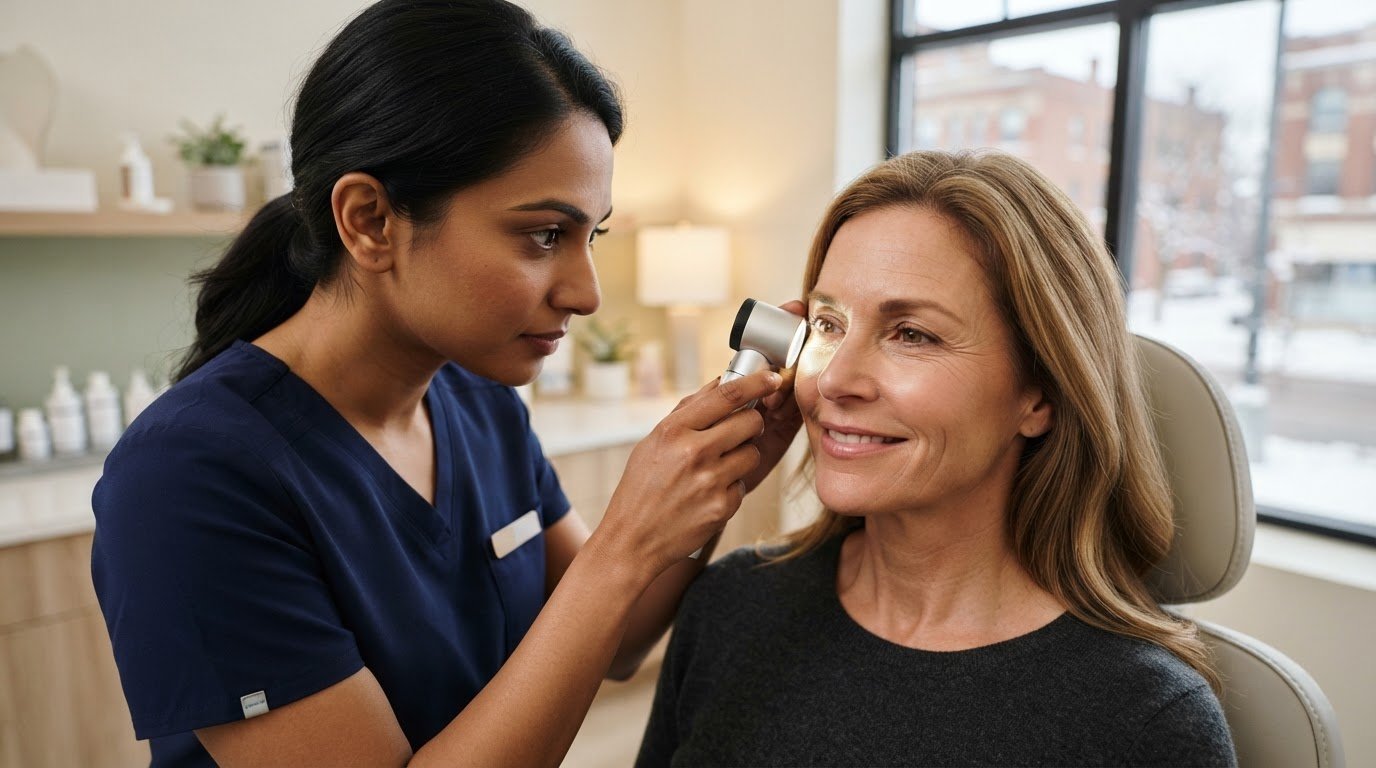
Lines around the eyes can have different causes. Periorbital wrinkles may be dynamic, appearing with facial movement, or static, remaining visible when the face is at rest. A periorbital wrinkle reduction treatment should be matched to the type of line and the skin changes involved. Botulinum toxin can soften wrinkles linked to muscle activity, while skin-resurfacing approaches may improve the appearance of fine lines and texture.
It’s understandable to want a treatment that addresses wrinkles without changing the natural character of your expression. First, distinguish movement-related lines, such as crow’s feet that deepen when you smile, from etched lines that remain visible when your face is relaxed. Skin texture and elasticity around the eyes also help determine which approach may be appropriate.
This guide explains what causes dynamic and static periorbital wrinkles and how botulinum toxin, chemical peels, laser treatments, and microneedling work differently. Understanding what each option is designed to address can help you assess the considerations behind a personalized treatment plan.
Key Takeaways
- Dynamic lines appear with facial movement, while static wrinkles remain visible at rest; identifying the pattern helps clarify which approaches may be relevant.
- Botox targets wrinkles linked to muscle activity, while skin-resurfacing treatments focus on texture and the appearance of fine lines.
- Chemical peels, laser treatments, and microneedling work differently, so treatment choice depends on the skin concern and desired type of improvement.
- Understanding how each option works can help you have a more focused conversation about your aesthetic goals and treatment considerations.
- Contact My Health 360 for a Meet and Greet appointment to discuss with Medical Director Dr. Fatima whether a procedure may be a good option for you.
Chemical peels, laser treatments, and microneedling
Choose a dermatologist or cosmetic injector with relevant medical training and experience treating the delicate area around the eyes. At consultation, discuss your concerns, eye-area anatomy, treatment depth, and how nearby structures will be protected. Before proceeding, ask for a clear explanation of the proposed method, expected recovery, and alternatives.
Skincare and other nonsurgical options may address mild changes in texture, pigmentation, and fine lines. Topical retinoids and glycolic acid preparations can improve texture and the appearance of fine lines. Chemical peels exfoliate the outer skin layers to improve tone and appearance. Around the eyes, the peel’s strength and placement matter because the skin is delicate. A clinician can assess whether skincare or a peel better suits your concern.
Laser resurfacing and phototherapy use light energy to stimulate collagen production and improve skin elasticity. Ablative lasers remove controlled layers of skin; periorbital resurfacing options include the 10,600 nm carbon dioxide laser. Fractional Er:YAG treatment in one cited study involved 4 sessions spaced 2 weeks apart, with healing within 2 to 4 days. Nonablative fractional lasers heat deeper tissue while leaving the surface more intact. A study used 3 to 7 treatments at intervals of 3 to 4 weeks for eyelid tightening. Fractional laser treatment around the eyes may involve 5 to 7 days of social downtime.
Laser choice also depends on the concern. A vascular laser may target visible redness or small superficial veins, while pigment-focused treatment addresses discoloration. A cited long-pulsed KTP laser study used 3 to 6 sessions to improve redness and pigmentation. Laser therapy and phototherapy can also encourage collagen formation, but they don’t all target the same tissue or skin change. The clinician’s assessment helps distinguish a vascular concern from pigmentation or wrinkles.
Microneedling creates controlled micro-injuries that prompt a skin-repair response. Radiofrequency (RF) microneedling adds heat beneath the surface; around the eyes, treatment depths typically range from 0.5 mm to 1.5 mm. A typical series includes 3 to 4 sessions, spaced 4 to 6 weeks apart. Each session takes 30 to 45 minutes, including numbing time. Mild redness and swelling typically resolve within 24 to 48 hours.
One study reported an average 49% reduction in periorbital wrinkle severity after RF microneedling. That finding describes a study result, not a promised outcome for every patient. Chemical peels, laser resurfacing, and microneedling differ in their depth, recovery, and targets. A practical next step is to identify whether your main concern is fine lines, texture, pigmentation, redness, or visible veins, then discuss which approach matches that concern and your tolerance for downtime.
Botox for crow’s feet and frown lines
Botulinum toxin addresses movement-related lines by reducing the muscle activity that deepens them. Suitability depends on the wrinkle pattern, treatment area, and your facial goals.
Botox and Neuromodulator Options
Botox is a botulinum toxin neuromodulator used to soften crow’s feet and frown lines caused by repeated muscle contractions. For crow’s feet, a typical amount is 6-12 units per side, adjusted to the person and treatment plan. The treatment takes less than 15 minutes. Results typically begin to soften lines within 3-5 days, with full results visible by two weeks.
At consultation, the clinician assesses facial movement and the lines that appear when you smile or frown. This helps distinguish expression-related wrinkles from lines that remain at rest and may need a different approach. The goal is to soften targeted lines while preserving natural expression, not to treat skin texture or pigmentation directly.
Combining Botox With Other Treatments
Botox and RF microneedling address different contributors to wrinkles: muscle activity and skin quality. Botox can reduce movement-related creasing, while RF microneedling stimulates a collagen response. RF microneedling results for eye wrinkles are described as lasting 6-7 months, compared with 3-4 months for Botox.
Fillers may be considered for deep etched lines or areas where muscle activity needs to be preserved. This differs from botulinum toxin, which targets lines caused by muscle activity. A consultation can match each concern to an appropriate method instead of treating every crease the same way. Any combination of approaches should reflect the specific area and goal.
Preventative Botox
Preventative Botox refers to treating expression lines before they become deeply established at rest. It may be considered when facial lines become more prominent during repeated expressions, often between ages 25-35. The decision centers on visible movement-related lines and individual goals, rather than age alone.
For maintenance, touch-up treatments every 3-4 months are described as helping maintain results. A measured plan considers the muscles involved and the degree of movement a person wants to preserve. This matters around the eyes, where a personalized approach can balance wrinkle softening with natural facial expression.
Treatment Costs, Results, and Risks
In the United States, treatment price depends on the case and is given after a quote request; the treatment area, technique, and amount used influence the quote. Botox results typically last 3-4 months, while RF microneedling results are described as lasting 6-7 months. Laser results depend on the modality and treatment plan; filler longevity varies by the product and treated area.
For RF microneedling, mild redness and swelling typically resolve within 24-48 hours. Risks and side effects differ by treatment, so the specific method and its possible effects should be part of the consultation before proceeding.
A suitable candidate has movement-related lines that match the treatment’s purpose and understands its limits. Before treatment, discuss your goals, relevant health history, and other procedures with the clinician. Recovery depends on the method: Botox results develop over two weeks, while RF microneedling redness and swelling typically settle within 24-48 hours.
For a personalized discussion, contact My Health 360 for a Meet and Greet appointment with Medical Director Dr. Fatima to discuss whether a procedure is a good option for you.
Botulinum toxin for wrinkle reduction
Botulinum toxin reduces selected muscle activity, softening lines created by repeated facial expressions. Crow’s feet form as muscles around the eyes contract during smiling or squinting, so treatment is most relevant when creases become more visible with movement. It does not resurface skin or directly correct pigmentation, redness, or loose skin. Those concerns may call for other periorbital rejuvenation techniques.
Precision matters because facial muscles contribute to expression as well as wrinkle formation. Treatment planning starts with observing your face at rest and during movement, such as smiling or frowning. The clinician identifies which muscles contribute to the lines and considers how much movement to preserve. This helps distinguish movement-related creases from lines that remain visible at rest. The appearance and location of each line guide the discussion.
Botox is one brand of botulinum toxin used for cosmetic wrinkle reduction. The effect is localized to the muscles selected for treatment, rather than changing skin texture through chemical exfoliation or resurfacing. For crow’s feet, a typical amount is 6-12 units per side, with the plan shaped around facial anatomy and expression. Treatment for crow’s feet typically takes less than 15 minutes. These details help frame a consultation, but they don’t make one dose suitable for everyone.
Botulinum toxin can also treat frown lines caused by repeated muscle activity. Their position and depth differ from crow’s feet, so the injection pattern and treatment area differ too. A clinician evaluates the areas separately rather than assuming one approach will address every crease. This matters when lines appear both around the eyes and between the brows, since each pattern reflects different muscle activity.
In 2024, 9.9 million Americans received neuromodulator treatments. That figure includes neuromodulator procedures broadly; it doesn’t represent only eye-area treatments or predict an individual result. For a specific patient, the relevant questions are whether muscle movement drives the concern, which area is being treated, and what expression should remain. These considerations also help explain why botulinum toxin won’t address every sign associated with skin aging.
Botulinum toxin may be one part of a broader treatment plan, but it works differently from collagen-focused resurfacing. Laser and light-based techniques address skin appearance through other mechanisms, while botulinum toxin targets muscle activity. Redness, pigmentation, and uneven texture may need separate consideration. Discussing each concern individually helps shape a clear periorbital rejuvenation plan, with techniques matched to the cause rather than grouped under one general goal.

Dynamic and static periorbital wrinkles
Dynamic wrinkles appear with movement, while static wrinkles remain visible when the face is relaxed. Around the eyes, smiling, squinting, and repeated opening and closing of the eyes can contribute to creases. Aging and sun damage also play a role. As skin loses elasticity, it may sag and hold lines more visibly. The patterns can overlap: a crease may first appear during expression and later become etched at rest.
The skin around the eyes is 40% thinner than the rest of the face, making this area especially delicate. Ultraviolet rays from sun exposure can harm skin and accelerate aging, contributing to premature wrinkles. A useful first distinction is whether the line changes with expression. For example, crow’s feet that deepen with a smile suggest a movement component, while a crease still visible after the face relaxes has a static component.
This distinction helps clarify cosmetic treatment options. Botulinum toxin targets muscle activity linked to dynamic lines, but does not directly remove creases caused by lasting skin changes. Chemical peels, laser resurfacing, and microneedling address skin appearance through different mechanisms. If you have both expression lines and uneven texture, discuss each concern rather than expecting one procedure to address every feature.
Static lines can occur alongside excess eyelid skin or a drooping brow, which involve more than fine wrinkles. Upper eyelid blepharoplasty can remove excess skin, muscle, and fat to improve the contour of heavy or droopy eyelids. Some patients may need ptosis correction for a drooping eyelid, while a brow lift may reposition the eyebrows. These are surgical considerations, not substitutes for assessing surface lines.
Age alone doesn’t determine when patients consider aesthetic care. Eyelid rejuvenation may occur as early as the 20s when inherited traits, such as eye tilt or eye bags, are present. The relevant assessment is the specific feature, its cause, and the person’s goals. For example, a movement-related crow’s-foot pattern differs from pigmentation, skin laxity, or lower-eye bags. Identifying those separately helps clarify whether nonsurgical procedures, plastic surgery, or neither directly addresses the concern.
Before discussing treatment, note when each line appears: during a smile, at rest, or in both situations. Also note other visible concerns, such as pigmentation or excess skin. This gives the clinician useful context for distinguishing dynamic from static wrinkles and considering appropriate options. A tailored plan should match the concern, since microneedling and muscle-relaxing injections address different tissue features.
What treatments reduce wrinkles around the eyes?
The right approach depends on what causes the visible change: muscle movement, skin texture, pigmentation, or excess eyelid skin. Botulinum toxin targets muscle activity, while topical retinoids and glycolic acid preparations can improve texture and the appearance of fine lines. A periorbital wrinkle reduction treatment plan starts by identifying your main concern so the options discussed align with your goal.
For mild lines, pigmentation, and very mild skin looseness, skincare may be useful. Medical-grade options can include Retin-A, glycolic acids, and chemical peels such as trichloroacetic acid (TCA). Sunscreen helps protect against ultraviolet damage, while a suitable home regimen supports skin health. These measures focus on surface appearance, not excess eyelid tissue or prominent tear troughs. A periorbital wrinkle reduction treatment will not address every concern in the same way.
Botulinum toxin injections can reduce muscle activity and soften wrinkles caused by repeated expressions. Fillers or fat injections may camouflage a prominent tear trough in younger patients, while fillers may also be considered for deep etched lines where muscle activity needs to remain. The choice depends on whether the concern is a moving crease, a hollow, or a line visible at rest.
Laser therapy and phototherapy use light energy to stimulate collagen production and improve skin elasticity. Thermage monopolar radiofrequency was approved by the U.S. Food and Drug Administration for periorbital wrinkles in 2002. Laser resurfacing offers another route for improving skin appearance, but treatments differ in depth and recovery. Fractional laser treatment around the eyes typically involves 5-7 days of social downtime.
When excess eyelid skin, muscle, or fat changes the eye contour, nonsurgical skin treatments may not address the structural concern. Upper eyelid blepharoplasty can remove excess skin, muscle, and fat to improve heavy or droopy eyelids. Some patients may need ptosis correction for a drooping eyelid, while a brow lift may reposition the eyebrows. These surgical options are distinct from cosmetic injections and resurfacing.
To compare options, first name the concern: expression lines, etched creases, texture, pigmentation, tear-trough hollowing, or excess skin. Then consider whether your goal is muscle relaxation, added volume, surface improvement, or a contour change. For example, a chemical peel may address skin appearance, while botulinum toxin addresses muscle-driven lines. Matching the method to the cause helps focus discussion of benefits, limitations, and recovery.
Contact My Health 360 to arrange a Meet and Greet appointment and discuss with Medical Director Dr. Fatima whether a procedure is a good option for you.
My Health 360: Emsculpt Neo
My Health 360 offers Emsculpt Neo for body contouring, not for reducing wrinkles around the eyes. If your goals include body contouring alongside your aesthetic considerations, this offering may be relevant to discuss; it addresses a different concern from Botox, peels, laser treatments, or microneedling. Keeping those goals distinct helps you consider each procedure in the context of what it is intended to address.
For guidance on whether a procedure fits your goals, contact My Health 360 to arrange a Meet and Greet appointment and discuss your options with Medical Director Dr. Fatima.
You’re welcome to contact My Health 360 or visit myhealth360wellness.com.
Choose a Next Step That Fits Your Goals
Your next step can be a focused conversation about what you hope to change and which concern matters most. Consider a periorbital wrinkle reduction treatment in the context of your facial features, skin concerns, and preferences, rather than choosing by procedure name alone. Bring your questions and describe what you notice when your face is relaxed and when you express emotion.
My Health 360 also offers Emsculpt Neo, BioPrime for pre-operative or pre-event whole-body habilitation, and Bio-Restore for post-operative or injury whole-body habilitation. These offerings address different goals and are not substitutes for an eye-area wrinkle treatment. A Meet and Greet gives you the opportunity to discuss your concerns with Medical Director Dr. Fatima and explore whether a procedure is a good option for you.
Contact My Health 360 to arrange a Meet and Greet and take a thoughtful next step toward care that reflects your goals.
Frequently Asked Questions
What Are Periorbital Wrinkles?
Periorbital wrinkles are lines in the skin surrounding the eyes, including crow’s feet at the outer corners and creases beneath the lower eyelids. They may be more noticeable during expressions, remain visible at rest, or show both patterns. For a practical distinction, observe whether a line changes when you smile and then relax your face. That observation helps describe the concern clearly during a clinical assessment.
How do Botox and dermal fillers compare for periorbital wrinkles?
Botulinum toxin reduces muscle activity that contributes to expression-related lines, while dermal fillers add volume or help camouflage selected hollows and etched lines. For example, a crease that deepens with a smile has a different treatment target from a tear trough that looks hollow at rest. These methods are not interchangeable, and neither addresses every cause of eye-area aging. The location and appearance of the concern guide the comparison.
Do laser resurfacing and microneedling improve crow’s feet?
Laser resurfacing and microneedling may improve the appearance of fine lines and skin texture, including around crow’s feet. They work on skin quality rather than directly relaxing the muscles that create expression lines. If crow’s feet are most apparent when you smile, that distinction matters when comparing options. A clinician can assess whether skin texture or muscle movement is the more prominent concern, or whether both contribute.
Can retinoids, sunscreen, or eye creams reduce wrinkles around the eyes?
Topical retinoids may improve fine-line appearance, while sunscreen helps limit ultraviolet exposure that contributes to premature skin aging. “Eye cream” describes a product category, so its purpose depends on the ingredients and the concern it targets. For Buffalo-area readers, a Meet and Greet with My Health 360’s Medical Director, Dr. Fatima, offers an opportunity to discuss whether a procedure suits your goals alongside skincare.
How long do results last for Botox, fillers, and laser treatments around the eyes?
Botox results typically last 3-4 months. Filler longevity varies by product and treated area, while laser results depend on the modality and treatment plan.
What are the risks and side effects of under-eye and crow’s-feet treatments?
Risks and side effects vary by treatment. After RF microneedling, mild redness and swelling typically resolve within 24-48 hours; discuss the specific method and its possible effects with the clinician before treatment.