Recovery support is most useful when it complements training rather than replacing it. For athletes exploring photobiomodulation for athletic recovery in Buffalo, NY, red and near-infrared light offer a non-invasive approach that may influence cellular signaling and support ATP production, processes involved in the body’s repair and energy needs.
Hard training can leave muscles sore and tissues feeling taxed. It’s understandable to look for recovery options that complement sleep, nutrition, conditioning, and appropriate rehabilitation. Photobiomodulation isn’t a shortcut around those foundations; it offers a way to explore how light may support the body’s recovery response between sessions.
This article explains how red and near-infrared light interact with tissue, how ATP and mitochondrial activity relate to recovery, and what research suggests about soreness and athletic performance. It also covers the limits of the evidence, so you can consider photobiomodulation as one part of a balanced recovery strategy.
Key Takeaways
- Red and near-infrared light interact with tissue at different depths, so the wavelength helps shape which tissues are reached.
- Photobiomodulation may influence mitochondrial signaling and ATP production, processes involved in cellular energy and tissue repair.
- Consider light therapy as a possible complement to sleep, nutrition, progressive training, and appropriate rehabilitation, not a replacement for them.
- Research findings on soreness, fatigue, and performance vary; understanding the study context can help set realistic expectations.
- Contact My Health 360 for a Meet and Greet to discuss with Medical Director Dr. Fatima whether a procedure is a good option for you.
What Is Red Light Therapy?
Red light therapy, also called photobiomodulation, uses light to influence biological activity in tissue. For athletes exploring photobiomodulation for athletic recovery in Buffalo, NY, potential areas of interest include muscle function, soreness, and recovery after physical stress.
Muscle Strength, Fatigue, and Endurance
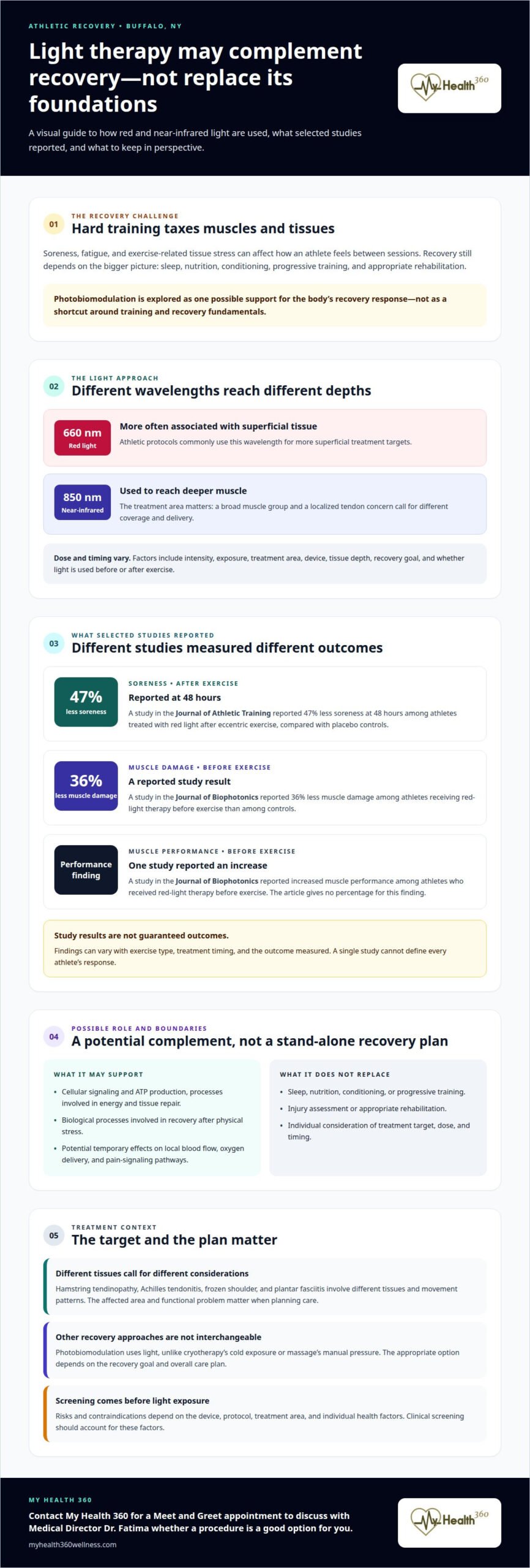
Photobiomodulation applies red or near-infrared light to tissue, aiming to support processes involved in muscle performance. This may matter when fatigue affects training quality or an athlete is preparing for repeated efforts. A study in Journal of Biophotonics reported increased muscle performance among athletes who received red-light therapy before exercise. The finding is one research result, not a promised outcome for every athlete or session.
Muscle Soreness and Exercise Recovery
Delayed-onset muscle soreness, or DOMS, is soreness that develops after strenuous exercise rather than during the effort. A study reported in Journal of Athletic Training found 47% less soreness at 48 hours among athletes treated with red light after eccentric exercise, compared with placebo controls. Athletes may find that result relevant during demanding training blocks, while remembering that one study cannot define every recovery response.
Inflammation and Muscle Damage
Inflammation is part of the body’s response to exercise stress, and demanding or unfamiliar movement can also cause muscle damage. Photobiomodulation is studied for its potential effects on these processes. A Journal of Biophotonics study reported 36% less muscle damage among athletes receiving red-light therapy before exercise than among controls. The result describes that study, not a predictable outcome for every athlete.
Recovery Research and Sports Performance
Clinical research measures distinct outcomes, including soreness, fatigue, and performance. Findings depend on the exercise type, treatment timing, and outcome measured. For example, the Journal of Athletic Training study examined soreness after eccentric exercise, while findings in the Journal of Biophotonics addressed pre-exercise treatment and performance-related outcomes. These differences help athletes considering photobiomodulation for athletic recovery in Buffalo, NY understand what research can and cannot show.
Unlike cryotherapy or massage, photobiomodulation uses light rather than cold exposure or manual pressure. These approaches work differently and aren’t interchangeable. The appropriate option depends on the recovery goal and overall care plan.
Does insurance cover photobiomodulation therapy in New York? Coverage depends on the individual policy and how the treatment is classified, so the answer varies by plan.
Athletic protocols commonly use 660-nanometer red light for superficial tissue and 850-nanometer near-infrared light to reach deeper muscle. Dose and timing depend on factors such as intensity, exposure, treatment area, and whether therapy is used before or after exercise.
Risks and contraindications depend on the device, protocol, treatment area, and individual health factors. Clinical screening should account for these factors before light exposure begins.
Near-infrared light and tissue repair
Near-infrared light is used in photobiomodulation to reach deeper tissues, including muscle. In sports recovery, the aim is to deliver light energy to an area affected by strain or overuse and support biological processes involved in repair. The approach is non-invasive, but it doesn’t replace injury assessment or rehabilitation.
Red light and infrared light differ in wavelength and tissue penetration. Near-infrared light commonly uses 850 nm to reach deeper muscle, while red light is more often associated with superficial tissue. The target area matters: a broad muscle group and a localized tendon concern call for different treatment coverage and delivery.
Photobiomodulation may temporarily improve blood flow and oxygen delivery. Local circulation is part of the environment that supports recovery in injured tissue. The therapy may also affect pain-signaling pathways, which could matter when discomfort limits movement. These proposed mechanisms describe how light may interact with tissue, not a guaranteed healing timeline.
Professional treatment can use high-intensity lasers to deliver near-infrared light to an injured area. A randomized trial examined a Class IV laser treatment at 10 W for epicondylitis, commonly known as tennis elbow. The example illustrates how a treatment protocol can be studied for a specific condition rather than assumed to apply equally to every sports injury.
Photobiomodulation is also used for concerns such as hamstring tendinopathy, Achilles tendonitis, frozen shoulder, and plantar fasciitis. These conditions affect different tissues and movement patterns. A hamstring tendon issue, for example, differs from heel pain associated with plantar fasciitis, so the treatment target and functional problem matter when planning care.
For athletes, tissue repair involves more than reducing soreness. A sound recovery plan considers how the affected area tolerates loading, whether mobility is restricted, and how symptoms change as activity resumes. Light therapy may be considered alongside appropriate rehabilitation, progressive loading, sleep, and nutrition, but should not replace those foundations.
Choosing treatment timing and dose depends on the device, tissue depth, treatment area, and recovery goal. Those variables shape how light is delivered to a specific injury. For a discussion of whether whole-body red light therapy fits your recovery plan, contact My Health 360 to arrange a Meet and Greet with Medical Director Dr. Fatima.
Recovery between training sessions
Between workouts, recovery means restoring capacity for the next effort while managing soreness and training stress. Athletes use photobiomodulation as one tool alongside sleep, nutrition, progressive loading, and appropriate rehabilitation.
Sports teams may use light therapy proactively for minor aches between games or reactively when injuries occur. These situations differ: routine muscle soreness after a demanding practice is not the same as pain that disrupts movement. Recovery protocols are most relevant when matched to the athlete’s training demands and the tissue involved.
How many photobiomodulation sessions are typically recommended for athletic recovery? A typical professional low-level laser course involves two to three sessions per week, with six to twelve sessions in total. These figures describe a general course; the treatment area and recovery objective shape how it is applied.
Session timing can also relate to the training cycle. An athlete preparing for competition may consider treatment around a demanding event, while someone managing post-exercise soreness may use it afterward as part of recovery. Light therapy should support, not replace, core practices such as adequate sleep, nutrition, and progressive training loads.
Tracking your response across sessions can make a protocol more purposeful. An athlete might note whether soreness affects a planned run, strength session, or practice, then consider those observations alongside mobility and rehabilitation needs. A single improvement in comfort doesn’t establish that an injury has healed or that normal loading should resume.
Photobiomodulation is used both before symptoms become disruptive and after an injury needs attention. The distinction matters: a recurring ache during training calls for a different recovery discussion than general fatigue after a game. Appropriate rehabilitation remains important when pain or limited function affects movement.
Recovery is a system, not a single session. A practical framework considers:
- Training load: Whether the next workout adds intensity or volume.
- Symptoms: Whether soreness is improving or still limiting activity.
- Foundations: Whether sleep, nutrition, and rehabilitation support the training plan.
- Light therapy: Whether sessions fit the athlete’s recovery objective and schedule.
These considerations place photobiomodulation within the wider recovery plan, rather than treating it as a substitute for rest or rehabilitation.
Recovery can also involve practices that address how an athlete moves and responds to stress between workouts. Recovery Reset sessions use functional and energetic movement, breathwork, and mindfulness techniques. They aim to support movement and mobility, connect breath and body, and promote relaxation and recovery. The sessions are intended to lower stress, improve focus and attention, and promote mobility and stability to reduce injury risk.
These practices can complement a broader training and rehabilitation approach, with support tailored to the athlete’s recovery objective. In the author’s clinical experience, roughly half of patients who try red light therapy for recovery report meaningful improvement. This reflects the author’s clinical experience, not a guaranteed response for every athlete. Consider the response alongside symptom tracking and recovery goals, while maintaining sleep, nutrition, progressive training loads, and appropriate rehabilitation.
ATP production and mitochondria
ATP, or adenosine triphosphate, is a molecule cells use to transfer energy. Mitochondria are cellular structures involved in producing ATP, including in muscles working through a training session. Photobiomodulation is described as stimulating mitochondrial ATP production in injured tissues. This offers a biological rationale for studying light as possible recovery support, rather than treating light exposure as energy itself.
Red and near-infrared light deliver energy to tissue at different wavelengths. The response depends on factors such as wavelength, dose, and treated area. In athletic settings, the target might be a sore muscle after a demanding workout or tissue affected by injury. The question is whether light exposure can influence cellular activity in that specific context.
Mitochondrial activity matters because muscle cells need energy to perform and recover from physical demands. Consider a runner whose legs feel depleted after a hard training session. ATP production is part of the cellular energy picture, but it cannot determine readiness for the next run on its own. Training load, rest, nutrition, and rehabilitation also shape recovery.
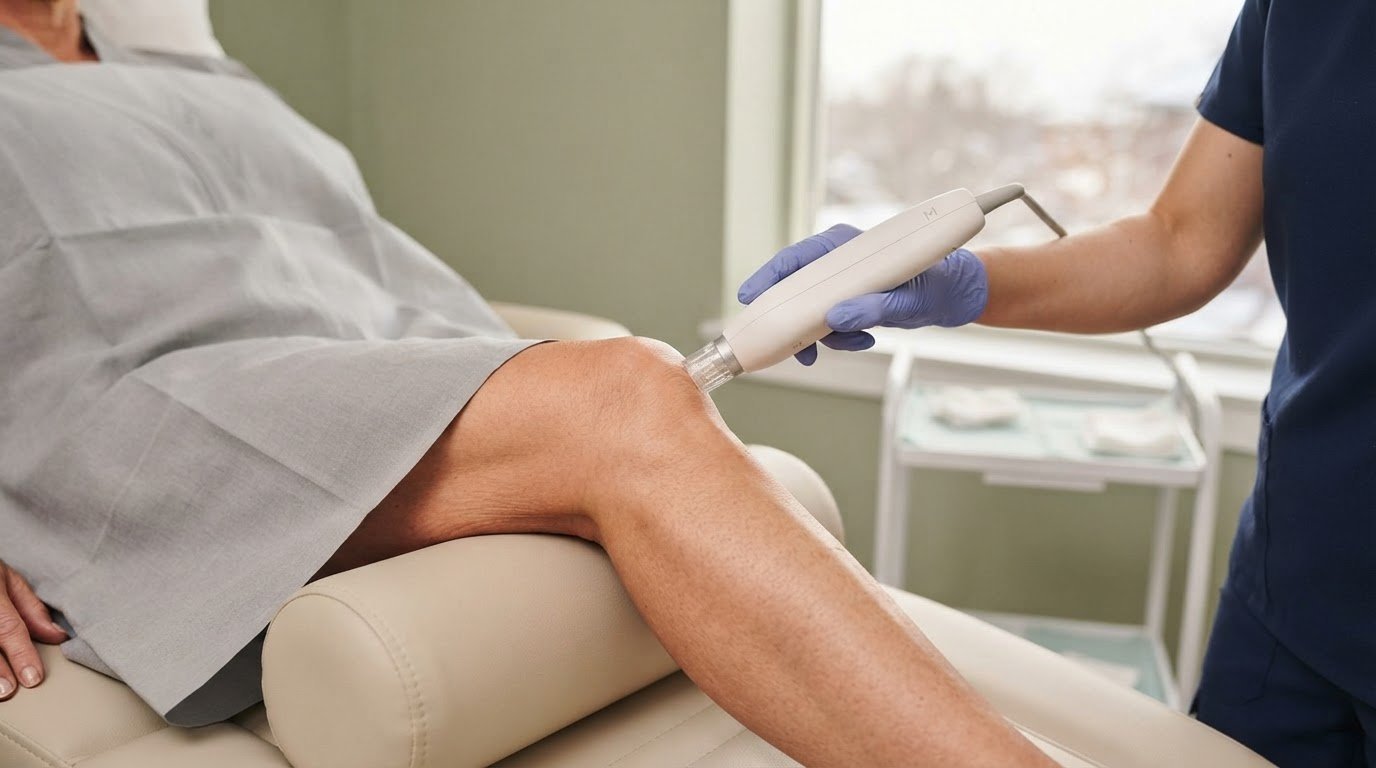
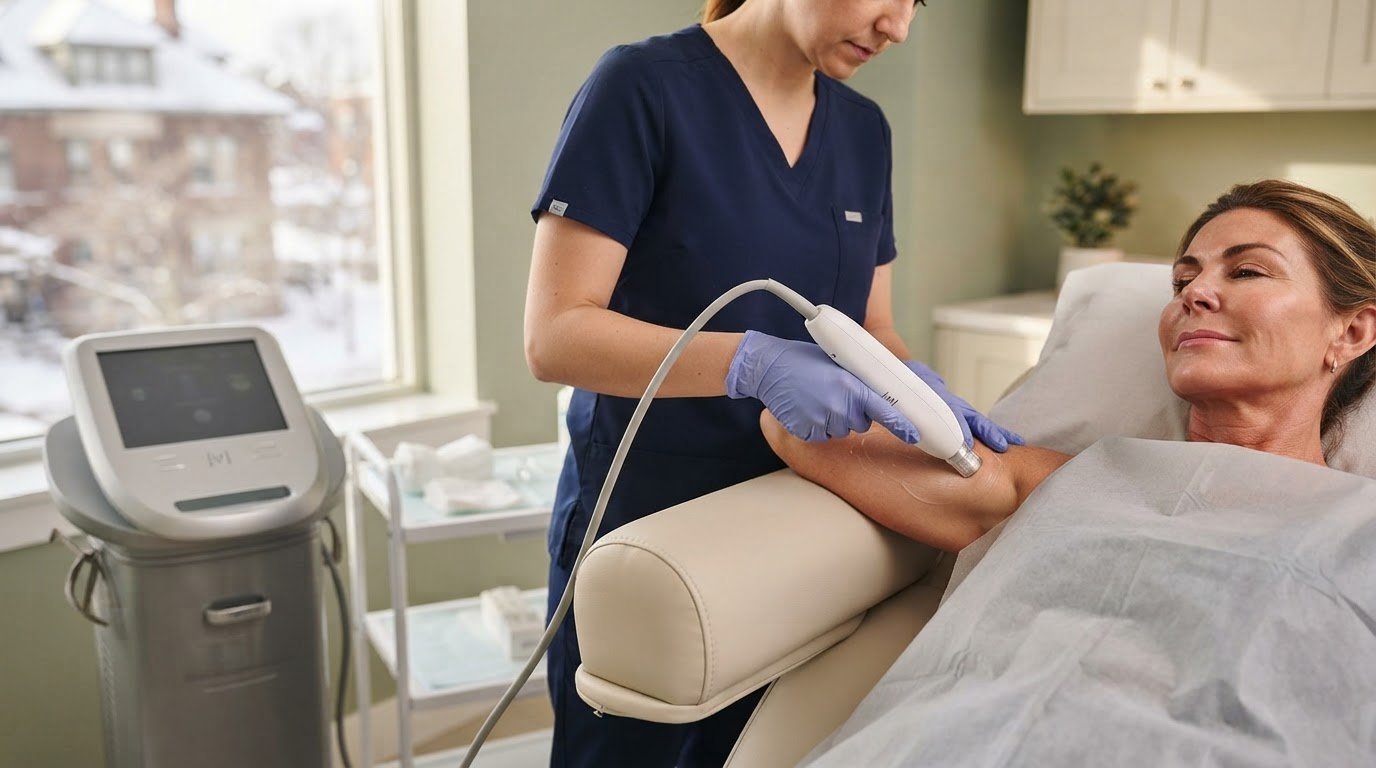
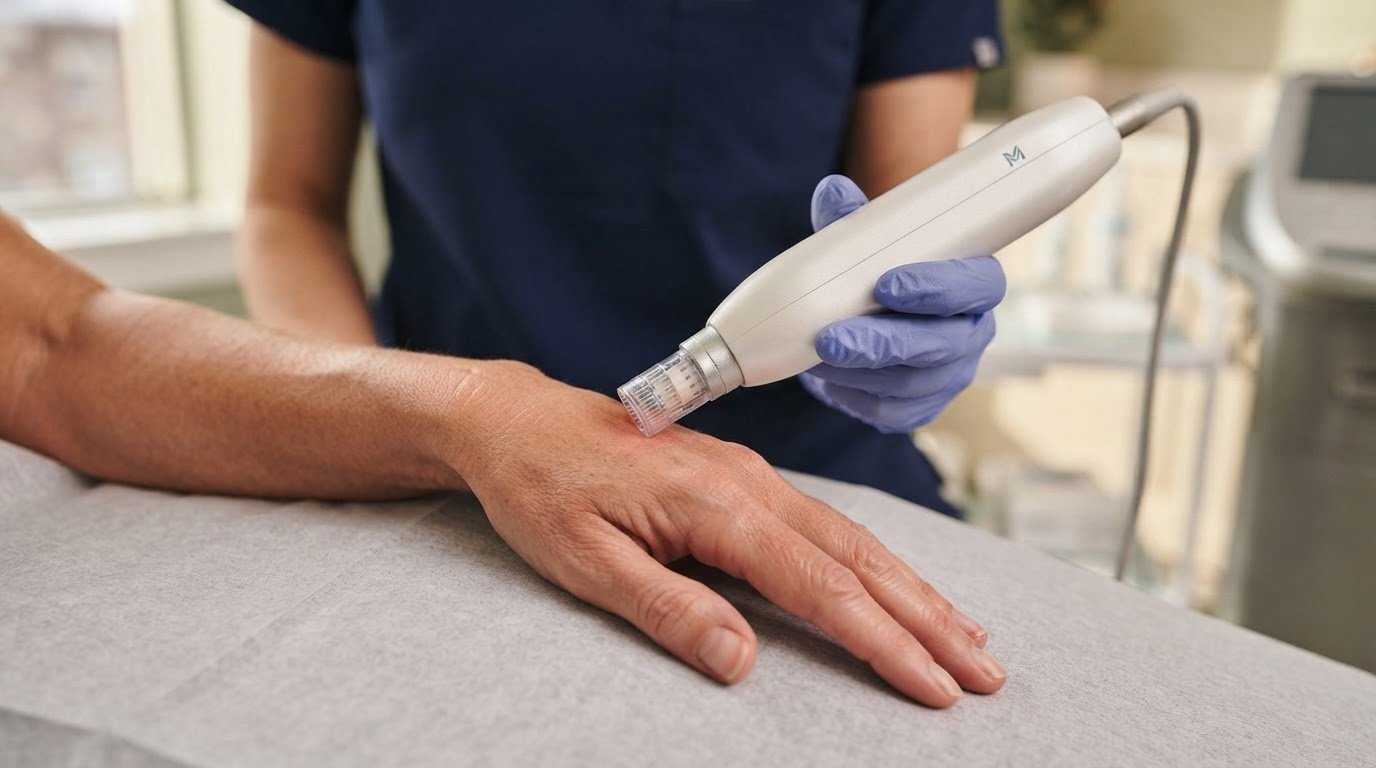
Photobiomodulation devices differ in how they deliver light. A panel may expose a broader surface area, while a laser can target a more localized area. Red light is commonly associated with superficial tissue, while near-infrared light is used to reach deeper muscle. Device type and treatment target are considered together because not every device produces the same exposure.
Published research on photobiomodulation examines cellular signaling and athletic outcomes, but these are related, distinct questions. A proposed effect on ATP production does not by itself establish measurable improvements in strength, endurance, or tissue repair. For example, an athlete may notice less fatigue during training, but that experience alone cannot show which cellular process caused the change.
To assess claims about ATP, separate the proposed mechanism from the measured outcome. First, identify the tissue and training context. Next, consider how the device delivers red or infrared light and what dose the protocol uses. Then distinguish cellular measurements from practical outcomes, such as completing a planned workout or returning to normal movement. This approach connects mitochondrial explanations to real recovery questions.
For athletes in Buffalo, the ATP connection helps explain why photobiomodulation is being studied. It doesn’t mean light replaces sleep, nutrition, progressive loading, or rehabilitation. Mitochondrial ATP production is one biological pathway researchers examine when assessing whether light exposure may contribute to recovery after training or injury.
What does research say about photobiomodulation for muscle soreness, fatigue, and sports performance?
Research on photobiomodulation examines separate outcomes, including soreness, fatigue, muscle damage, and sports performance. A 2025 meta-analysis in Sports Health examined 14 randomized controlled trials involving professional soccer and volleyball players. This scope matters because team-sport demands, treatment protocols, and measured outcomes can differ between trials.
A narrative review in Life analyzed 25 human studies of photobiomodulation in athletic populations. That wider review considered evidence across studies rather than one treatment protocol or performance measure. For an athlete, the practical question is whether a finding relates to a familiar goal, such as reducing post-training soreness or supporting performance before exercise.
Interpret results in light of what each study measured and when it applied light. A soreness measure after exercise doesn’t answer the same question as a performance test before exertion. Similarly, findings in professional soccer or volleyball may not apply directly to an individual’s strength program, distance running, or injury rehabilitation.
Protocol differences also affect how researchers interpret outcomes. Wavelength, dose, treatment area, and timing can influence light delivery. A study using pre-exercise exposure asks a different question from one treating athletes after strenuous exercise. Comparing protocols helps explain why a result for muscle soreness should not automatically be taken as evidence of improved endurance or reduced fatigue.
When reviewing a study, focus on the athlete group, treatment timing, and measured outcome. For example, a trial involving professional team-sport athletes might assess performance around competition, while another study may track soreness after a demanding exercise session. These distinctions help connect research to your own training context without assuming that one result applies to everyone.
Evidence can inform a recovery discussion, but it belongs alongside training fundamentals. Sleep, nutrition, progressive loading, and appropriate rehabilitation remain central to an athlete’s plan. Photobiomodulation is best considered as a possible complement, with its relevance assessed against the person’s goals and the specific protocol being considered.
To discuss how research findings relate to your recovery goals, contact My Health 360 for a Meet and Greet and speak with Medical Director Dr. Fatima about whether a procedure is a good option for you, and whether photobiomodulation fits your goals and training context.
Photobiomodulation therapy may help minimize delayed-onset muscle soreness after intense training or competition, although that possibility does not mean every athlete will experience the same effect. A Journal of Biophotonics study found that athletes using red-light therapy before exercise increased muscle performance by 12%. This result concerns performance following a particular pre-exercise approach; it should not be read as proof that all devices, schedules, or outcomes will produce the same change.
Red light therapy is described as safe and potentially helpful for recovery and muscle soreness in some athletes and active people. Its possible role depends on an individual’s response, the treatment protocol, and the recovery plan already in place. A clinician can help weigh potential benefits against expectations and ensure light therapy does not displace established training, recovery, or rehabilitation practices.
My Health 360
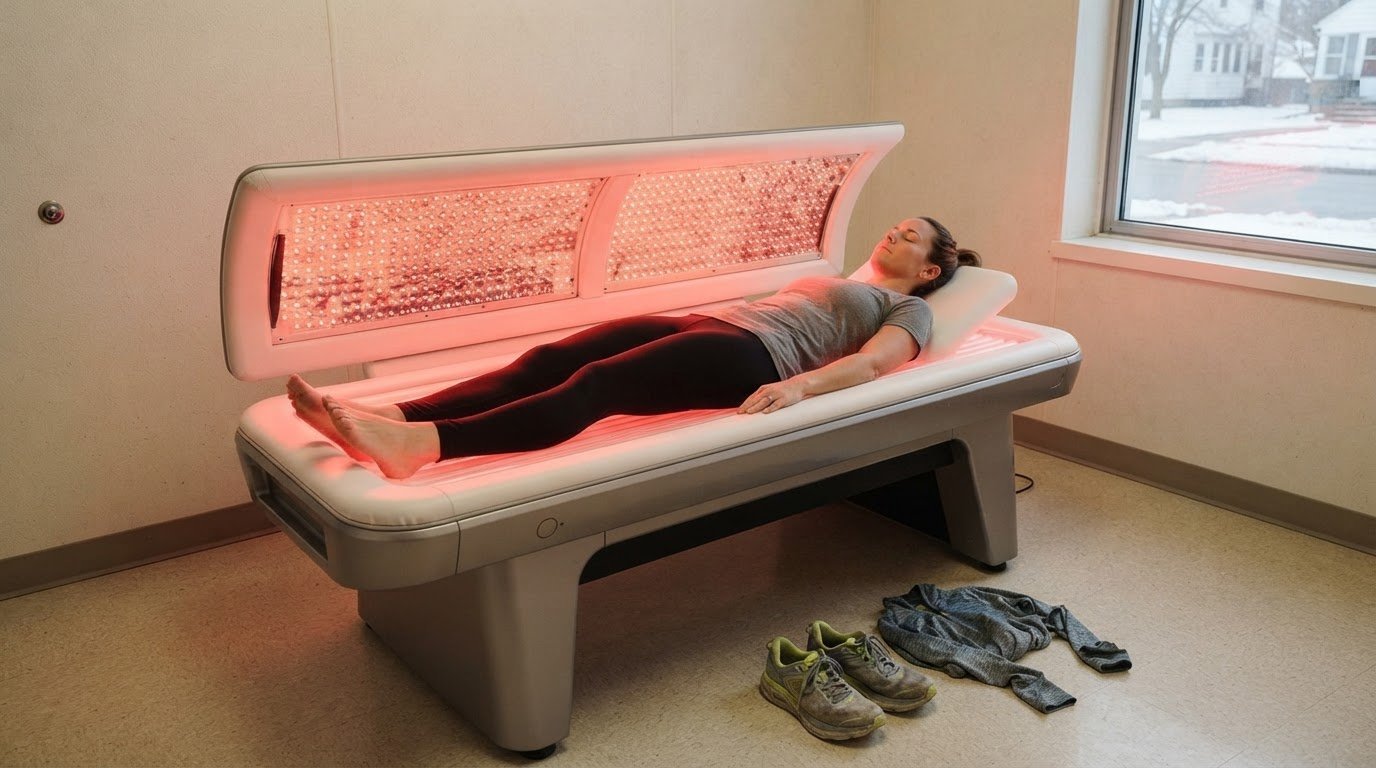
My Health 360 offers whole-body red light therapy for athletes considering photobiomodulation as part of a broader recovery plan. The approach can be discussed alongside training demands, recovery goals, and any injury-related concerns, rather than treated as a substitute for appropriate rehabilitation. A conversation can help clarify how this option relates to your circumstances.
If you’re considering a procedure, contact My Health 360 to arrange a Meet and Greet and discuss with Medical Director Dr. Fatima whether it’s a good option for you.
Choose a recovery plan that fits your training
Recovery decisions are most useful when they reflect what you’re preparing for, what limits your movement, and how your body responds to training. For athletes considering photobiomodulation for athletic recovery in Buffalo, NY, a conversation can help assess whether light therapy aligns with broader performance or injury-recovery needs.
My Health 360 also offers BioPrime for pre-operative or pre-event whole-body habilitation and Bio-Restore for post-operative or injury-related whole-body habilitation. Emsculpt Neo is another available offering. These services address different needs, so a discussion can help clarify which approach is relevant to your goals.
Contact My Health 360 to arrange a Meet and Greet and discuss with Medical Director Dr. Fatima whether a procedure is a good option for you. Request a Meet and Greet and take a thoughtful next step toward a recovery plan that supports your training.
Frequently Asked Questions
What Is Photobiomodulation?
Photobiomodulation is a non-invasive, non-pharmacological approach that uses red or near-infrared light to influence cellular signaling. In athletic recovery, researchers examine how light exposure may relate to mitochondrial ATP production in injured tissue, blood flow, and pain-signaling pathways. Wavelengths differ in tissue reach, so treatment planning considers the target area and intended purpose rather than treating all light devices as equivalent.
Who Can Benefit?
Athletes and active people experiencing training-related soreness or minor aches may consider photobiomodulation as part of a broader recovery plan. Someone managing muscle discomfort between practices may have different goals from an athlete returning after an injury. Relevant factors include symptoms, movement limitations, training demands, and rehabilitation needs. Light therapy is a complementary option, not a substitute for appropriate injury care.
What is photobiomodulation and how may it support athletic recovery?
Photobiomodulation uses red or near-infrared light to deliver energy to a targeted area, with the aim of supporting biological processes involved in recovery. An athlete might consider it during a training block when soreness affects planned workouts, while an injury-related concern calls for attention to function and rehabilitation needs. Set clear treatment goals, such as supporting recovery between sessions, rather than assuming light alone restores performance.
What should I look for when choosing a photobiomodulation provider in Buffalo?
Look for a provider who screens your health factors and tailors the device, dose, timing, and treatment area to your recovery goal and the tissue involved. Photobiomodulation should complement appropriate rehabilitation, sleep, nutrition, and progressive training.